
King of hearts (Adelonema wallisii)
Also known as: Adelonema wallisii
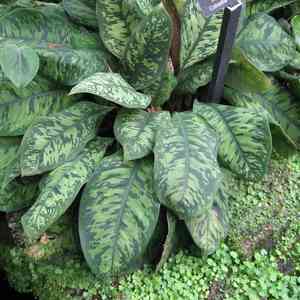
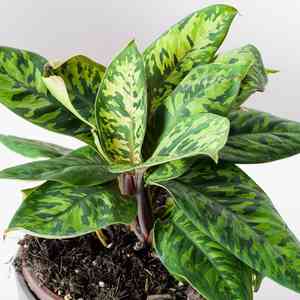
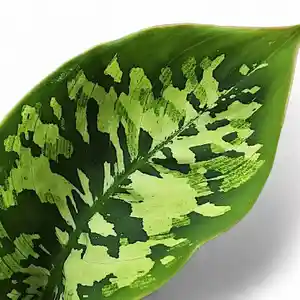
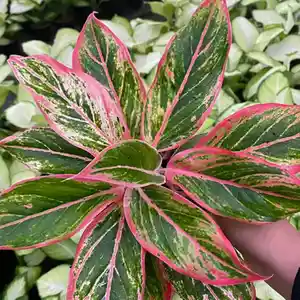
Adelonema wallisii (synonym Homalomena wallisii ) is a species of flowering plant in the family Araceae native to Venezuela, Colombia, and Panama. It reaches about 15 cm in height but with a much wider spread. The leaf blades are elliptic to ovate-oblong in shape about 13 to 20 cm in length, on rather short stalks, arching or recurving, bright-green with a markings of a marbled yellow. It can be confused with the rather similar Aglaonema.
In This Article
Attributes of King of hearts
Lifespan
Perennial
Plant Type
Herb
Plant Height
15 cm
Spread
20 cm to 30 cm
Leaf Color
Green Yellow
Flower Size
Small, usually less than 1 cm
Flower Color
Pink
Images of King of hearts
Quickly Identify King of hearts
1
Adelonema wallisii can be identified by its broad, heart-shaped leaves that are dark green with light green or silver veining. The leaves are glossy and can grow to a substantial size.
Scientific Classification of King of hearts
Phylum
Vascular plants
Class
Monocotyledons
Order
Alismatales
Family
Arum
Genus
Adelonema
Species
King of hearts
Planting and Growing of King of hearts
Care Difficulty
Easy
Watering Schedule
Every 2 days
Sunlight Requirements
Partial sun
Sunshine Duration
4-8 hours
Ideal Temperature
65-75℉
Soil Type
Potting Mix, Peat Mix
Soil pH
6.5-7.5
Fertilizer Type
Balanced
Pruning Season
Spring, Summer
Pruning Area
Branches, Leaves
Pruning Frequency
2 times a year
Repotting Season
Spring
Pot Type
Plastic, Ceramic
 How to Water King of hearts?
Adelonema wallisii thrives when watered moderately. During each session, ensure about 250ml of water is applied until the top 2 inches of soil feel moist but not soggy. This approach provides sufficient moisture for root absorption without causing root rot.
What are the symptoms of an underwatered King of hearts?
›
What should I do if my King of hearts is not getting enough water?
›
What are the symptoms of an overwatered King of hearts?
›
How to save an overwatered King of hearts?
›
 What Are the Sunlight Requirements for King of hearts?
Partial sun exposure supports healthy growth, as Adelonema wallisii relishes indirect light, mimicking its natural habitat. This lighting ensures vibrant and robust leaf development.
Optimal Light Level
›
Solutions for Ideal Lighting
›
Benefits of Ideal Light
›
 What Is the Ideal Temperature Range for King of hearts?
For optimal growth, Adelonema wallisii thrives in temperatures between 65°F and 75°F. This range mimics their natural tropical environment, providing warmth without excessive heat. Consistent temperatures within this range help maintain the plant's metabolism, ensuring healthy foliage and growth while preventing stress-induced conditions.
 What Soil is Best for King of hearts?
Adelonema wallisii prefers a well-draining soil to prevent root rot. The ideal choice is loam or sandy loam, which allows excess water to quickly percolate away, helping the roots to breathe and stay healthy. This plant loves nutrient-rich soil that provides ongoing nourishment. A soil mix that incorporates compost or well-rotted organic matter helps ensure the plant receives essential nutrients for vibrant growth and foliage. While drainage is crucial, the soil should also be able to retain some moisture. A blend that balances drainage with moisture retention, such as adding peat moss, keeps the plant hydrated without drowning its roots.
 How to Fertilize King of hearts?
When fertilizing Adelonema wallisii, use a balanced liquid fertilizer diluted to half strength. Apply 5 milliliters of diluted liquid fertilizer per liter of water. This amount ensures nutrients are available without risking root damage.
 How to Prune King of hearts?
Start by identifying any yellowing, damaged, or dead leaves and gently remove them by cutting close to the main stem. This helps prevent disease and pest infestations while also improving the plant's appearance. Next, trim any overgrown or leggy stems to maintain a compact shape, making cuts just above a leaf node. This encourages branching and fuller growth. Always use sterilized, sharp scissors or pruning shears to prevent infection and make clean cuts.
More About Pruning Techniques→
 How to Propagate King of hearts plant?
1
Select a healthy stem from the parent plant, avoiding any signs of disease or damage. Cut the stem at least 4-6 inches long, ensuring you have several nodes as these are critical for new root formation.
2
Remove the lower leaves from the cuttings to prevent rot when inserted into the soil. Dip the cut end into rooting hormone to stimulate the root growth, which is particularly helpful for difficult-to-root species.
3
Insert the prepared cuttings into a potting mix composed of peat and perlite to ensure aeration and moisture retention. Keep the cuttings in a warm area with indirect sunlight to enhance the rooting process.
 How to Repot King of hearts plant?
1
Adelonema wallisii shows signs it's time for repotting when you observe roots emerging from the drainage holes, or the plant appears to be oversized for its current pot. If growth seems to have slowed despite regular care, these are clear signals that repotting is necessary. Choose a time during the growing seasons, like spring or summer, to minimize stress.
2
Select a pot that is one size larger than the current one, with ample drainage holes. Using a pot that’s slightly bigger prevents water from sitting too long and causing root rot, yet provides enough room for growth, supporting a healthier, more vigorous plant.
3
Opt for a well-draining aroid mix, ideally composed of peat, perlite, and orchid bark. This combination ensures moisture is retained without waterlogging the roots, offering the perfect balance for Adelonema wallisii to flourish in its new pot.
Toxicity
Ingestion, Contact with sap
WARNING
The judgment on toxicity and danger is for reference only. We DO NOT GUARANTEE any accuracy of such judgment. Therefore, you SHALL NOT rely on such judgment. It is IMPORTANT TO SEEK PROFESSIONAL ADVICE in advance when necessary.
Learn More About King of hearts Diseases
Anthracnose
Bacterial Leaf Spot
Bacterial Soft Rot
Black Spot
Chemical Injury
Crown Gall
Cyst Nematode
Damping-off
Drought Stress
Fusarium Wilt
Gray Mold
Leaf Spot
Mosaic
Nutrient Deficiency
Nutrient Toxicity
Powdery Mildew
Root Rot
Root-knot Nematode
Sooty Mold
Spider Mites
Temperature Stress
Thrips Damage
White Mold



