Wild lime (Adelia) (Adelia)
Also known as: Mexican Allspice, Marble-Leaf
Wild lime is a genus of flowering plants in the spurge family, Euphorbiaceae, specifically within the subfamily Acalyphoideae. Its native range includes Latin America and the Caribbean, and one species even extends as far north as southern Texas.
In This Article
Attributes of Wild lime (Adelia)
Lifespan
Perennial
Plant Height
1-5 meters
Spread
Varies, typically spreading
Leaf Color
Green
Flower Size
Small, typically less than 1 cm
Flower Color
Green
Images of Wild lime (Adelia)
Quickly Identify Wild lime (Adelia)
1
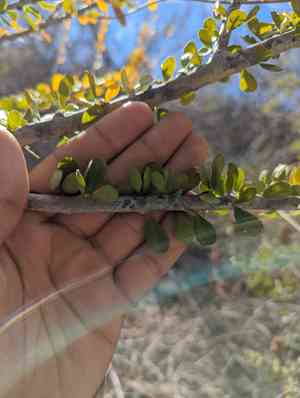
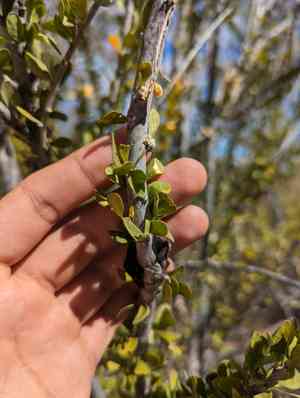
Adelia plants can be identified by their alternate leaves, which can be simple or lobed. The flowers are small, green, and inconspicuous, typically appearing in clusters. The fruit are small, capsule-like, containing seeds that are often dispersed by wind or water.
Scientific Classification of Wild lime (Adelia)
Phylum
Magnoliophyta
Class
Magnoliopsida
Order
Malpighiales
Family
Euphorbiaceae
Genus
Adelia
Planting and Growing of Wild lime (Adelia)
Care Difficulty
Moderate
Watering Schedule
Every 2 days
Sunlight Requirements
Partial sun
Sunshine Duration
4-6 hours
Ideal Temperature
60-75℉
Soil Type
Potting Mix, Peat Mix
Soil pH
6.5-7.5
Fertilizer Type
Balanced
Pruning Season
Spring, Summer
Pruning Area
Branches, Leaves
Pruning Frequency
Once a year
Repotting Season
Spring
Pot Type
Ceramic, Plastic
 How to Water Wild lime (Adelia)?
For Adelia, it's important to water thoroughly until the soil feels moist but not waterlogged. Typically, 500 ml per session is sufficient, ensuring the lower soil layers are reached, promoting deep root growth without drowning the roots. Excess water in the saucer should be emptied to avoid root rot.
What are the symptoms of an underwatered Wild lime (Adelia)?
›
What should I do if my Wild lime (Adelia) is not getting enough water?
›
What are the symptoms of an overwatered Wild lime (Adelia)?
›
How to save an overwatered Wild lime (Adelia)?
›
 What Are the Sunlight Requirements for Wild lime (Adelia)?
Partial sun exposure is ideal for Adelia. This lighting encourages robust growth and maintains its foliage color, ensuring plant health and vigor without the risk of burns or stress.
What is the optimal lighting for Adelia?
›
How can you achieve this optimal lighting?
›
What are the benefits of ideal lighting for Adelia?
›
 What Is the Ideal Temperature Range for Wild lime (Adelia)?
The ideal temperature range for cultivating Adelia is between 60°F and 75°F. Maintaining this temperature helps ensure optimal growth and health, promoting strong foliage and vibrant blossoms.
 What Soil is Best for Wild lime (Adelia)?
Adelia prefers soil that allows good drainage to prevent root rot. This benefits the plant by enhancing its ability to absorb nutrients and retain optimal moisture levels. A soil enriched with organic matter is ideal for Adelia. The presence of compost or decayed leaves can provide necessary nutrients, encouraging robust growth and radiant foliage. Adelia thrives in soil that holds moisture yet is not waterlogged. Appropriate moisture levels ensure that the plant's roots have continuous access to water while minimizing the risk of fungal infections.
 How to Fertilize Wild lime (Adelia)?
When fertilizing Adelia, it is crucial to use moderation. Apply 1/2 teaspoon of liquid fertilizer per gallon of water for monthly feedings. For solid fertilizers, scatter approximately 1/4 cup evenly around the root zone. Using too much can harm the plant, so always adhere to recommended amounts.
 How to Prune Wild lime (Adelia)?
Start by removing any dead, diseased, or damaged branches to allow more air circulation and sunlight penetration, which are crucial for the plant's health. Carefully trim back any overgrown branches to shape the plant and maintain an ideal size. This helps to promote more even growth and prevents the Adelia from becoming too leggy or unkempt. Every few years, conduct a more thorough pruning called rejuvenation pruning. This involves cutting back some older stems and branches to rejuvenate the plant and stimulate new growth.
 How to Propagate Wild lime (Adelia) plant?
1
Choose a well-draining potting mix, ideally one that is suitable for shrubs. Moisten the soil slightly without making it soggy to provide a conducive environment for seed germination or rooting cuttings.
2
For seeds, collect them from ripe fruit ensuring they are mature. For cuttings, select healthy new growth and cut at a 45-degree angle to maximize rooting potential.
3
For seed propagation, sow the seeds just below the soil surface. For cuttings, dip the cut end in rooting hormone and place it halfway into the soil. Position your trays in a location with indirect sunlight.
 How to Repot Wild lime (Adelia) plant?
1
Adelia should be repotted when you notice its roots peeking from the drainage holes or if it becomes root-bound. This typically occurs every couple of years. Spring or summer are ideal seasons as the plant is actively growing and can recover faster. Signs also include slowed growth or yellowing leaves, indicating the plant needs more space and nutrients.
2
Select a pot slightly larger than the current one, with drainage holes to prevent waterlogging. The ideal pot should provide enough room for root expansion without being excessively large, which might retain too much moisture and harm the roots. Opting for a breathable material like terracotta can also ensure good airflow around the roots.
3
A well-draining potting mix, rich in organic matter, is crucial for Adelia. Such soil ensures efficient moisture retention and nutrient availability without becoming waterlogged. The right soil balance also helps the plant establish quickly in its new environment, reducing transplant shock and promoting healthy growth.
Toxicity
Ingestion
WARNING
The judgment on toxicity and danger is for reference only. We DO NOT GUARANTEE any accuracy of such judgment. Therefore, you SHALL NOT rely on such judgment. It is IMPORTANT TO SEEK PROFESSIONAL ADVICE in advance when necessary.

