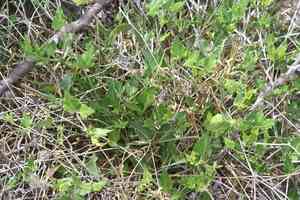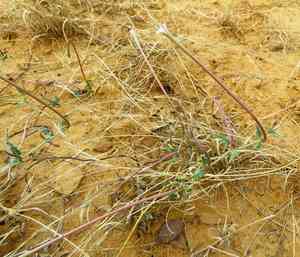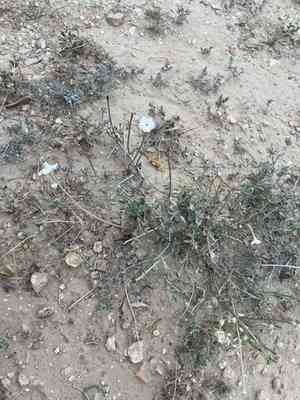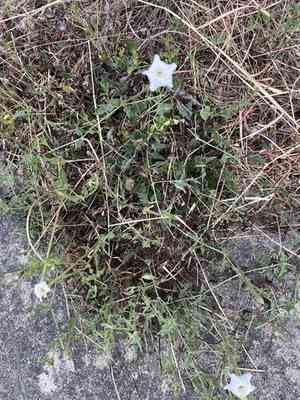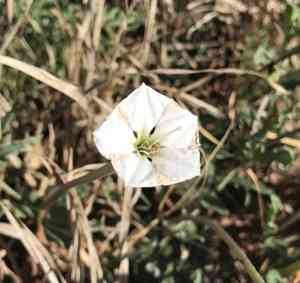
Angel's trumpets(Acleisanthes longiflora)

Angel's trumpets (Acleisanthes longiflora)

Also known as: Angel Trumpets

Angel's trumpets (Brugmansia species) are perennial plants celebrated for their large, trumpet-shaped flowers that often bloom in the evening. Contrary to being naturally adapted to arid environments, they thrive in tropical and subtropical regions. However, if we were to consider some general adaptations that might support survival in drier conditions, they could include:

1. **Deep Root Systems**: These can help the plant access deeper moisture reservoirs during dry periods.
2. **Drought Tolerance**: While not naturally drought-resistant, some varieties may exhibit a degree of tolerance through selective breeding.
3. **Nocturnal Flowering**: Their evening blooms attract nocturnal pollinators, which can be advantageous in various environmental conditions.
4. **Fragrance**: The strong scent of the flowers can enhance pollination success by attracting nighttime insects.

Despite these points, it's important to note that Angel's trumpets generally require regular moisture and are best suited for environments that provide adequate water and rich soil.

Attributes of Angel's trumpets

Lifespan
Perennial
Plant Type
Herb
Plant Height
30 cm to 91 cm
Spread
20-30 cm
Leaf Color
Green
Flower Size
5-10 cm
Flower Color
White

ForwardPlant - Identify plants with a snap

Identify and diagnose plants, get toxicity alerts, and explore safety guides for all types of fungi.

Try for Free

Images of Angel's trumpets

Angel's trumpets(Acleisanthes longiflora)

Quickly Identify Angel's trumpets

1
Identify Acleisanthes longiflora by its long, tubular white flowers that open in the evening and emit a strong, sweet fragrance. The leaves are simple, ovate, and green.

Scientific Classification of Angel's trumpets

Phylum
Vascular plants
Class
Dicotyledons
Order
Caryophyllales
Family
Four o'clock
Genus
Trumpets
Species
Angel's trumpets

Planting and Growing of Angel's trumpets

Care Difficulty
Moderate
Watering Schedule
Every 3 days
Sunlight Requirements
Full sun
Sunshine Duration
6-10 hours
Ideal Temperature
65-75℉
Soil Type
Potting Mix, Peat Mix
Soil pH
6.5-7.5
Fertilizer Type
Balanced
Pruning Season
Spring, Summer
Pruning Area
Branches, Leaves
Pruning Frequency
2 times a year
Repotting Season
Spring
Pot Type
Plastic, Ceramic

water icon How to Water Angel's trumpets?

When watering Acleisanthes longiflora, aim to moisten the soil thoroughly without causing water to pool at the base. Use approximately 250 ml of water, or enough to ensure the soil is evenly damp, while avoiding waterlogging. Check if the top 2-3 inches of soil are dry before watering.
What are the symptoms of an underwatered Angel's trumpets?
What should I do if my Angel's trumpets is not getting enough water?
What are the symptoms of an overwatered Angel's trumpets?
How to save an overwatered Angel's trumpets?

sunlight icon What Are the Sunlight Requirements for Angel's trumpets?

Sunlight Requirements: Full sun, Partial sun
Duration of light: 6 to 8 hours daily
Position Acleisanthes longiflora in full to partial sun environments. Optimal light exposure encourages robust blooming and sustains vibrant leaf coloration, crucial for its aesthetic and health benefits.
How much sunlight does it need?
What are the solutions to achieve this lighting?
Why is this lighting beneficial?

temperature icon What Is the Ideal Temperature Range for Angel's trumpets?

Ideal Temperature: 65 ~ 75℉
The ideal temperature range for Acleisanthes longiflora is between 65 and 75°F. This range provides the optimal conditions for growth and flowering, ensuring the plant maintains its health and vigor. Consistent temperatures within this range also help in preventing stress and promote steady development.

soil icon What Soil is Best for Angel's trumpets?

Soil type: Sandy soil, Loam, Sandy loam
Soil PH: 6.5 ~ 7.5
Acleisanthes longiflora thrives in well-drained soils which prevent waterlogging. Good drainage allows the roots to breathe and prevents root rot, supporting healthier plant growth. Adding organic matter to the soil, like compost or aged manure, enhances soil fertility. This provides essential nutrients and improves moisture retention, resulting in more robust and vibrant plants. Maintaining a moderate level of soil nutrients is important for balanced growth. Over-fertilization can harm the plant, so a balanced nutrient supply supports steady development and flowering.

fertilize icon How to Fertilize Angel's trumpets?

Fertilizer type: Balanced
Acleisanthes longiflora requires a balanced approach when it comes to fertilization. Use a diluted liquid fertilizer at half the standard strength recommended by the manufacturer. For slow-release pellets, apply about 1/4 cup distributed evenly over the soil.

prune icon How to Prune Angel's trumpets?

Pruning Time: Spring, Summer
To ensure healthy growth and blooming, Acleisanthes longiflora should be pruned quarterly. Begin by sanitizing your pruning shears to prevent the spread of disease. Identify and remove dead or damaged branches first, which will encourage the plant to direct its energy towards new growth. Next, trim any overgrown areas to maintain the desired size and shape of the plant. Always cut at a slight angle just above a leaf node to promote optimal healing and regrowth. Make sure not to remove more than one-third of the plant's foliage at a time. More About Pruning Techniques

propagate icon How to Propagate Angel's trumpets plant?

Propagate Time: Late spring, Early summer
1
Use a well-draining soil mix, rich in organic matter, to ensure good aeration and moisture retention. Soil should be sterilized to prevent any fungal infections affecting the seedlings or cuttings.
2
Scatter Acleisanthes longiflora seeds evenly across the seed tray. Cover them lightly with soil and water gently to avoid displacing them. Ensure optimal warmth and light conditions for germination.
3
Select a healthy stem from the plant and cut a 4-6 inch segment. Remove leaves from the lower half and dip the cut end in rooting hormone to encourage root development.
More About Propagating Techniques

repot icon How to Repot Angel's trumpets plant?

Repotting frequency: Every two years
1
Repot Acleisanthes longiflora when you notice the roots beginning to circle the pot or if the plant seems to be top-heavy. Spring or early summer is the ideal time when the plant is actively growing, ensuring it can recover quickly from the repotting process.
2
Choose a pot that is only slightly larger than the current one, with good drainage holes. Clay pots are ideal as they allow for evaporation, preventing the soil from being overly moist, which can lead to root rot in this plant.
3
Opt for a fast-draining cactus mix, rich in organic matter, to ensure proper aeration and drainage. This type of soil mimics the natural arid conditions Acleisanthes longiflora thrives in, promoting healthy growth.

ForwardPlant - Identify plants with a snap

Find the best spots for them to optimize their health, simply using your phone.

Try for Free