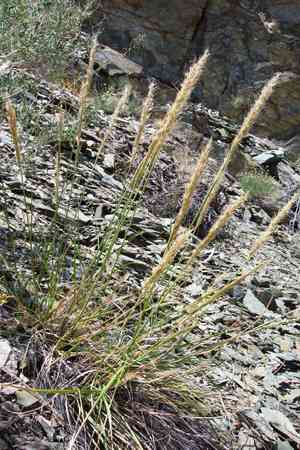
Achnatherum (Achnatherum) (Achnatherum)
Also known as: Needlegrass, Stipe
Achnatherum is a genus of grasses commonly known as needlegrass or stipe. This genus is part of the Poaceae family and includes perennial bunchgrasses known for their needle-like seeds.
In This Article
Attributes of Achnatherum (Achnatherum)
Lifespan
Perennial
Plant Height
30-120 cm
Spread
Varies depending on species
Leaf Color
Green
Flower Size
0.2-0.5 cm
Flower Color
Pale green to purplish
Images of Achnatherum (Achnatherum)
Quickly Identify Achnatherum (Achnatherum)
1
To identify Achnatherum, look for its needle-like seeds, long and narrow leaves, and erect tufted stems. The inflorescence is usually a loose panicle.
Scientific Classification of Achnatherum (Achnatherum)
Phylum
Magnoliophyta
Class
Liliopsida
Order
Poales
Family
Poaceae
Genus
Achnatherum
Planting and Growing of Achnatherum (Achnatherum)
Care Difficulty
Moderate
Watering Schedule
Every 2 days
Sunlight Requirements
Full sun
Sunshine Duration
4-8 hours
Ideal Temperature
60-75℉
Soil Type
Potting Mix, Peat Mix
Soil pH
6.5-7.5
Fertilizer Type
Balanced
Pruning Season
Spring, Summer
Pruning Area
Branches, Leaves
Pruning Frequency
2 times a year
Repotting Season
Spring
Pot Type
Plastic, Ceramic
 How to Water Achnatherum (Achnatherum)?
Achnatherum requires careful attention to its watering needs. Aim to provide around 500 ml of water each time, ensuring the soil is evenly moist but not waterlogged. This amount allows the plant to absorb the moisture it requires without oversaturation, which can lead to root issues. Always check the topsoil; it should be dry before the next watering session.
What are the symptoms of an underwatered Achnatherum (Achnatherum)?
›
What should I do if my Achnatherum (Achnatherum) is not getting enough water?
›
What are the symptoms of an overwatered Achnatherum (Achnatherum)?
›
How to save an overwatered Achnatherum (Achnatherum)?
›
 What Are the Sunlight Requirements for Achnatherum (Achnatherum)?
Achnatherum thrives best with full sun exposure but can adapt to partial sun. Ideal lighting encourages robust growth, healthier leaves, and improved resistance to environmental stresses, contributing to the plant’s aesthetic and structural integrity.
How much direct sunlight is ideal?
›
What to do if sun exposure is insufficient?
›
How does ideal lighting affect Achnatherum?
›
 What Is the Ideal Temperature Range for Achnatherum (Achnatherum)?
For optimal growth, Achnatherum thrives in a temperature range between 60°F and 75°F. This range allows the plant's physiological processes, such as photosynthesis and nutrient absorption, to operate efficiently. Maintaining this temperature range will promote healthy growth, vibrant foliage, and overall robust plant development.
 What Soil is Best for Achnatherum (Achnatherum)?
Achnatherum thrives in well-drained soil that prevents root saturation and rot. Ensuring good drainage means the roots can access both moisture and oxygen, fostering a robust growth environment and healthy plant development. The plant prefers soils with moderate nutrient levels. Soils that are too rich in organic matter might encourage excessive foliage growth, potentially leading to weaker plants susceptible to pests and diseases. Achnatherum can handle slightly alkaline soil conditions, which helps it flourish in areas where other plants might struggle with basic soil. This preference leverages the mineral availability in such environments, optimizing its nutrient uptake.
 How to Fertilize Achnatherum (Achnatherum)?
For Achnatherum, using a balanced fertilizer with a NPK ratio of 10-10-10 is suitable. Approximately 1 tablespoon per gallon of water is recommended for liquid fertilizers. For slow-release granules, around 1/4 cup for every square foot of soil should suffice to nourish them adequately.
 How to Prune Achnatherum (Achnatherum)?
Regularly inspect for signs of pest infestation around freshly cut areas, as they can be opportunistic when a plant is stressed. Treat with appropriate organic pesticides if needed. Do not remove more than one-third of the plant at any time. Excessively cutting back Achnatherum can lead to decreased vitality and hinder its next growth cycle.
 How to Propagate Achnatherum (Achnatherum) plant?
1
Fill the seed tray with a seed-starting mix, which is lightweight and retains moisture without becoming waterlogged. Moisten the soil before planting the seeds to ensure good contact with the soil.
2
Spread the seeds evenly over the surface of the soil and lightly cover them with a thin layer of the seed-starting mix. Follow specific depth requirements for Achnatherum, if available, on the seed packet for optimal germination.
3
Gently dig up the plant and carefully separate the roots into two or more sections. Each section should have a healthy root system and shoot. Replant the divisions promptly and water them thoroughly to reduce transplant shock.
 How to Repot Achnatherum (Achnatherum) plant?
1
Repotting of Achnatherum is needed when you notice stunted growth or roots emerging from the drainage holes. These signals indicate that the plant has outgrown its current pot and needs more space to thrive.
2
Select a pot that is 2-3 inches larger in diameter than the current one. Ensure it has adequate drainage holes to prevent waterlogging, which could lead to root rot. A larger pot allows more room for root expansion, promoting healthier growth.
3
Opt for well-draining loamy soil, ideally with added sand or perlite. This type of soil prevents water retention, ensuring Achnatherum roots receive proper aeration and avoid excess moisture, which can harm the plant.
Toxicity
Ingestion
WARNING
The judgment on toxicity and danger is for reference only. We DO NOT GUARANTEE any accuracy of such judgment. Therefore, you SHALL NOT rely on such judgment. It is IMPORTANT TO SEEK PROFESSIONAL ADVICE in advance when necessary.

