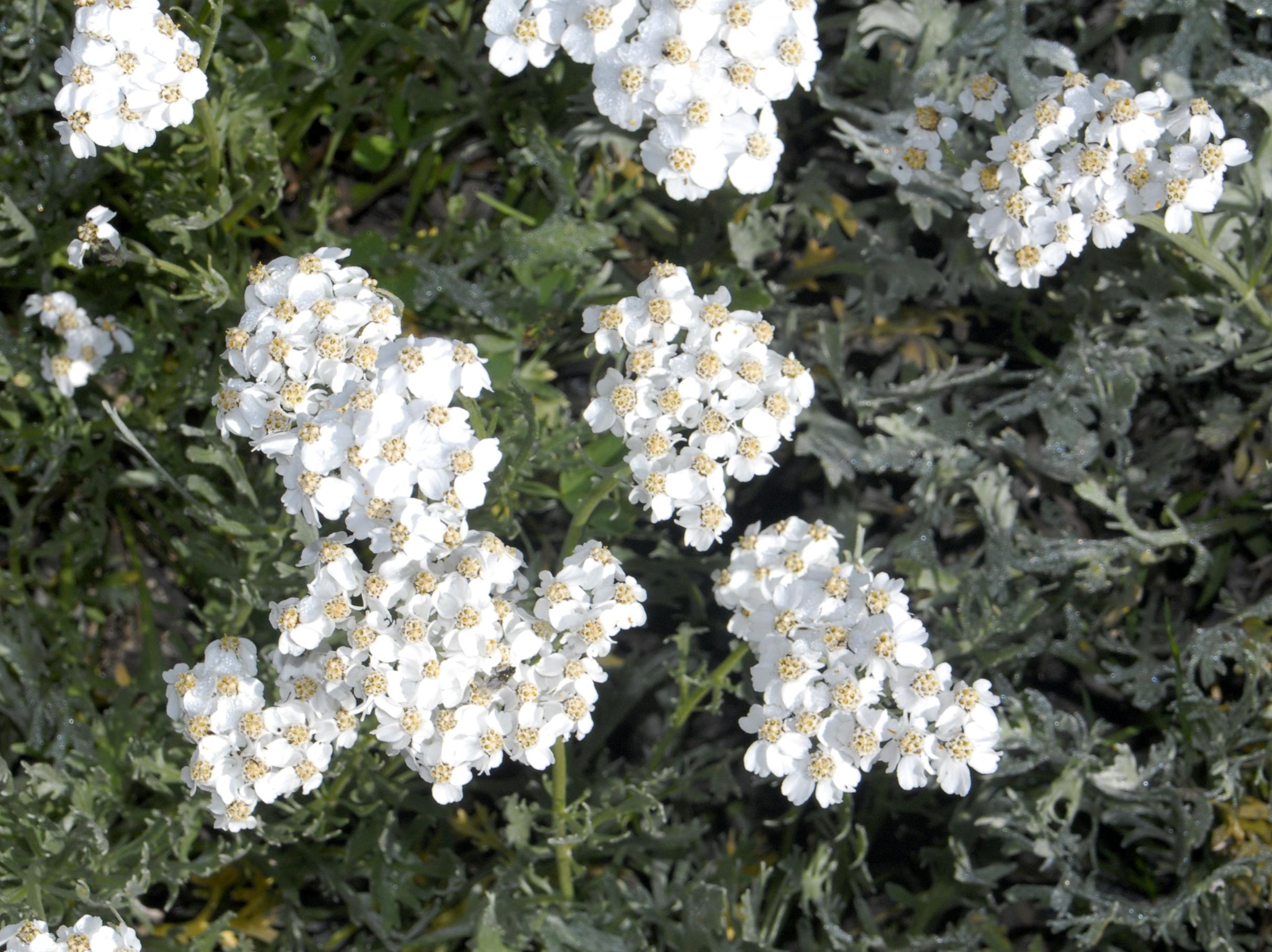
Silvery yarrow (Achillea clavennae)
Also known as: silvery-leaved yarrow, Yarrow
Silvery yarrow is highly valued by gardeners for its striking silvery-gray foliage and delicate clusters of white to pale yellow flowers, which are reminiscent of those found in Achillea kellereri. Its aromatic leaves add an extra sensory dimension to gardens. Additionally, silvery yarrow attracts native butterflies, offering a reliable nectar source, and is known for being drought-tolerant and easy to maintain, making it an excellent choice for low-maintenance gardens.
In This Article
Attributes of Silvery yarrow
Lifespan
Perennial
Plant Type
Herb
Plant Height
10-30 cm (4-12 inches)
Spread
Typically minimal due to its compact growth form, not exceeding 20 cm (8 inches)
Leaf Color
Silvery-green
Flower Size
Approximately 5 mm (0.2 inches)
Flower Color
White
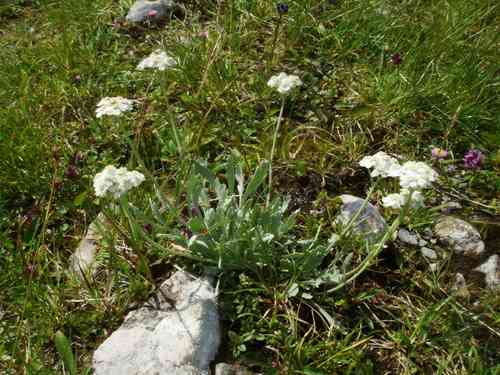
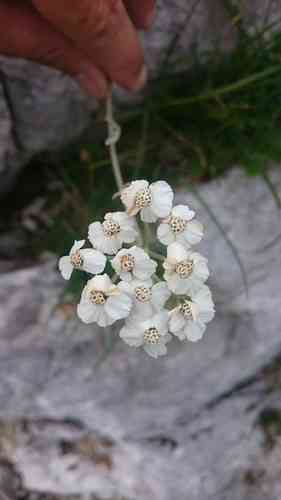
Images of Silvery yarrow


Quickly Identify Silvery yarrow
1
Identify Achillea clavennae by its finely dissected, silvery-green leaves and the small, flat-topped clusters of white to pale pink flowers. The leaves are aromatic when crushed.
Scientific Classification of Silvery yarrow
Phylum
Vascular plants
Class
Dicotyledons
Order
Asterales
Family
Daisy
Genus
Yarrows
Species
Silvery yarrow
Planting and Growing of Silvery yarrow
Care Difficulty
Easy
Watering Schedule
Every 3 days
Sunlight Requirements
Full sun
Sunshine Duration
6-10 hours
Ideal Temperature
60-75℉
Soil Type
Potting Mix, Peat Mix
Soil pH
6.5-7.5
Fertilizer Type
Balanced
Pruning Season
Spring, Summer
Pruning Area
Branches, Leaves
Pruning Frequency
2 times a year
Repotting Season
Spring
Pot Type
Plastic, Terracotta
 How to Water Silvery yarrow?
Achillea clavennae, known for its drought tolerance, requires moderate watering. When watering, ensure the soil is moist but not drenched, allowing it to dry slightly between sessions.
What are the symptoms of an underwatered Silvery yarrow?
›
What should I do if my Silvery yarrow is not getting enough water?
›
What are the symptoms of an overwatered Silvery yarrow?
›
How to save an overwatered Silvery yarrow?
›
 What Are the Sunlight Requirements for Silvery yarrow?
Achillea clavennae prefers full sun exposure for optimal growth. Consistent sunshine encourages healthy foliage development and prolific blooming, making it a showstopper in sunny garden spots.
Ideal Sun Exposure
›
Solution for Optimum Sunlight
›
Benefits of Ideal Lighting
›
 What Is the Ideal Temperature Range for Silvery yarrow?
Achillea clavennae thrives best in a temperature range between 60°F and 75°F. These conditions mimic the plant's natural habitat in mountainous regions where temperatures and conditions are moderate. Consistent temperatures within this range ensure optimal growth, flowering, and overall plant health.
 What Soil is Best for Silvery yarrow?
Achillea clavennae thrives in well-drained soil that prevents waterlogging, ensuring the roots do not rot. This facilitates proper aeration and helps the plant to absorb nutrients effectively, promoting robust growth and vibrant blooms. A unique characteristic of Achillea clavennae is its ability to thrive in nutrient-poor soils. This minimizes the need for heavy fertilization, reflecting its adaptation to rocky alpine environments. Such conditions encourage the plant's natural resilience and hardiness. Achillea clavennae prefers a soil pH ranging from 6.5 to 7.5, favoring environments that are neutral to slightly alkaline. This pH range suits its natural habitat, supporting optimal enzymatic activity and nutrient absorption.
 How to Fertilize Silvery yarrow?
Achillea clavennae, known for its delightful blooms, should be fertilized sparingly to avoid overwhelming its natural resilience. Liquid fertilizers should be diluted to half-strength before application, ensuring the plant receives balanced nutrients without the risk of nutrient burn. For slow-release fertilizers, a thin layer around the plant's base suffices, as it gradually supplies nutrients over time.
 How to Prune Silvery yarrow?
Before you start pruning, make sure you have clean, sharp pruning shears to ensure smooth cuts. Disinfect the blades with alcohol or bleach solution to prevent disease transmission. Identify and remove any dead, damaged, or diseased stems by cutting them back to healthy tissue. This not only tidies the plant but helps in preventing parasitic infections. Trim back stems to encourage bushier growth. Focus on maintaining a neat and compact shape, cutting just above a pair of leaves to promote branching and a fuller appearance.
More About Pruning Techniques→
 How to Propagate Silvery yarrow plant?
1
Place seeds on the surface of a good quality seed compost. Lightly cover with compost or vermiculite. Keep at 15-20°C until germination, which usually takes 14-21 days.
2
Use a sharp knife to cut a 4-6 inch length from a healthy stem. Remove the lower leaves and dip the cut end in rooting hormone to stimulate root growth.
3
Carefully dig up the plant and gently separate clumps into smaller sections, ensuring each division has roots attached. Replant in well-prepared soil and water immediately to establish contact with the soil.
 How to Repot Silvery yarrow plant?
1
Look for signs like roots growing through the drainage holes, water passing through too quickly, or visibly stunted plant growth. These indicators suggest that it's time to repot your Achillea clavennae to encourage healthy development.
2
Select a pot that is one size larger than the current one, with good drainage holes at the bottom. This ensures proper drainage, prevents waterlogging and root rot, and gives the roots room to spread and grow.
3
Pick a well-draining loamy soil mix, preferably with some added grit or sand. This replicates the plant's natural environment, prevents water retention, and helps maintain healthy root oxygenation.
Learn More About Silvery yarrow Diseases
Anthracnose
Bacterial Leaf Spot
Bacterial Soft Rot
Chemical Injury
Damping-off
Downy Mildew
Drought Stress
Fusarium Wilt
Gray Mold
Leaf Spot
Mosaic
Nutrient Deficiency
Nutrient Toxicity
Powdery Mildew
Root Rot
Root-knot Nematode
Rusts
Sooty Mold
Spider Mites
Temperature Stress
Thrips Damage
White Mold


