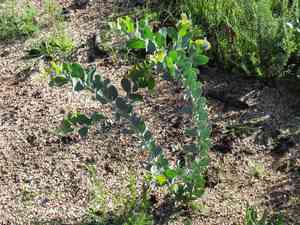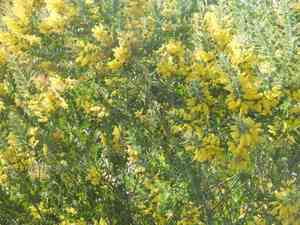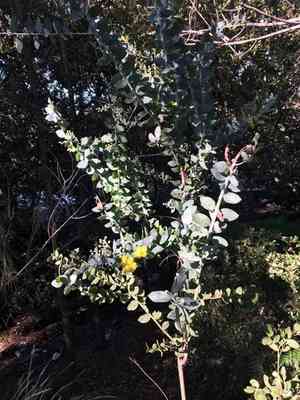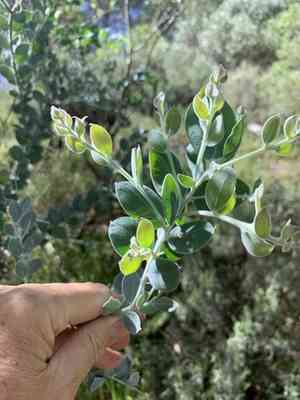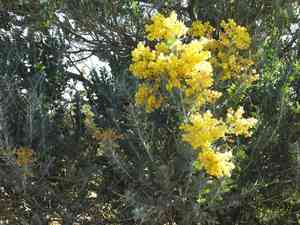
Pearl acacia(Acacia podalyriifolia)

Pearl acacia (Acacia podalyriifolia)

Also known as: Silver-leaved golden wattle, Queensland silver wattle, Queensland wattle

Acacia dealbata, also known as the silver wattle or mimosa, is a rapidly growing evergreen tree native to Australia. It is notable for its abundant, fragrant yellow blossoms and was introduced to western North America in 1908. Often used as an ornamental plant, it has the capacity to form dense thickets that can outcompete and displace native vegetation.

Attributes of Pearl acacia

Lifespan
Perennial
Plant Type
Tree
Plant Height
3 m
Spread
3 m
Leaf Color
Green Blue Gray Silver Bronze
Flower Size
1-1.5 cm
Flower Color
Yellow

PlantJoy - Identify plants with a snap

Identify and diagnose plants, get toxicity alerts, and explore safety guides for all types of fungi.

Try for Free

Images of Pearl acacia

Pearl acacia(Acacia podalyriifolia)

Quickly Identify Pearl acacia

1
Evergreen plant, reaches 20 feet (6 meters) in height with silvery-gray, round phyllodes as leaves.
2
Produces small, fluffy clusters of bright yellow flowers in winter to early spring.
3
Thrives in full sun with well-drained soil, moderate cold tolerance down to 25°F (-4°C).
4
Can be pruned to shape a rounded canopy or kept as a compact bush.

Scientific Classification of Pearl acacia

Phylum
Vascular plants
Class
Dicotyledons
Order
Fabales
Family
Legume
Genus
Acacias
Species
Pearl acacia

Planting and Growing of Pearl acacia

Care Difficulty
Easy
Watering Schedule
Every 3 days
Sunlight Requirements
Full sun
Sunshine Duration
4-8 hours
Ideal Temperature
59-77℉
Soil Type
Potting Mix, Peat Mix
Soil pH
6.5-7.5
Fertilizer Type
Balanced
Pruning Season
Spring, Summer
Pruning Area
Branches, Leaves
Pruning Frequency
2 times a year
Repotting Season
Spring
Pot Type
Plastic, Ceramic

water icon How to Water Pearl acacia?

Water Acacia podalyriifolia until the soil feels moist but not overly saturated. The goal is to provide sufficient moisture without causing water to pool at the base. It prefers well-drained soil, so ensure appropriate drainage when watering, typically around 100 ml at a time.
What are the symptoms of an underwatered Pearl acacia?
What should I do if my Pearl acacia is not getting enough water?
What are the symptoms of an overwatered Pearl acacia?
How to save an overwatered Pearl acacia?

sunlight icon What Are the Sunlight Requirements for Pearl acacia?

Sunlight Requirements: Full sun
Duration of light: 6 to 8 hours
Acacia podalyriifolia ideally needs full sun, meaning it requires exposure to direct sunlight for the majority of the day. This ensures robust growth and a prolific flowering cycle.
What is the best lighting condition for Acacia podalyriifolia?
How can I achieve ideal lighting for Acacia podalyriifolia?
What are the benefits of ideal lighting for Acacia podalyriifolia?
More About Sunlight Requirements Techniques

temperature icon What Is the Ideal Temperature Range for Pearl acacia?

Ideal Temperature: 59 ~ 77℉
Acacia podalyriifolia thrives best within an ideal temperature range of 59°F to 77°F (15°C to 25°C). These conditions mimic the plant's native environment, promoting optimal growth and flowering. Consistent temperatures within this range support strong foliar growth and enhance the plant's overall health and physiological processes.

soil icon What Soil is Best for Pearl acacia?

Soil type: Sandy soil, Loam, Sandy loam
Soil PH: 6.5 ~ 7.5
Acacia podalyriifolia thrives best in well-drained soil, preventing waterlogging that can lead to root rot. This drainage ensures the roots receive adequate oxygen, enabling the plant to flourish. Acacia podalyriifolia prefers soils with moderate nutrient content. This allows the plant to grow efficiently without excessive vegetative growth, which could weaken its structure. The optimal pH range for Acacia podalyriifolia is between 6.5 and 7.5, allowing for effective nutrient absorption. This balance helps maintain the plant’s health and vibrant foliage.

fertilize icon How to Fertilize Pearl acacia?

Fertilizer type: Balanced
For Acacia podalyriifolia, a balanced fertilizer with a higher phosphorus content is ideal. Liquid fertilizer should be diluted to half the recommended strength before application, while slow-release granules should be applied in a thin layer around the drip line of the plant. Use approximately 50-100 grams per square meter for slow-release fertilizers.

prune icon How to Prune Pearl acacia?

Pruning Time: Spring, Summer
Begin by assessing the plant's shape and identifying dead or damaged branches. Trim these first to improve overall plant health. Focus on thinning crowded areas to allow light and air circulation which is crucial for robust growth. Trim away any stems that disrupt the desirable shape of the plant, making sure to cut just above a node to encourage new growth. Prune during the late winter to early spring before new growth begins. This timing helps in promoting new growth and maintaining the plant's structure. Make angled cuts to allow water runoff and prevent rot. More About Pruning Techniques

propagate icon How to Propagate Pearl acacia plant?

Propagate Time: Spring,Early summer
1
Gather mature seeds from pods by waiting until they turn brown and dry. Gently crack open the pods to collect seeds, ensuring they are fully matured for improved germination.
2
Select healthy, disease-free branches for cuttings, approximately 6 inches long. Cut just below a node and remove lower leaves to reduce water loss, leaving a few leaves at the top.
3
Prepare a well-draining potting mix, consisting of equal parts of peat and perlite or sand to promote root development and prevent waterlogging issues.
More About Propagating Techniques

repot icon How to Repot Pearl acacia plant?

Repotting frequency: Every 2-3 years
1
Look for signs like slowed growth, roots protruding from drainage holes, or compacted soil. These signals indicate that it's time to repot Acacia podalyriifolia. Ideally, repotting should be done during the active growing seasons, Spring or Autumn, when the plant can quickly acclimate to its new environment.
2
Select a pot that is 1-2 inches larger in diameter than the current one. Ensure it has sufficient drainage holes. Choosing the right size and material ensures proper root expansion and prevents waterlogging, benefiting the overall health and growth of the plant.
3
Opt for a well-draining potting mix enriched with organic matter. A suitable soil blend prevents root rot and ensures the plant receives the right balance of moisture and nutrients. This structural composition supports robust root development and vibrant foliage.

PlantJoy - Identify plants with a snap

Find the best spots for them to optimize their health, simply using your phone.

Try for Free

Toxicity of Pearl acacia

Is Pearl acacia toxic to humans?

The pearl acacia plant exhibits a moderate degree of toxicity to humans, mainly through the consumption of its leaves. These leaves harbor hydrogen cyanide, a highly dangerous compound that can impair cellular respiration. Ingesting the leaves of the pearl acacia can result in a range of symptoms including breathing difficulties, dizziness, headaches, and nausea. In severe instances, it may cause convulsions and loss of consciousness. It is essential for individuals to refrain from eating pearl acacia leaves to avoid these harmful health effects. The risk of poisoning is especially pertinent for groups that might encounter the plant and inadvertently consume its leaves.

Is Pearl acacia toxic to cat?

The pearl acacia presents a moderate toxicity risk for felines. Should a cat consume its leaves, which are the plant's toxic components, it could be introduced to hydrogen cyanide. In the event of ingestion, the cat may exhibit symptoms including labored breathing, enlarged pupils, or panting—indicative of systemic distress. It is crucial to supervise cats in proximity to pearl acacia to avert accidental ingestion. If poisoning is suspected, it is vital to seek prompt veterinary assistance to safeguard the cat's health and recovery.

Is Pearl acacia toxic to dog?

Pearl acacia is recognized to possess moderate toxicity for dogs. If canines accidentally ingest this plant, they may be at risk of poisoning. The leaves are the most toxic components of pearl acacia, harboring detrimental substances that can induce poisoning effects. Dogs that consume any part of pearl acacia may show signs such as vomiting, diarrhea, lethargy, or respiratory distress. Should a dog ingest pearl acacia, it is crucial for pet owners to promptly seek veterinary assistance to secure the best possible recovery for their pet.

Identify toxic plants for your safety

Learn which plants are harmful to you and your pets, and make informed choices for a safer home!

Try for Free
WARNING
The judgment on toxicity and danger is for reference only. We DO NOT GUARANTEE any accuracy of such judgment. Therefore, you SHALL NOT rely on such judgment. It is IMPORTANT TO SEEK PROFESSIONAL ADVICE in advance when necessary.
More About Toxic Techniques