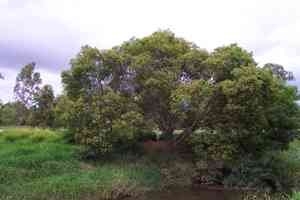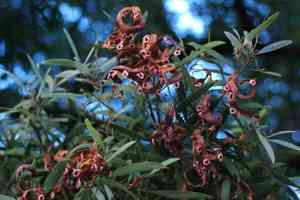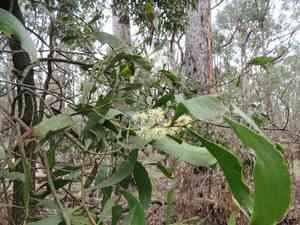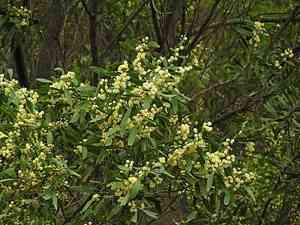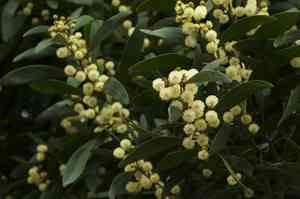
Blackwood(Acacia melanoxylon)

Blackwood (Acacia melanoxylon)

Also known as: Mudgerabah, Hickory

Acacia melanoxylon, commonly known as Blackwood, Black Wattle, and Tasmanian Blackwood, is a deciduous tree in the Legume family. Native to Australia, it has also been introduced to a limited area along the eastern coast of the United States.

Attributes of Blackwood

Lifespan
Perennial
Plant Type
Tree
Plant Height
12 m to 15 m
Spread
6 m
Leaf Color
Green
Flower Size
2.5 cm
Flower Color
Yellow White Cream

PlantJoy - Identify plants with a snap

Identify and diagnose plants, get toxicity alerts, and explore safety guides for all types of fungi.

Try for Free

Images of Blackwood

Blackwood(Acacia melanoxylon)

Quickly Identify Blackwood

1
Fast-growing tree reaching 40 feet (12 meters) with dark gray bark and vertical fissures.
2
Mid-green phyllodes 3-5 inches (7.5-12.5 cm) long, 1 inch (2.5 cm) wide, curved margin.
3
Creamy-white flowers in ball-like clusters, followed by thin, curling seed pods.
4
Thrives in full sun to light shade, well-drained soil, hardy to 15-20°F (-9 to -6°C).
5
High tolerance for heat and coastal conditions, approximate width of 20 feet (6 meters).

Scientific Classification of Blackwood

Phylum
Vascular plants
Class
Dicotyledons
Order
Fabales
Family
Legume
Genus
Acacias
Species
Blackwood

Planting and Growing of Blackwood

Care Difficulty
Easy
Watering Schedule
Every 2 days
Sunlight Requirements
Full sun
Sunshine Duration
6-10 hours
Ideal Temperature
50-77℉
Soil Type
Potting Mix, Peat Mix
Soil pH
6-7.5
Fertilizer Type
Balanced
Pruning Season
Spring, Summer
Pruning Area
Branches, Leaves
Pruning Frequency
2 times a year
Repotting Season
Spring
Pot Type
Plastic, Ceramic

water icon How to Water Blackwood?

For Acacia melanoxylon, water each application should be deep and thorough, roughly measuring around 500 ml. This amount ensures that the water penetrates the roots without standing water in the soil, catering to their deep-root system and drought tolerance.
What are the symptoms of an underwatered Blackwood?
What should I do if my Blackwood is not getting enough water?
What are the symptoms of an overwatered Blackwood?
How to save an overwatered Blackwood?
More About Watering Techniques

sunlight icon What Are the Sunlight Requirements for Blackwood?

Sunlight Requirements: Full sun, Partial sun
Duration of light: 6-8 hours
Partial to full sunlight is ideal, providing 6-8 hours of light boosts photosynthesis rates, promotes healthy growth, and enhances natural resilience to adverse environmental conditions.
What is the best location?
How to ensure adequate lighting?
Why is ideal lighting important?
More About Sunlight Requirements Techniques

temperature icon What Is the Ideal Temperature Range for Blackwood?

Ideal Temperature: 50 ~ 77℉
Acacia melanoxylon thrives best in environments where the temperature ranges from 50°F to 77°F. These conditions allow the plant to maintain optimal metabolic processes, facilitating growth and development. Maintaining this range ensures the plant remains healthy and vibrant.

soil icon What Soil is Best for Blackwood?

Soil type: Loam, Clay soil, Sandy loam
Soil PH: 6 ~ 7.5
Acacia melanoxylon thrives in well-drained soil, which prevents root rot and ensures healthy root development. Adequate drainage maintains the right moisture level, promoting robust growth. This plant prefers nutrient-rich conditions as they provide essential minerals and compounds crucial for its growth and vitality. A fertile soil enhances leaf production and overall plant health. The species benefits from soil that retains moisture without waterlogging. This ability to hold moisture supports sustained hydration, crucial during dry spells to ensure continuous growth. More About Soil

fertilize icon How to Fertilize Blackwood?

Fertilizer type: Balanced
For Acacia melanoxylon, ensure to apply fertilizers in moderation. Use a balanced fertilizer with a ratio like 10-10-10, diluting it half-strength for liquid applications to avoid burning the roots. Typically, for a mature tree, 0.5 to 1 pound of slow-release granular fertilizer annually is sufficient. More About Fertilizing Techniques

prune icon How to Prune Blackwood?

Pruning Time: Spring, Summer
Begin by gathering your tools, including sharp pruning shears, gloves, and disinfectant. Ensuring your tools are sharp minimizes harm to the plant, and disinfecting them prevents disease spread. Start pruning by removing dead or damaged branches. This encourages healthier growth and prevents the spread of disease. Cut branches at a 45-degree angle close to the main stem. Focus on thinning out the inner branches to enhance light penetration and air circulation. Shape the tree by cutting back to a healthy lateral branch or bud without over-thinning it. More About Pruning Techniques

propagate icon How to Propagate Blackwood plant?

Propagate Time: Early spring,Spring,Early summer
1
Before planting Acacia melanoxylon seeds, soak them in hot water for 24 hours. This helps soften the seed coat and promotes germination. Afterward, rinse them with cold water to ensure they are ready to be planted.
2
Plant the pre-treated seeds in seed trays filled with a well-draining potting mix. Cover them lightly with soil, maintaining a depth of about 1/4 inch. Water them gently to ensure good soil contact.
3
Select healthy, young stems approximately 6 inches in length for cuttings. Remove the lower leaves and dip the cut ends in rooting hormone to encourage root development.
More About Propagating Techniques

repot icon How to Repot Blackwood plant?

Repotting frequency: Every 2-3 years
1
Look for signs like roots emerging from the pot's drainage holes or the soil drying out quickly. These are key indicators that your Acacia melanoxylon needs more space and nourishment, usually observed during the active growth phases in spring and autumn.
2
Opt for a pot that is 1-2 inches larger in diameter than the current one. Ensure it has adequate drainage holes. A slightly larger pot prevents waterlogging, promoting proper root aeration while allowing for healthy growth.
3
Choose a well-draining mix rich in organic matter, like a cactus mix or a blend of peat, sand, and compost. This facilitates root growth and prevents water retention, crucial for avoiding root rot and ensuring plant vitality.

PlantJoy - Identify plants with a snap

Find the best spots for them to optimize their health, simply using your phone.

Try for Free

Toxicity of Blackwood

Is Blackwood toxic to humans?

The blackwood tree poses several risks to humans, primarily due to its high tannin concentration and the presence of quinones, which can irritate the skin and various tissues. Ingestion of its parts may lead to symptoms such as nausea, vomiting, abdominal pain, and diarrhea. Furthermore, handling the cut wood without proper gloves can induce rashes, while woodworkers or anyone exposed to its sawdust have reported experiencing asthma-like symptoms. If a blackwood tree is situated in your yard, particularly with small children around, it is advisable to erect a fence to keep them away from it. When it becomes necessary to prune or fell the tree, ensure you wear protective gear, gloves, and a dust mask for safety.

Is Blackwood toxic to cat?

Blackwood presents a slight toxicity risk to felines. The plant's bark, leaves, and seeds are the toxic components that could result in poisoning when ingested in significant quantities. Cats that consume these parts may suffer from physical distress, requiring urgent veterinary care. To protect the health of their cats, owners must carefully supervise their pets' access to blackwood, ensuring that these specific parts of the plant are kept out of reach. Swift medical intervention at a veterinary clinic is vital for any cat exhibiting symptoms of poisoning following exposure to blackwood.

Is Blackwood toxic to dog?

Blackwood presents a slight toxicity hazard to dogs. If canines consume large quantities of its bark, leaves, or seeds, they may be at risk of poisoning. Signs of poisoning in dogs may manifest as gastrointestinal distress, including vomiting and diarrhea, as well as possible lethargy and behavioral changes. If you believe your dog has ingested any parts of the blackwood plant, it is crucial to obtain immediate care at a veterinary clinic to safeguard your pet's health and well-being.

Identify toxic plants for your safety

Learn which plants are harmful to you and your pets, and make informed choices for a safer home!

Try for Free
WARNING
The judgment on toxicity and danger is for reference only. We DO NOT GUARANTEE any accuracy of such judgment. Therefore, you SHALL NOT rely on such judgment. It is IMPORTANT TO SEEK PROFESSIONAL ADVICE in advance when necessary.
More About Toxic Techniques