
Black wattle (Acacia mangium)
Also known as: Mangium, Brown salwood
A notable tree from the pea family is the Koa tree (Acacia koa). Known for its exquisite wood, it is commonly used in furniture making. Additionally, the Koa tree plays a significant role in reforestation efforts. When grown near the equator, this tree tends to achieve greater size compared to those cultivated in regions further away.
In This Article
Attributes of Black wattle
Lifespan
Perennial
Plant Type
Tree
Plant Height
30 m
Spread
50 cm
Leaf Color
Green
Flower Size
10 cm
Flower Color
Yellow Green
Images of Black wattle
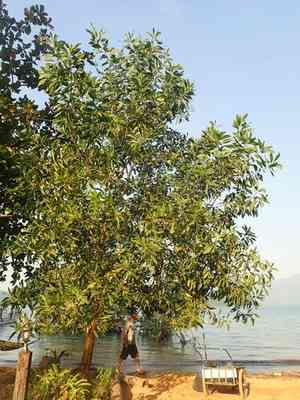
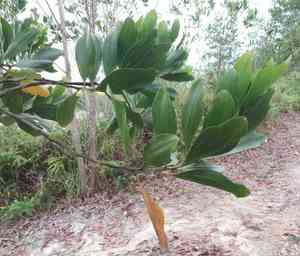
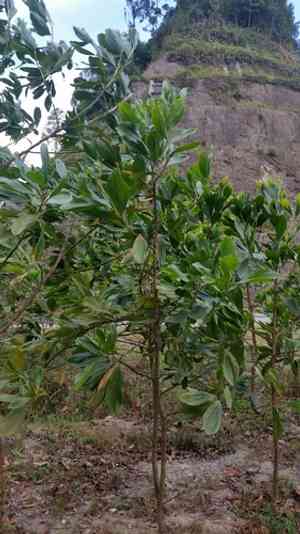
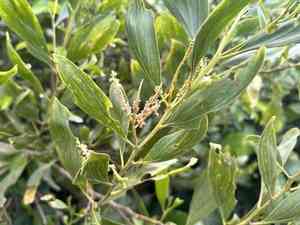
Quickly Identify Black wattle
1
Acacia mangium can be identified by its broad, flat phyllodes (a type of modified leaf), which can grow up to 30 cm long and 2-10 cm wide. The tree also has a smooth, grey to brown bark and produces small, cream-colored flowers arranged in spikes.
Scientific Classification of Black wattle
Phylum
Vascular plants
Class
Dicotyledons
Order
Fabales
Family
Legume
Genus
Acacias
Species
Black wattle
Planting and Growing of Black wattle
Care Difficulty
Easy
Watering Schedule
Every 3 days
Sunlight Requirements
Full sun
Sunshine Duration
8-12 hours
Ideal Temperature
77-86℉
Soil Type
Potting Mix, Peat Mix
Soil pH
4.5-7.5
Fertilizer Type
Balanced
Pruning Season
Spring, Summer
Pruning Area
Branches, Leaves
Pruning Frequency
Once a year
Repotting Season
Spring
Pot Type
Plastic, Terracotta
 How to Water Black wattle?
When watering Acacia mangium, aim to keep the soil consistently moist but not waterlogged. The goal is to ensure the water permeates to the root level, allowing them to absorb necessary moisture without drowning in excess water. Use about 500 ml of water each time to achieve this balance.
What are the symptoms of an underwatered Black wattle?
›
What should I do if my Black wattle is not getting enough water?
›
What are the symptoms of an overwatered Black wattle?
›
How to save an overwatered Black wattle?
›
 What Are the Sunlight Requirements for Black wattle?
For optimal health, Acacia mangium thrives best with full to partial sun exposure. This setup ensures maximum photosynthesis, promoting strong growth, vibrant foliage, and resilience. Such light exposure enhances leaf pigmentation, a marker of good plant health.
More About Sunlight Requirements Techniques→
What is the best lighting environment for Acacia mangium?
›
How can you ensure Acacia mangium gets the right amount of sunlight?
›
What benefits does Acacia mangium gain from ideal sunlight conditions?
›
 What Is the Ideal Temperature Range for Black wattle?
The ideal temperature range for Acacia mangium growth is between 77°F and 86°F. This temperature range ensures optimal metabolic reactions and physiological activities in the plant, facilitating healthy growth and robust development. Proper maintenance of this temperature range aids in maximizing photosynthesis and nutrient uptake.
 What Soil is Best for Black wattle?
Acacia mangium thrives in rich, fertile soil that supplies essential nutrients. Such soil promotes healthy growth, leading to lush foliage and robust trees that can withstand environmental stress. Ensuring good drainage prevents root rot in Acacia mangium. Well-drained soil keeps the roots healthy by preventing water from stagnating around them, which is essential for sustained growth. While the soil should be well-draining, it must also retain adequate moisture. This balance ensures Acacia mangium receives enough water without drowning, aiding in its growth and resilience.
 How to Fertilize Black wattle?
For Acacia mangium, the application of fertilizers should be moderate; typically, around 100-150 grams of NPK 3:1:2 ratio per plant annually is recommended. This ensures the plant gets enough nutrients without overwhelming it.
 How to Prune Black wattle?
First, locate and prune any dead or diseased branches to prevent potential pest infestation and promote healthier growth. Focus on creating a balanced canopy by trimming overgrown branches, allowing light to penetrate through the foliage and encouraging fuller growth. Remove any suckers growing from the base or watersprouts along the branches. These can draw nutrients away from the main branches.
More About Pruning Techniques→
 How to Propagate Black wattle plant?
1
To successfully propagate Acacia mangium by seeds, start with scarification. This involves lightly sanding or nicking the seed coat to aid water penetration. You can also soak the seeds in hot water overnight.
2
Once the seeds are prepared, sow them in a mixture of sand and potting soil. Ensure they are spaced adequately to avoid competition and cover them lightly with soil.
3
Select healthy, non-flowering stems from the parent plant. Cut segments about 10-15 cm in length and remove the lower leaves. Dip the cut end in rooting hormone to enhance root development.
 How to Repot Black wattle plant?
1
Look for signs like roots coming out of drainage holes, soil drying out quickly, or stunted growth. These indicate it's time to repot Acacia mangium. Typically, repotting in spring or summer allows the plant to recover well due to its active growth period.
2
Select a pot that is 1-2 inches larger in diameter than the current one, with adequate drainage holes. A slightly larger pot prevents root bound and encourages healthy growth, while drainage holes prevent water logging and root rot.
3
Opt for a well-draining potting mix, such as a combination of peat, perlite, and pine bark. This type of soil allows for good aeration and prevents issues related to overwatering, making it ideal for Acacia mangium.



