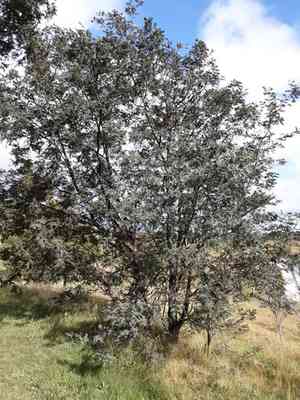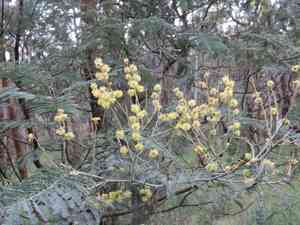
Silver wattle(Acacia dealbata)

Silver wattle (Acacia dealbata)

Also known as: Wattle Bark, Blue wattle, Mimosa

The silver wattle (Acacia dealbata) is a rapidly growing evergreen that can reach heights of up to 15 meters. It features finely divided, blue-green to silvery-gray leaves, offering year-round visual appeal. The tree produces vibrant yellow, spherical flower clusters, each consisting of 13–42 small flowers, typically blooming from late winter to early spring.

Attributes of Silver wattle

Lifespan
Perennial
Plant Type
Tree, Shrub
Plant Height
30 m
Spread
12 m to 15 m
Leaf Color
Green Silver Gray
Flower Size
6 mm to 7 mm
Flower Color
Yellow

ForwardPlant - Identify plants with a snap

Identify and diagnose plants, get toxicity alerts, and explore safety guides for all types of fungi.

Try for Free

Images of Silver wattle

Silver wattle(Acacia dealbata)

Quickly Identify Silver wattle

1
Identify Acacia dealbata by its bipinnate, feathery leaves that have a silvery-grey hue. The tree produces fragrant, spherical clusters of small, bright yellow flowers. It also has smooth, dark green bark that can vary in texture with age.

Scientific Classification of Silver wattle

Phylum
Vascular plants
Class
Dicotyledons
Order
Fabales
Family
Legume
Genus
Acacias
Species
Silver wattle

Planting and Growing of Silver wattle

Care Difficulty
Easy
Watering Schedule
Every 3 days
Sunlight Requirements
Full sun
Sunshine Duration
4-8 hours
Ideal Temperature
60-75℉
Soil Type
Potting Mix, Peat Mix
Soil pH
6-7.5
Fertilizer Type
Balanced
Pruning Season
Spring, Summer
Pruning Area
Branches, Leaves
Pruning Frequency
2 times a year
Repotting Season
Spring
Pot Type
Plastic, Ceramic

water icon How to Water Silver wattle?

For Acacia dealbata, ensure that the soil is moist but not waterlogged. Watering about 500 ml each time is generally sufficient, aiming for the soil to be evenly moist. The goal is to provide enough water to reach the roots without causing standing water or saturation.
What are the symptoms of an underwatered Silver wattle?
What should I do if my Silver wattle is not getting enough water?
What are the symptoms of an overwatered Silver wattle?
How to save an overwatered Silver wattle?
More About Watering Techniques

sunlight icon What Are the Sunlight Requirements for Silver wattle?

Sunlight Requirements: Full sun
Duration of light: 6 to 8 hours daily
Acacia dealbata thrives best in open, sunlit environments. Ideal exposure involves sustaining full sun conditions, providing about six to eight hours of direct sunlight daily. This light profile supports healthy growth, robust foliage, and prolific flowering, enhancing landscape beauty.
What is the best lighting condition for Acacia dealbata?
How can you achieve ideal lighting conditions for Acacia dealbata?
What are the benefits of ideal lighting for Acacia dealbata?
More About Sunlight Requirements Techniques

temperature icon What Is the Ideal Temperature Range for Silver wattle?

Ideal Temperature: 60 ~ 75℉
For healthy growth, Acacia dealbata thrives in a temperature range of 60°F to 75°F. This range supports optimal photosynthesis, nutrient absorption, and enzymatic functions. Providing this temperature range ensures robust foliage, bright flowers, and overall plant vigor.

soil icon What Soil is Best for Silver wattle?

Soil type: Sandy soil, Loam
Soil PH: 6 ~ 7.5
Acacia dealbata thrives best in well-drained soil conditions. This requirement is essential because it prevents water logging, which can result in root rot and various other health issues. Proper drainage ensures that the plant receives adequate oxygen at the root level, which is vital for its growth and nutrient uptake. The plant benefits considerably from soil enriched with organic matter, such as compost. This type of soil provides the essential nutrients required for robust growth and flowering. It also helps in maintaining the soil structure, enhancing aeration and fostering a strong root system. Acacia dealbata does not require excessively fertile soil. Moderate fertility ensures the plant doesn't grow too vigorously, which can make it unstable in windy conditions. A balanced nutrient profile supports sustained growth over time without compromising its structural integrity. More About Soil

fertilize icon How to Fertilize Silver wattle?

Fertilizer type: Balanced
When fertilizing Acacia dealbata, it's crucial to apply a balanced amount that supports its rapid growth without causing damage. For liquid fertilizers, follow label instructions, typically diluting to half strength. For solid fertilizers, use approximately a handful per square meter, ensuring even distribution around the plant base. More About Fertilizing Techniques

prune icon How to Prune Silver wattle?

Pruning Time: Spring, Summer
Start by cutting away any dead or damaged branches using sharp pruners. Focus on the outermost stems to shape the tree into a pleasing silhouette. Ensure to make cuts at a slight angle close to the main branch to encourage healing and new growth. When shaping, aim for an open structure that allows light and air to penetrate the center. Remove crossing branches and thin out crowded areas to maintain a balanced structure. More About Pruning Techniques

propagate icon How to Propagate Silver wattle plant?

Propagate Time: Spring, Early spring
1
Start by soaking the seeds in warm water for 24 hours. This process is known as scarification and softens the seed coat, enhancing germination rates.
2
For cutting propagation, select healthy stems from the parent plant. Cut below a leaf node to ensure a higher success rate and remove lower leaves to reduce moisture loss.
3
Plant the prepared seeds or cuttings in a well-draining potting mix. Ensure the medium is sterile to prevent diseases. Water lightly to settle the soil around the seeds or cuttings.
More About Propagating Techniques

repot icon How to Repot Silver wattle plant?

Repotting frequency: Every 2-3 years
1
Acacia dealbata needs repotting when roots outgrow the current pot or when growth slows significantly. Spring is ideal, giving the plant a recovery period during the growing season.
2
Choose a pot just slightly larger than the previous one to give roots space without overwhelming them. A pot with adequate drainage holes prevents waterlogging, which can harm roots.
3
Opt for a well-draining soil mix rich in organic matter. This encourages robust root growth and prevents water retention, reducing the risk of root rot.

ForwardPlant - Identify plants with a snap

Find the best spots for them to optimize their health, simply using your phone.

Try for Free

Toxicity of Silver wattle

Is Silver wattle toxic to humans?

Silver wattle has the potential to be mildly toxic if consumed or handled by humans, similar to various other species within its genus. The entire plant may possess toxic elements attributed to alkaloids prevalent in numerous *Acacia* species. As reported by certain sources, contact with or ingestion of the plant might trigger irritation in the skin or gastrointestinal tract.

Identify toxic plants for your safety

Learn which plants are harmful to you and your pets, and make informed choices for a safer home!

Try for Free
WARNING
The judgment on toxicity and danger is for reference only. We DO NOT GUARANTEE any accuracy of such judgment. Therefore, you SHALL NOT rely on such judgment. It is IMPORTANT TO SEEK PROFESSIONAL ADVICE in advance when necessary.
More About Toxic Techniques