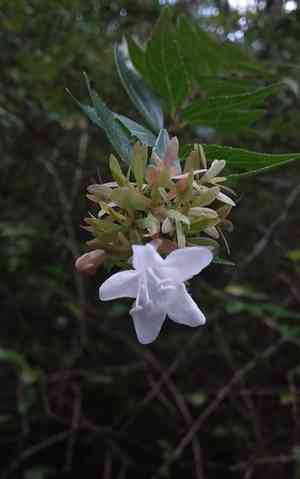
Abelia × grandiflora (Abelia × grandiflora)
Also known as: Glossy Abelia
Abelia × grandiflora is a cross between A. chinensis and A. uniflora. It is a rounded, spreading, multi-stemmed shrub in the honeysuckle family. Noteworthy characteristics include its glossy dark green leaves, pink buds, and fragrant white flowers.
In This Article
Attributes of Abelia × grandiflora
Lifespan
Perennial
Plant Height
1 to 1.8 meters
Spread
1 to 1.8 meters
Leaf Color
Dark Green
Flower Size
2 cm
Flower Color
White with pink
Images of Abelia × grandiflora

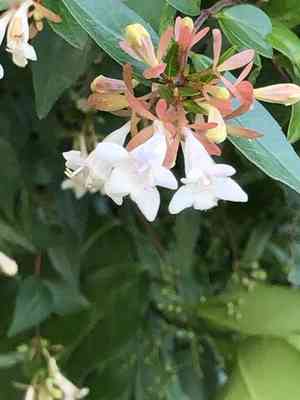
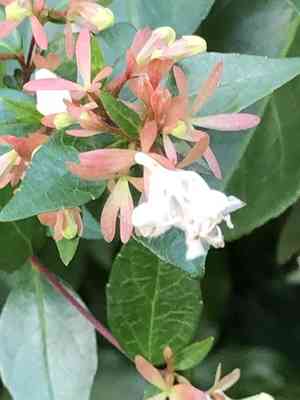
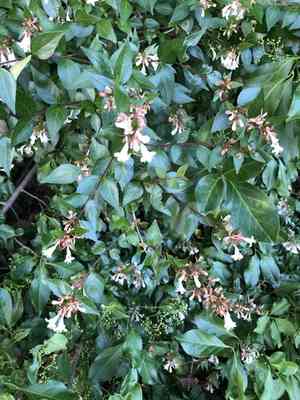
Quickly Identify Abelia × grandiflora
1
Look for somewhat arching branches that grip the ground, finely serrated, semi-evergreen leaves and tiny, red sepals that persist into winter. It has pinkish-tinged blooms in late spring into autumn.
Scientific Classification of Abelia × grandiflora
Phylum
Tracheophyta
Class
Magnoliopsida
Order
Dipsacales
Family
Caprifoliaceae
Genus
Abelia
Species
grandiflora
Planting and Growing of Abelia × grandiflora
Care Difficulty
Easy
Watering Schedule
Every 4 days
Sunlight Requirements
Full sun
Sunshine Duration
6-12 hours
Ideal Temperature
60-75℉
Soil Type
Potting Mix, Peat Mix
Soil pH
6.5-7.5
Fertilizer Type
Balanced
Pruning Season
Spring, Summer
Pruning Area
Branches, Leaves
Pruning Frequency
2 times a year
Repotting Season
Spring
Pot Type
Plastic, Ceramic
 How to Water Abelia × grandiflora?
Abelia × grandiflora prefers consistently moist soil but not waterlogged conditions. Water thoroughly, ensuring the moisture reaches the root zone but avoid standing water. A general guide is 500 ml per watering.
What are the symptoms of an underwatered Abelia × grandiflora?
›
What should I do if my Abelia × grandiflora is not getting enough water?
›
What are the symptoms of an overwatered Abelia × grandiflora?
›
How to save an overwatered Abelia × grandiflora?
›
 What Are the Sunlight Requirements for Abelia × grandiflora?
Partial to full sun exposure ensures maximum growth and bloom performance while preventing foliage damage. Ideal lighting optimizes photosynthesis, fueling its stunning floral displays and healthy growth.
Where should I place my Abelia × grandiflora?
›
How to ensure Abelia gets the right light?
›
Benefits of ideal lighting on Abelia?
›
 What Is the Ideal Temperature Range for Abelia × grandiflora?
For optimal growth, Abelia × grandiflora thrives well within the temperature range of 60°F to 75°F. This ensures robust flowering and foliage development. Maintaining this temperature promotes healthy metabolic processes in the plant, leading to vibrant color and overall plant vigor.
 What Soil is Best for Abelia × grandiflora?
Loamy soil is ideal for Abelia × grandiflora, as it retains enough moisture while providing excellent drainage. The nutrient richness promotes healthy growth and vibrant flowers, enhancing the aesthetic appeal of the plant. Sandy loam is beneficial for this plant as it ensures excess water drains away easily, preventing root rot. Quick drainage and adequate aeration help in the optimal health and longevity of Abelia × grandiflora. A pH range of 6.5 to 7.5 is ideal. This range ensures that the nutrients are readily available to the plant, supporting lush growth and optimal flowering performance throughout the growing season.
 How to Fertilize Abelia × grandiflora?
When fertilizing Abelia × grandiflora, it's important to apply a balanced fertilizer, typically a 10-10-10 ratio. For liquid fertilizers, use about half a teaspoon per gallon of water, ensuring an even distribution. For granular slow-release fertilizers, around 1 tablespoon for small plants and about 2 tablespoons for larger, established shrubs would suffice. Always read product instructions for specific dosages.
 How to Prune Abelia × grandiflora?
Begin by removing any dead or damaged branches to improve air circulation and light penetration. Next, assess the overall shape and size of the shrub. To create a compact form, selectively cut back branches that protrude beyond the desired shape, focusing on cutting just above a leaf node to encourage new growth. Pruning the stems back by about one-third in early spring before new growth begins can help stimulate the production of lateral shoots that will bear flowers. This technique also maintains a dense canopy and increases the number of blooms during the flowering season.
More About Pruning Techniques→
 How to Propagate Abelia × grandiflora plant?
1
Choose semi-hardwood cuttings from healthy, disease-free plants. The ideal cutting should be about 10-15 cm long with at least two nodes. This ensures a high chance of rooting success.
2
Dip the freshly cut end of the cutting into rooting hormone powder or gel. Shake off any excess before planting. This step promotes faster root initiation and growth.
3
Plant the treated cuttings in well-draining potting mix, burying them one-third deep. Space the cuttings adequately to allow airflow and prevent the development of mold or disease.
 How to Repot Abelia × grandiflora plant?
1
Abelia × grandiflora shows signs that it's time to repot when roots start coming out of the drainage holes, or if the plant seems stunted in growth. Ideally, spring or autumn is the best time to transfer it to a new pot as these seasons offer optimal conditions for recovery and growth.
2
Select a pot that is one size larger than the current one. It should have ample drainage holes to prevent waterlogging, which promotes root rot. This will provide enough room for root expansion and a stable environment, ensuring both plant health and robust growth.
3
Opt for a well-draining potting mix that offers adequate aeration and nutrient availability. Such soil prevents soggy roots and thereby avoids root rot, while supporting beautifully lush growth with optimal nutrient uptake for your Abelia × grandiflora.



