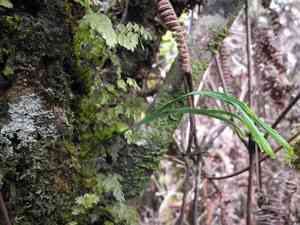
Flatfork fern (Psilotum complanatum)
Also known as: Whisk Fern
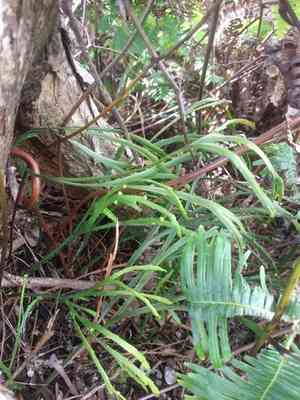
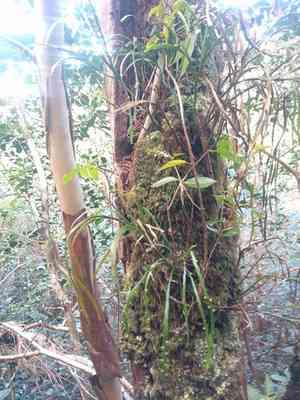
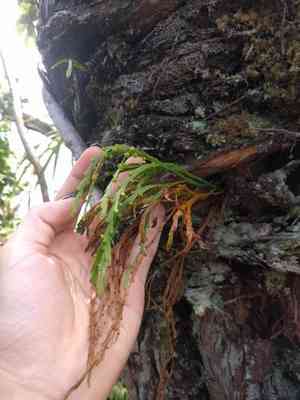
The flatfork fern is an ancient vascular plant with simple, leafless green stems that branch dichotomously. It flourishes in shaded, humid environments such as forest floors and stream banks. The plant's rhizoids, which resemble roots, play a crucial role by firmly anchoring it to the soil and facilitating the uptake of water and nutrients. Unlike modern plants, the flatfork fern lacks true leaves and roots, reflecting its primitive origins. It reproduces via spores, highlighting its connection to early terrestrial ecosystems.
In This Article
Attributes of Flatfork fern
Lifespan
Perennial
Plant Type
Fern
Plant Height
Up to 40 centimeters
Spread
Not applicable, no conventional crowns
Leaf Color
No true leaves, green photosynthetic stems
Flower Size
Does not produce flowers
Flower Color
Not applicable
Images of Flatfork fern
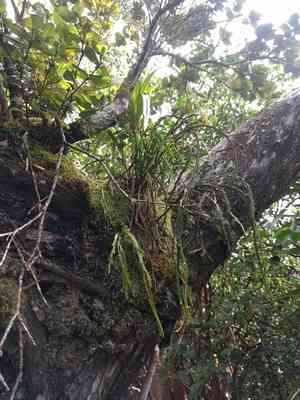
Quickly Identify Flatfork fern
1
Psilotum complanatum can be identified by its dichotomously branching green stems, lack of leaves, and the presence of small, yellow, spherical sporangia along the stems.
Scientific Classification of Flatfork fern
Phylum
Vascular plants
Class
Psilotopsida
Order
Psilotales
Family
Whisk-fern
Genus
Whisk ferns
Species
Flatfork fern
Planting and Growing of Flatfork fern
Care Difficulty
Easy
Watering Schedule
Every 2 days
Sunlight Requirements
Full shade
Sunshine Duration
4-6 hours
Ideal Temperature
68-77℉
Soil Type
Potting Mix, Peat Mix
Soil pH
6.5-7.5
Fertilizer Type
Balanced
Pruning Season
Spring, Summer
Pruning Area
Branches, Leaves
Pruning Frequency
2 times a year
Repotting Season
Spring
Pot Type
Plastic, Ceramic
 How to Water Flatfork fern?
For Psilotum complanatum, you should aim for a moderate level of moisture. Watering with around 200 ml each time ensures that the soil is evenly moist but never soggy. It's important to let the top layer dry slightly before watering again.
What are the symptoms of an underwatered Flatfork fern?
›
What should I do if my Flatfork fern is not getting enough water?
›
What are the symptoms of an overwatered Flatfork fern?
›
How to save an overwatered Flatfork fern?
›
 What Are the Sunlight Requirements for Flatfork fern?
Partial shade provides optimal growing conditions for Psilotum complanatum, resulting in healthy growth patterns, vibrant foliage, and reduced risk of stress-related issues.
What is the optimal light intensity?
›
How do I ensure it gets the right amount of light?
›
What are the benefits of providing ideal light?
›
 What Is the Ideal Temperature Range for Flatfork fern?
Psilotum complanatum, commonly known as a whisk fern, thrives best within a temperature range of 68°F to 77°F. This range ensures optimal growth and metabolic processes, allowing the plant to maintain its health and vitality. Temperatures within this range can stimulate effective photosynthesis while preventing stress factors that can arise from excessively high or low temperatures.
 What Soil is Best for Flatfork fern?
Psilotum complanatum thrives best in well-drained soil conditions. The roots of these plants are susceptible to rot if soil retains too much water, so ensuring good drainage protects the plant's root system. Although not overly demanding, Psilotum complanatum benefits from a soil rich in organic matter. This nutrient-rich environment supports healthy growth and more robust fronds, enhancing the plant's overall vitality. While drainage is critical, the soil must also retain some moisture to prevent the plant from drying out completely. A balanced moisture level supports steady growth and reduces stress on the plant.
 How to Fertilize Flatfork fern?
For Psilotum complanatum, applying a diluted liquid fertilizer at half strength is recommended. This approach ensures the plant receives adequate nutrients without the risk of over-fertilization, which can damage its delicate rhizoid structure.
 How to Prune Flatfork fern?
First, identify the areas that need pruning. Look for dead, diseased, or damaged stems. Also, check for any stems that are overly long or unsightly. Using sharp, sterilized pruning tools, make clean cuts at a slight angle to promote proper healing. Take care not to damage the surrounding healthy tissue. After pruning, ensure that all plant debris is cleaned up and disposed of appropriately to prevent attracting pests or spreading disease.
More About Pruning Techniques→
 How to Propagate Flatfork fern plant?
1
For seed propagation, prepare a suitable medium by mixing peat moss with perlite to create a well-draining and nutrient-retentive base. This will provide the seeds with adequate moisture, essential for germination and initial growth phases.
2
Scatter Psilotum complanatum seeds thinly on the prepared medium. Cover them lightly with the same medium or a fine layer of horticultural sand, which helps maintain moisture while ensuring seeds receive enough light to trigger germination processes.
3
For tissue culture, begin by cutting small sections of sterile plant tissue. Place these sections onto a nutrient-rich agar medium. Seal the culture vessel, maintaining a temperature of around 25°C, which is optimal for callus and root formation.
 How to Repot Flatfork fern plant?
1
Psilotum complanatum typically signals a need for repotting when you see roots emerging from the pot's drainage holes or when growth significantly slows. These signs indicate that the plant has become root-bound and needs more space to thrive. Choosing the right time, mainly in spring or early summer, ensures that the plant can recover quickly and continue its growth in its new environment.
2
Select a pot that is one size larger than the current one to give the roots room to grow, but not so large that excess soil retains too much moisture. Ensure the pot has adequate drainage holes, which prevents waterlogging – a major factor in root rot. A new pot promotes healthy air circulation around the roots, essential for Psilotum complanatum's well-being.
3
Opt for a well-draining, sandy mix to mimic the natural epiphytic environment of Psilotum complanatum. A soil mix designed for orchids can work well, ensuring it provides enough aeration and quick drainage, which helps prevent the common issue of root rot these plants face when overwatered.



