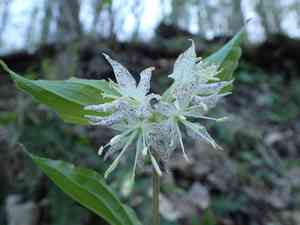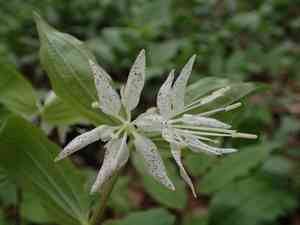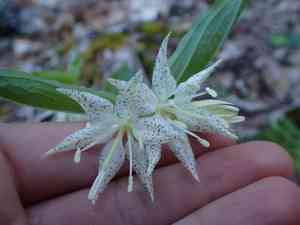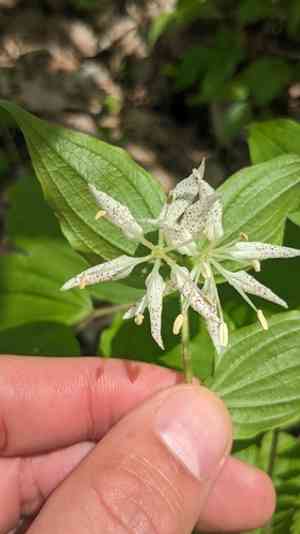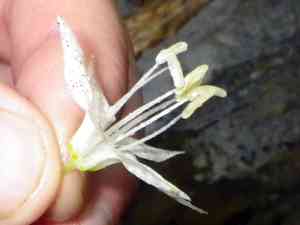
Yellow mandarin(Prosartes maculata)

Yellow mandarin (Prosartes maculata)

Also known as: Nodding mandarin

Yellow mandarin (Prosartes lanuginosa) is a perennial herb that thrives in woodland environments. It is characterized by:

1. **Leaves:** Broad, ovate leaves that efficiently capture sunlight, even under the dense forest canopy.
2. **Flowers:** Subtle, yellow, bell-shaped flowers that attract specialized pollinators such as bees.
3. **Camouflage:** Speckled foliage that helps it blend into the forest floor, offering protection from herbivores.
4. **Fruit:** Produces orange-red berries that facilitate seed dispersal through animals.
5. **Growth Habit:** Rhizomatous roots that allow for both stability and spreading in the forest soil.

These features collectively enhance its ability to thrive in shaded, competitive woodland environments by optimizing light absorption, ensuring pollination, providing camouflage, and promoting effective seed dispersal and vegetative growth.

Attributes of Yellow mandarin

Lifespan
Perennial
Plant Type
Herb
Plant Height
30-60 cm
Spread
N/A
Leaf Color
Green
Flower Size
2.5 cm to 8 cm
Flower Color
White

ForwardPlant - Identify plants with a snap

Identify and diagnose plants, get toxicity alerts, and explore safety guides for all types of fungi.

Try for Free

Images of Yellow mandarin

Yellow mandarin(Prosartes maculata)

Quickly Identify Yellow mandarin

1
Nodding, bell-shaped flowers with greenish-white coloring and distinctive purple spotting.
2
Distinctive 3-lobed berries in pale straw color, housing 6 to 10 seeds.
3
Stem with reddish hue, fine hairs, and occasional branching up to 1.5 feet (45 cm).
4
Leaves 2-4 inches (5-10 cm) long with parallel veins and stalkless attachment.
5
Diminutive herbaceous plant not exceeding 18 inches (45 cm) in height, with dappled ovate leaves.

Scientific Classification of Yellow mandarin

Phylum
Vascular plants
Class
Monocotyledons
Order
Liliales
Family
Lily
Genus
Fairybells
Species
Yellow mandarin

Planting and Growing of Yellow mandarin

Care Difficulty
Moderate
Watering Schedule
Every 2 days
Sunlight Requirements
Partial sun
Sunshine Duration
6-10 hours
Ideal Temperature
60-75℉
Soil Type
Potting Mix, Peat Mix
Soil pH
5.5-7
Fertilizer Type
Balanced
Pruning Season
Spring, Summer
Pruning Area
Branches, Leaves
Pruning Frequency
2 times a year
Repotting Season
Spring
Pot Type
Plastic, Ceramic

water icon How to Water Yellow mandarin?

Prosartes maculata prefers moist soil that's not waterlogged. Watering should saturate the soil to a depth of about one inch, allowing the roots to access moisture without drowning the plant. A consistent balance ensures healthy growth.
What are the symptoms of an underwatered Yellow mandarin?
What should I do if my Yellow mandarin is not getting enough water?
What are the symptoms of an overwatered Yellow mandarin?
How to save an overwatered Yellow mandarin?

sunlight icon What Are the Sunlight Requirements for Yellow mandarin?

Sunlight Requirements: Partial sun, Full shade
Duration of light: 3 to 5 hours
Partial sun or full shade allows Prosartes maculata to maintain optimal photosynthetic activity, promoting lush foliage and healthy root development, maximizing its aesthetic and ecological roles.
Optimal Sun Exposure
Solution for Ideal Lighting
Benefits of Ideal Lighting

temperature icon What Is the Ideal Temperature Range for Yellow mandarin?

Ideal Temperature: 60 ~ 75℉
Prosartes maculata thrives in temperatures ranging from 60°F to 75°F. This range ensures optimal growth and health for the plant, as it aligns with the conditions found in its native habitat, the forest floors of North America. Maintaining this range helps to promote robust foliage and successful flowering.

soil icon What Soil is Best for Yellow mandarin?

Soil type: Loam, Sandy loam, Acidic soil
Soil PH: 5.5 ~ 7
Prosartes maculata thrives in well-drained soil that prevents waterlogging. This allows the roots to breathe and reduces the risk of root rot, ensuring the plant remains healthy and vibrant. While well-drained, the soil should still retain enough moisture to support the plant's growth. This ensures a steady water supply, especially during dry spells, promoting robust and sustained development. The soil should be rich in nutrients to support the vibrant growth of Prosartes maculata. This fosters healthy foliage and encourages blooming, maximizing the plant’s overall vitality.

fertilize icon How to Fertilize Yellow mandarin?

Fertilizer type: Balanced
For Prosartes maculata, it is crucial to apply fertilizer in moderation. A liquid fertilizer should be diluted to half of its recommended strength to prevent root burn. One application typically ranges between 1/4 to 1/2 teaspoon of concentrated fertilizer per gallon of water to ensure a thorough and gentle feeding. Follow with deep watering to aid absorption.

prune icon How to Prune Yellow mandarin?

Pruning Time: Spring, Summer
Begin by identifying any stems that appear old or damaged. These can often be distinguished by their lack of foliage or discolored appearance. Carefully remove them at the base. Check for dead stems, which will not bear healthy foliage. Cut these away to the ground level to encourage the growth of new shoots and improve air circulation. Lightly trim the healthy branches to maintain the plant's natural bushy shape. Avoid cutting the tips of new green growth unless necessary, as this can inhibit blooming. More About Pruning Techniques

propagate icon How to Propagate Yellow mandarin plant?

Propagate Time: Spring, Early summer
1
Begin by collecting mature seeds from the plant, which should be dark and dry. Clean and store them in a cool, dry place until ready for sowing. When preparing for sowing, soak the seeds in warm water for 24 hours to soften their outer coat, which encourages better germination.
2
Division propagation involves separating the plant into smaller sections during its dormant phase. Carefully excavate the plant using a garden fork, ensuring minimal root damage. Gently separate the roots into smaller clumps, each with a few buds and roots, and replant them in suitable soil.
3
Fill seed trays with a good quality seed compost and plant the seeds at the depth suggested for the species. Maintain a consistent moisture level without overwatering and ensure the seeds receive ample indirect light, promoting healthy germination.
More About Propagating Techniques

repot icon How to Repot Yellow mandarin plant?

Repotting frequency: Every 2-3 years
1
Repotting Prosartes maculata should be considered when the plant shows signs such as roots sprouting at the drainage holes or soil that dries out too quickly. Additionally, if growth seems stunted or leaves start yellowing, it indicates it's time for a new pot with fresh soil.
2
Selecting a pot for your Prosartes maculata requires careful consideration. Choose one that is only a little larger than the current pot, to avoid overwatering issues. Pots with drainage holes are imperative to prevent root rot by allowing excess water to escape, thus keeping the root system healthy.
3
Opt for a well-draining potting mix to ensure adequate air flow to the roots and to mimic their natural habitat. Soil that retains some moisture but doesn’t stay waterlogged is ideal. This type of soil supports healthy growth and helps to avoid problems such as root rot.

ForwardPlant - Identify plants with a snap

Find the best spots for them to optimize their health, simply using your phone.

Try for Free

Toxicity

Ingestion

Identify toxic plants for your safety

Learn which plants are harmful to you and your pets, and make informed choices for a safer home!

Try for Free
WARNING
The judgment on toxicity and danger is for reference only. We DO NOT GUARANTEE any accuracy of such judgment. Therefore, you SHALL NOT rely on such judgment. It is IMPORTANT TO SEEK PROFESSIONAL ADVICE in advance when necessary.