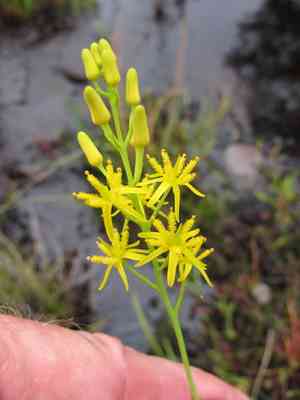
Yellow asphodel (Narthecium americanum)
Also known as: Bog-Asphodel
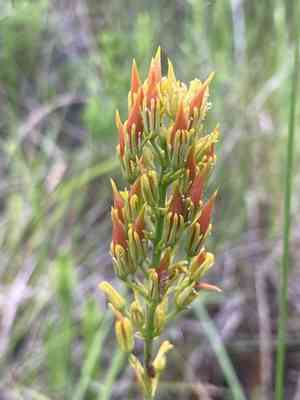
The plant features slender, linear leaves that can reach up to 20 centimeters in length and are only a few millimeters wide near the stem's base. Higher up on the stem, the leaves become smaller. The plant produces a compact cluster of yellow flowers that bloom during the summer. The fruit is a slightly elongated, papery capsule, approximately one centimeter in length, and it houses yellow seeds.
In This Article
Attributes of Yellow asphodel
Lifespan
Perennial
Plant Type
Herb
Plant Height
30-60 cm
Spread
N/A
Leaf Color
Green
Flower Size
1-2 cm
Flower Color
Yellow
Images of Yellow asphodel
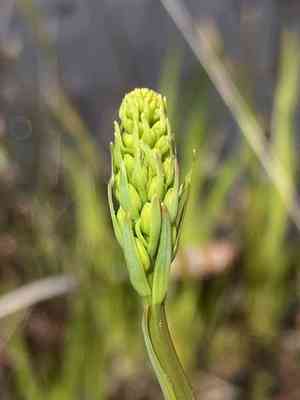
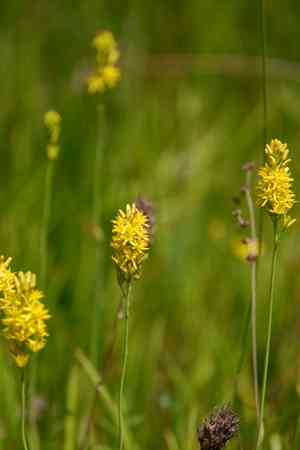
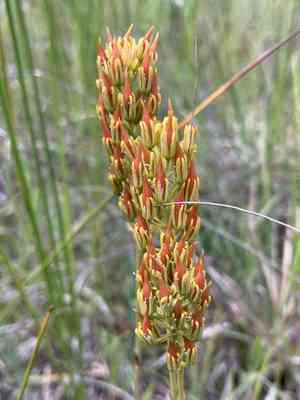
Quickly Identify Yellow asphodel
1
This plant can be identified by its bright yellow star-shaped flowers that bloom in mid to late summer and its grass-like leaves. It often has a reddish tinge at the base of the stems.
Scientific Classification of Yellow asphodel
Phylum
Vascular plants
Class
Monocotyledons
Order
Dioscoreales
Family
Bog asphodel
Genus
Asphodel
Species
Yellow asphodel
Planting and Growing of Yellow asphodel
Care Difficulty
Moderate
Watering Schedule
Every 2 days
Sunlight Requirements
Full sun
Sunshine Duration
4-8 hours
Ideal Temperature
60-75℉
Soil Type
Potting Mix, Peat Mix
Soil pH
4.5-5.5
Fertilizer Type
Balanced
Pruning Season
Spring, Summer
Pruning Area
Branches, Leaves
Pruning Frequency
2 times a year
Repotting Season
Spring
Pot Type
Plastic, Ceramic
 How to Water Yellow asphodel?
For Narthecium americanum, water with around 500 ml of water each time, ensuring the soil remains moist but not waterlogged. This plant thrives in wetland conditions, so the water should thoroughly saturate the soil without leaving standing water for prolonged periods.
What are the symptoms of an underwatered Yellow asphodel?
›
What should I do if my Yellow asphodel is not getting enough water?
›
What are the symptoms of an overwatered Yellow asphodel?
›
How to save an overwatered Yellow asphodel?
›
 What Are the Sunlight Requirements for Yellow asphodel?
Narthecium americanum thrives under full to partial sunlight, benefiting from 4-8 hours daily. Ideal light enhances growth, flowering, and photosynthesis efficiency, ensuring a robust and vibrant plant.
What type of sunlight does Narthecium americanum prefer?
›
How to achieve ideal light conditions for Narthecium americanum?
›
What benefits does Narthecium americanum get from ideal lighting?
›
 What Is the Ideal Temperature Range for Yellow asphodel?
Narthecium americanum thrives best when grown in temperatures between 60°F and 75°F. This range provides the plant with the warmth it needs to perform essential physiological processes efficiently. Consistent temperatures within this range promote healthy growth, lush foliage, and vibrant flowering.
 What Soil is Best for Yellow asphodel?
Narthecium americanum thrives in consistently moist environments. Adequate moisture retention in soil is crucial to mimicking its natural wetland and boggy habitats, ensuring healthy growth and vibrant foliage. Given its preference for nutrient-dense environments, the soil should provide ample nutrients to support robust plant health. Regular addition of organic matter can help fulfill this requirement. Proper drainage is essential to prevent root rot, a common issue in wet-loving plants like Narthecium americanum. Sandy soil provides the necessary drainage while maintaining some moisture.
 How to Fertilize Yellow asphodel?
For Narthecium americanum, it's crucial to provide a balanced amount of nutrients without overloading the plant. Typically, a dilution of half the recommended amount on the fertilizer package for liquid fertilizers is effective. For solid fertilizers, a light layer on the soil surface suffices.
 How to Prune Yellow asphodel?
Begin by sterilizing your pruning shears to prevent the spread of disease. Focus on removing any dead or damaged foliage to improve air circulation and access to sunlight. Carefully trim the plant to shape, cutting back to a healthy leaf node to encourage robust new growth. Ensure that you maintain the plant's natural form while removing excess growth that may lead to crowding.
 How to Propagate Yellow asphodel plant?
1
Harvesting seeds from mature Narthecium americanum involves waiting until the seed capsules are dry and brown. Carefully collect and store them in a cool, dry place until ready for sowing.
2
For starting seeds, prepare a well-drained soil mix that retains moisture but does not become waterlogged. A mix of peat moss and perlite works well, providing the aeration that seeds need.
3
In spring or early autumn, dig up mature plants with a garden fork. Gently separate the clumps and replant them immediately, ensuring each division has a healthy root system.
 How to Repot Yellow asphodel plant?
1
An appropriate time to repot Narthecium americanum is when the roots start to outgrow their current container, or you notice that the plant's growth has noticeably slowed. Often, these signals appear after a couple of years in the same pot, especially if the plant shows yellowing leaves or signs of waterlogging.
2
Choose a pot that is just one size larger than the current one to avoid excessive space, which can lead to water retention and root rot. A pot with drainage holes is crucial as it allows excess water to drain away, helping to maintain the well-draining condition Narthecium americanum prefers.
3
Opt for sandy, acidic, and well-draining soil when repotting Narthecium americanum. This type of soil mirrors the plant's natural habitat and ensures that water does not accumulate around the roots, preventing rot and promoting ideal growth conditions.
Toxicity
Ingestion
WARNING
The judgment on toxicity and danger is for reference only. We DO NOT GUARANTEE any accuracy of such judgment. Therefore, you SHALL NOT rely on such judgment. It is IMPORTANT TO SEEK PROFESSIONAL ADVICE in advance when necessary.
Learn More About Yellow asphodel Diseases
Anthracnose
Bacterial Leaf Spot
Bacterial Soft Rot
Bacterial Wilt
Crown Gall
Cyst Nematode
Damping-off
Downy Mildew
Fusarium Wilt
Gray Mold
Leaf Spot
Mosaic
Powdery Mildew
Root Rot
Root-knot Nematode
Rusts
Sooty Mold
White Mold
Chemical Injury
Drought Stress
Nutrient Deficiency
Nutrient Toxicity
Spider Mites
Temperature Stress
Thrips Damage



