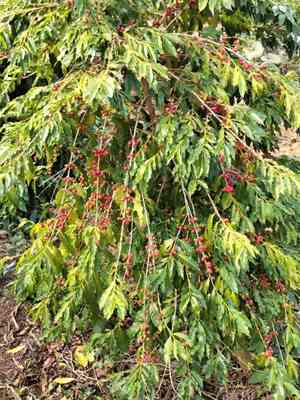
Coffee (Coffea) (Coffea)
Also known as: Coffee Plant, Coffee Tree
Coffee is derived from a relatively large genus of tropical and subtropical shrubs and small trees. Despite the variety, nearly all commercial coffee comes from the seeds, or "beans," of only a few species. The beverage's worldwide popularity is largely due to its caffeine content, which provides a stimulating effect. Interestingly, caffeine originally evolved in these plants as a defense mechanism against insect herbivores.
In This Article
Attributes of Coffee (Coffea)
Lifespan
Perennial
Plant Height
1.5 m
Spread
1 m
Leaf Color
Dark green
Flower Size
1-2 cm
Flower Color
White
Images of Coffee (Coffea)
Quickly Identify Coffee (Coffea)
1
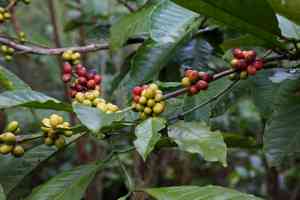
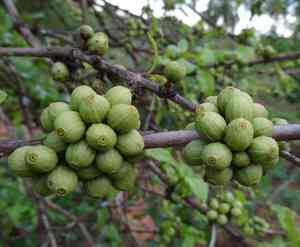
Coffea plants can be identified by their glossy, dark green leaves and small, white, fragrant flowers. The berries, which contain the coffee beans, start green and turn red or purple when ripe.
Scientific Classification of Coffee (Coffea)
Phylum
Magnoliophyta
Class
Magnoliopsida
Order
Gentianales
Family
Rubiaceae
Genus
Coffea
Planting and Growing of Coffee (Coffea)
Care Difficulty
Moderate
Watering Schedule
Every 3 days
Sunlight Requirements
Partial sun
Sunshine Duration
6-10 hours
Ideal Temperature
64-70℉
Soil Type
Potting Mix, Peat Mix
Soil pH
6.5-7.5
Fertilizer Type
Balanced
Pruning Season
Spring, Summer
Pruning Area
Branches, Leaves
Pruning Frequency
2 times a year
Repotting Season
Spring
Pot Type
Plastic, Ceramic
 How to Water Coffee (Coffea)?
For Coffea plants, the watering should be thorough but not excessive. Water until you see it draining from the bottom, ensuring the soil is evenly moist but not waterlogged. This helps mimic their natural tropical environment.
What are the symptoms of an underwatered Coffee (Coffea)?
›
What should I do if my Coffee (Coffea) is not getting enough water?
›
What are the symptoms of an overwatered Coffee (Coffea)?
›
How to save an overwatered Coffee (Coffea)?
›
 What Are the Sunlight Requirements for Coffee (Coffea)?
Coffea thrives best in partial sun conditions where it receives four to six hours of light daily. Adequate light facilitates optimal growth and blooming potential, ensuring the plant remains healthy and vibrant.
What is the best lighting solution?
›
How to achieve this lighting condition?
›
What benefits does ideal lighting offer?
›
 What Is the Ideal Temperature Range for Coffee (Coffea)?
Coffea plants thrive best within a temperature range of 64°F to 70°F because these conditions mimic their native tropical environments. This temperature range ensures adequate metabolic activities and healthy growth.
 What Soil is Best for Coffee (Coffea)?
Coffee plants thrive in soil rich in organic matter which improves soil structure and provides essential nutrients. This enhances growth and yields by mimicking the plant's natural environment. Well-drained soil prevents waterlogging, which can lead to root rot. Ensuring proper drainage keeps roots healthy and promotes robust plant development. The soil should retain enough moisture between watering without becoming soggy. This balance ensures the coffee plant remains hydrated while avoiding diseases associated with overly wet conditions.
 How to Fertilize Coffee (Coffea)?
For Coffea plants, applying a balanced liquid fertilizer at half-strength is advisable. Work with approximately 1/4 tablespoon (about 3.7 grams) per gallon of water. This ensures the nutrients are slowly taken up, preventing root burn and encouraging healthy growth.
 How to Prune Coffee (Coffea)?
Make your cuts at a 45-degree angle facing outwards, which helps in new growth to occur outward rather than inward. This technique encourages a fuller, balanced shape. To keep your Coffea plant at a manageable size, cut back any overly long branches, but never remove more than one-third of the plant at a time. This helps minimize plant shock and encourages healthier growth.
 How to Propagate Coffee (Coffea) plant?
1
Coffee seeds have a hard coat, so soaking them for 24-48 hours in warm water is advisable to improve germination rates. After soaking, plant the seeds in seedling trays filled with a well-draining medium.
2
Select green, healthy stems with 3-4 nodes from the coffee plant during early spring or summer. Make a clean cut with sterile pruners just below a node, and remove the lower leaves to prepare the cuttings for planting.
3
Dip the cut end of the coffee cuttings in rooting hormone to encourage root development, then plant them in a potting mix with good drainage. Water lightly and cover with a plastic bag to maintain moisture.
 How to Repot Coffee (Coffea) plant?
1
Coffea plants should be repotted when you notice roots growing out of the drainage holes or the plant becomes top-heavy. This usually signals that the plant has outgrown its current pot. Spring and summer are ideal due to active growth periods which allow the plant to adjust better.
2
Opt for a pot that is 1-2 inches larger in diameter than the current one. A pot that is too large can retain excess moisture, leading to root rot. Terra cotta pots are ideal as they allow good air circulation and prevent overwatering.
3
Use a well-draining, acidic soil mix for repotting Coffea. Including organic matter like peat or compost helps retain some moisture while providing necessary nutrients, essential for the plant's health and growth.
Toxicity
Ingestion
WARNING
The judgment on toxicity and danger is for reference only. We DO NOT GUARANTEE any accuracy of such judgment. Therefore, you SHALL NOT rely on such judgment. It is IMPORTANT TO SEEK PROFESSIONAL ADVICE in advance when necessary.

