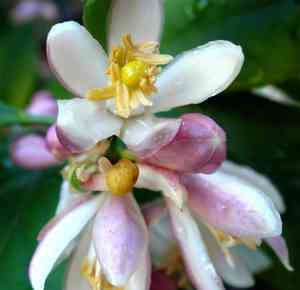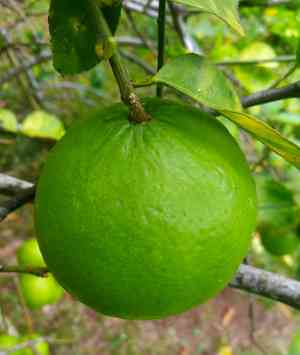
Key lime(Citrus aurantiifolia)

Key lime (Citrus aurantiifolia)

Also known as: Adam's Apple, Egyptian Lime, Sour Lime, West indian lime, Omani lime

The Key lime tree (Citrus aurantiifolia) is an evergreen tree known for its small, green limes, perfect for making Key lime pie and cocktails. The tree features dark green leaves and sharp thorns, and it produces white, fragrant, star-shaped flowers in the spring. The fruit typically ripens in the summer. For optimal growth, the tree requires full sun and well-drained soil.

Attributes of Key lime

Lifespan
Perennial
Plant Type
Shrub, Tree
Plant Height
4 m to 6 m
Spread
1.5 m to 4.5 m
Leaf Color
Green
Flower Size
2.5 cm
Flower Color
White

ForwardPlant - Identify plants with a snap

Identify and diagnose plants, get toxicity alerts, and explore safety guides for all types of fungi.

Try for Free

Images of Key lime

Key lime(Citrus aurantiifolia)

Quickly Identify Key lime

1
Key Limes can be identified by their small, round fruit, green when immature, and yellow when ripe. The tree has thorny branches, shiny, dark green leaves, and white, fragrant flowers.

Scientific Classification of Key lime

Phylum
Vascular plants
Class
Dicotyledons
Order
Maples, mangos, mahogany, citrus, and allies
Family
Rue
Genus
Citrus
Species
Key lime

Planting and Growing of Key lime

Care Difficulty
Moderate
Watering Schedule
Every 4 days
Sunlight Requirements
Full sun
Sunshine Duration
4-6 hours
Ideal Temperature
70-100℉
Soil Type
Potting Mix, Peat Mix
Soil pH
6-7.5
Fertilizer Type
Balanced
Pruning Season
Spring, Summer
Pruning Area
Branches, Leaves
Pruning Frequency
2 times a year
Repotting Season
Spring
Pot Type
Plastic, Ceramic

water icon How to Water Key lime?

For Citrus aurantiifolia, which is commonly known as the Key lime, it is essential to ensure the soil remains consistently moist but not waterlogged. Water should be given until it thoroughly wets the 6-8 inches of soil surrounding the roots, usually requiring approximately 500 ml per session, ensuring the water drains well.
What are the symptoms of an underwatered Key lime?
What should I do if my Key lime is not getting enough water?
What are the symptoms of an overwatered Key lime?
How to save an overwatered Key lime?
More About Watering Techniques

sunlight icon What Are the Sunlight Requirements for Key lime?

Sunlight Requirements: Full sun, Partial sun
Duration of light: 6 to 8 hours
Citrus aurantiifolia ideally requires full sun to partial sun, ensuring the plant receives abundant energy for optimal growth. Sufficient light promotes lush foliage, strong flowering, and fruitful yields, enhancing the plant's aesthetics and productivity.
How much light does Citrus aurantiifolia need?
What if natural sunlight is inconsistent?
How does ideal lighting benefit the plant?
More About Sunlight Requirements Techniques

temperature icon What Is the Ideal Temperature Range for Key lime?

Ideal Temperature: 70 ~ 100℉
The ideal temperature range for Citrus aurantiifolia, commonly known as key lime or Mexican lime, is between 70 to 100 degrees Fahrenheit. This range provides a conducive environment for optimal growth, ensuring the plant can carry out photosynthesis efficiently and produce fruit. Maintaining temperatures within this range helps avoid stress and promotes healthy development.

soil icon What Soil is Best for Key lime?

Soil type: Sandy soil, Loam, Sandy loam
Soil PH: 6 ~ 7.5
Citrus aurantiifolia thrives in well-drained soil as it prevents root rot. This type of soil helps in avoiding water stagnation which can lead to various fungal diseases, ensuring optimal growth and fruit production. The plant benefits greatly from nutrient-rich soil to support its vigorous growth and fruiting. Soil enriched with organic matter or compost provides essential nutrients and improves soil structure, promoting healthy foliage and abundant fruit. Having soil with moderate moisture retention ensures the roots stay hydrated without becoming waterlogged. This balance is crucial for maintaining the plant's health, supporting its ability to produce juicy and flavorful fruits. More About Soil

fertilize icon How to Fertilize Key lime?

Fertilizer type: Balanced
Citrus aurantiifolia requires a well-balanced approach to fertilization. When using liquid fertilizers, it's essential to dilute them properly. Generally, one tablespoon per gallon of water is suitable, ensuring an even distribution across the plant’s root zone. For slow-release fertilizers, follow the manufacturer's instructions but aim for around one pound per year for young trees, increasing as the tree matures. More About Fertilizing Techniques

prune icon How to Prune Key lime?

Pruning Time: Spring, Summer
Start by removing any dead or diseased branches, ensuring you cut back to living wood. Next, thin out crossing branches to improve air circulation. The goal is to open the canopy, allowing light and air to penetrate, which promotes healthy growth. Always use sharp, clean tools to make clean cuts and prevent infection. More About Pruning Techniques

propagate icon How to Propagate Key lime plant?

Propagate Time: Spring, Early summer
1
Choose a healthy, well-developed stem from the mother plant. Ensure the stem is disease-free and ideally from the current year's growth. A length of about 6-8 inches is optimal for propagation.
2
Remove the lower leaves from the stem, leaving a few leaves at the top to sustain photosynthesis. This reduces moisture loss and focuses the plant's energy on developing roots.
3
Dip the cut end of the stem in rooting hormone to encourage root development. Plant the cutting in a well-drained potting mix, ensuring the node is buried beneath the surface for root growth.
More About Propagating Techniques

repot icon How to Repot Key lime plant?

Repotting frequency: Every 2-3 years
1
You should consider repotting Citrus aurantiifolia when you notice its roots start encircling the pot or peeking out from drainage holes. Another signal is slowed growth despite good care. Spring and summer are ideal times when the plant is naturally active and more resilient to change.
2
Select a pot that is one size larger than the current one. It should have adequate drainage holes to prevent waterlogging, which can lead to root rot. A slightly larger pot allows enough room for growth, providing a balance between stability and space for the roots, thus supporting robust plant development.
3
For Citrus aurantiifolia, opt for a well-draining soil mix, perhaps one intended for citrus or succulent plants. Such soil prevents the roots from sitting in water, decreasing the risk of root rot while ensuring adequate aeration. This promotes healthy growth with ample nutrient availability.
More About Repotting Techniques

ForwardPlant - Identify plants with a snap

Find the best spots for them to optimize their health, simply using your phone.

Try for Free

Toxicity of Key lime

Is Key lime toxic to cat?

Key lime poses a risk of toxicity to felines. This toxicity typically arises when cats inadvertently consume the fruit. Following the ingestion of key lime, cats may display various signs of physical distress or illness. Although the precise toxic compounds in key lime are not specified, it is clear that the fruit itself is the harmful component. If a cat consumes key lime, seeking immediate veterinary assistance is crucial to address and alleviate the symptoms appropriately.

Is Key lime toxic to dog?

Key lime is recognized as toxic to dogs. If a dog accidentally consumes any part of this plant, it can suffer from poisoning. The fruits of the key lime plant are particularly toxic, and if ingested by a dog, various symptoms signaling poisoning may occur. Therefore, dog owners need to remain alert and keep their pets away from key lime fruits. Should a dog ingest any part of this plant, it might show signs such as gastrointestinal discomfort or other distress signals. It is crucial for dog owners to act swiftly by contacting a veterinarian to safeguard their pet's health and wellbeing.

Identify toxic plants for your safety

Learn which plants are harmful to you and your pets, and make informed choices for a safer home!

Try for Free
WARNING
The judgment on toxicity and danger is for reference only. We DO NOT GUARANTEE any accuracy of such judgment. Therefore, you SHALL NOT rely on such judgment. It is IMPORTANT TO SEEK PROFESSIONAL ADVICE in advance when necessary.
More About Toxic Techniques