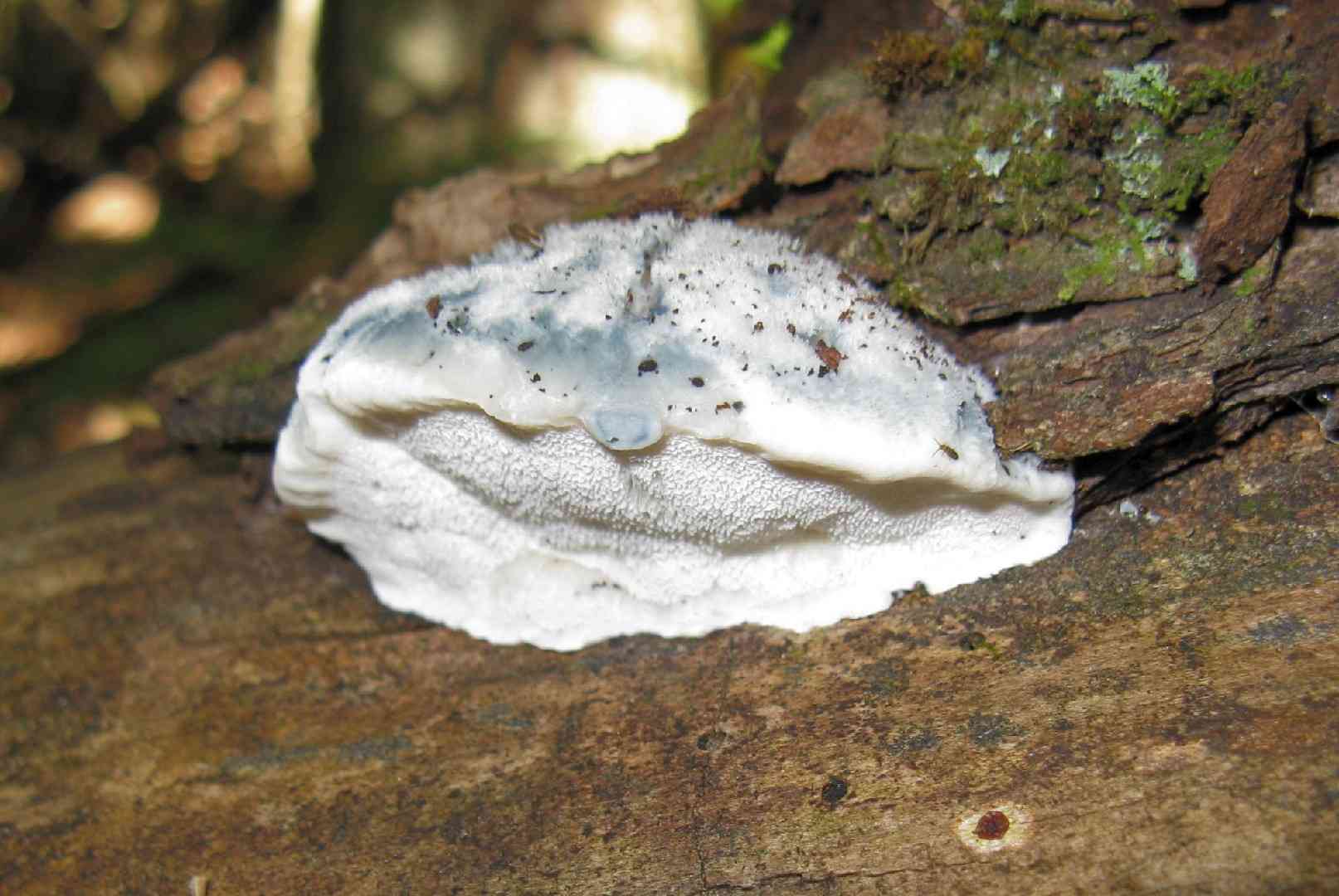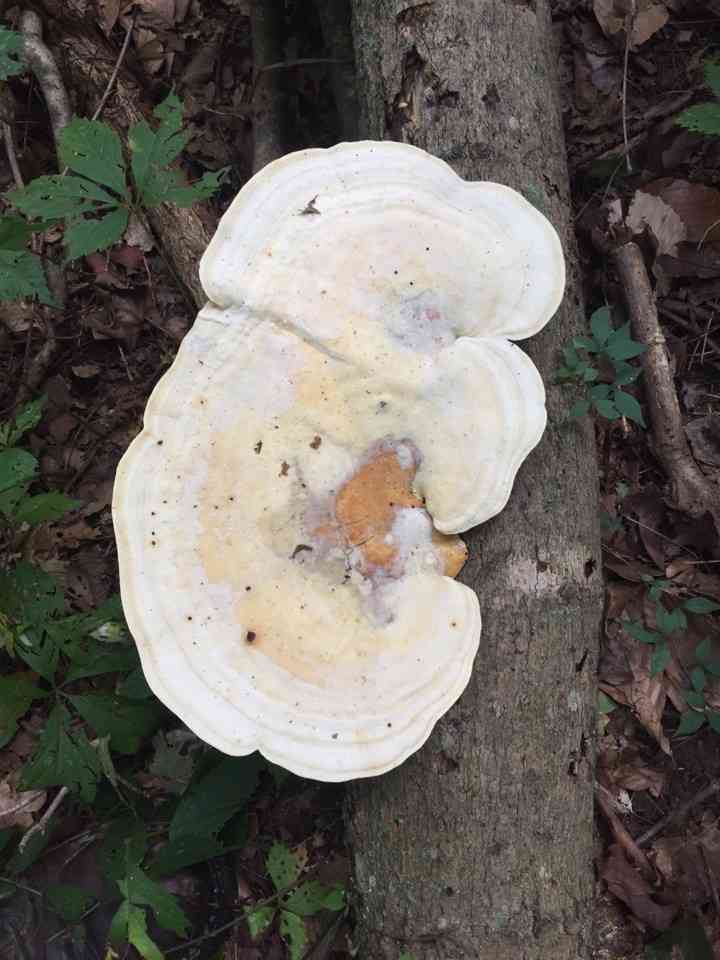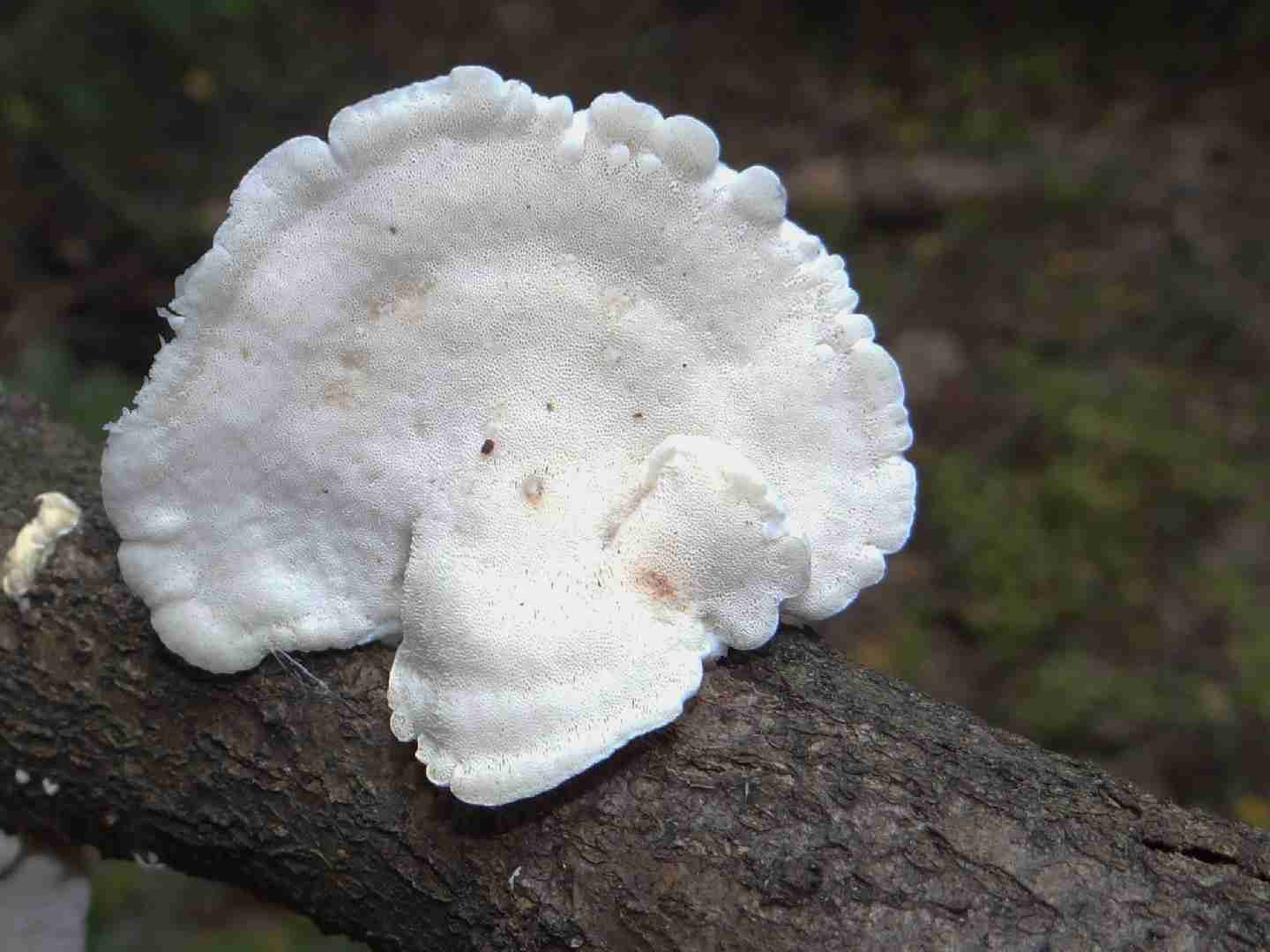
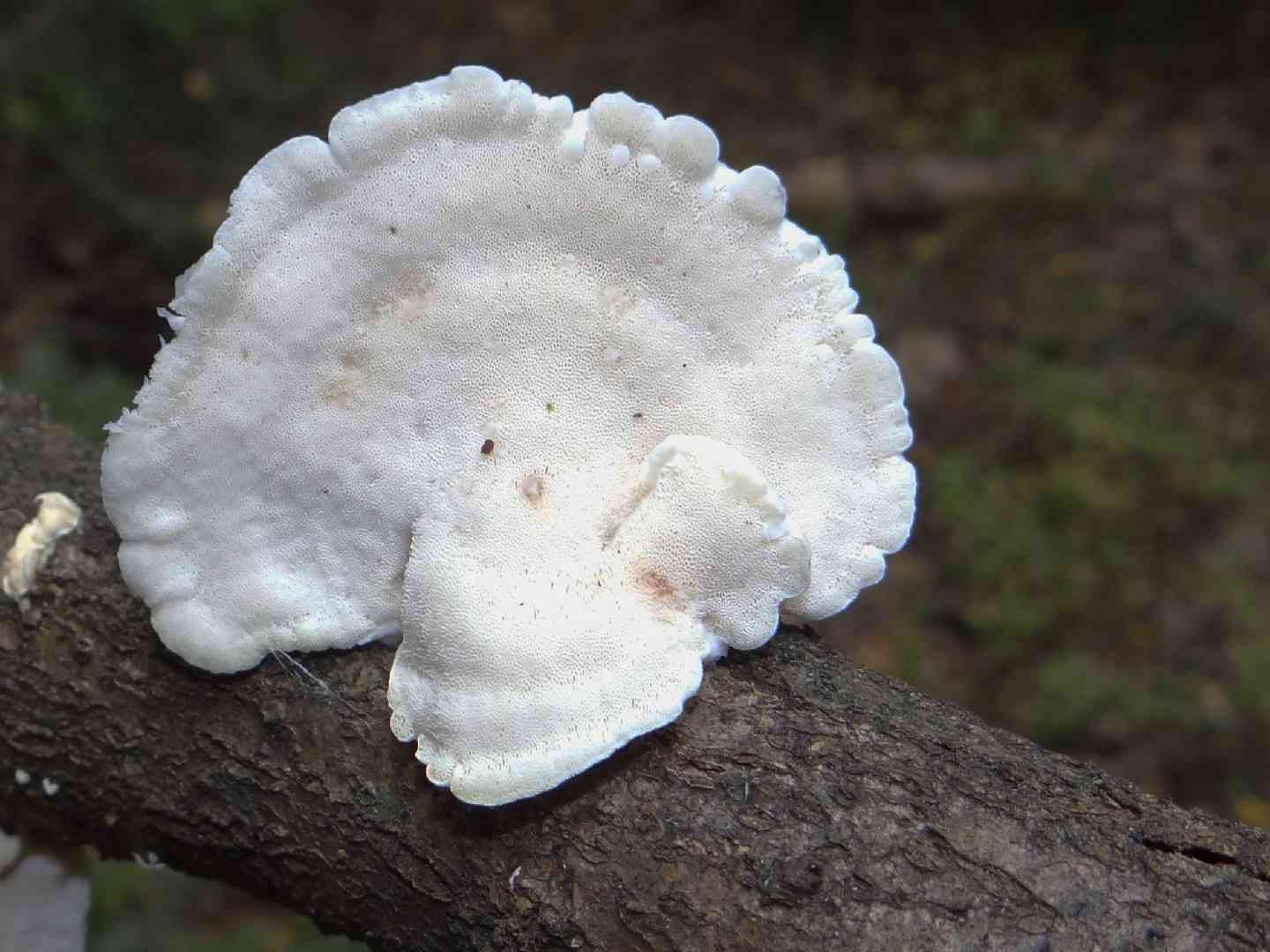
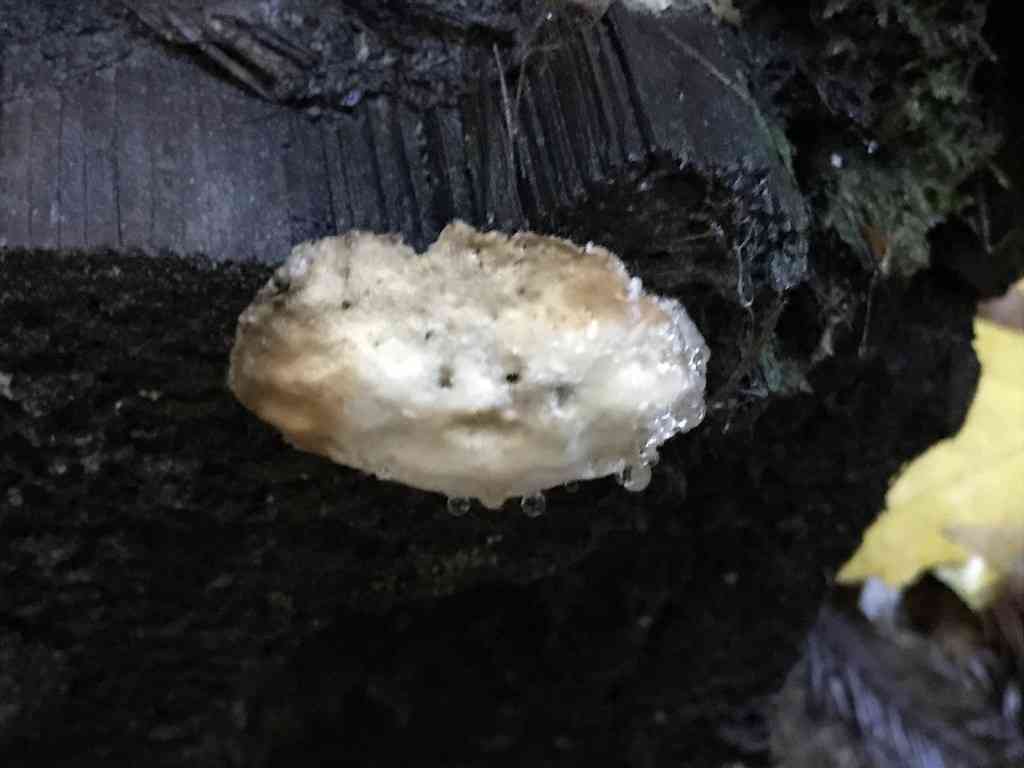
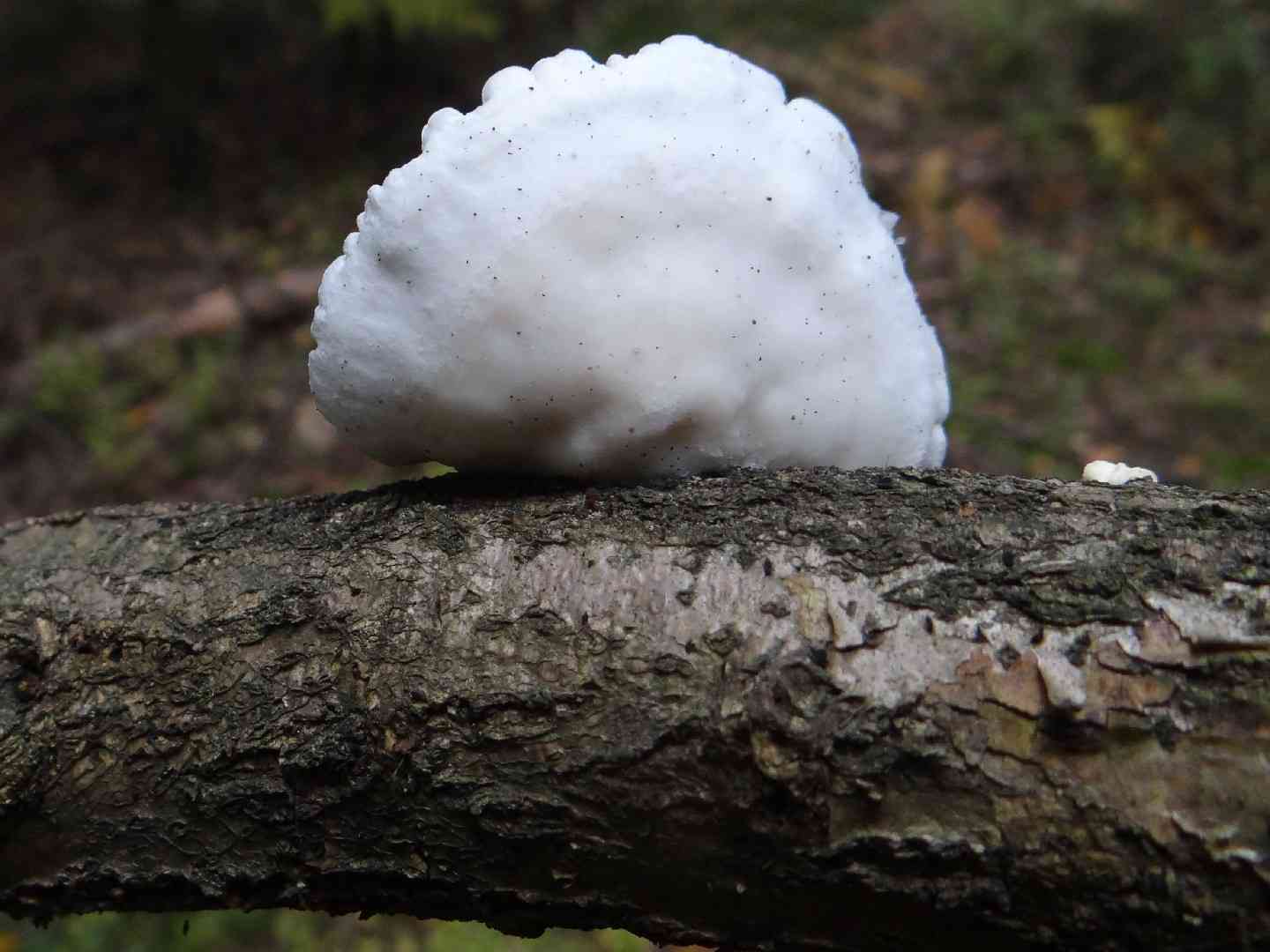
White cheese polypore
Tyromyces chioneus
A species of Tyromyces.
Tyromyces chioneus, commonly known as the white cheese polypore, has a broad geographical distribution spanning Asia, Europe, and North America. This fungus plays a significant role in the decomposition of dead or weakened hardwood trees, primarily causing white rot, and shows a notable inclination towards birch and conifer-rich boreal forests. Despite sometimes having an agreeable scent when freshly picked, it is not considered edible.
In This Article
Attributes of White cheese polypore
Cap Diameter
5 - 15 cm
Height
2 - 8 cm
Cap
Up to 12 cm across, 8 cm deep; convex, semicircular to kidney-shaped; white, yellowish, brownish; very finely
Cap Shape
Convex
Cap Surfaces
Velvety, Smooth, Fibrillose-scaly
Flesh
Soft and watery when fresh; white
Spore Print Color
White
Odor
Pleasantly fragrant when fresh.
Body Color
BrownYellowGrayWhite
Flesh Bruises
The flesh or milk does not discolor when bruised or cut.
Growth Form
Solitary, Gregarious
Nutrient Gathering
Saprophytic
Substrate
Dead Woods
You can find White cheese polypore by these plants
Paper birch, European beech
Occurence Habitats
Deciduous Woodland
Species Status
Widespread and common
Endangered Species
No
Scientific Classification of White cheese polypore
Phylum
Club fungi
Class
Mushroom-forming fungi
Order
Shelf fungi
Family
Polyporaceae
Genus
Tyromyces
Toxicity and Edibility of White cheese polypore
Is White cheese polypore Toxic?
Toxicity information is not available for this mushroom. Always consult with an expert before consuming any wild mushrooms.