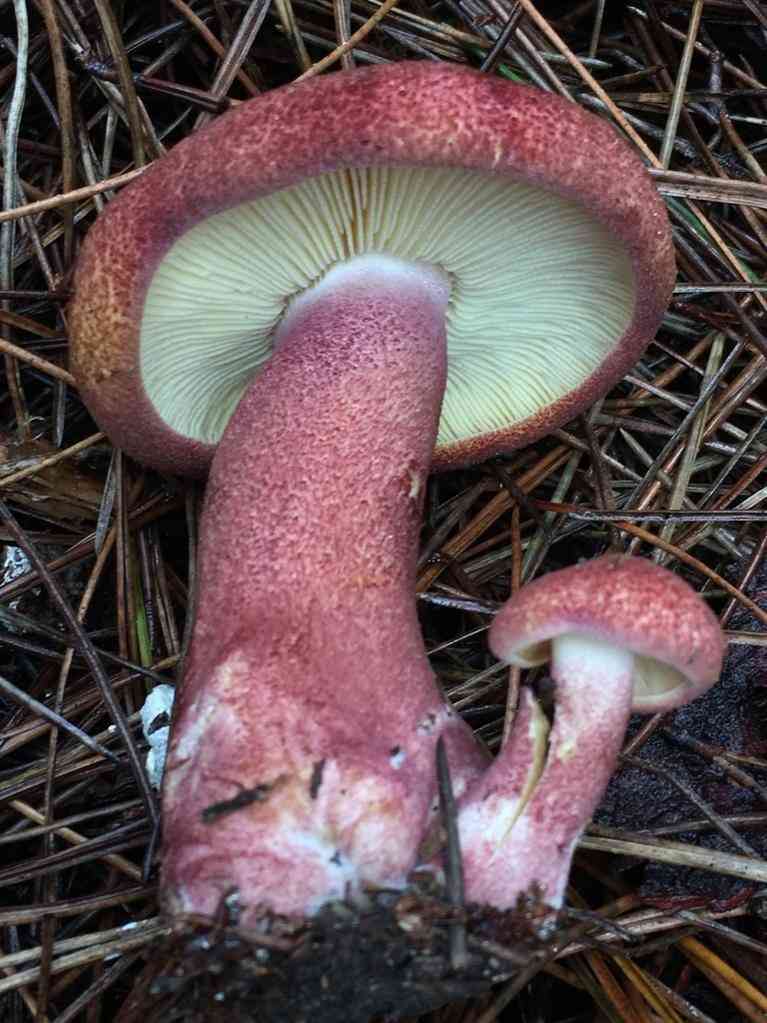
Plums and custard
Tricholomopsis rutilans
A species of Tricholomopsis. Also known as Variegated mop, Strawberry mushroom.
The fungus known as Plums and Custard (Tricholomopsis rutilans) predominantly inhabits regions throughout Europe and North America, with documented occurrences in other areas due to introduction. This uniquely monikered mushroom stands out due to its striking and aesthetically pleasing features, making it a popular discovery for amateur mycologists. However, its ingestion is not advised.
In This Article
Attributes of Plums and custard
Cap Diameter
3 - 12 cm
Height
4 - 10 cm
Cap
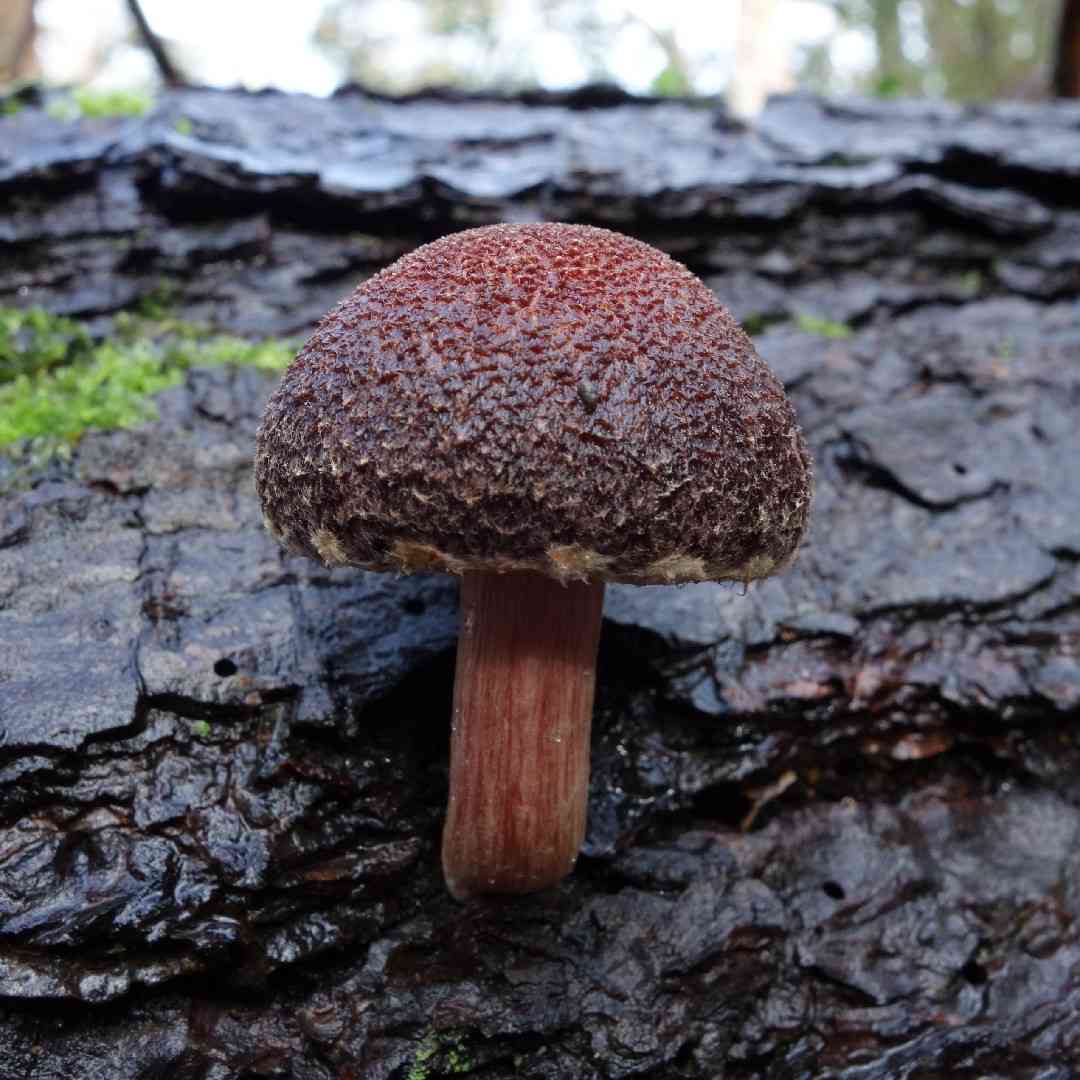
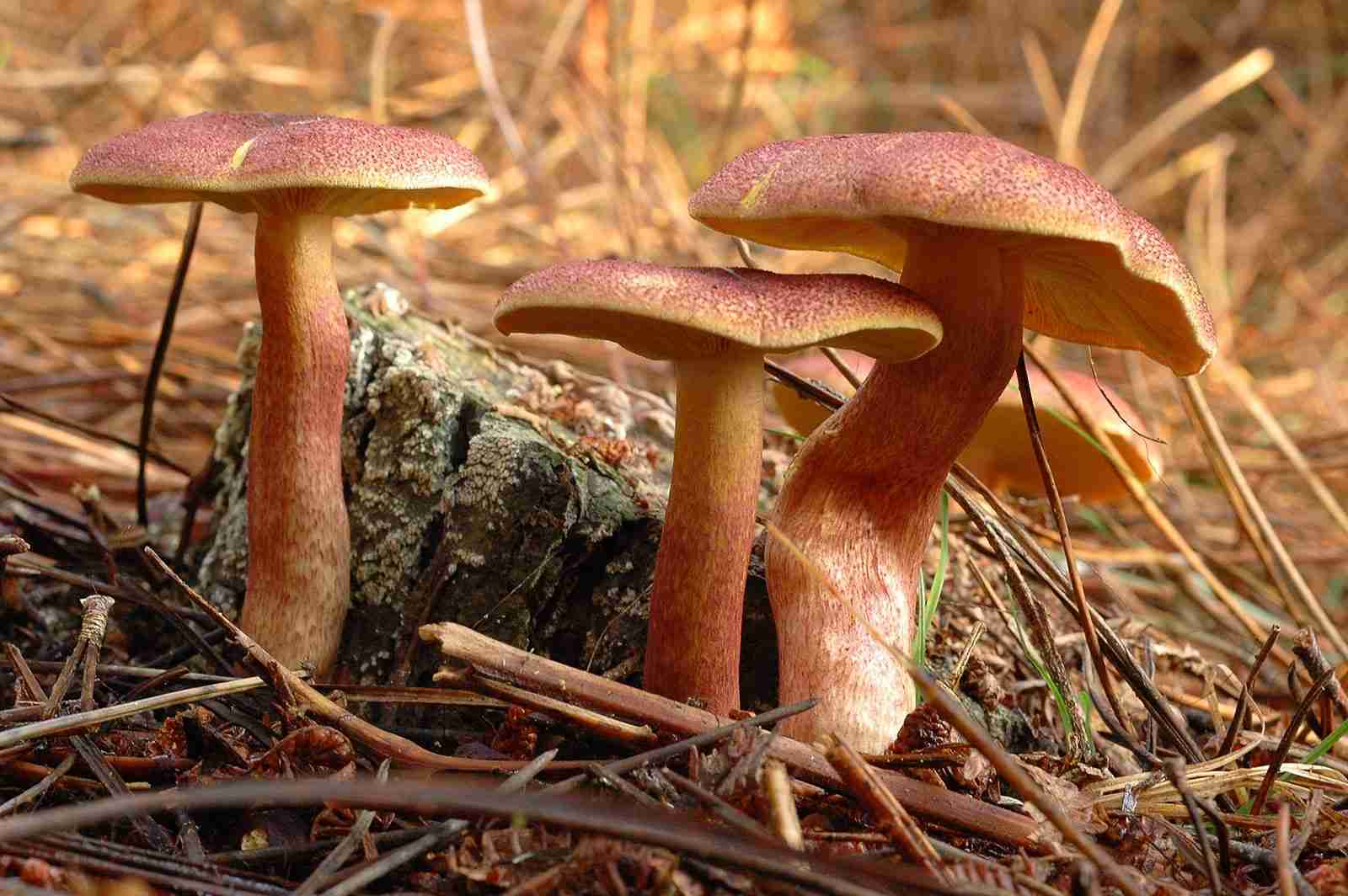
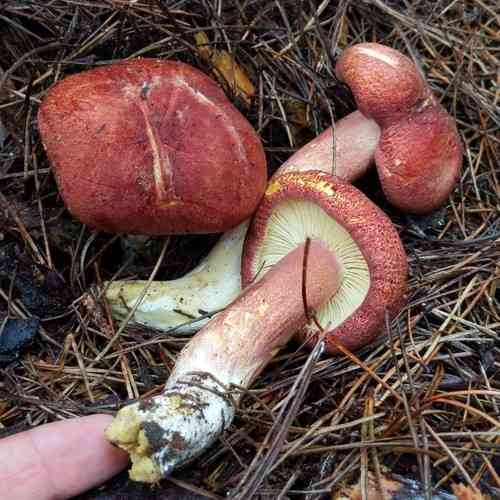
Cap 3 - 10 cm across; convex to flat or shallowly umbonate; pale yellow, purplish red; with finely scaly
Cap Shape
Convex, Flat, Bell-shaped, Depressed, Central Bump
Cap Surfaces
Fibrillose-scaly
Gills
Attached; close, crowded; pale to bright yellow
Gill Attachment
Attached
Stem
Stem 3 - 9 cm long, 1 - 1.5 cm thick; pale yellow, purplish red; with scales
Stem Shapes
Cylindrical
Stem Surfaces
Fibrillose
Flesh
Yellow to pale yellow
Ring
Ringless
Spore Print Color
White
Odor
Mildly fragrant; may smell slightly of pine.
Body Color
BrownYellowRedPurple
Flesh Bruises
The flesh or milk does not discolor when bruised or cut.
Growth Form
Solitary, Scattered, Gregarious
Nutrient Gathering
Saprophytic
Substrate
Dead Woods, Wood Chips or Mulch
You can find Plums and custard by these plants
Red pine, Spruces, Pines, Firs
Occurence Habitats
Coniferous Woodland
Species Status
Widely distributed
Endangered Species
No
Scientific Classification of Plums and custard
Phylum
Club fungi
Class
Mushroom-forming fungi
Order
Gilled fungi
Family
Pale-spore mushrooms
Genus
Tricholomopsis
Toxicity and Edibility of Plums and custard
Is Plums and custard Toxic?
Toxicity information is not available for this mushroom. Always consult with an expert before consuming any wild mushrooms.