Larch knight
Tricholoma psammopus
A species of Tricholoma.
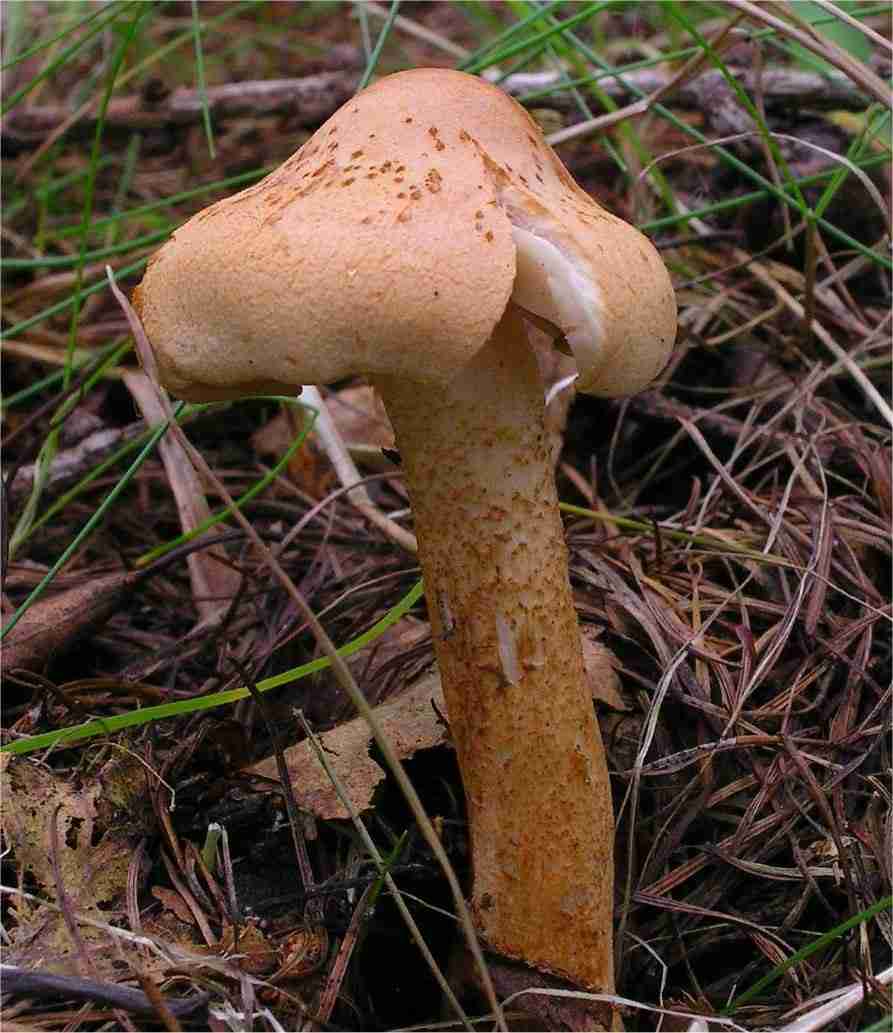
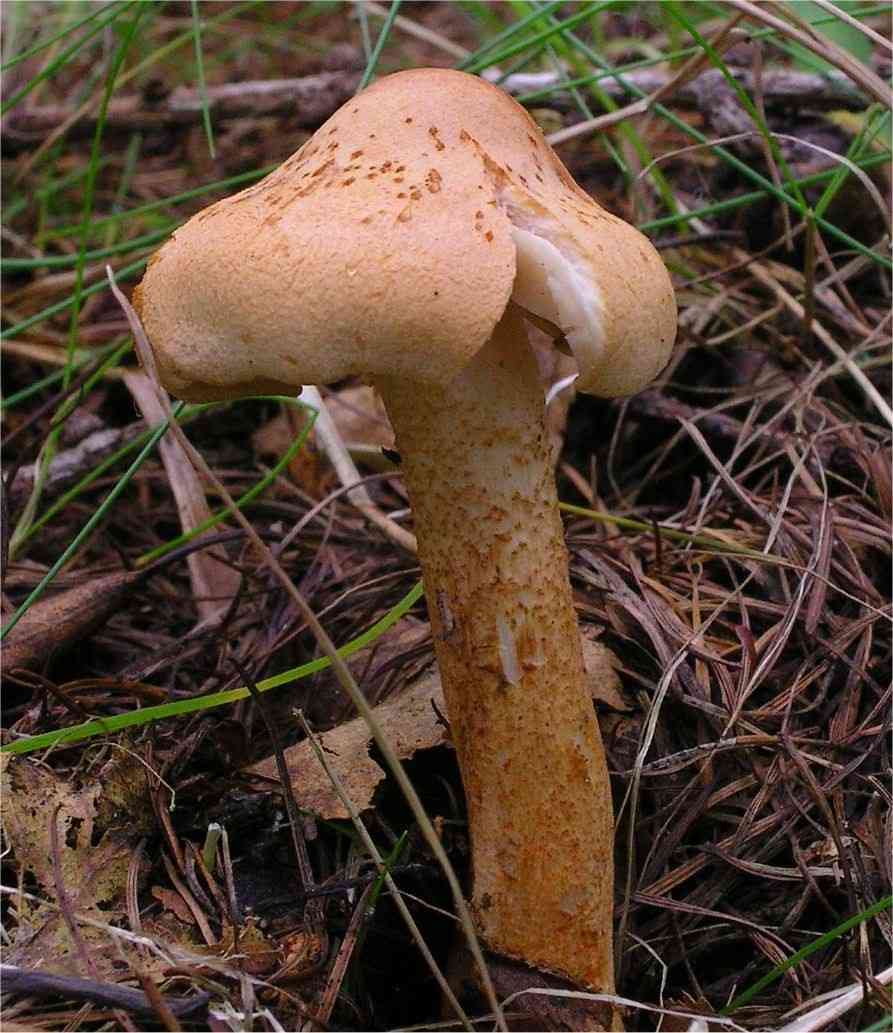
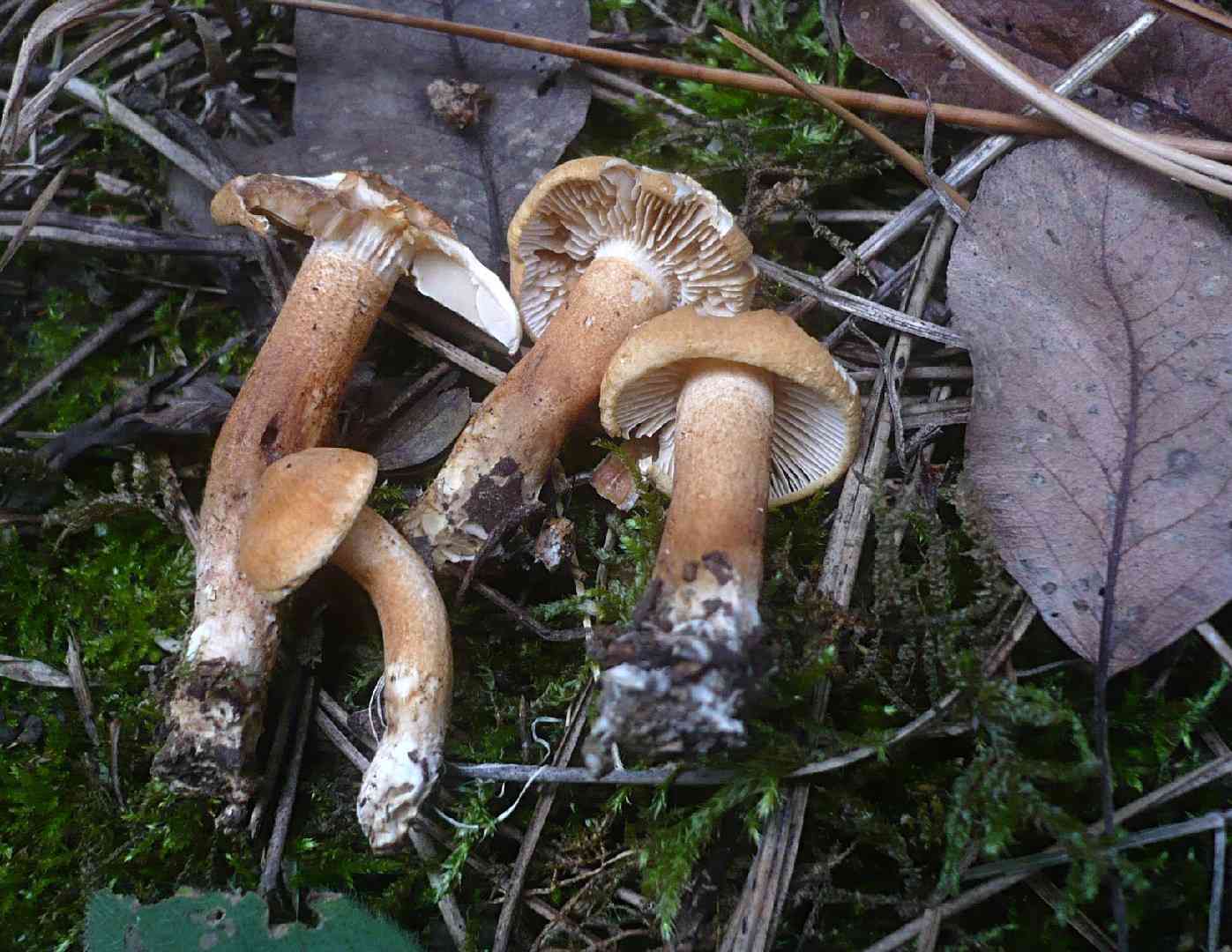
The Larch Knight mushroom commonly inhabits coniferous woodlands, establishing a mutualistic bond with larch trees. It emerges in the fall, characterized by a cap that transitions from a convex shape to a flatter form as it ages, acquiring a yellowish-brown hue upon maturity. Its gills are white and broadly connect to a short, robust stalk. This fungus contributes to the forest's ecosystem by facilitating nutrient cycling.
In This Article
Attributes of Larch knight
Cap Diameter
3 - 10 cm
Height
5 - 12 cm
Cap
Cap 3 - 8 cm across; convex; yellowish-brown to pale tan
Cap Shape
Convex, Flat
Cap Surfaces
Fibrillose-scaly
Gills
Adnate, sinuous; distant; whitish to ochraceous
Gill Attachment
Notched
Stem
Stem 4 - 8 cm long, 1 - 1.5 cm thick; whitish, reddish-brown; cottony; with scales
Stem Shapes
Club Shaped
Flesh
Yellowish-brown
Ring
Ringless
Spore Print Color
White
Odor
Mildly mushroomy but not distinctive.
Body Color
BrownYellowRedWhite
Growth Form
Solitary, Scattered
Nutrient Gathering
Mycorrhizal
Substrate
On soil
You can find Larch knight by these plants
Pines, Spruces
Species Status
Uncommon
Endangered Species
No
Scientific Classification of Larch knight
Phylum
Club fungi
Class
Mushroom-forming fungi
Order
Gilled fungi
Family
Pale-spore mushrooms
Genus
Tricholoma
Toxicity and Edibility of Larch knight
Is Larch knight Toxic?
Toxicity information is not available for this mushroom. Always consult with an expert before consuming any wild mushrooms.

