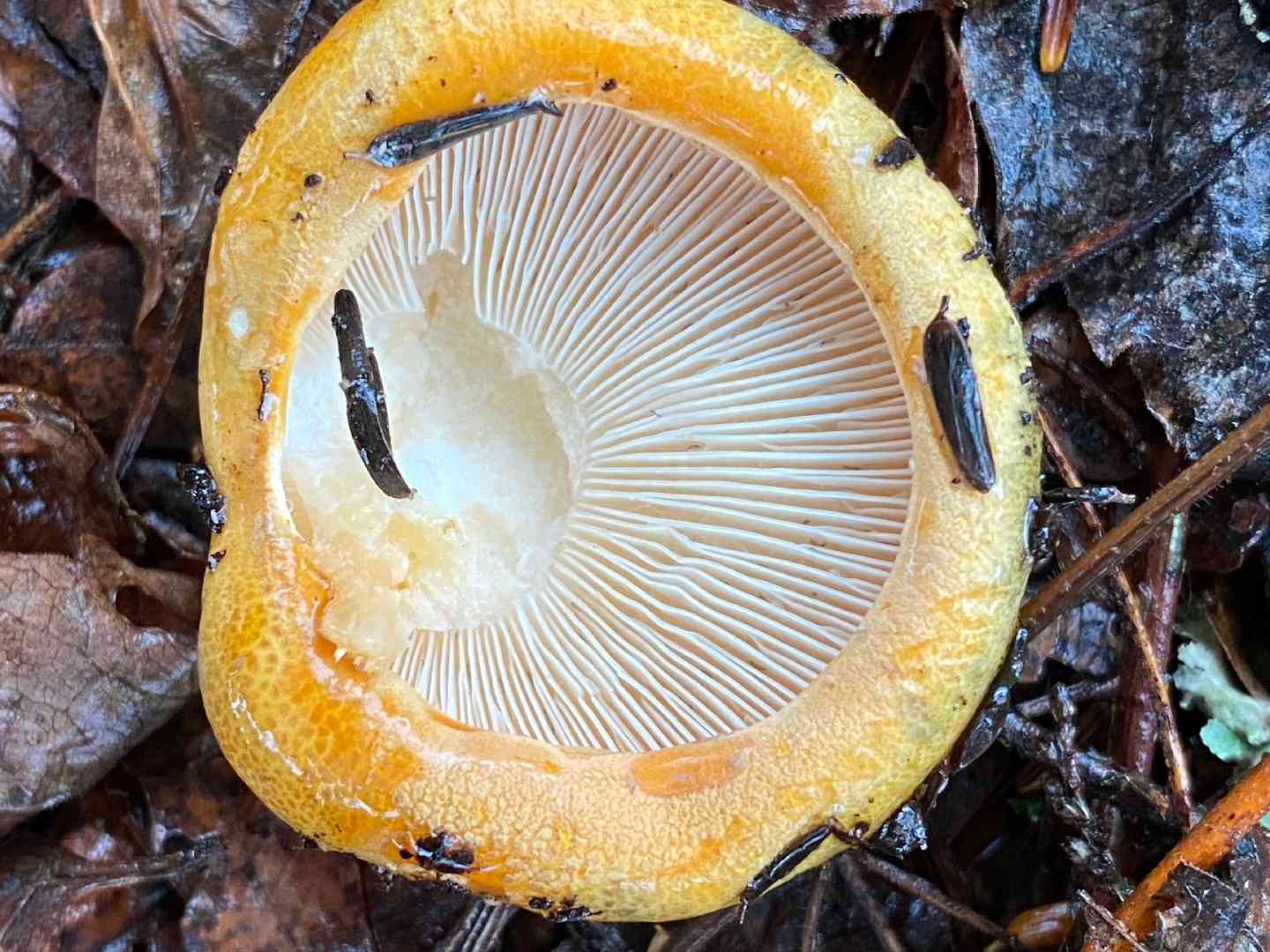
Golden orange tricholoma
Tricholoma aurantium
A species of Tricholoma.
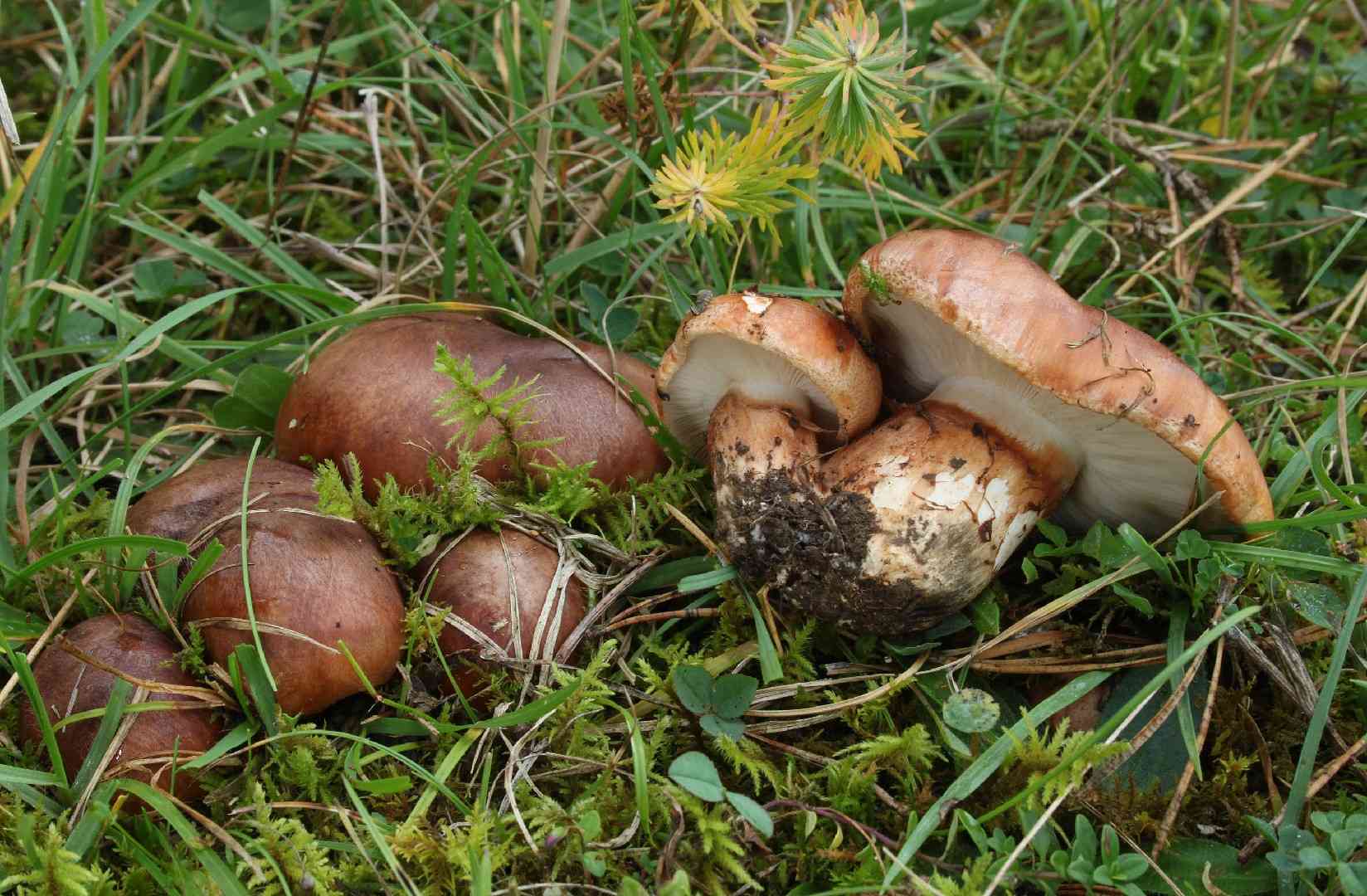
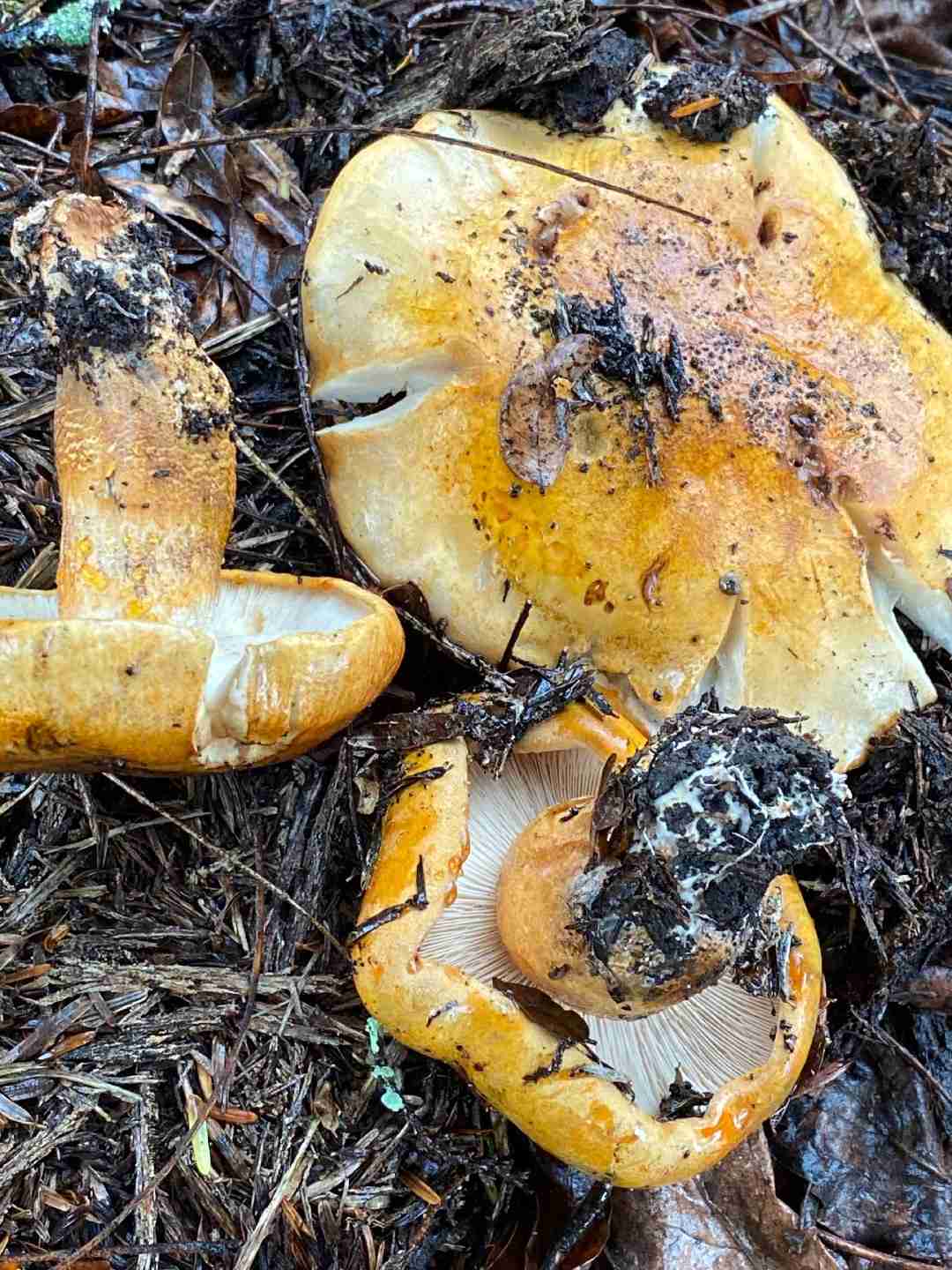
Tricholoma aurantium, distinguished by its golden-orange hue, establishes a symbiotic connection with the root systems of conifer trees. While typically presenting in shades of orange or white, its surface acquires a pronounced red discoloration upon touch or injury. Its species name, aurantium, denotes its characteristic golden appearance. This mushroom emits a potent and unpleasant scent.
In This Article
Attributes of Golden orange tricholoma
Cap Diameter
3 - 10 cm
Height
4 - 10 cm
Cap
Cap 4 - 9 cm across; convex, nearly flat; orange, brownish orange; with scattered scales; margin inrolled
Cap Shape
Convex, Flat
Cap Surfaces
Slimy or slightly sticky, Fibrillose-scaly
Gills
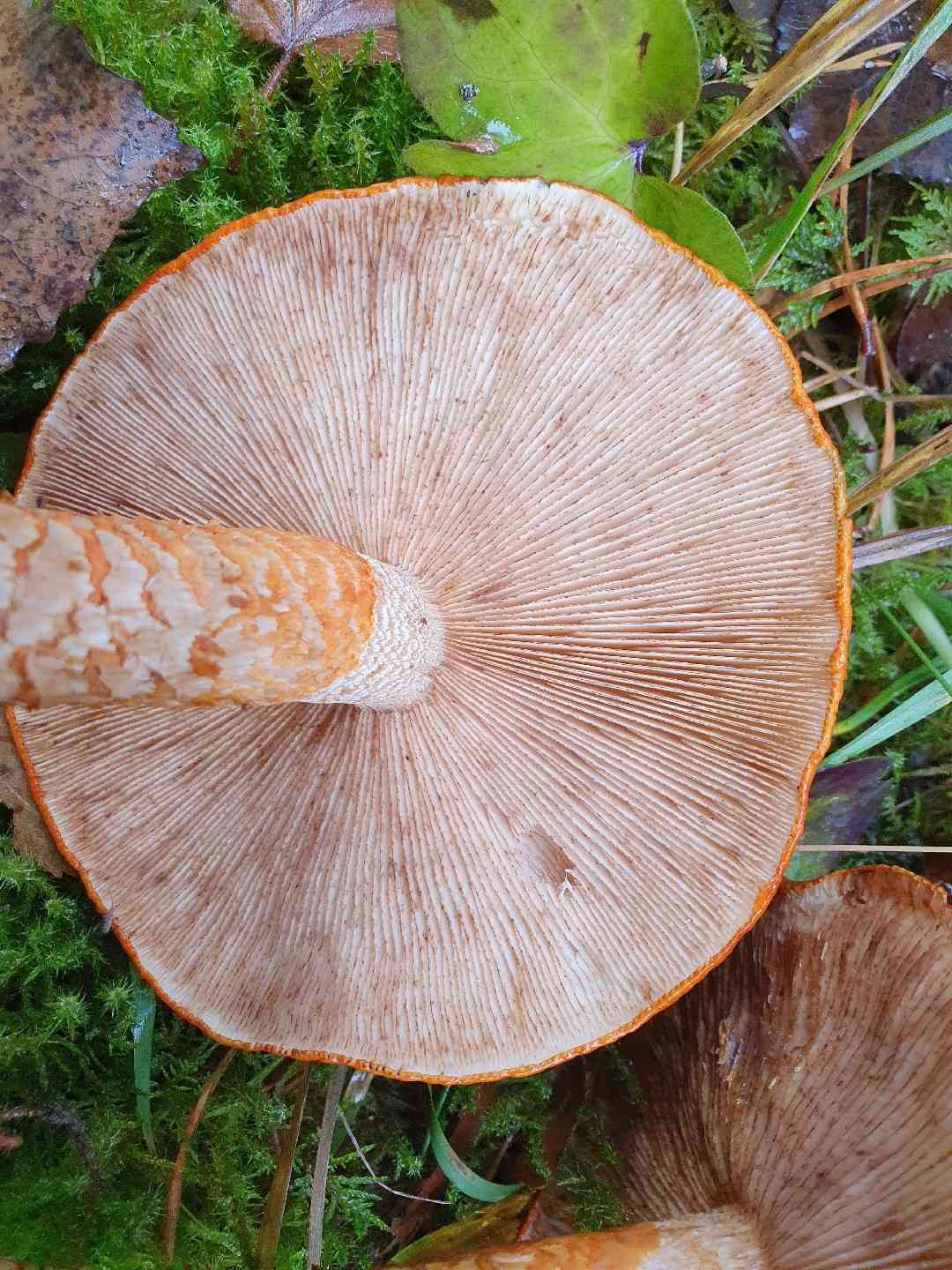
Adnate; crowded; creamy, brown to reddish brown
Gill Attachment
Notched
Stem
Stem 3 - 9 cm long, 1 - 2 cm thick; tapering to the base; orange to brownish orange, white; with scaly girdles
Stem Shapes
Cylindrical
Stem Surfaces
Scaly
Flesh
White; not changing on exposure, or turning pinkish in places
Ring
Ringless
Spore Print Color
White
Odor
Noticeably cereal-like fragrance.
Body Color
BrownRedWhiteOrangeCyan
Flesh Bruises
The flesh or milk does not discolor when bruised or cut.
Growth Form
Scattered, Gregarious
Nutrient Gathering
Mycorrhizal
Substrate
On soil
You can find Golden orange tricholoma by these plants
Spruces, Pines, Oaks, Firs
Occurence Habitats
Coniferous Woodland
Species Status
Widely distributed
Endangered Species
No
Scientific Classification of Golden orange tricholoma
Phylum
Club fungi
Class
Mushroom-forming fungi
Order
Gilled fungi
Family
Pale-spore mushrooms
Genus
Tricholoma
Toxicity and Edibility of Golden orange tricholoma
Is Golden orange tricholoma Toxic?
Toxicity information is not available for this mushroom. Always consult with an expert before consuming any wild mushrooms.