Turkey tail
Trametes versicolor
A species of Trametes. Also known as Turkeytail fungus.
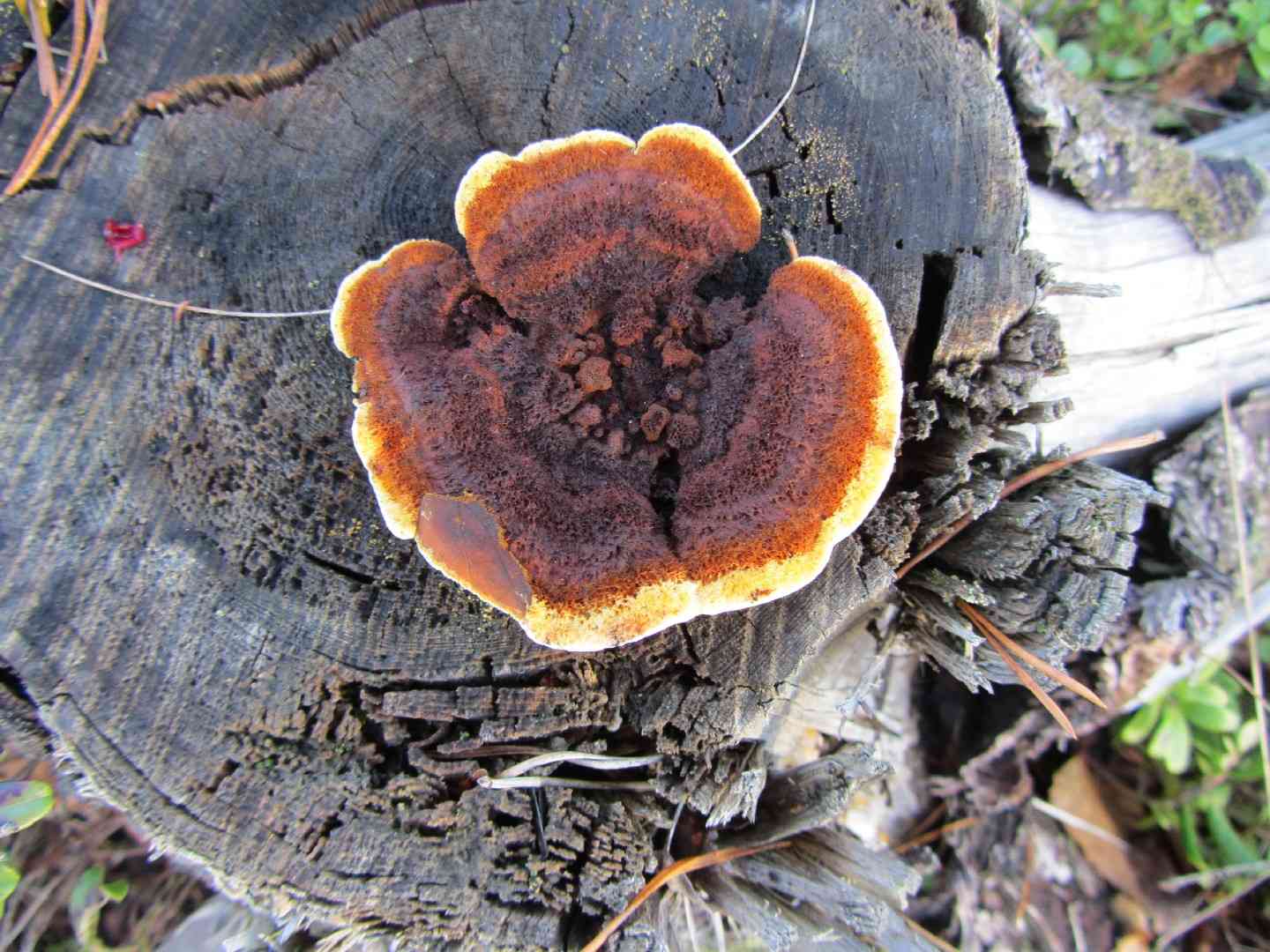
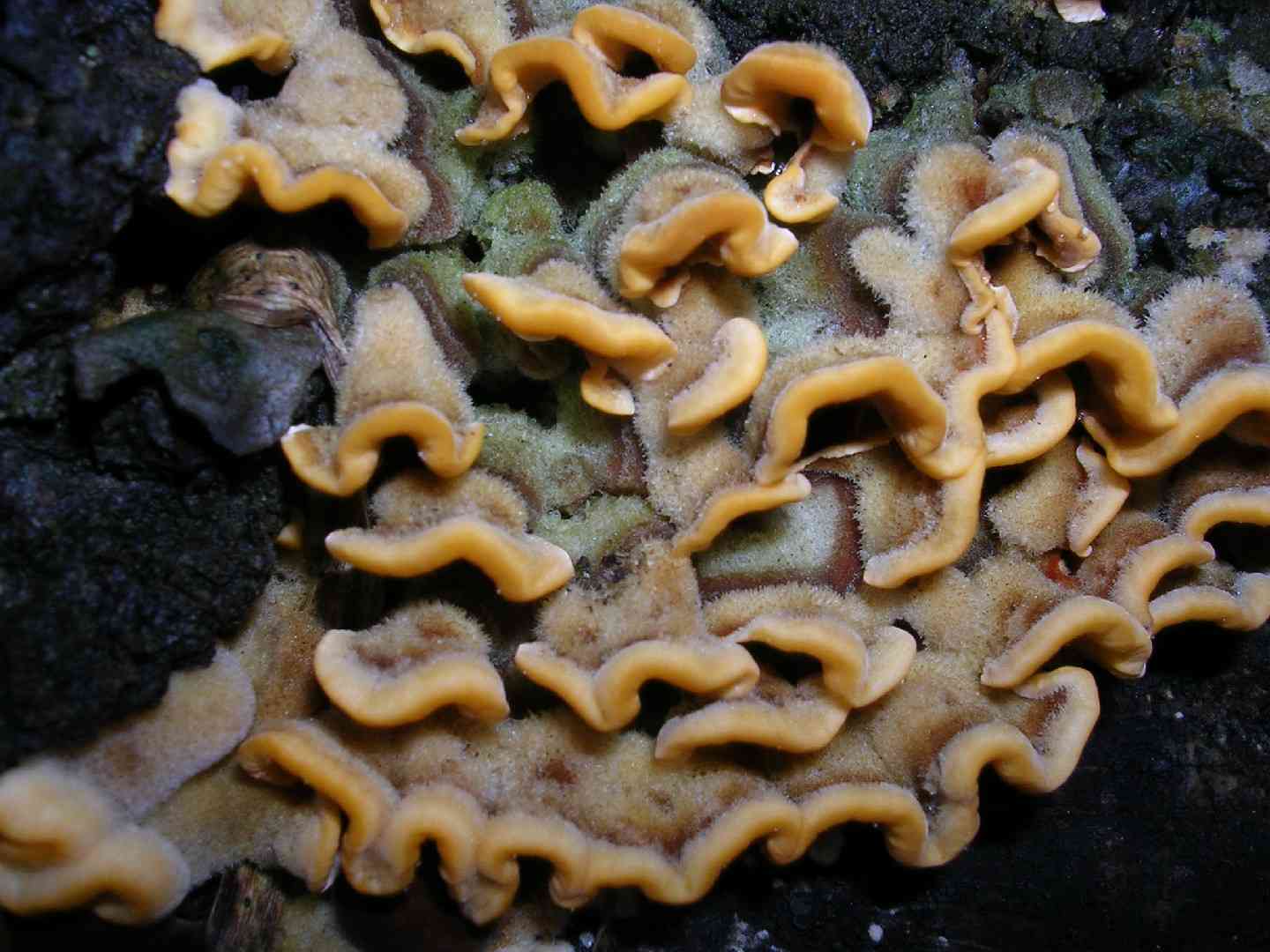
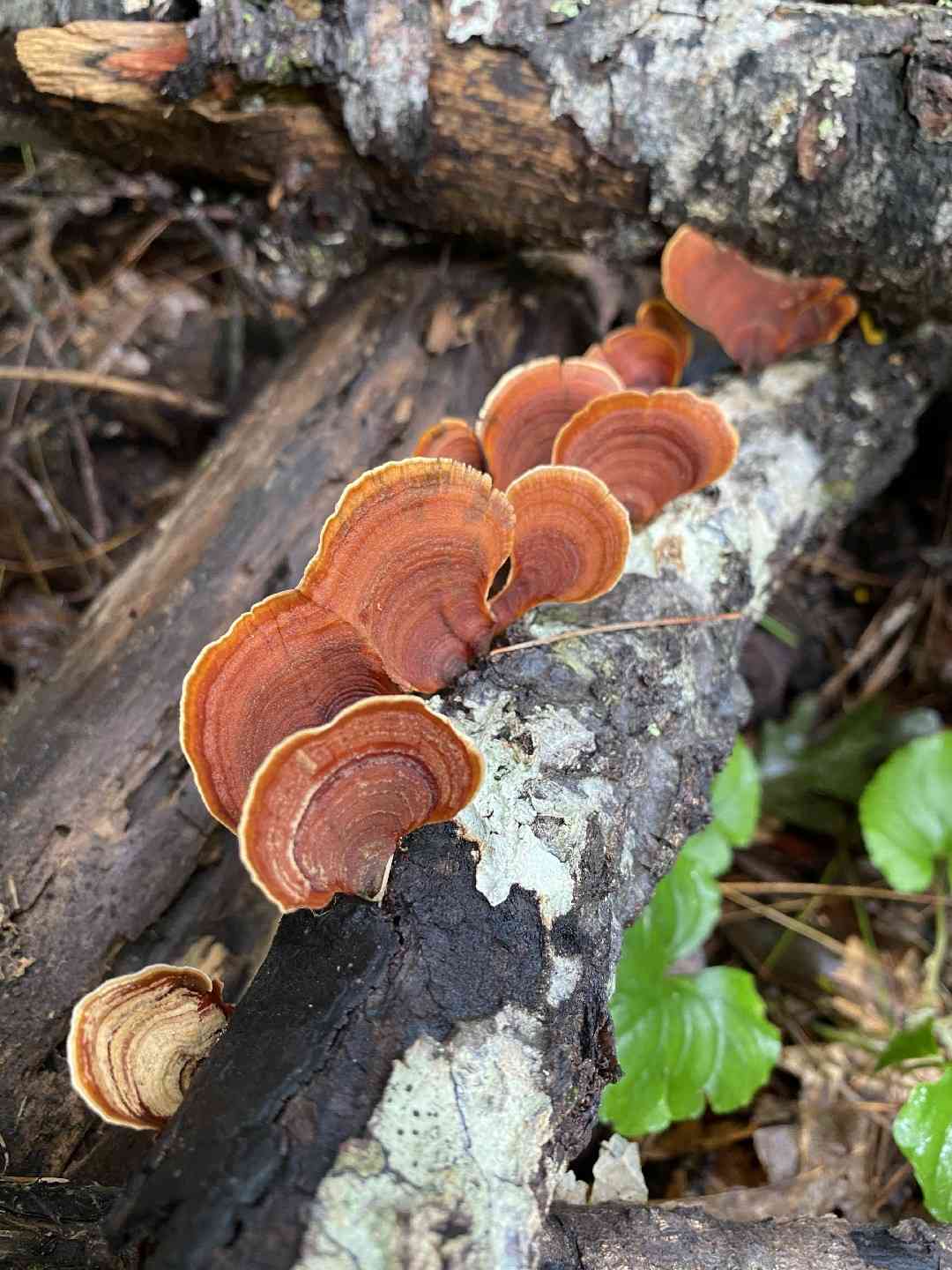
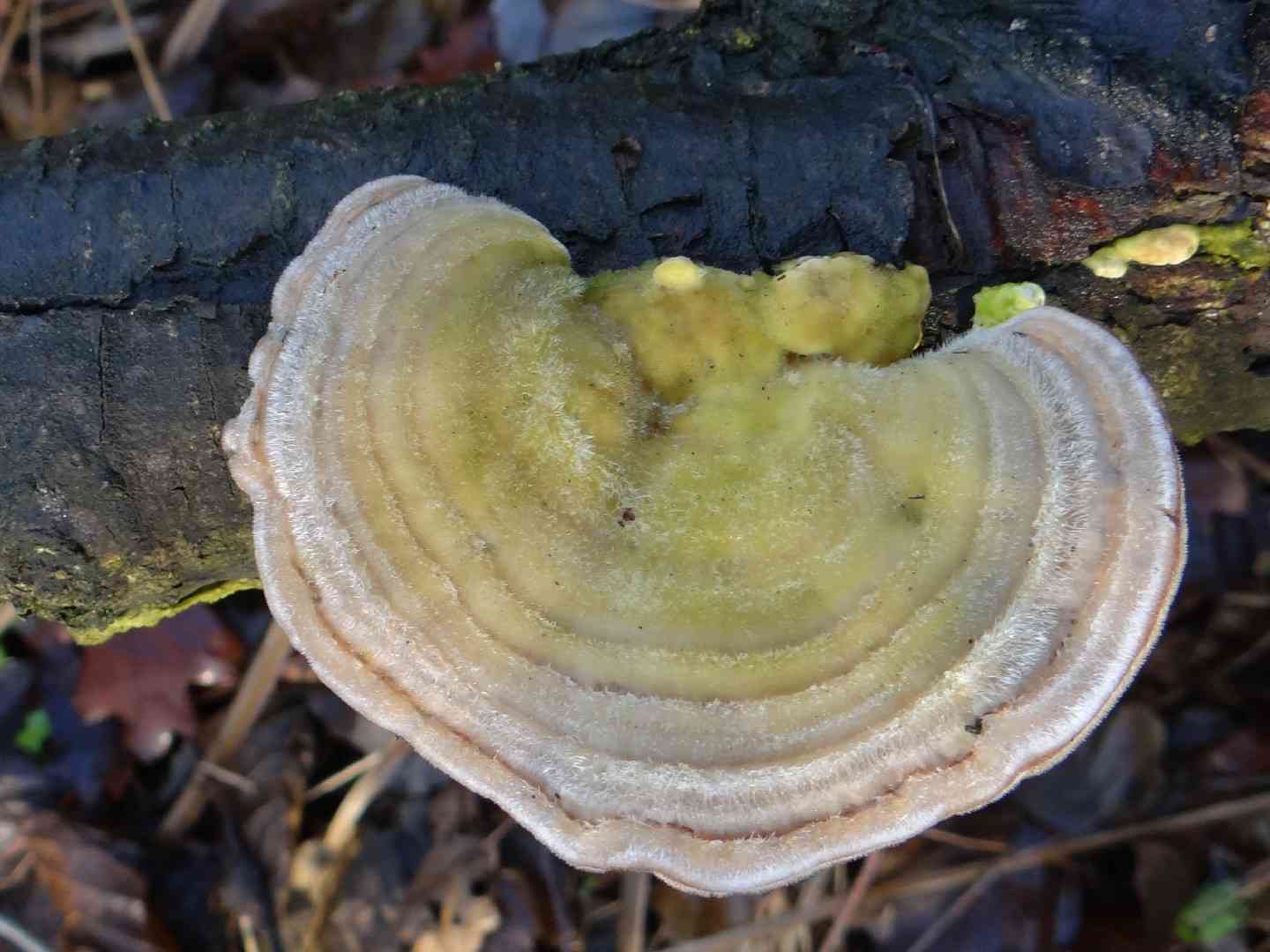
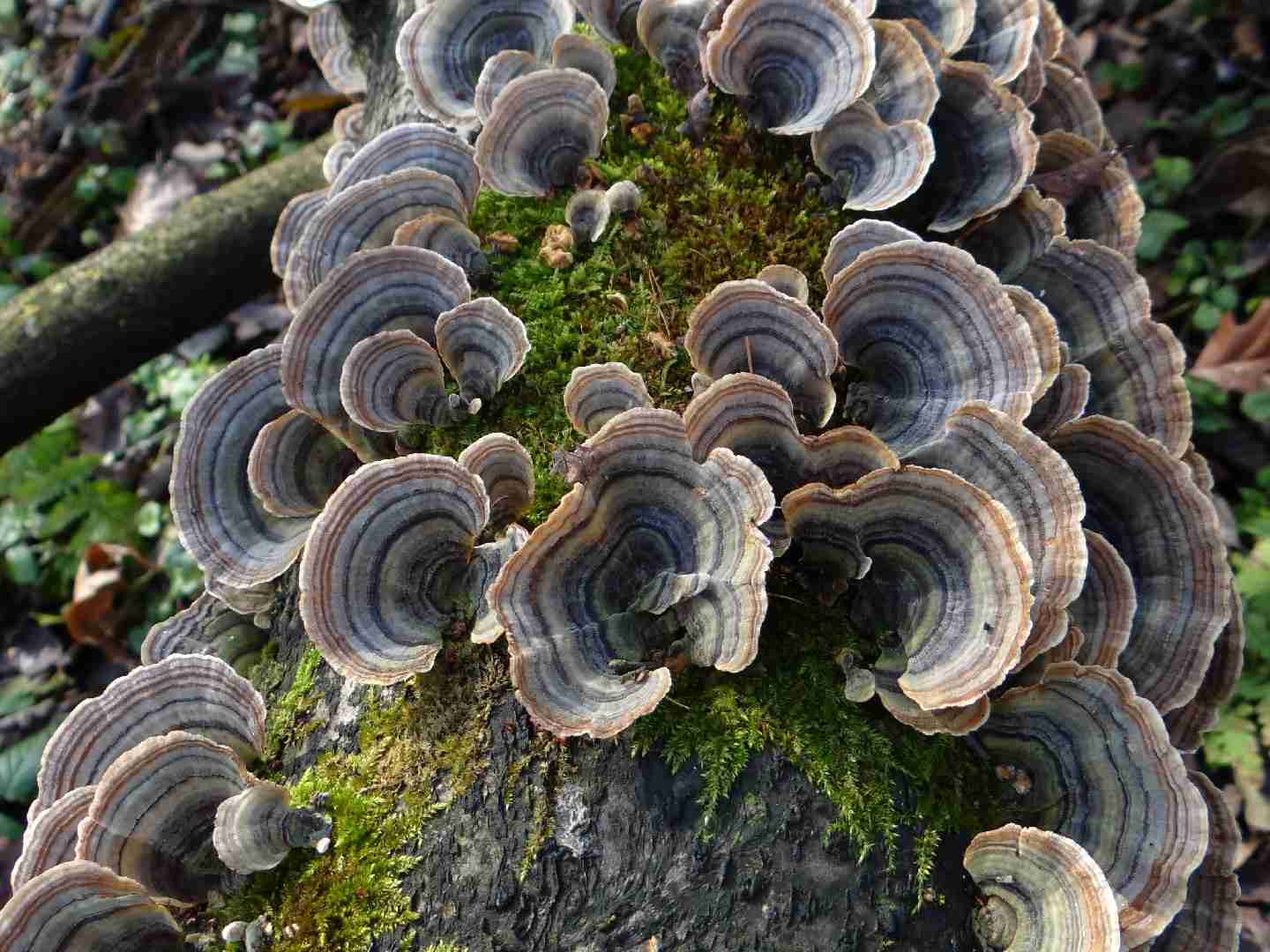
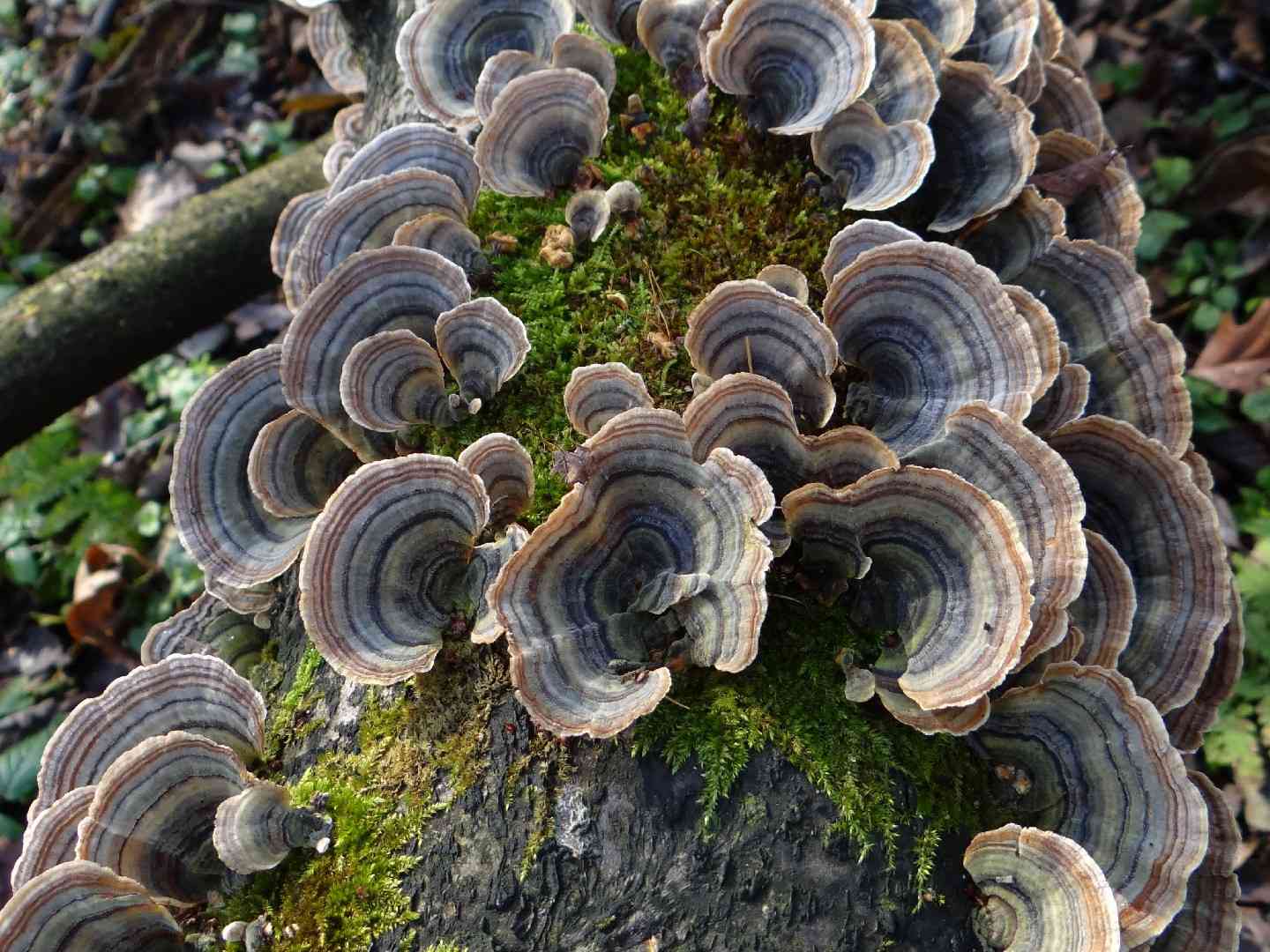
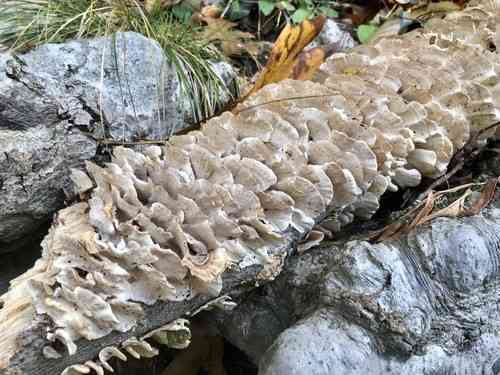
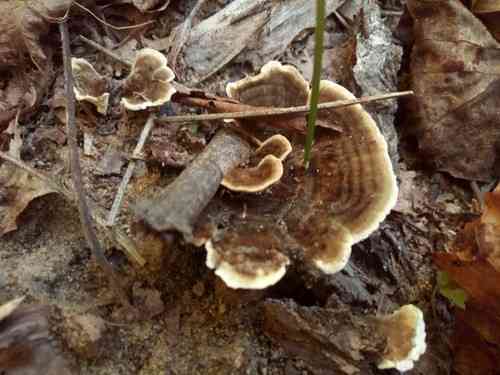
The turkey tail fungus, with its distinctive stripes, is a ubiquitous sight on stumps and logs throughout the northern hemisphere's forests. Indeed, it's quite possibly the most frequently encountered species. Yet, its commonality doesn't imply a lack of character; each cap presents a unique design. Observe the concentric rings, which alternate in both texture and hue.
In This Article
Attributes of Turkey tail
Cap Diameter
2 - 8 cm
Height
1 - 3 cm
Cap
Cap 2 - 8 cm across, 1 - 4 cm deep, 1 - 2 mm thick; plano-convex to flat, fan-shaped; gray, brown, cinnamon; flexible when fresh, densely hairy or velvety
Cap Shape
Convex, Flat
Cap Surfaces
Fibrillose-scaly, Velvety
Gills
Have a pore surface instead of gills
Stem
No Stem
Flesh
1 - 3 mm thick; leathery texture, tough; whitish
Spore Print Color
White
Odor
Faintly woody or with no distinct smell.
Body Color
BrownBronzeGray
Flesh Bruises
The flesh or milk does not discolor when bruised or cut.
Growth Form
Clustered
Nutrient Gathering
Saprophytic
Substrate
Dead Woods
You can find Turkey tail by these plants
Oaks
Occurence Habitats
Deciduous Woodland, Coniferous Woodland
Species Status
Not Evaluated
Endangered Species
No
Scientific Classification of Turkey tail
Phylum
Club fungi
Class
Mushroom-forming fungi
Order
Shelf fungi
Family
Polyporaceae
Genus
Trametes
Toxicity and Edibility of Turkey tail
Is Turkey tail Toxic?
Toxicity information is not available for this mushroom. Always consult with an expert before consuming any wild mushrooms.