Lumpy bracket
Trametes gibbosa
A species of Trametes.
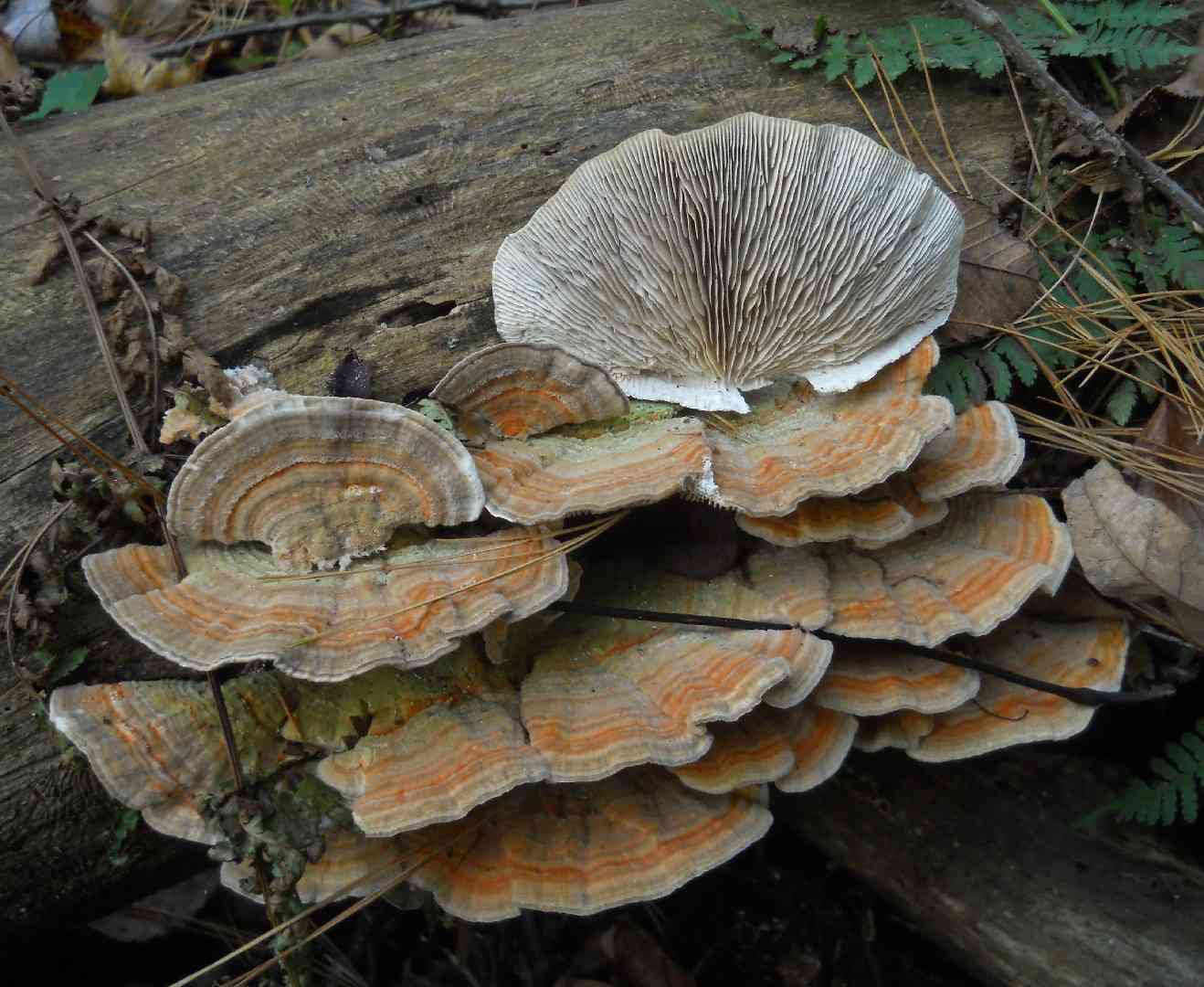
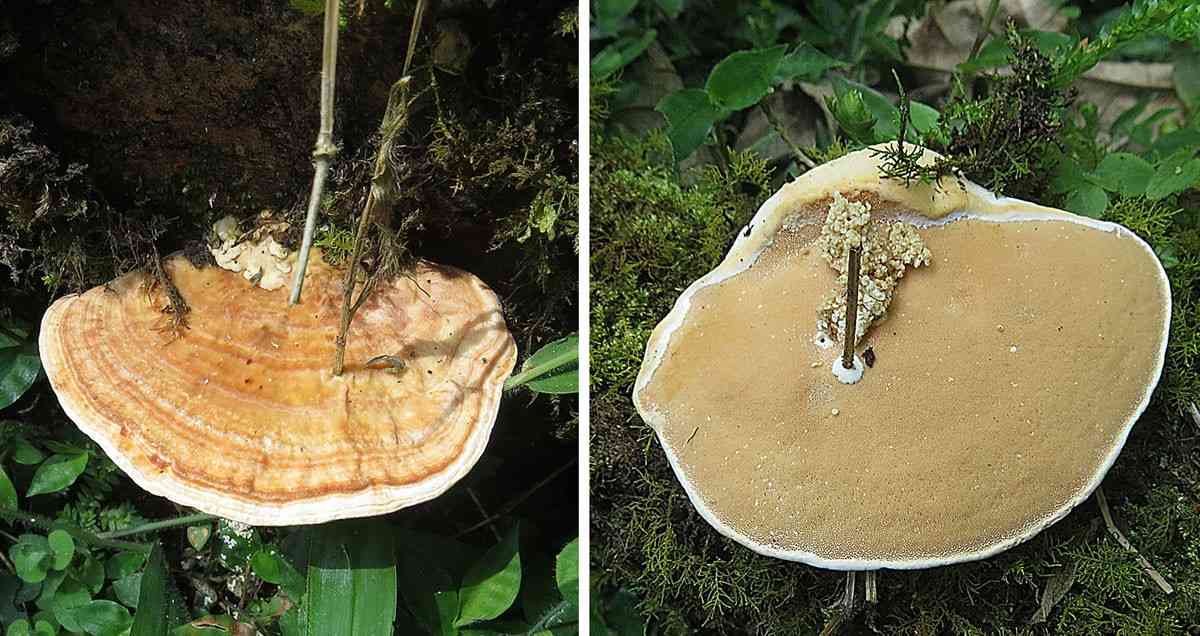
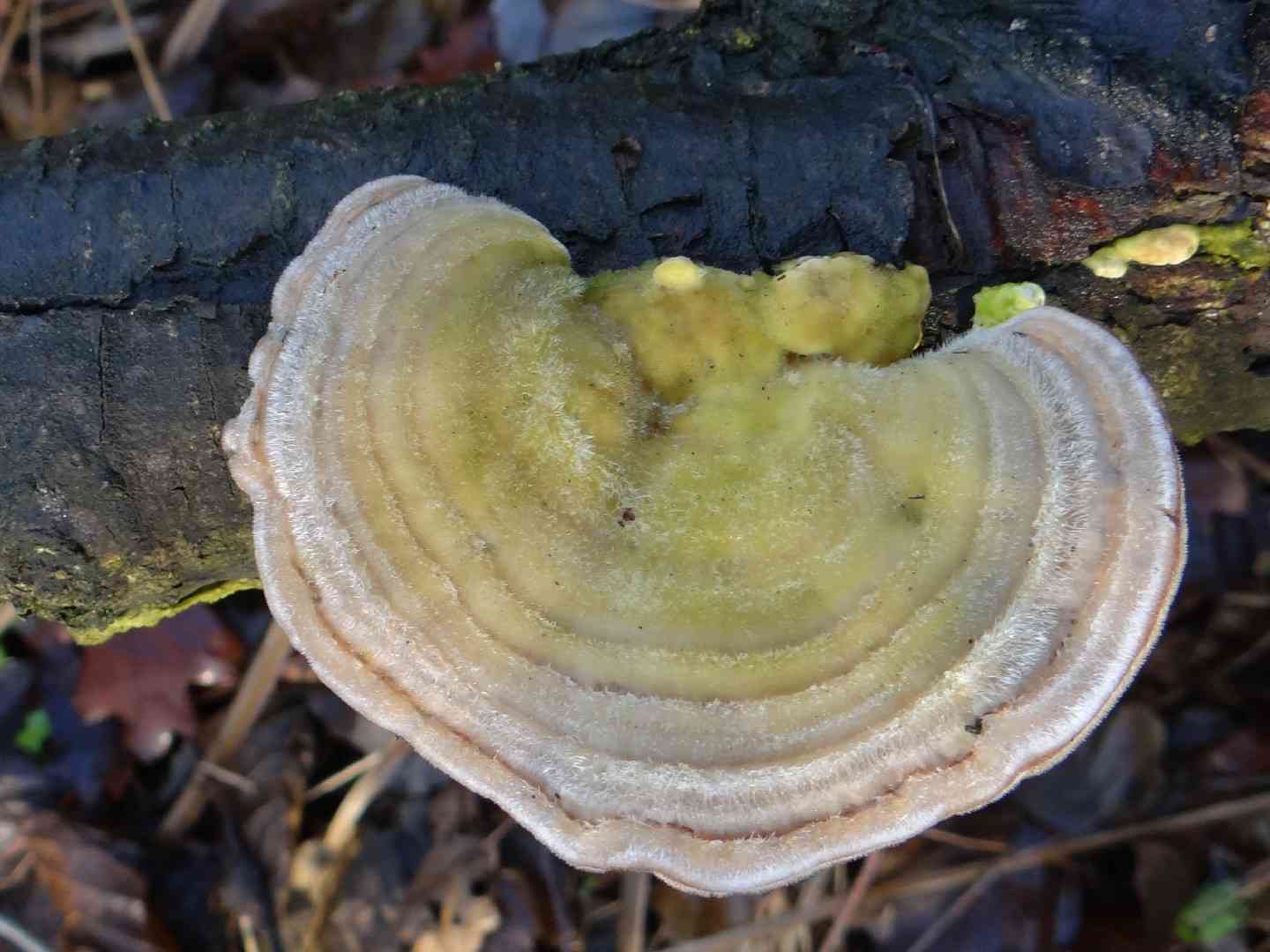
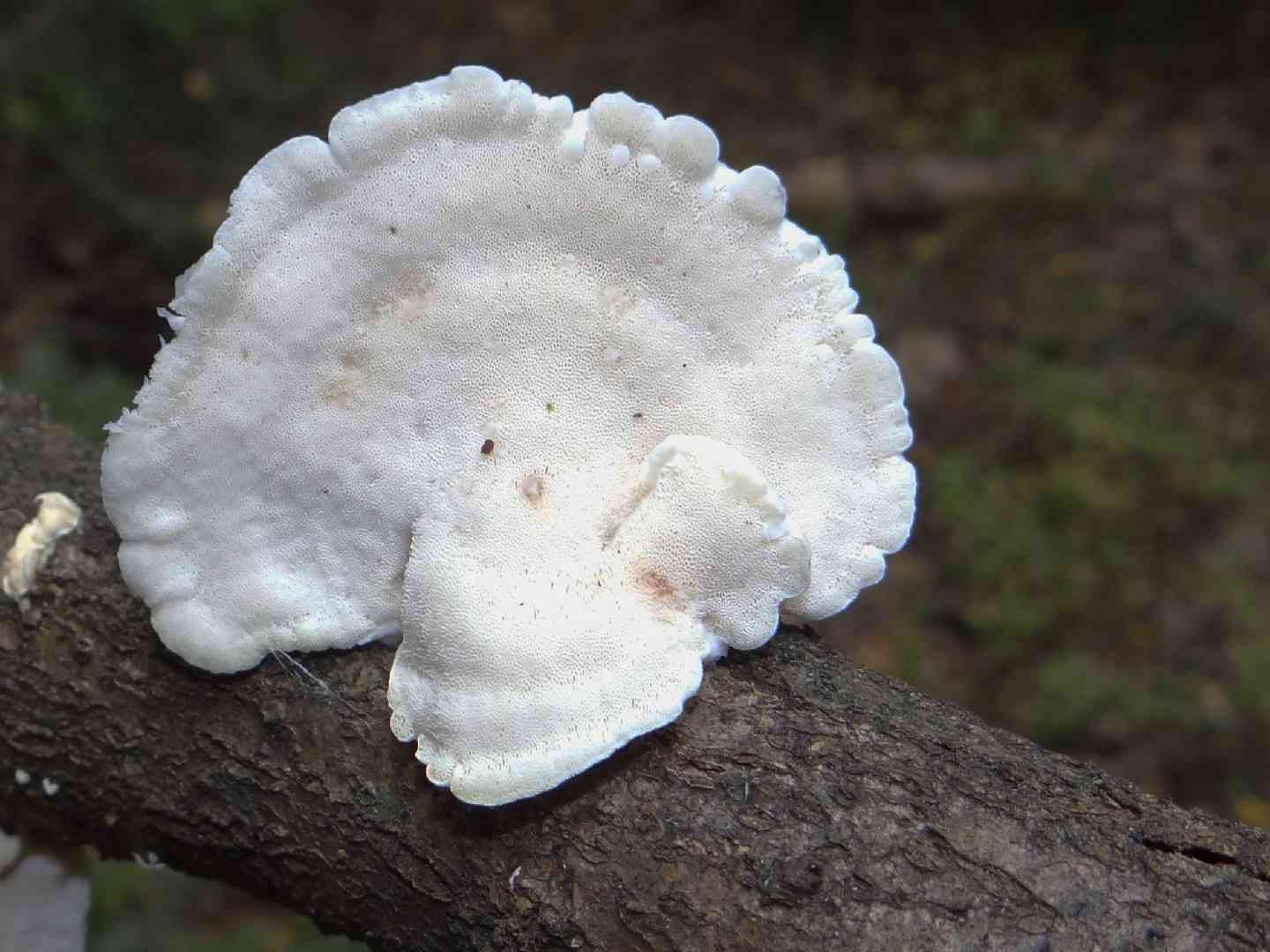
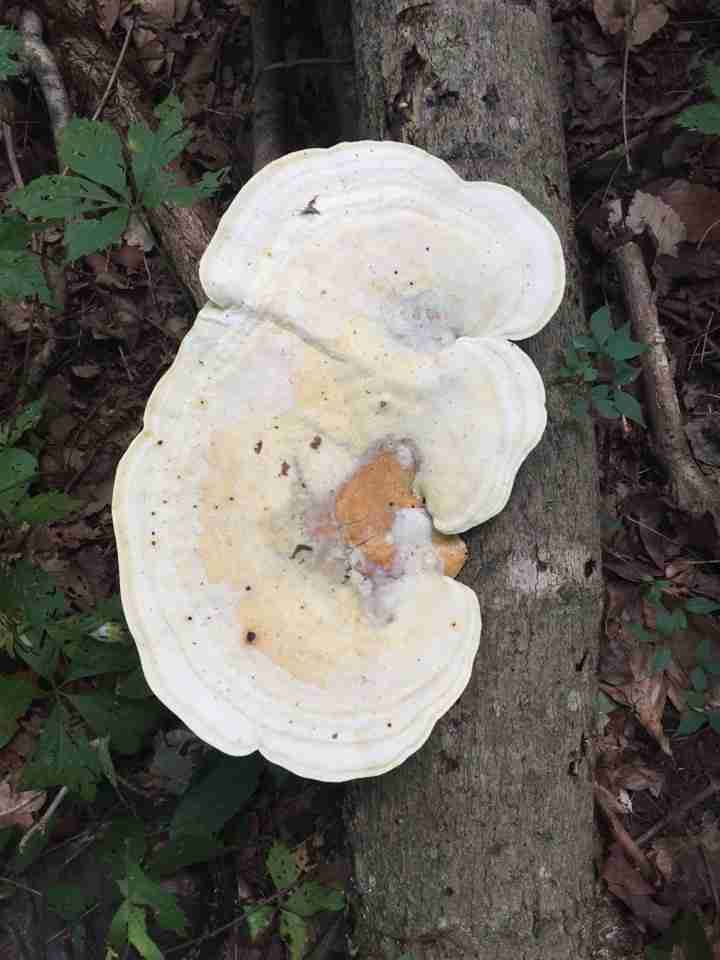
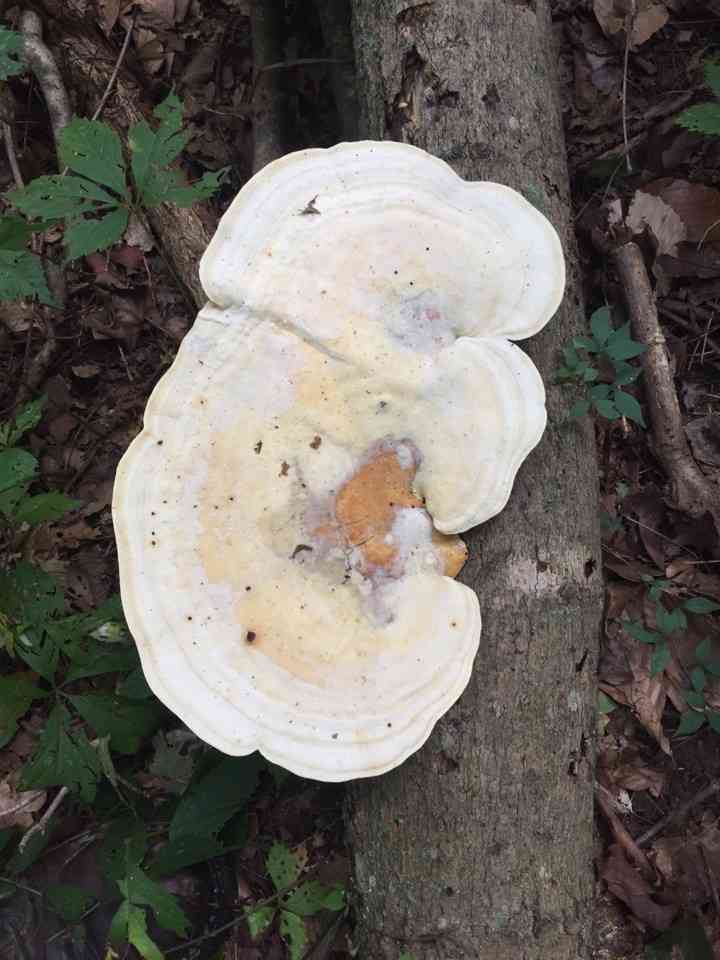
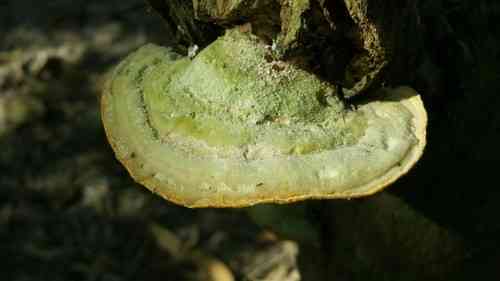
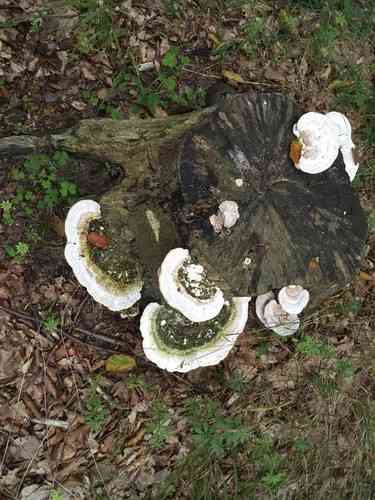
The polypore commonly known as 'Lumpy bracket' thrives on various hardwood species, manifesting as clustered growths on living trees or as rosette-shaped formations atop stumps. Its surface typically presents a very light hue, occasionally exhibiting a greenish tint due to the presence of algal colonies. These fungi can attain substantial sizes, as they persist through the winter months and continue to develop over multiple years.
In This Article
Attributes of Lumpy bracket
Cap Diameter
8 - 15 cm
Height
5 - 20 cm
Cap
8 - 15 cm in diameter; semicircular-shape; gray or white
Cap Shape
Convex
Cap Surfaces
Fibrillose-scaly
Stem
Absent
Flesh
3 cm thick, margin 2 - 3 mmthick; very tough; white to cream-colored
Spore Print Color
White
Odor
Strong and fragrant when fresh; otherwise mild.
Body Color
GreenSilverWhite
Flesh Bruises
The flesh or milk does not discolor when bruised or cut.
Growth Form
Solitary, Gregarious
Nutrient Gathering
Saprophytic
Substrate
Dead Woods
You can find Lumpy bracket by these plants
European beech
Occurence Habitats
Deciduous Woodland
Species Status
Very common
Endangered Species
No
Scientific Classification of Lumpy bracket
Phylum
Club fungi
Class
Mushroom-forming fungi
Order
Shelf fungi
Family
Polyporaceae
Genus
Trametes
Toxicity and Edibility of Lumpy bracket
Is Lumpy bracket Toxic?
Toxicity information is not available for this mushroom. Always consult with an expert before consuming any wild mushrooms.