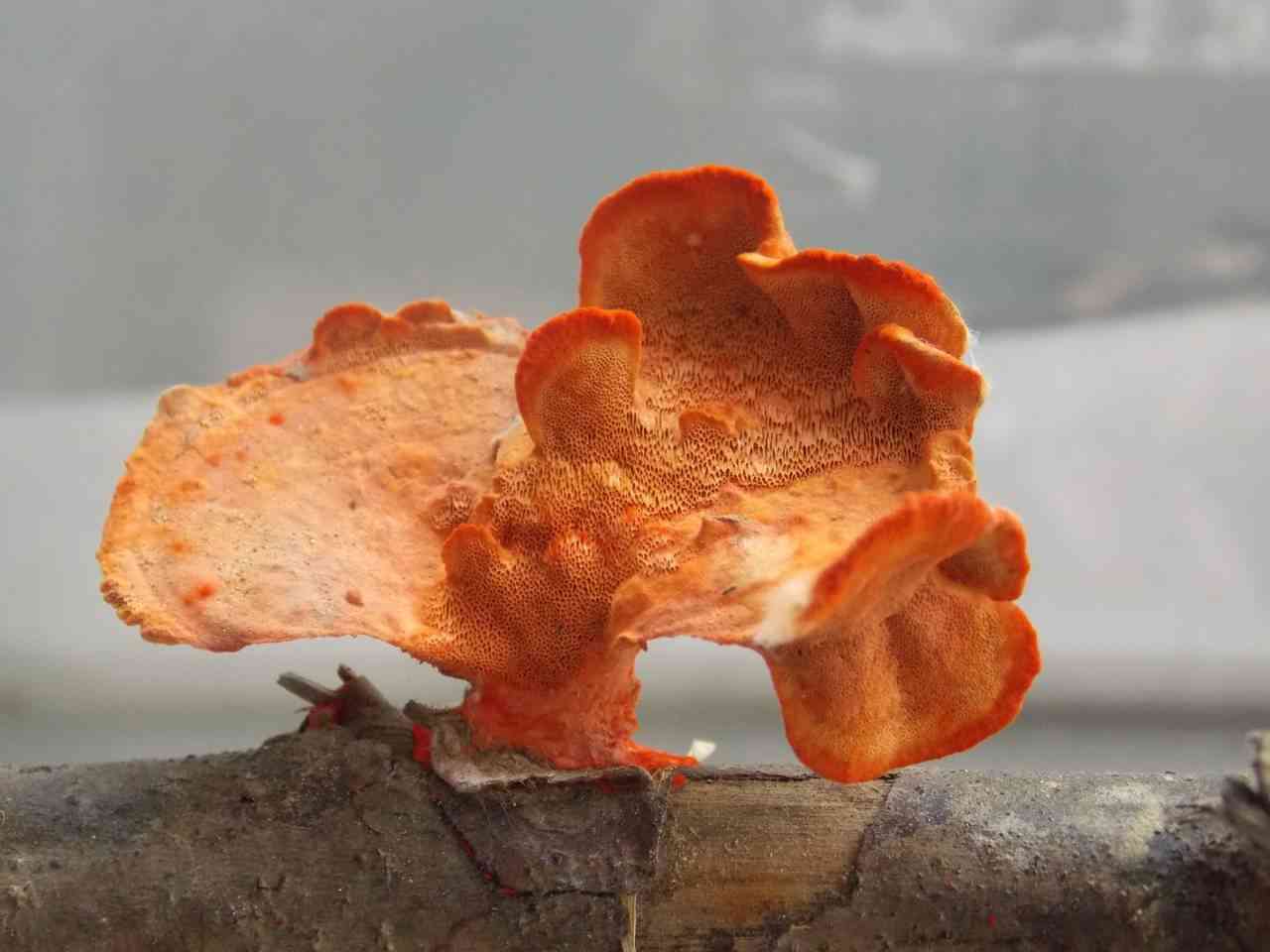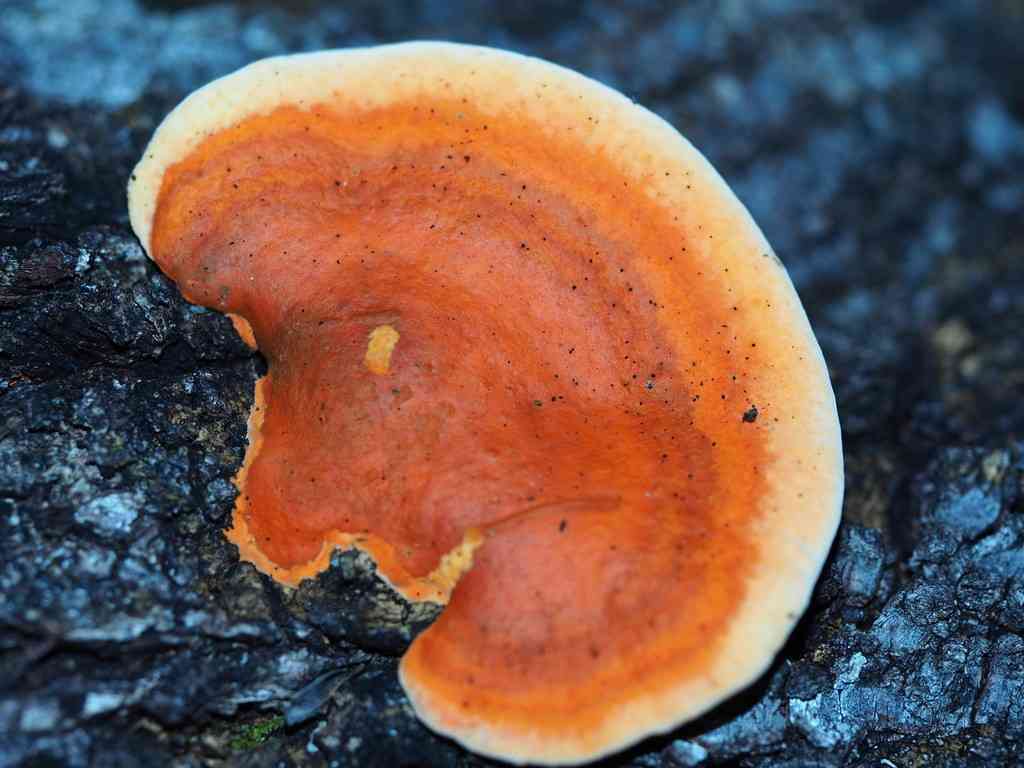


Southern cinnabar polypore
Trametes coccinea
A species of Trametes.
The southern cinnabar polypore, while adaptable, typically thrives on decaying wood in proximity to open water. This fungus produces fruiting bodies from late summer through early winter. When young, it exhibits a vivid orange hue, much like cinnabar, as its name suggests; however, this color may diminish with maturity.
In This Article
Attributes of Southern cinnabar polypore
Spore Print Color
White
Body Color
RedOrange
Growth Form
Gregarious, Clustered
Nutrient Gathering
Saprophytic
Substrate
On wood
You can find Southern cinnabar polypore by these plants
Willows
Species Status
Widely distributed
Endangered Species
No
Scientific Classification of Southern cinnabar polypore
Phylum
Club fungi
Class
Mushroom-forming fungi
Order
Shelf fungi
Family
Polyporaceae
Genus
Trametes
Toxicity and Edibility of Southern cinnabar polypore
Is Southern cinnabar polypore Toxic?
Toxicity information is not available for this mushroom. Always consult with an expert before consuming any wild mushrooms.