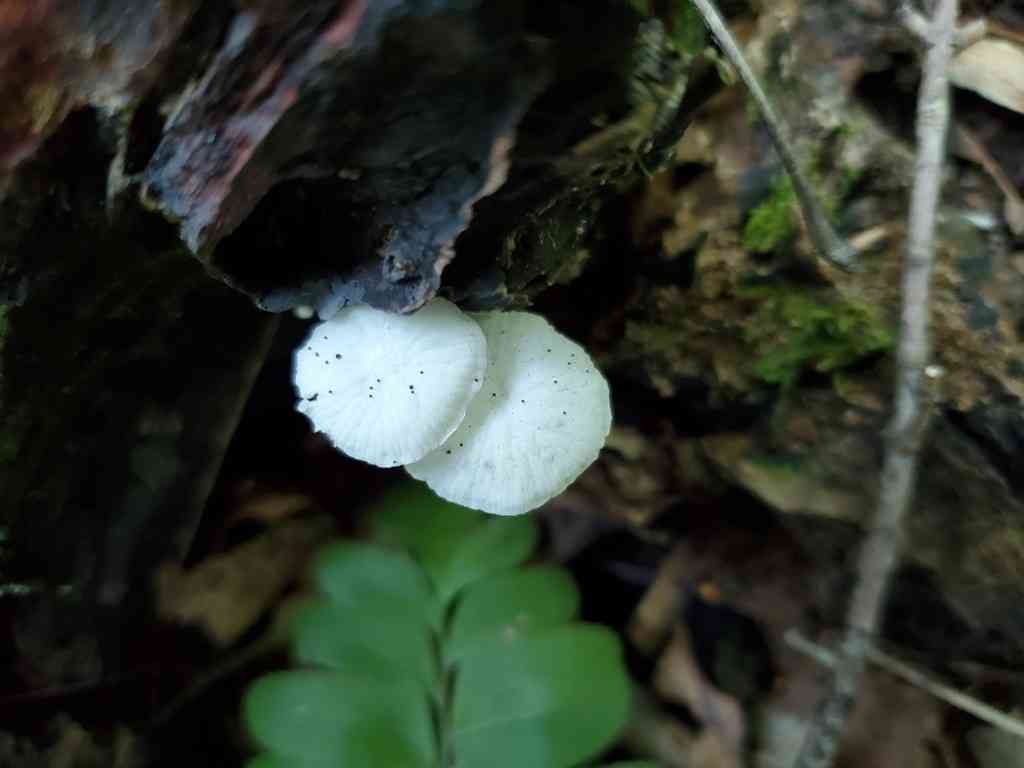
Black-stalked Marasmius
Tetrapyrgos nigripes
A species of Tetrapyrgos.
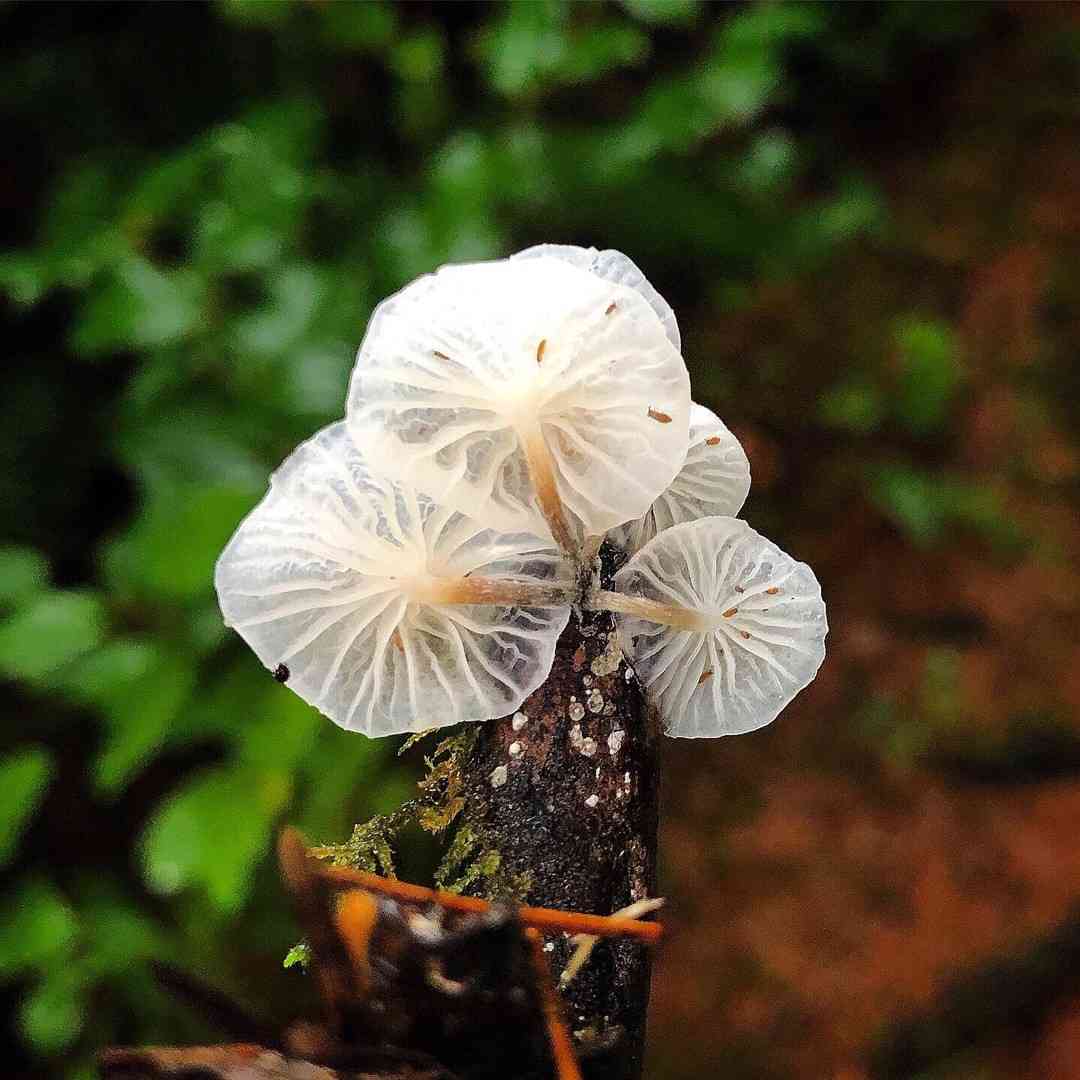
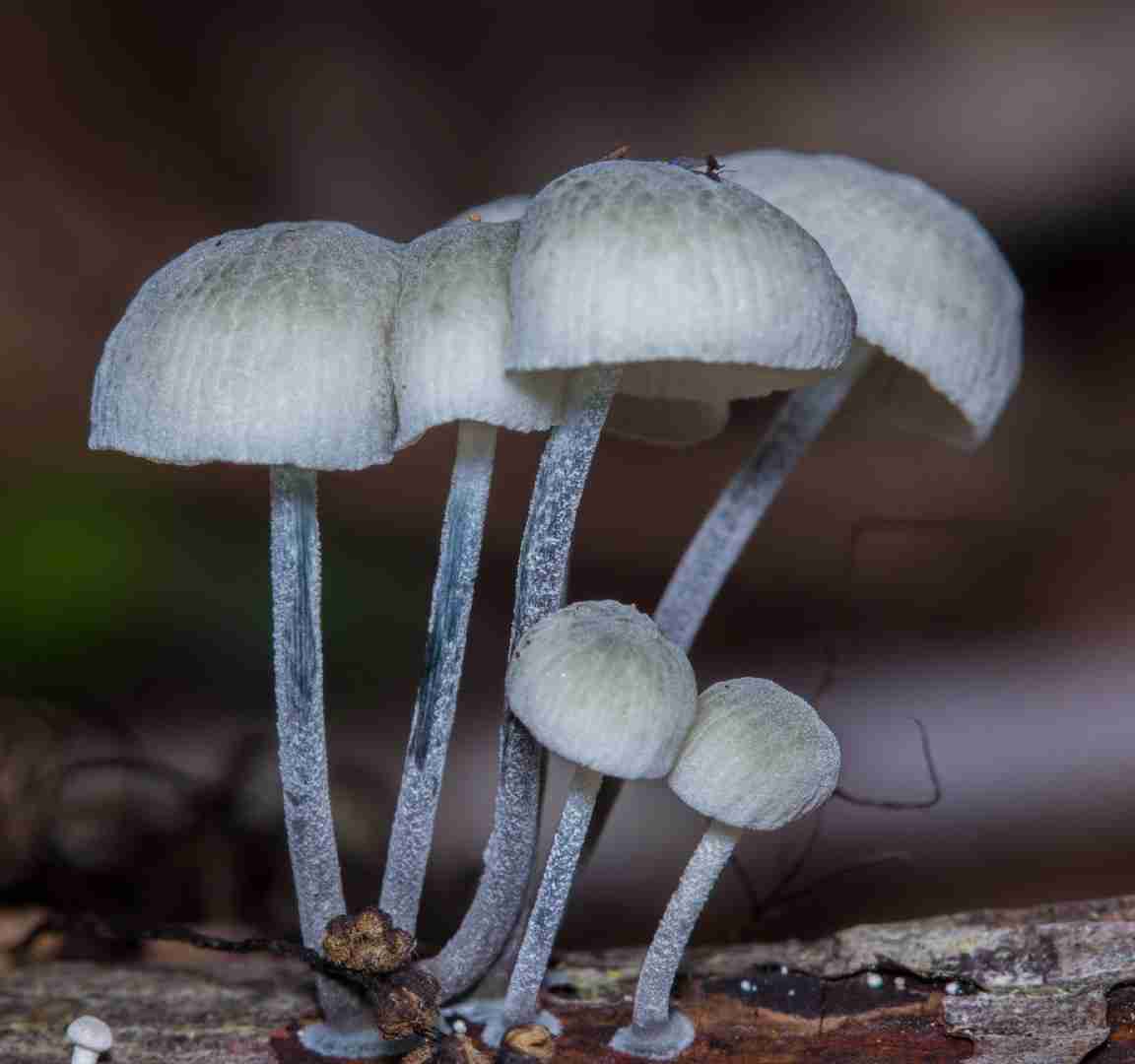
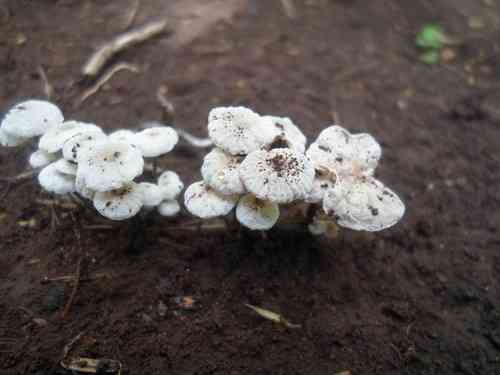
The diminutive fruiting body of the black-stalked Marasmius (Tetrapyrgos nigripes) presents a peculiar aesthetic, almost as if its cap and stem originated from separate fungi before being joined. This unusual pairing results in a distinct and easily recognizable look. These mushrooms are remarkably small, typically not exceeding the dimensions of a bottle cap. They exhibit a preference for emerging from small organic debris like twigs and fallen leaves.
In This Article
Attributes of Black-stalked Marasmius
Cap Diameter
1 - 2 cm
Height
3 - 6 cm
Cap
Cap 5 - 20 mm across; convex, flat; white
Cap Shape
Convex, Flat
Cap Surfaces
Smooth
Gills
Adnexed, decurrent; distant; white; sometimes discoloring reddish
Gill Attachment
Attached
Stem
Stem 2 - 5 cm long, less than 2 mm thick; whitish, black; dry, covered with tiny white hairs
Stem Shapes
Cylindrical
Stem Surfaces
Smooth to slightly fibrous
Flesh
Thin; a little rubbery; whitish
Ring
Ringless
Spore Print Color
White
Odor
Mildly mushroomy but not distinctive.
Body Color
BlackWhite
Flesh Bruises
The flesh or milk does not discolor when bruised or cut.
Growth Form
Solitary, Gregarious
Nutrient Gathering
Saprophytic
Substrate
Leaf or Needle Litter, Dead Woods
Occurence Habitats
Deciduous Woodland
Species Status
Widely distributed
Endangered Species
No
Scientific Classification of Black-stalked Marasmius
Phylum
Club fungi
Class
Mushroom-forming fungi
Order
Gilled fungi
Family
Marasmiaceae
Genus
Tetrapyrgos
Toxicity and Edibility of Black-stalked Marasmius
Is Black-stalked Marasmius Toxic?
Toxicity information is not available for this mushroom. Always consult with an expert before consuming any wild mushrooms.