Douglas fir cone mushroom
Strobilurus trullisatus
A species of Strobilurus.
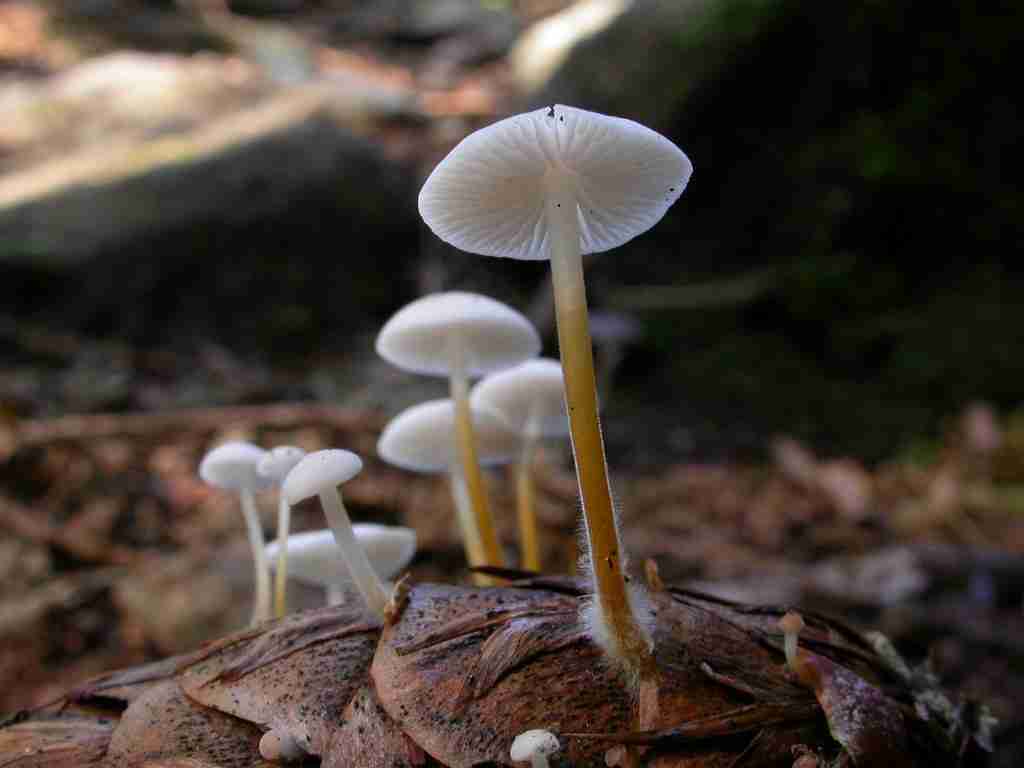
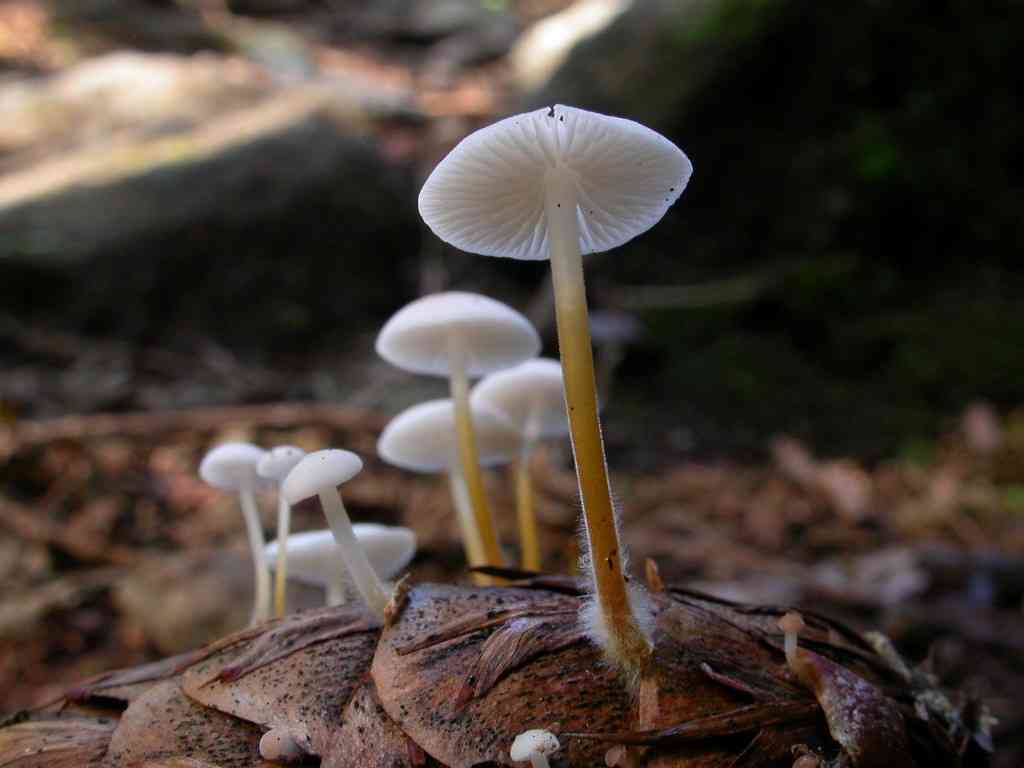
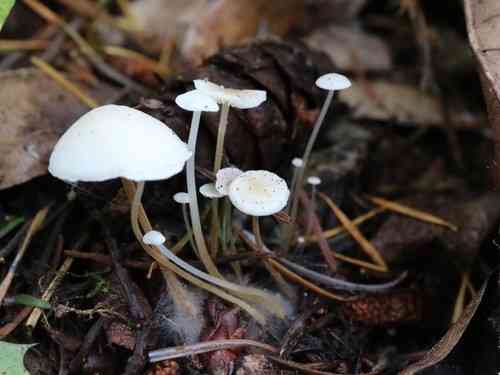
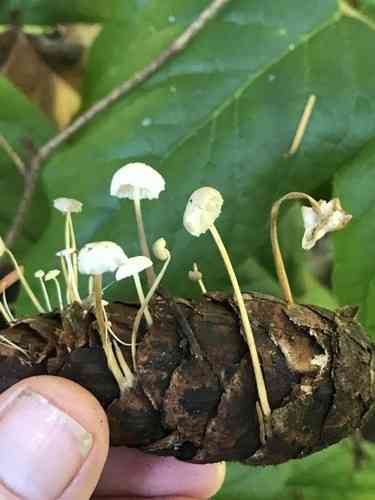
The Strobilurus trullisatus, also known as the douglas fir cone mushroom, frequently emerges from fallen cones of the Douglas fir. These mushrooms are notably small, with stems slender enough to nestle between the scales of conifer cones. Their usual hue is a vivid white, sometimes exhibiting a faint pinkish tint. The cap is predominantly flat, with its edges curling downwards to reveal closely packed gills.
In This Article
Attributes of Douglas fir cone mushroom
Cap Diameter
1 - 2 cm
Height
2 - 5 cm
Cap
Cap 4 - 17 mm across; convex to nearly plane; pallid brown, pale pinkish; surface smooth to faintly wrinkled
Cap Shape
Convex, Depressed
Cap Surfaces
Smooth, Visible lines or stripes
Gills
Attached; close; whitish to pinkish
Gill Attachment
Attached
Stem
Stem 1.5 - 4.5 cm long, 1 - 2 mm thick; white, yellowish-brown, orange-brown; surface subtomentose
Stem Shapes
Cylindrical
Stem Surfaces
Smooth to slightly fibrous
Flesh
Thin; white
Ring
Ringless
Spore Print Color
White
Odor
Mildly mushroomy but not distinctive.
Body Color
BrownWhiteOrangePink
Flesh Bruises
The flesh or milk does not discolor when bruised or cut.
Growth Form
Solitary, Gregarious
Nutrient Gathering
Saprophytic
Substrate
Dead Woods
You can find Douglas fir cone mushroom by these plants
Spruces, Pines, Norway spruce
Occurence Habitats
Coniferous Woodland
Endangered Species
No
Scientific Classification of Douglas fir cone mushroom
Phylum
Club fungi
Class
Mushroom-forming fungi
Order
Gilled fungi
Family
Physalacriaceae
Genus
Strobilurus
Toxicity and Edibility of Douglas fir cone mushroom
Is Douglas fir cone mushroom Toxic?
Toxicity information is not available for this mushroom. Always consult with an expert before consuming any wild mushrooms.

