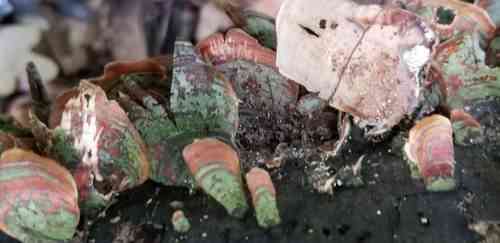
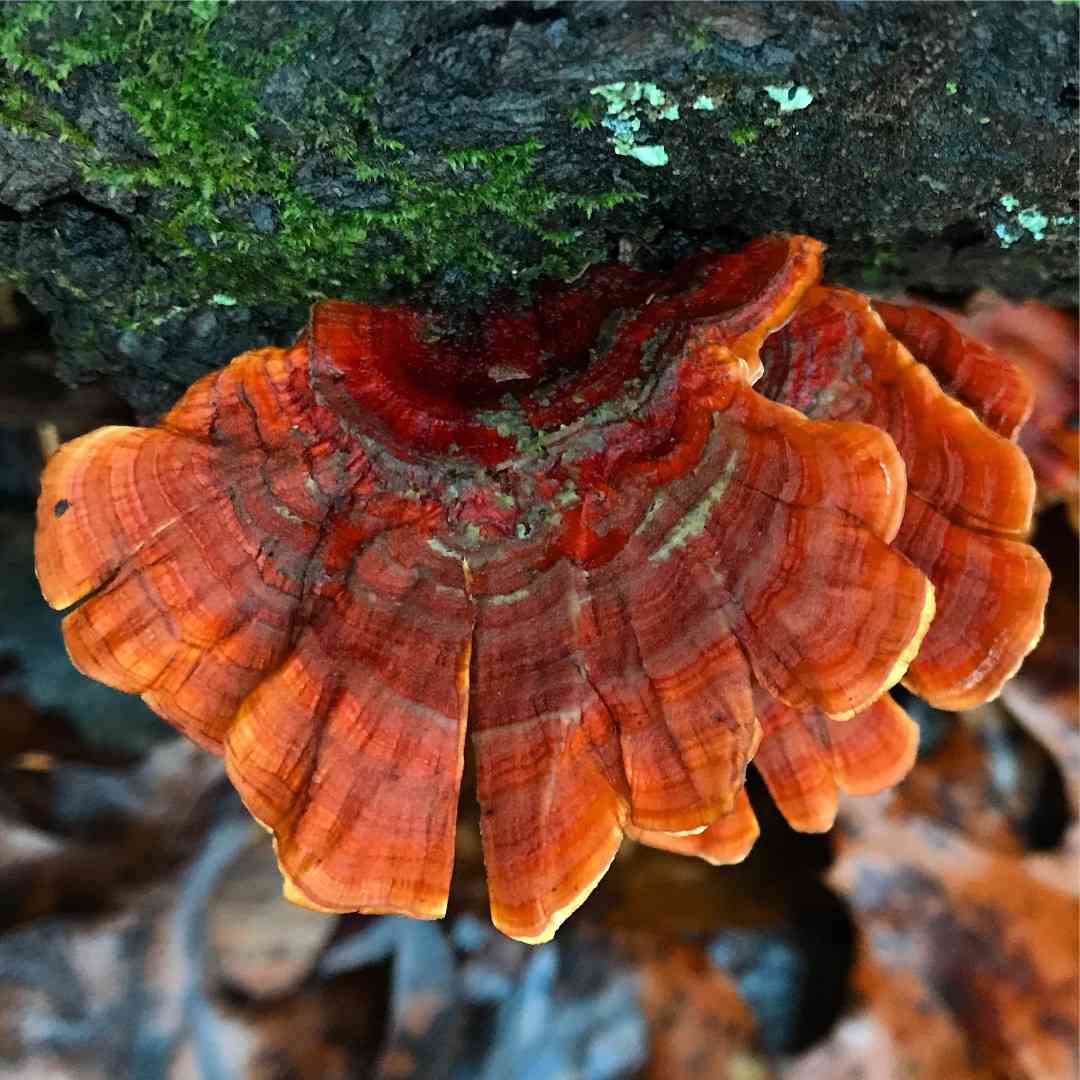
False turkey-tail
Stereum ostrea
A species of Leaf fungus. Also known as Golden curtain crust.
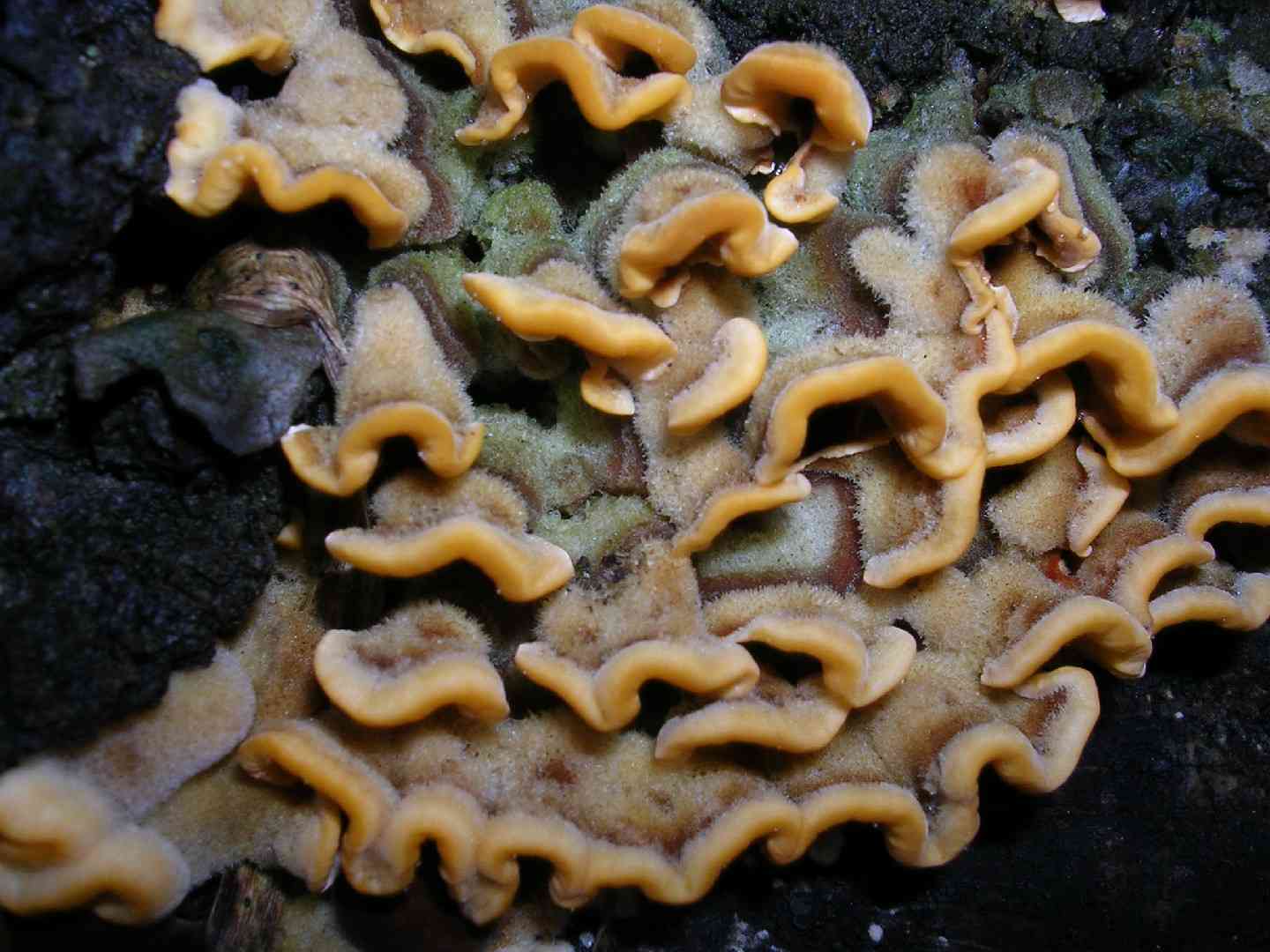
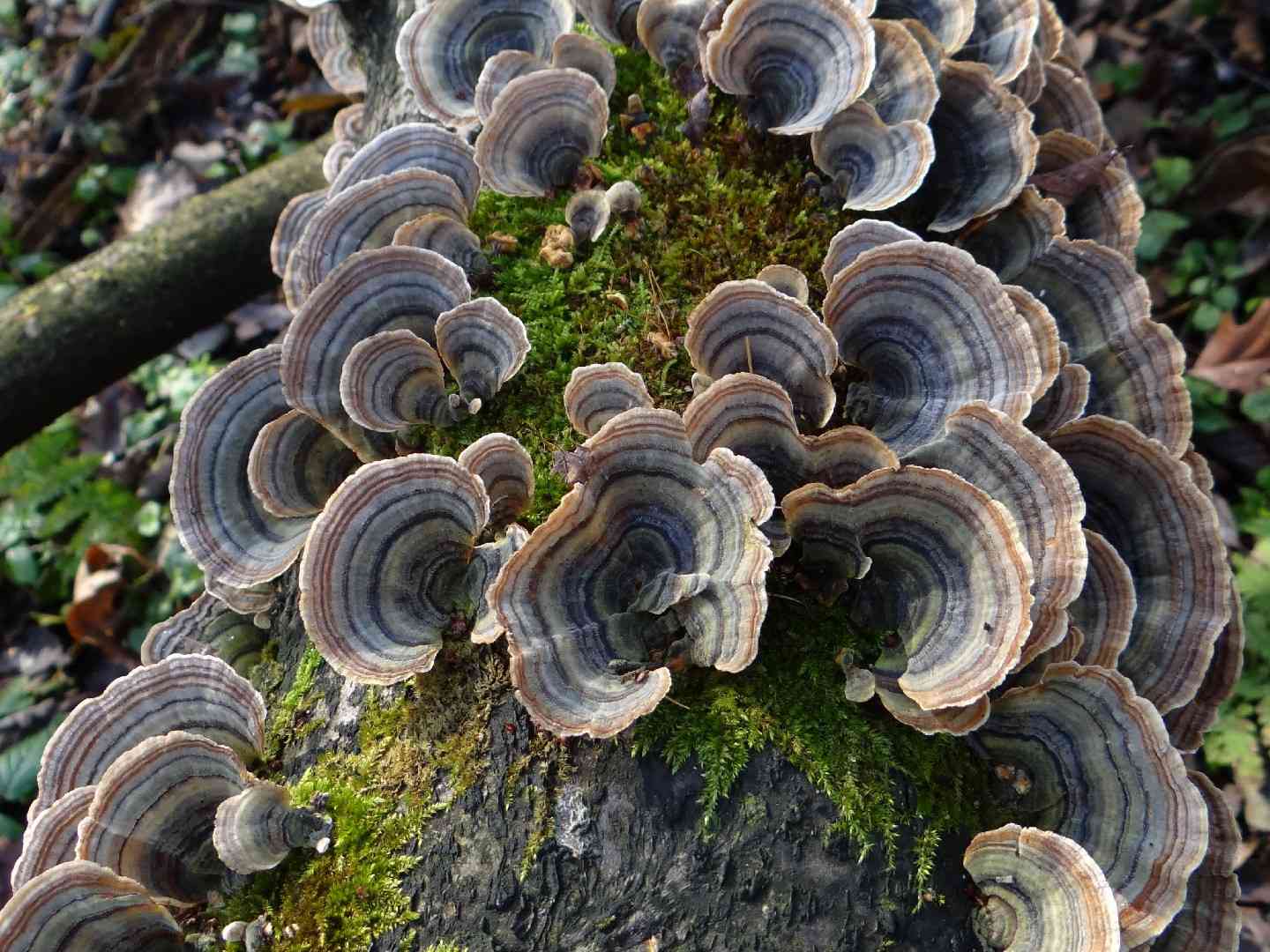
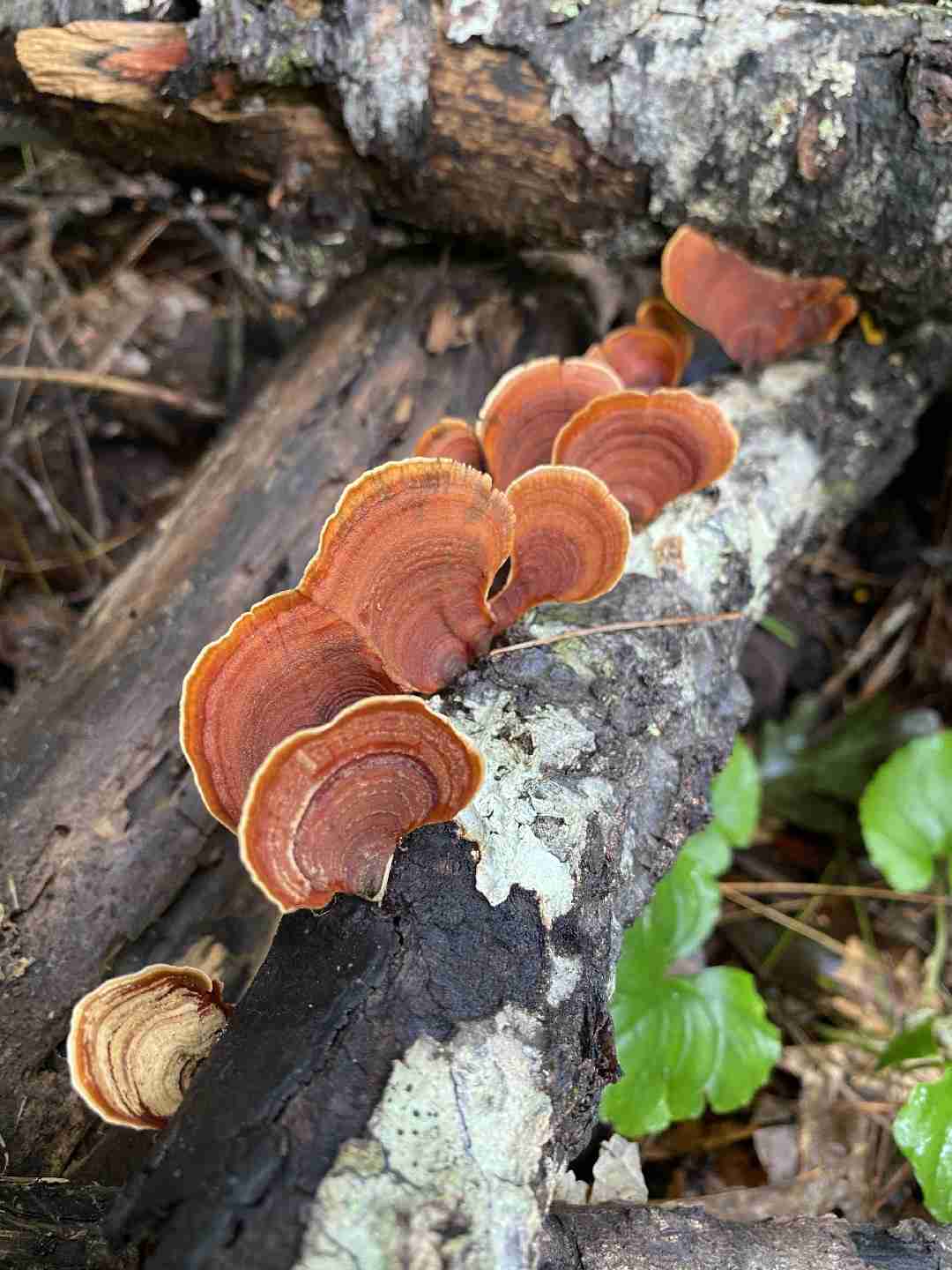
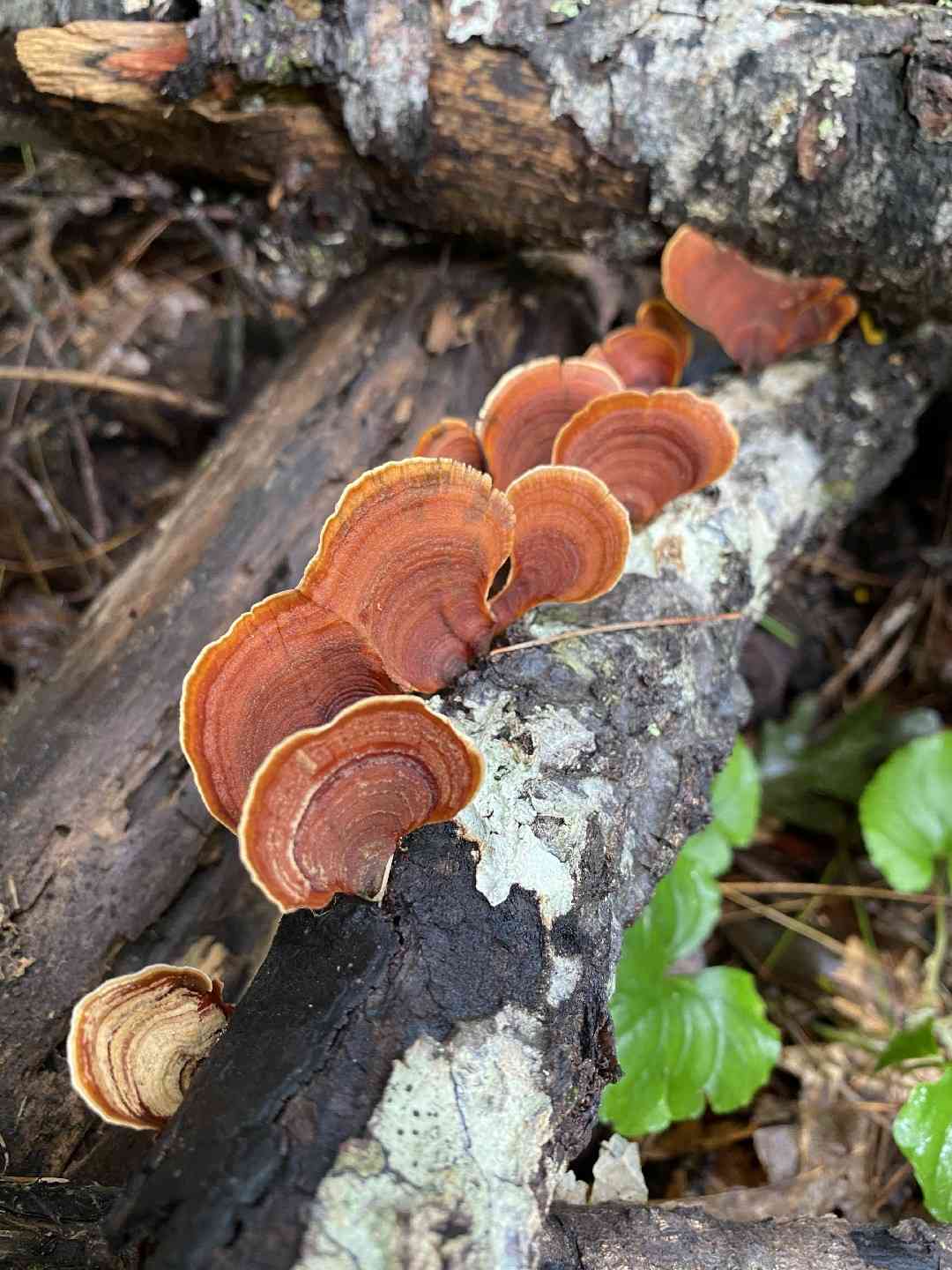
The false turkey-tail, a prevalent woodland fungus throughout North America, flourishes in damp conditions and is abundant on decomposing wood. Its name derives from its resemblance to the common Turkey Tail (Tremetes versicolor), with both species appearing as thin, roughly semi-circular sheets. False turkey-tails possess a tough, woody texture and are considered unsuitable for consumption.
In This Article
Attributes of False turkey-tail
Cap Diameter
1 - 7 cm
Height
1 - 5 mm
Cap
1 - 7 cm across; fan-shaped, irregularly kidney-shaped; with concentric zones of red, orange, yellowish, brown; smooth
Flesh
Insubstantial; tough
Spore Print Color
White
Odor
Faint smell of bitter almonds
Body Color
BrownYellowRedGrayWhiteOrange
Flesh Bruises
The flesh or milk does not discolor when bruised or cut.
Growth Form
Scattered, Gregarious
Nutrient Gathering
Saprophytic
Substrate
Dead Woods
You can find False turkey-tail by these plants
Northern red oak, White oak
Occurence Habitats
Deciduous Woodland
Species Status
Widely distributed in North America.
Endangered Species
No
Scientific Classification of False turkey-tail
Phylum
Club fungi
Class
Mushroom-forming fungi
Order
Russulales
Family
Crusts
Genus
Leaf fungus
Toxicity and Edibility of False turkey-tail
Is False turkey-tail Toxic?
Toxicity information is not available for this mushroom. Always consult with an expert before consuming any wild mushrooms.