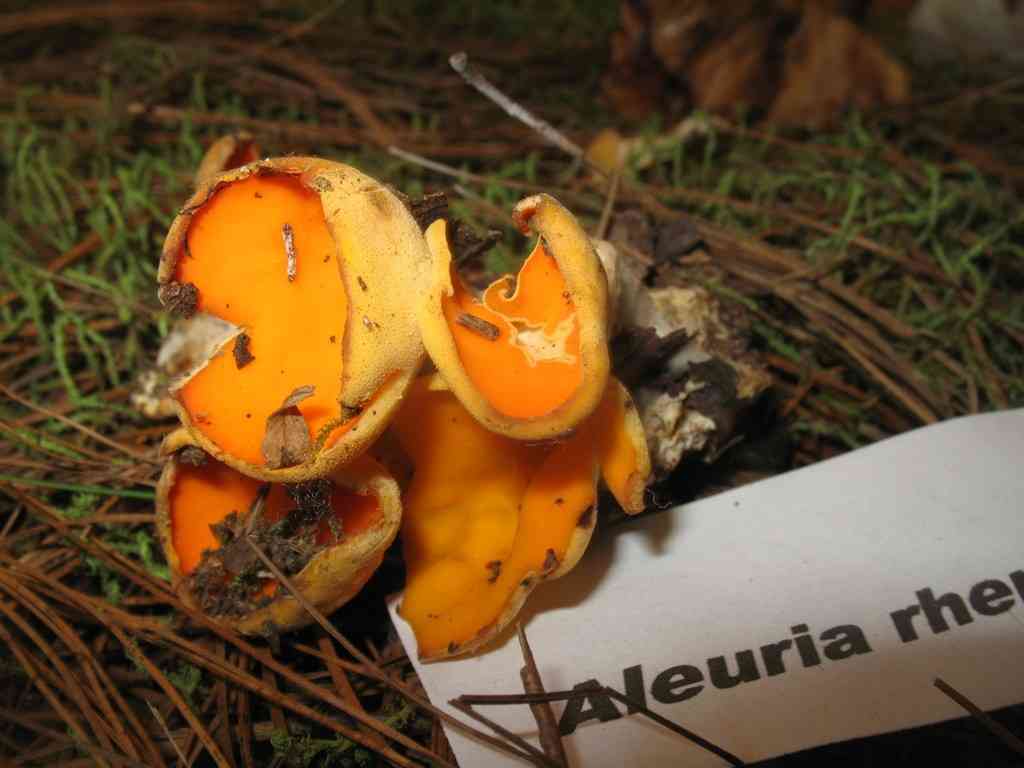
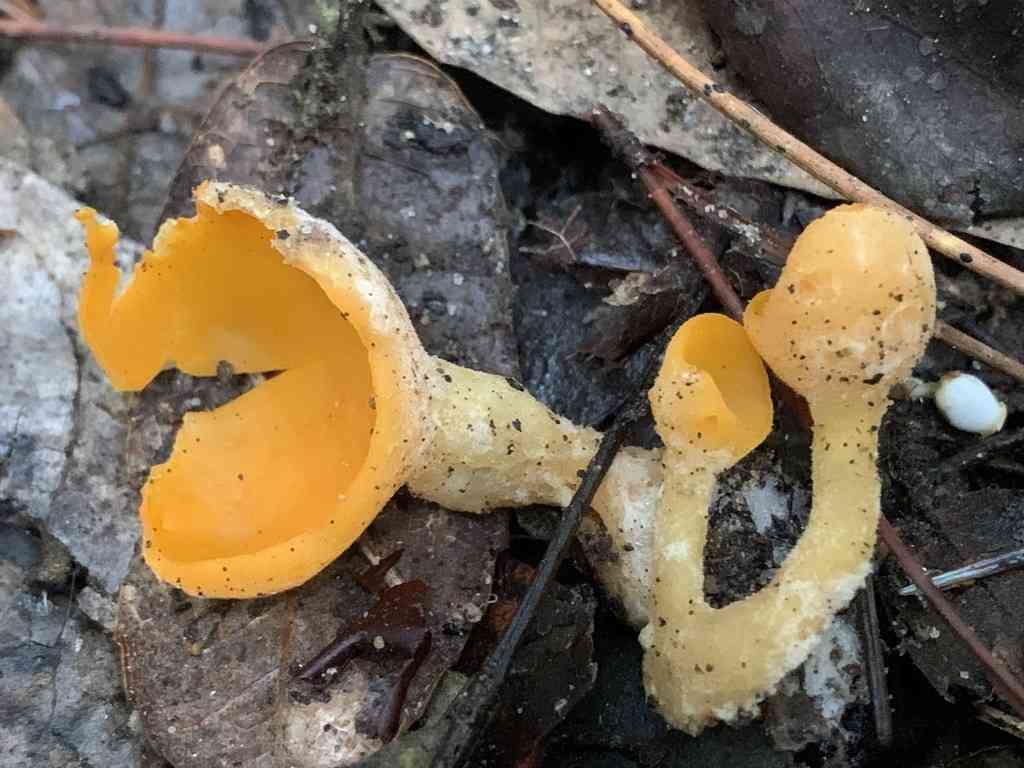
Stalked orange-peel fungus
Sowerbyella rhenana
A species of Sowerbyella.
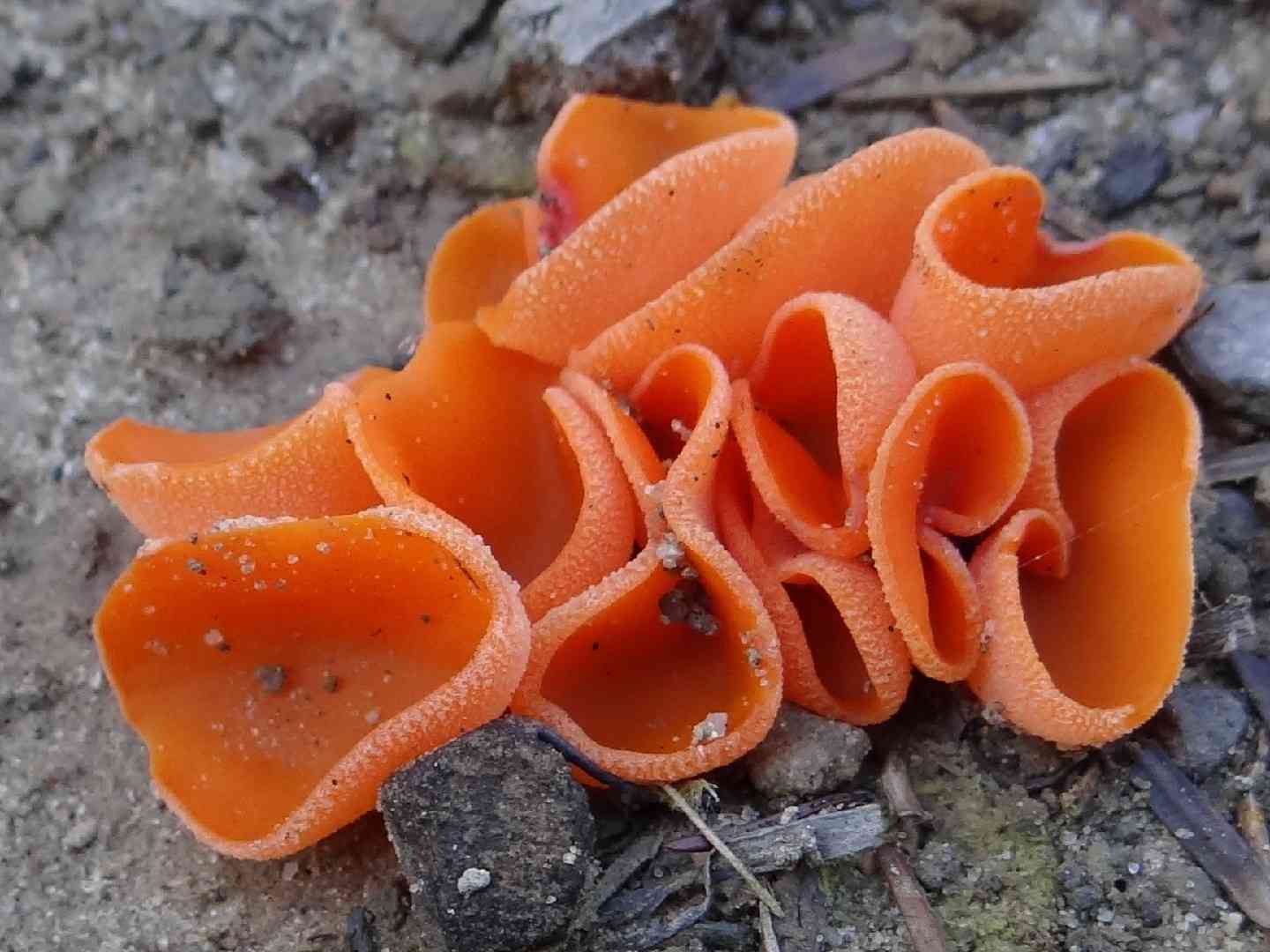
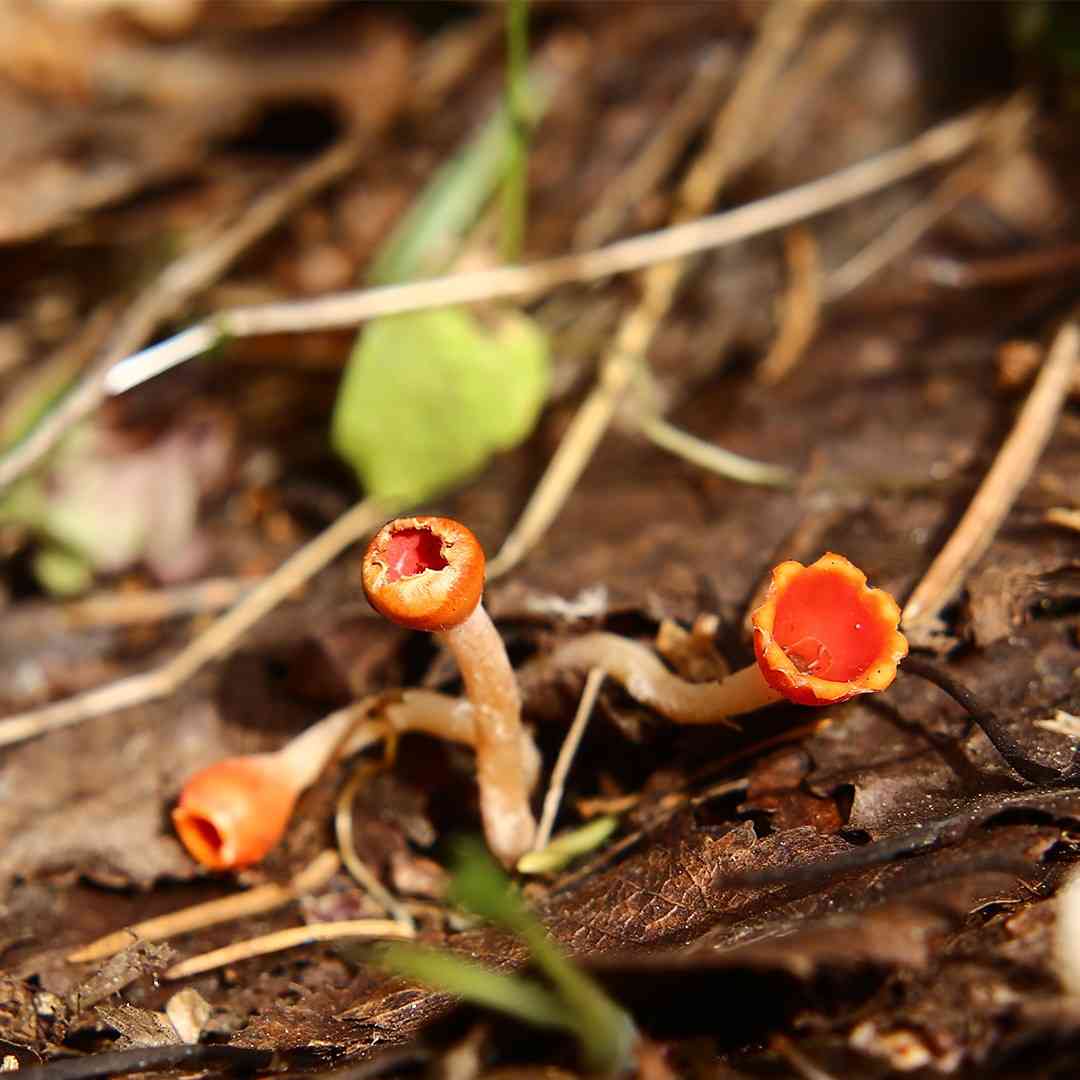
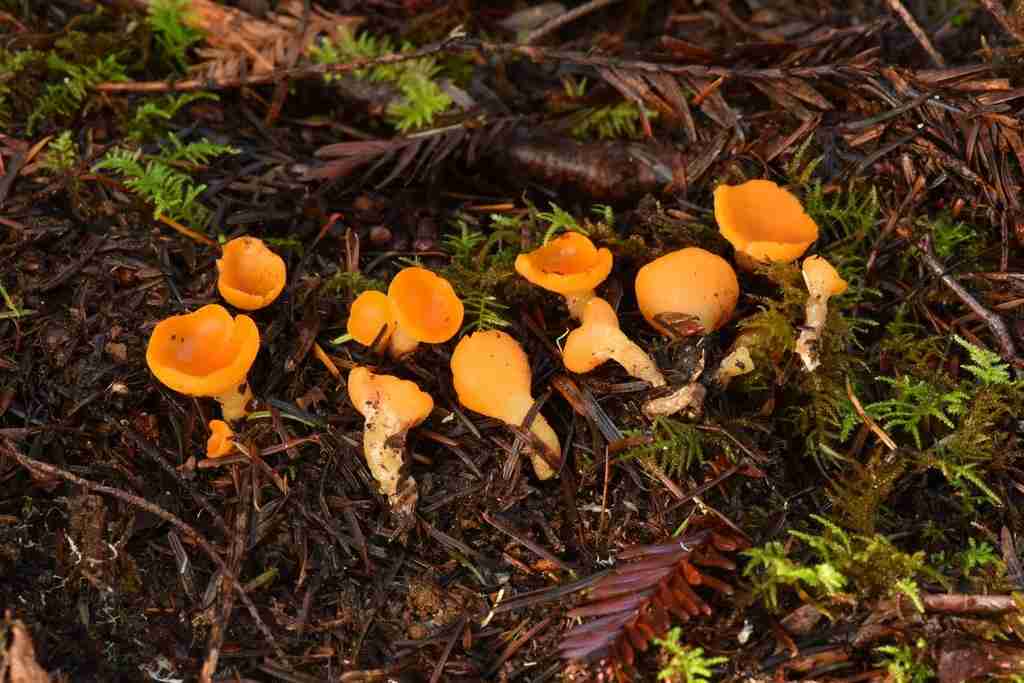
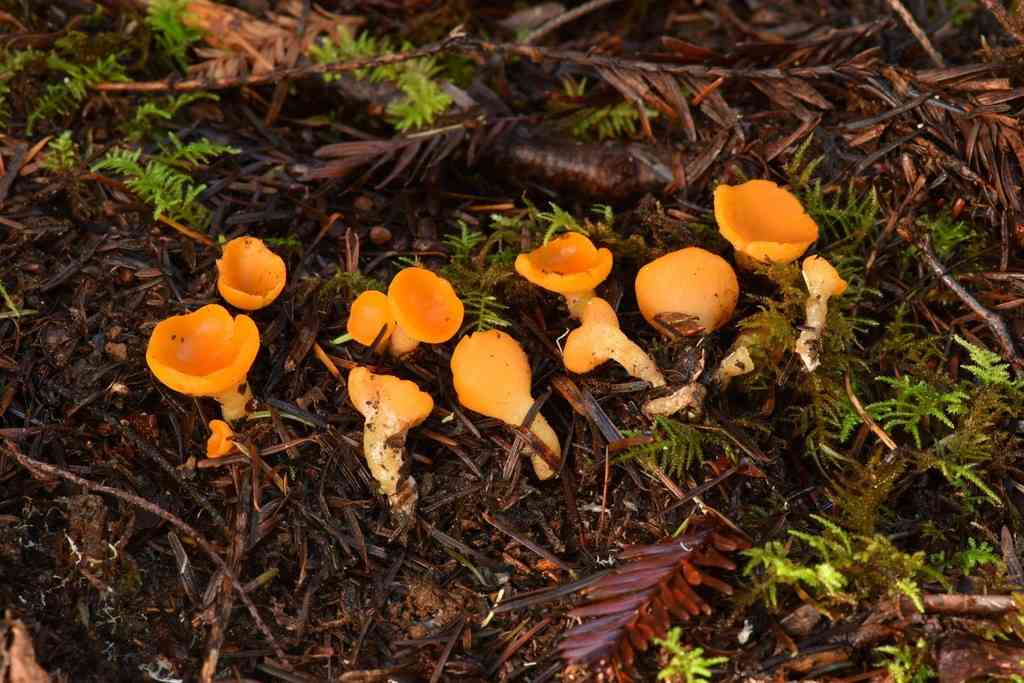
The stalked orange-peel fungus, recognized by its cup-like fruiting bodies, displays an exterior hue that varies from yellow to orange. This species prospers in temperate climates and commonly colonizes decomposing wood, frequently appearing in clusters. While its vivid coloration makes it conspicuous in its environment, its primary biological function is the breakdown of organic material, thereby facilitating nutrient circulation within ecosystems.
In This Article
Attributes of Stalked orange-peel fungus
Cap Diameter
1.8 - 2.5 cm
Height
1 - 5 cm
Cap
Cap 1.8 - 2.5 cm across; yellow-orange to orange, pale yellow; surface smooth, with finely scurfy
Stem
Stem 1 - 2.5 cm long, 3 - 5 mm thick; whitish to pale orange to orange
Stem Shapes
Rooting
Flesh
Brittle; orangish; unchanging when sliced
Ring
Ringless
Spore Print Color
White
Odor
Mildly mushroomy, not overly distinct.
Body Color
Orange
Flesh Bruises
The flesh or milk does not discolor when bruised or cut.
Growth Form
Gregarious
Nutrient Gathering
Mycorrhizal
Substrate
On soil, Mosses
Occurence Habitats
Coniferous Woodland
Species Status
Widely distributed
Endangered Species
No
Scientific Classification of Stalked orange-peel fungus
Phylum
Sac fungi
Class
Pezizomycetes
Order
Pezizales
Family
Pyronemataceae
Genus
Sowerbyella
Toxicity and Edibility of Stalked orange-peel fungus
Is Stalked orange-peel fungus Toxic?
Toxicity information is not available for this mushroom. Always consult with an expert before consuming any wild mushrooms.