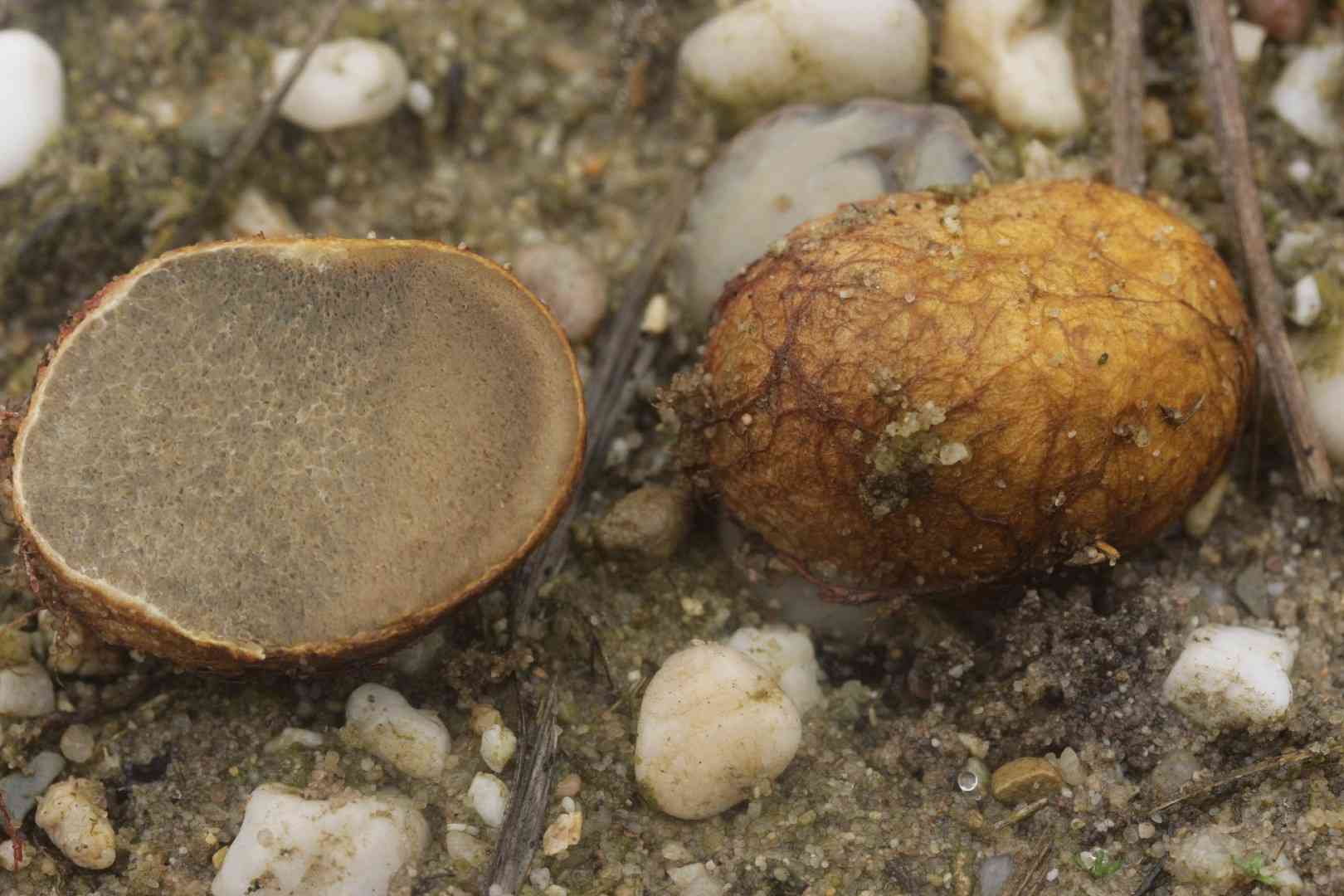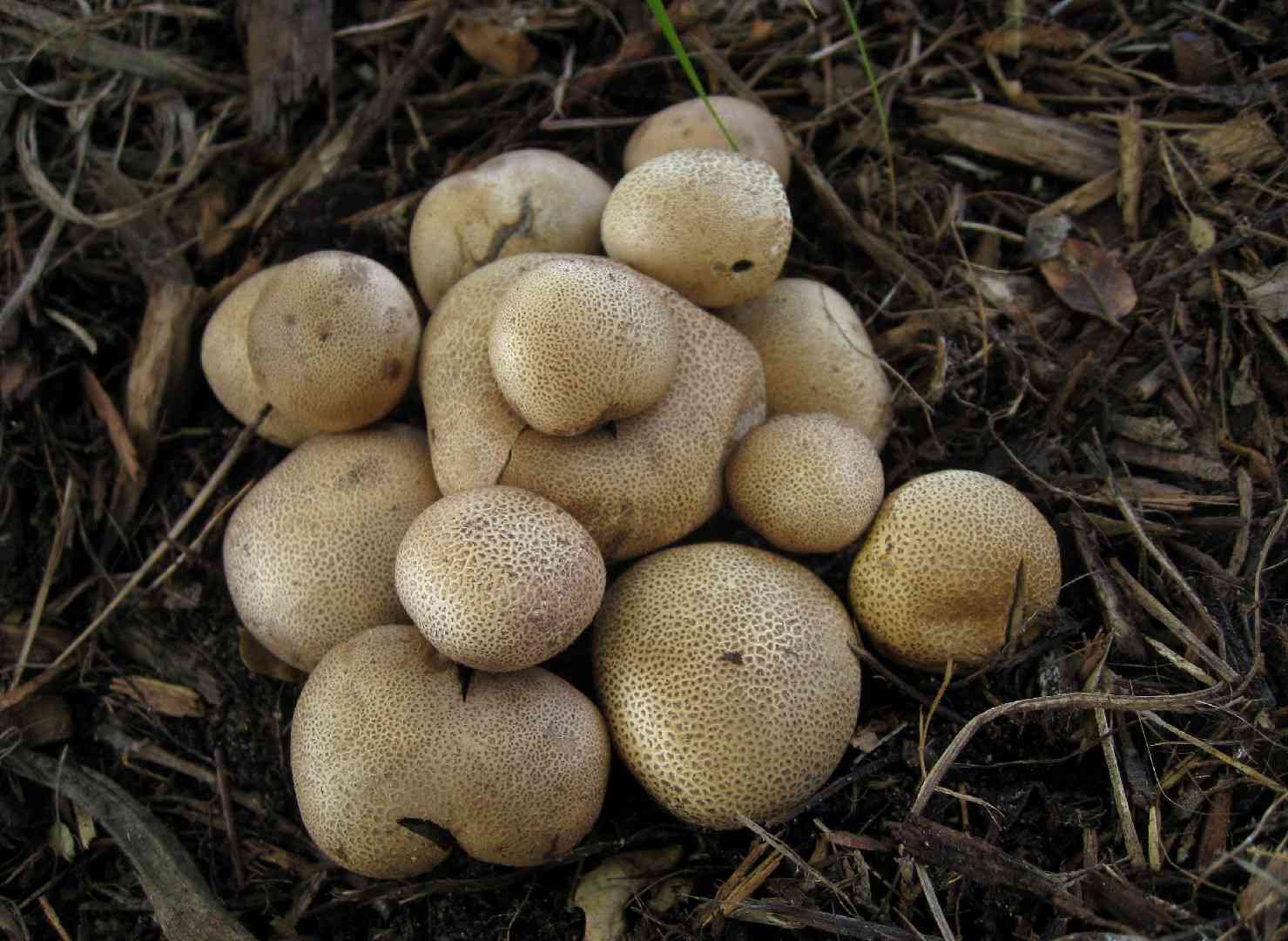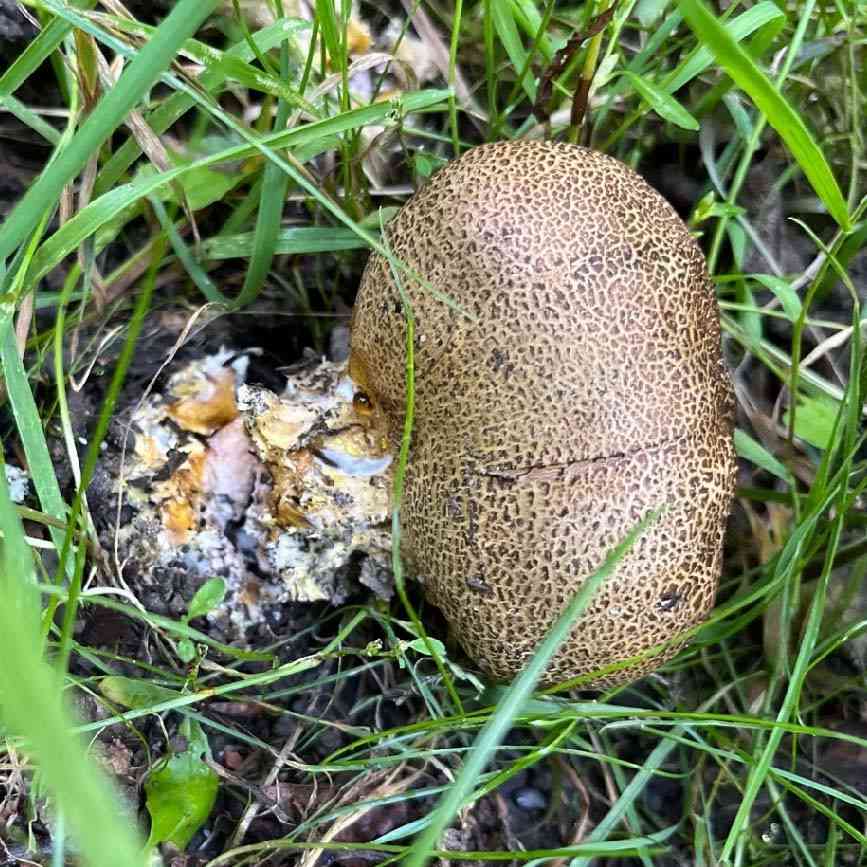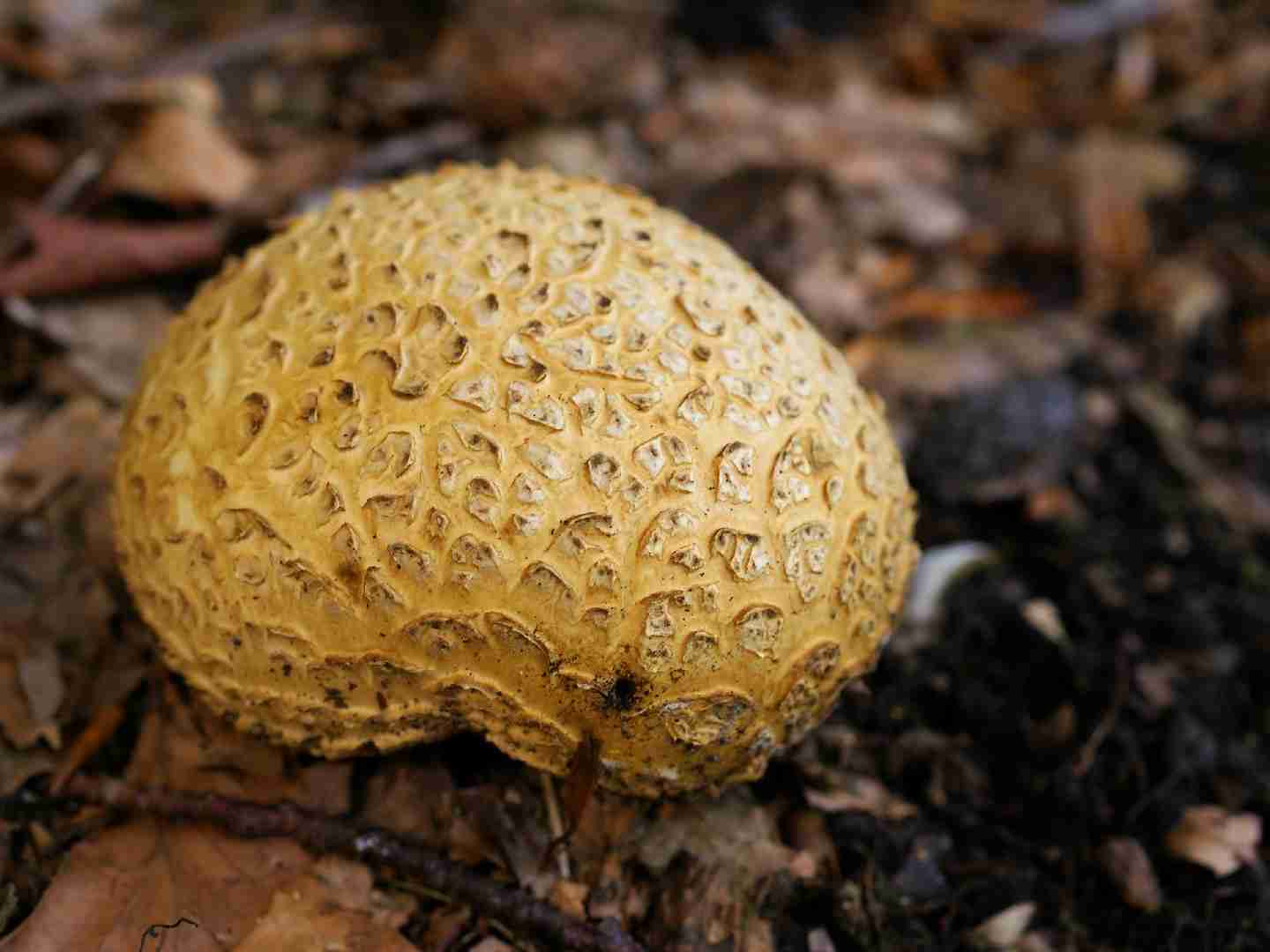
Common earthball
Scleroderma citrinum
A species of Earth balls. Also known as Golden scleroderma.
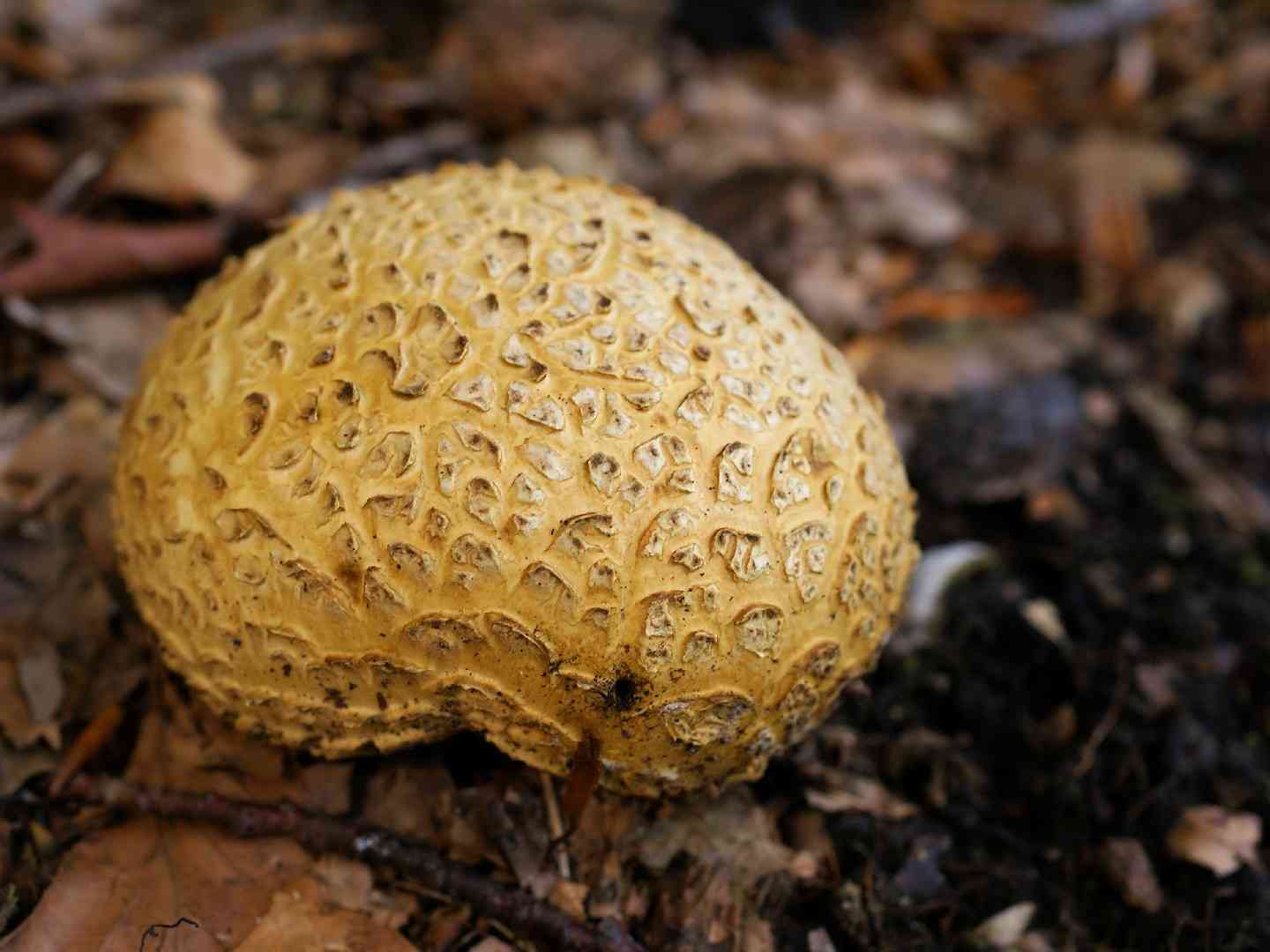
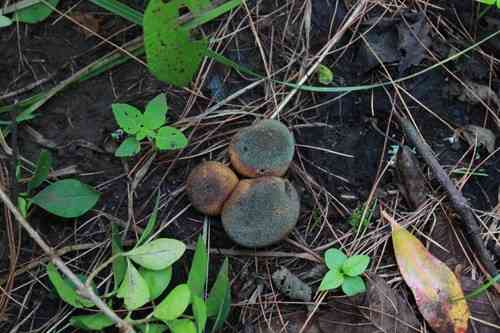
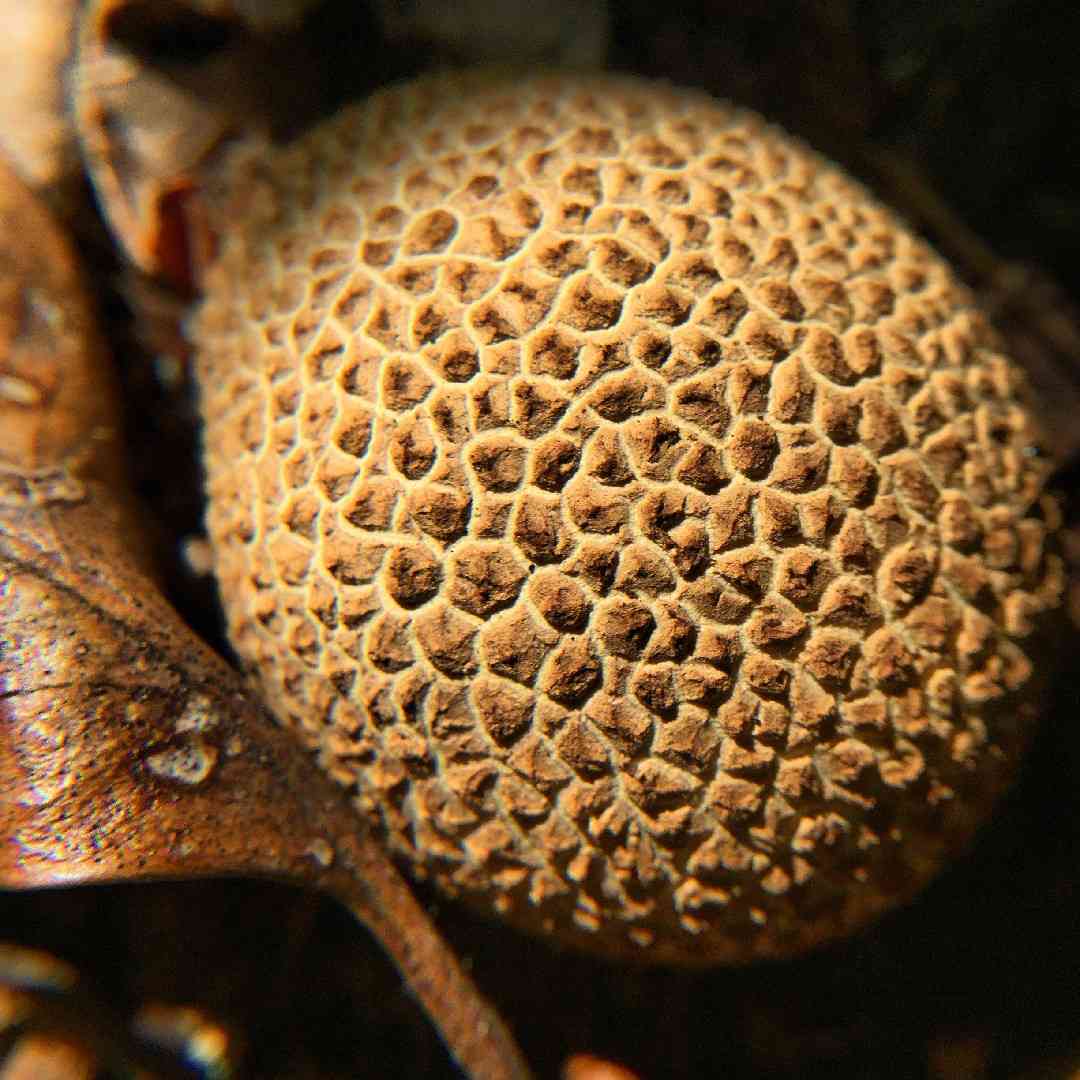
Resembling a rugged potato, the common earthball fungus thrives in acidic environments, often sprouting from compressed trails within forests. It develops a yellowish hue upon reaching maturity and is distributed throughout the northern hemisphere. Though closely related to bolete mushrooms, it is classified as toxic and should never be consumed.
In This Article
Attributes of Common earthball
Cap Diameter
2 - 10 cm
Height
3 - 5 cm
Cap
2 - 10 cm across; round, flattened; yellowish to yellow-brown; hard; pinkish when sliced
Stem
There is no stem
Flesh
Firm; purple/brown, black
Spore Print Color
Black
Odor
Faintly reminiscent of natural gas.
Flesh Bruises
The flesh or milk does not discolor when bruised or cut.
Growth Form
Solitary, Scattered, Gregarious
Nutrient Gathering
Mycorrhizal
Substrate
On soil, Mosses
You can find Common earthball by these plants
Pines, Oaks, Spruces, Firs
Occurence Habitats
Deciduous Woodland, Coniferous Woodland
Species Status
Widely distributed
Endangered Species
No
Scientific Classification of Common earthball
Phylum
Club fungi
Class
Mushroom-forming fungi
Order
Boletes and allies
Family
Hard-skinned puffballs
Genus
Earth balls
Toxicity and Edibility of Common earthball
Is Common earthball Toxic?
The common earthball mushroom poses a significant health risk, leading to severe gastrointestinal distress if consumed. Symptoms include abdominal discomfort, followed by nausea, perspiration, emesis, and loose stools. Consequently, it is imperative to steer clear of the common earthball entirely.