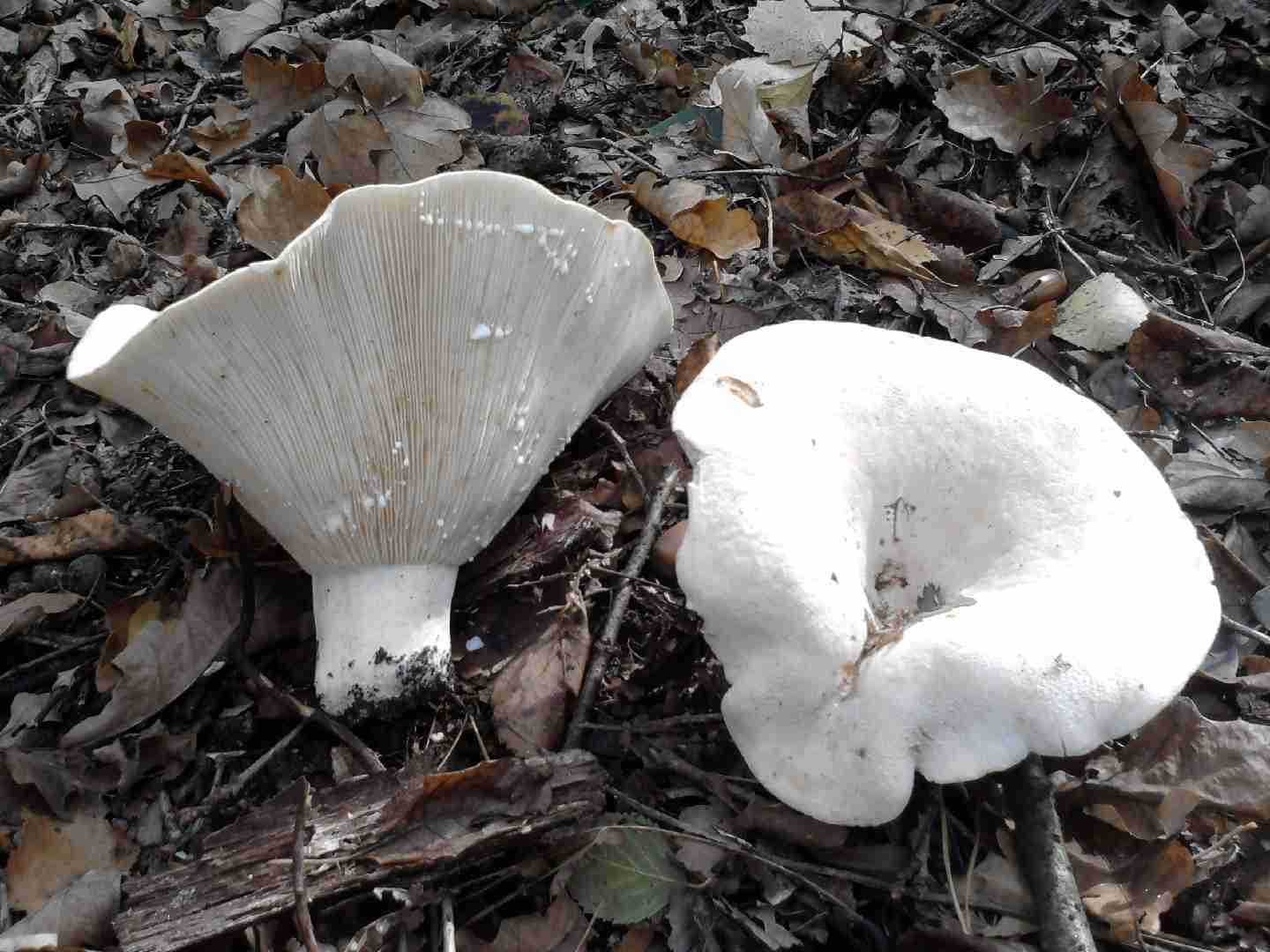
Nisekurohatsu
Russula subnigricans
A species of Russulas.
When incised, the flesh of this species adopts a light red hue, a characteristic distinguishing it from Russula nigricans, which blackens. Its nomenclature was established by the Japanese mycologist Tsuguo Hongo in 1955. This designation previously referred to the North American fungus Russula eccentrica, found in California. It has since been re-categorized as Russula cantharellicola, thriving in symbiotic relationships with coast live oak (Quercus agrifolia) trees within California's oak woodland ecosystems.
Attributes of Nisekurohatsu
Scientific Classification of Nisekurohatsu
Toxicity and Edibility of Nisekurohatsu
Is Nisekurohatsu Toxic?
Nisekurohatsu is a toxic fungus, and its accidental consumption leads to rhabdomyolysis, a condition characterized by the disintegration of muscle tissue. Within 30 minutes to an hour of ingestion, individuals typically experience symptoms of gastroenteritis. Further symptoms, such as fatigue, muscular weakness, myalgia, chest discomfort, and palpitations, manifest approximately 24 hours post-ingestion.

