Sunny brittlegill
Russula solaris
A species of Russulas.
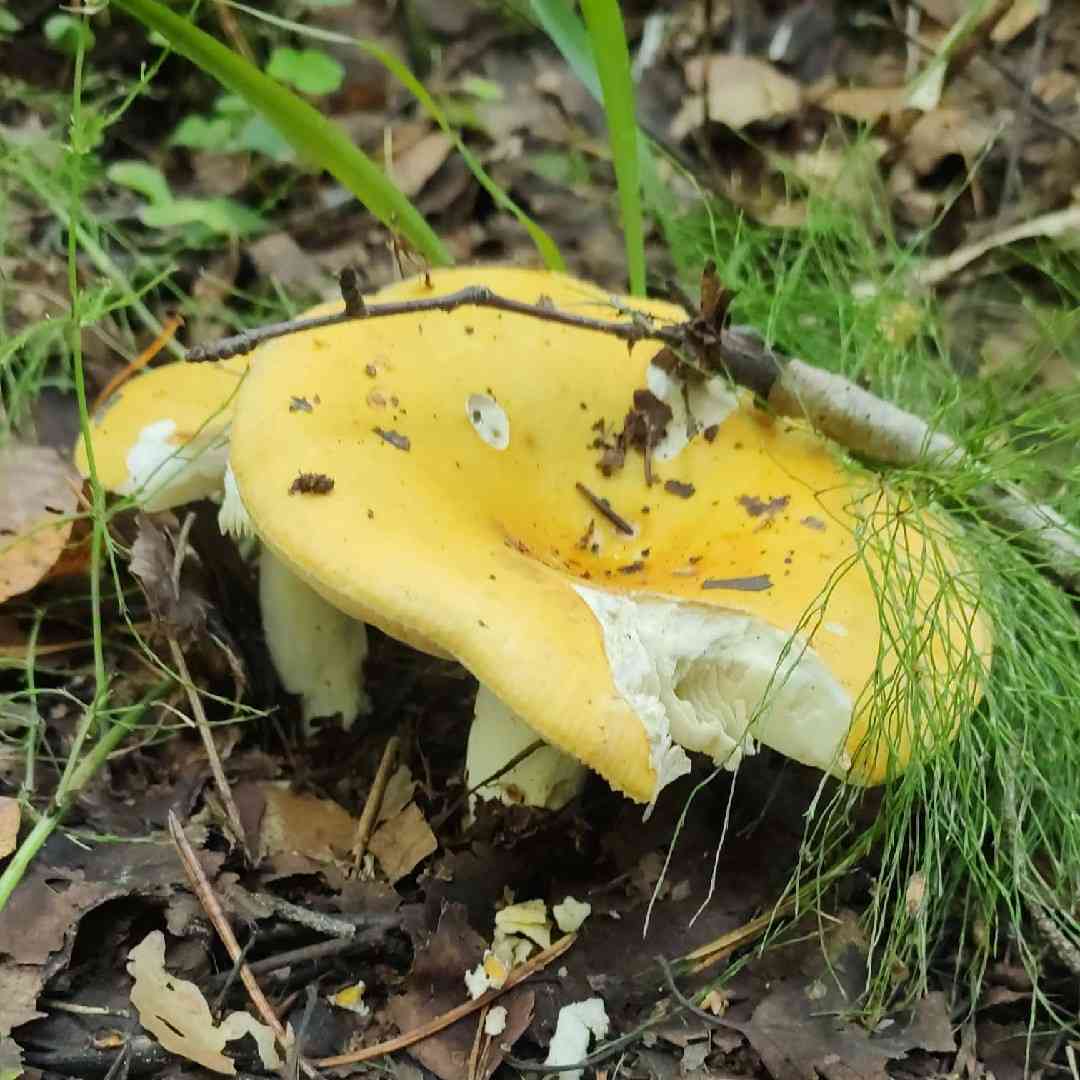
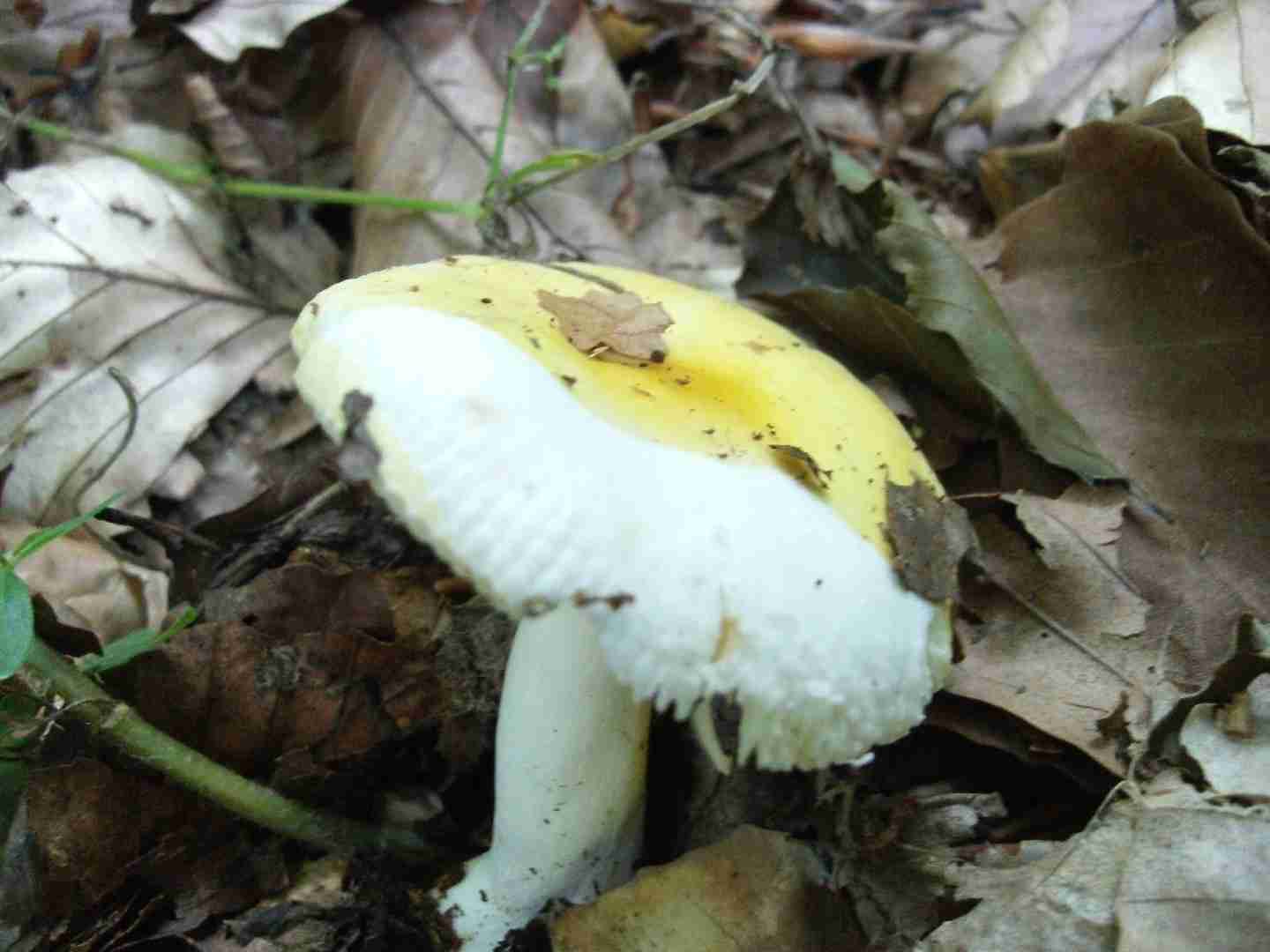
Known for its characteristic look, the Sunny Brittlegill features a cap capable of color transformation based on sun exposure. Beneath this, its gills are typically white and well-separated. This mushroom has a robust stem, and its flesh may emit a subtle or somewhat fruity aroma. Primarily located in mixed woodlands, it frequently establishes a connection with broad-leaved trees.
In This Article
Attributes of Sunny brittlegill
Cap Diameter
3 - 10 cm
Height
3 - 10 cm
Cap
Cap 2 - 8 cm in width; convex; golden yellow to chrome yellow; smooth; margin striate when mature
Cap Shape
Convex, Flat, Depressed
Cap Surfaces
Slimy or slightly sticky, Visible lines or stripes
Gills
Adnexed, emarginate to adnate; not very crowded; yellowish
Stem
2.5 - 6 cm in height, 7 - 20 mm in thickness; white; without ring
Stem Shapes
Club Shaped
Flesh
Grainy; white; unchanging
Ring
Ringless
Spore Print Color
Yellowish to ocher
Odor
Sweet-sour, reminiscent of pickles or mustard.
Body Color
YellowGoldWhite
Flesh Bruises
The flesh or milk does not discolor when bruised or cut.
Growth Form
Solitary, Scattered
Nutrient Gathering
Mycorrhizal
Substrate
On soil
You can find Sunny brittlegill by these plants
Pines, Oaks, European beech
Species Status
Rare
Endangered Species
No
Scientific Classification of Sunny brittlegill
Phylum
Club fungi
Class
Mushroom-forming fungi
Order
Russulales
Family
Russulaceae
Genus
Russulas
Toxicity and Edibility of Sunny brittlegill
Is Sunny brittlegill Toxic?
Toxicity information is not available for this mushroom. Always consult with an expert before consuming any wild mushrooms.