Russula roseipes
Russula roseipes
A species of Russulas.
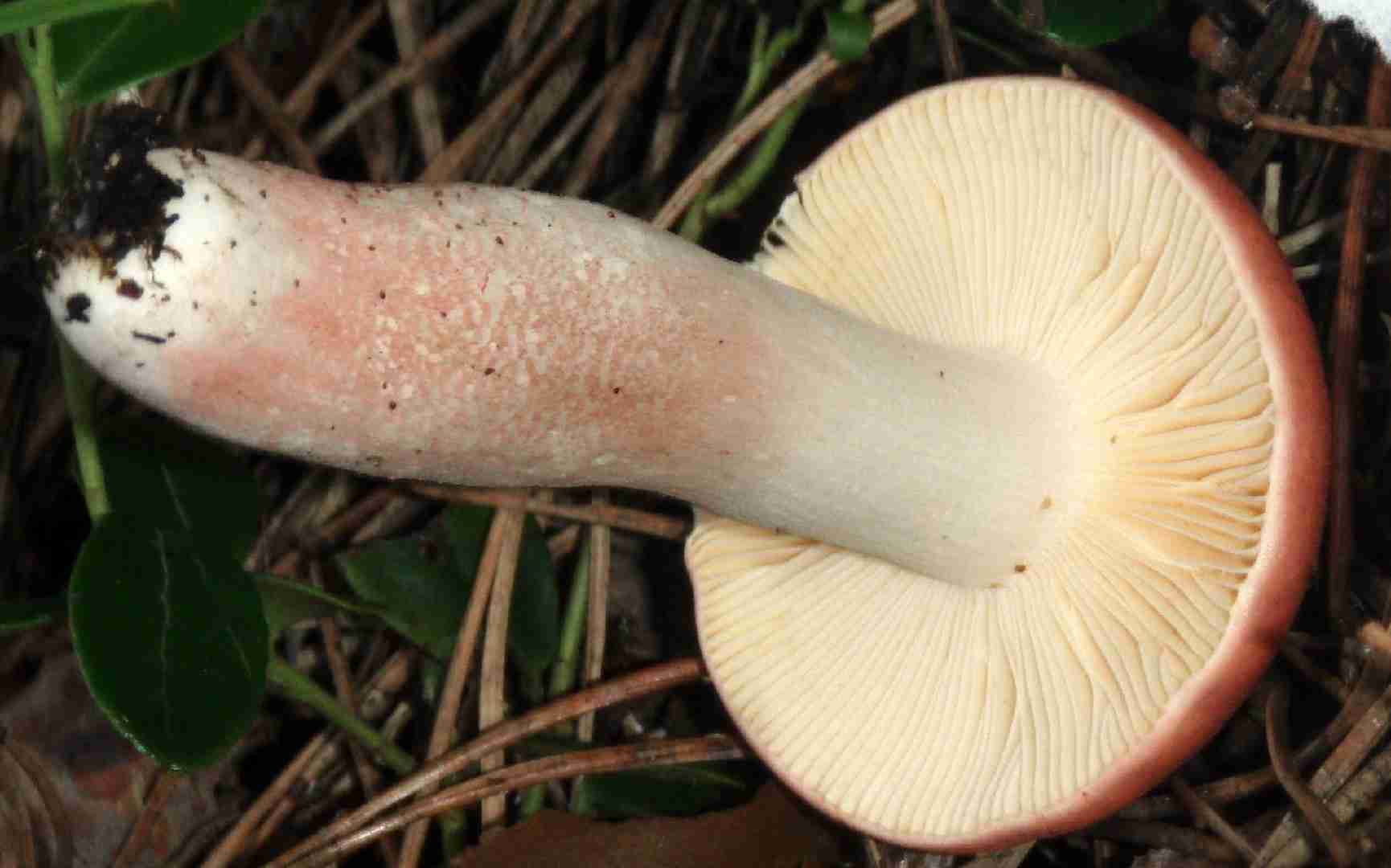
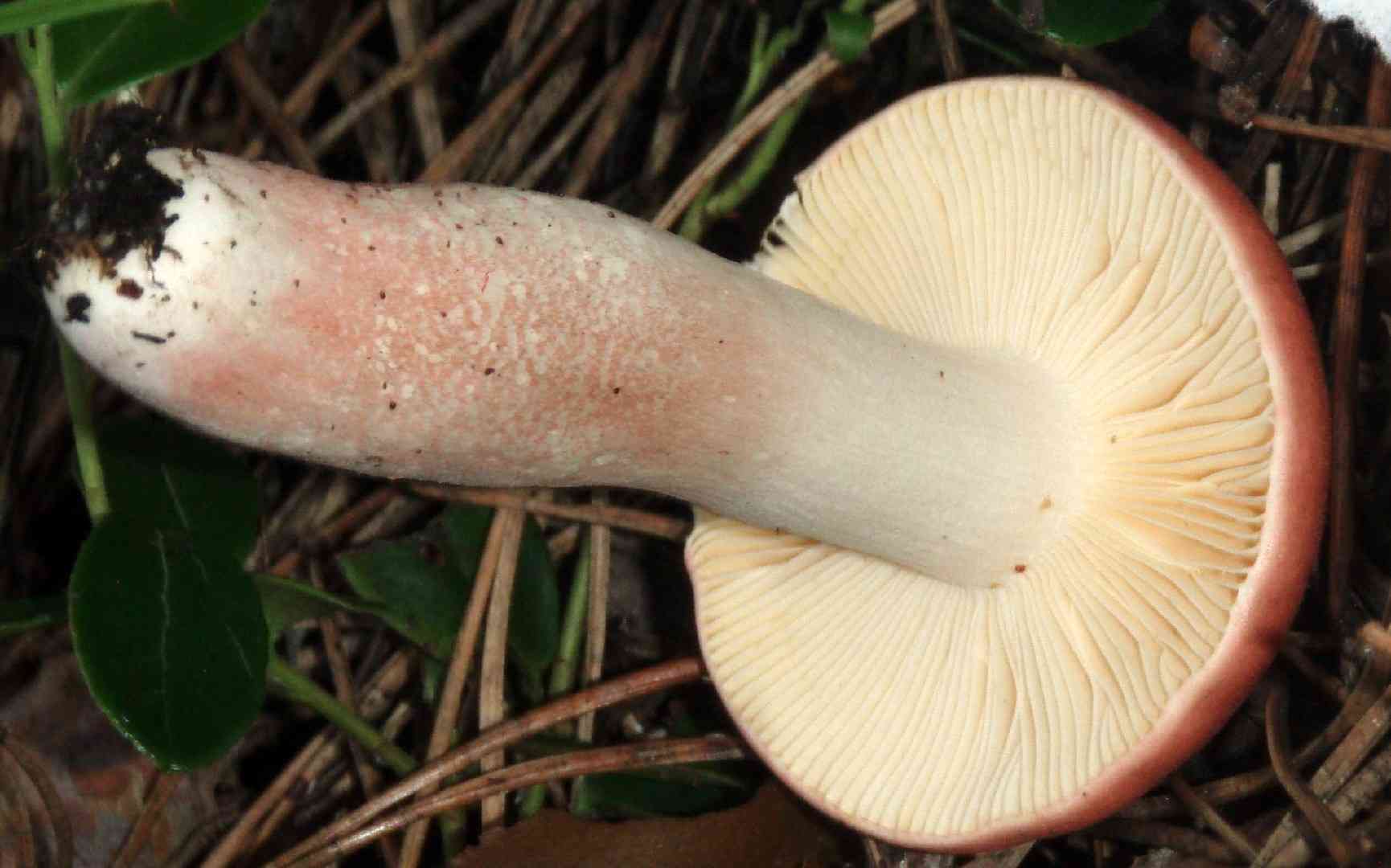
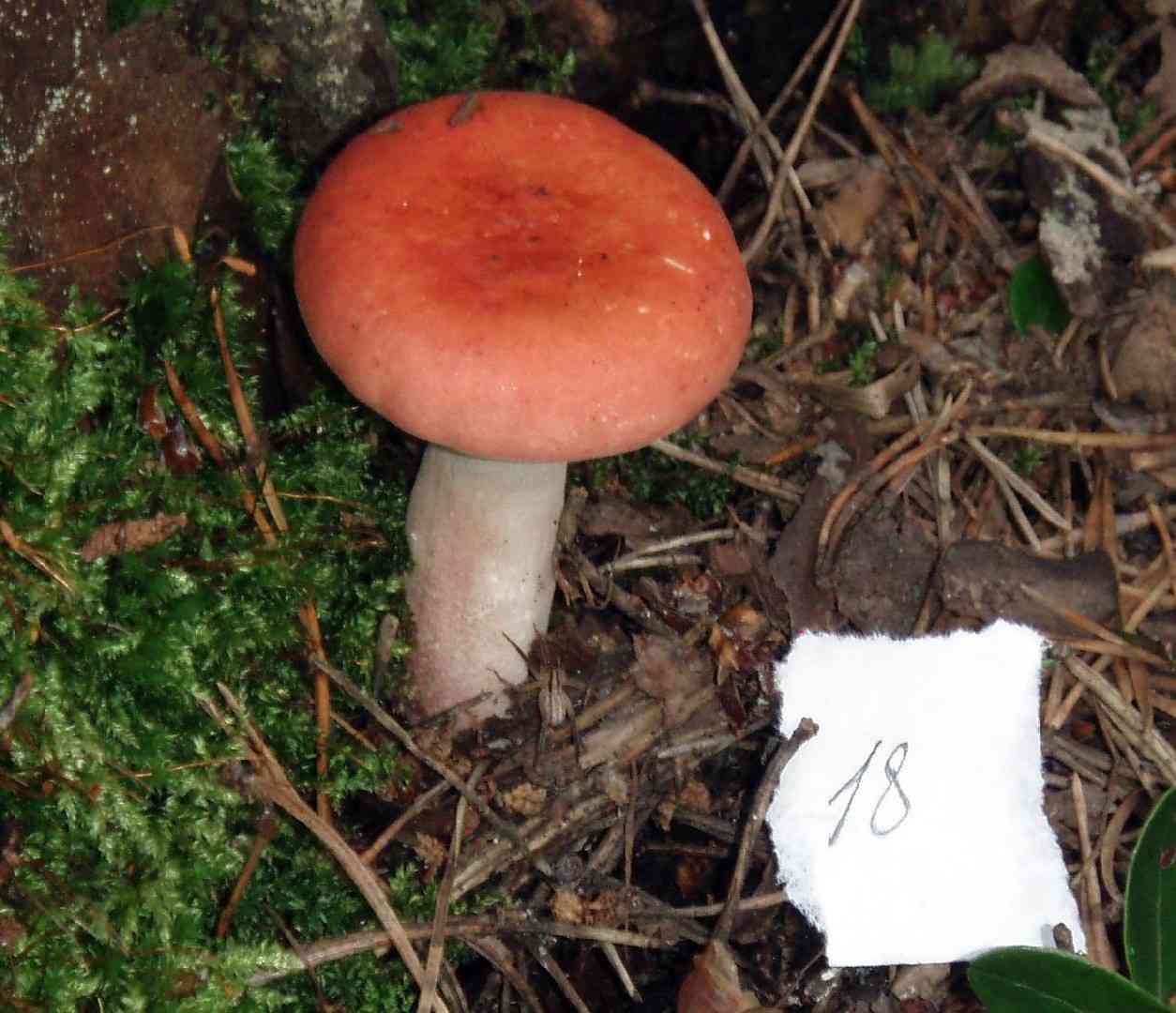
Belonging to a prominent fungal family known for its often vibrant and diverse cap colors and delicate gills, Russula roseipes is distinctive. It's recognized by its pinkish stem and predominantly forms symbiotic relationships with hardwood trees, especially oak varieties. A key characteristic of Russula roseipes is its cap's color transformation as it develops, progressing from an initial white to eventual pinkish tones.
In This Article
Attributes of Russula roseipes
Cap Diameter
3 - 5 cm
Height
4 - 10 cm
Cap
Cap 3 - 5 cm across; pinkish red, reddish orange to pinkish
Cap Shape
Convex, Flat, Depressed
Cap Surfaces
Smooth, Slimy or slightly sticky
Gills
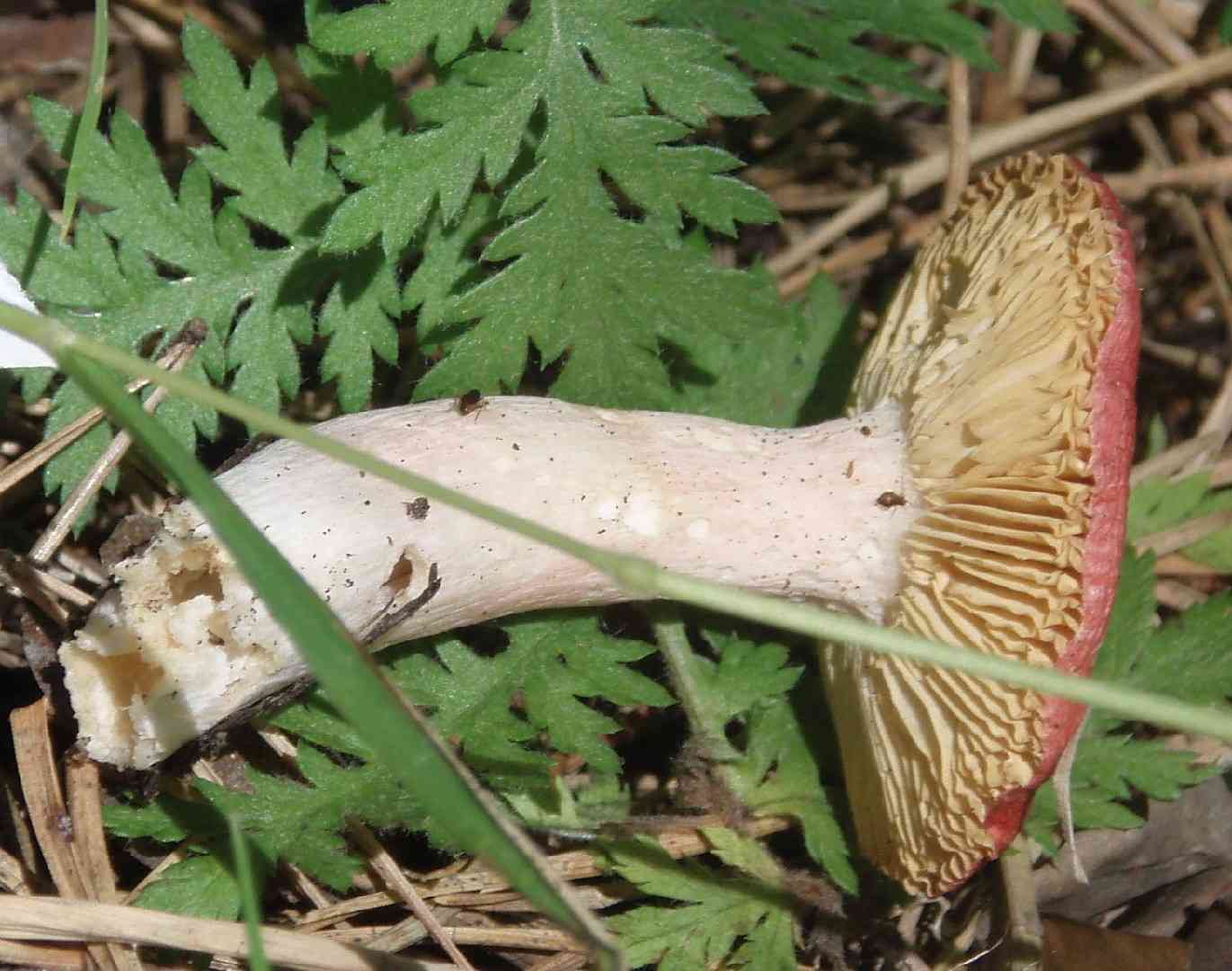
Subdistant; ochre-yellow
Gill Attachment
Attached
Stem
Stem 5 - 7 cm long, 1 - 1.5 cm thick; equal; white; solid to spongy; turns slightly pink when stained
Stem Shapes
Club Shaped
Flesh
White
Ring
Ringless
Spore Print Color
Ochre-yellow
Odor
Mild fruity scent juxtaposed with typical fungus.
Body Color
RedWhiteOrangePink
Flesh Bruises
The flesh or milk does not discolor when bruised or cut.
Growth Form
Solitary, Scattered, Gregarious
Nutrient Gathering
Mycorrhizal
Substrate
On soil
You can find Russula roseipes by these plants
Spruces, Pines, Oaks
Species Status
Rare
Endangered Species
No
Scientific Classification of Russula roseipes
Phylum
Club fungi
Class
Mushroom-forming fungi
Order
Russulales
Family
Russulaceae
Genus
Russulas
Toxicity and Edibility of Russula roseipes
Is Russula roseipes Toxic?
Toxicity information is not available for this mushroom. Always consult with an expert before consuming any wild mushrooms.

