Russet brittlegill
Russula mustelina
A species of Russulas.
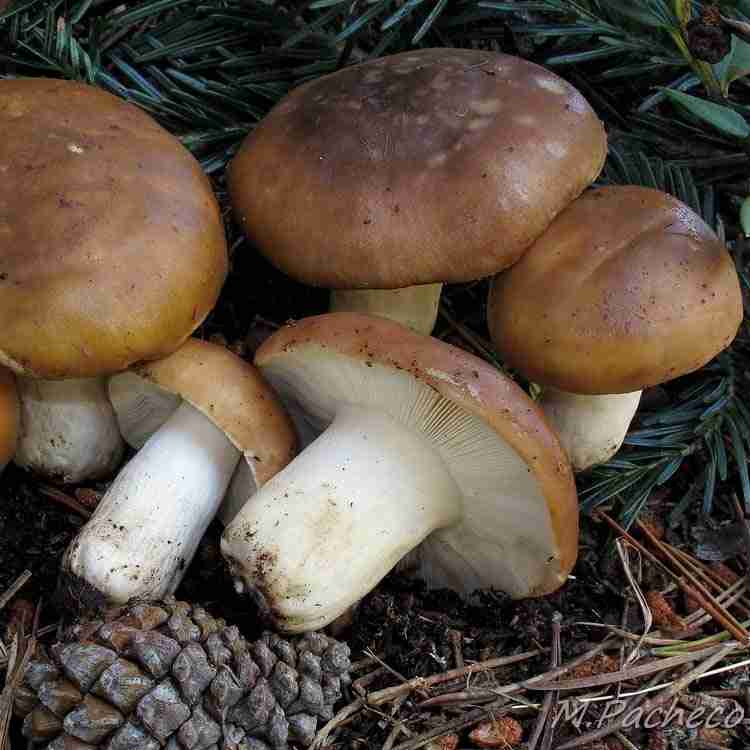
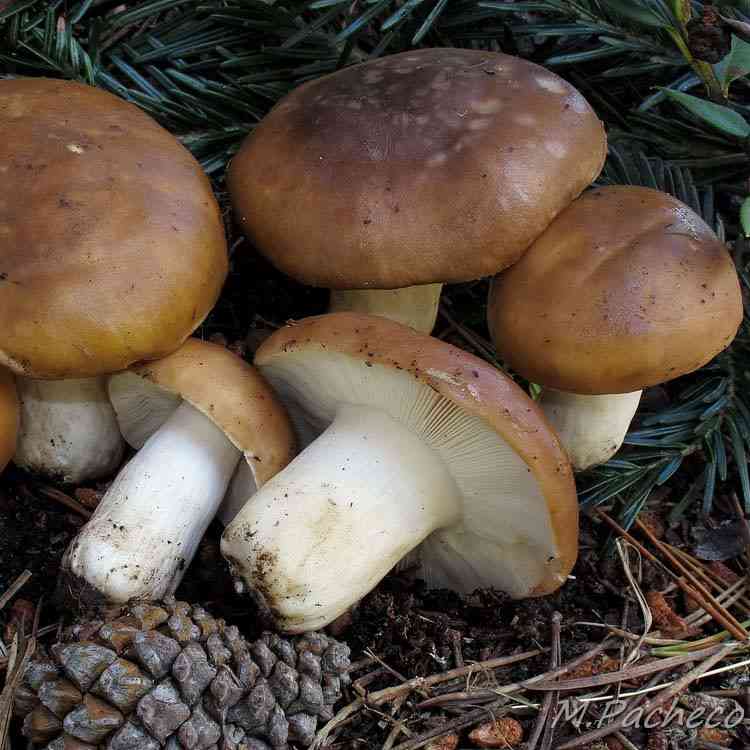
The Russet brittlegill shares many characteristics with its genus counterparts, differing mainly in its pigmentation and habitat. This fungus is distinguished by its cream-colored cap adorned with pink specks, and similarly pale gills. It predominantly flourishes in elevated pine forest environments.
In This Article
Attributes of Russet brittlegill
Cap Diameter
4 - 17 cm
Height
4 - 13 cm
Cap
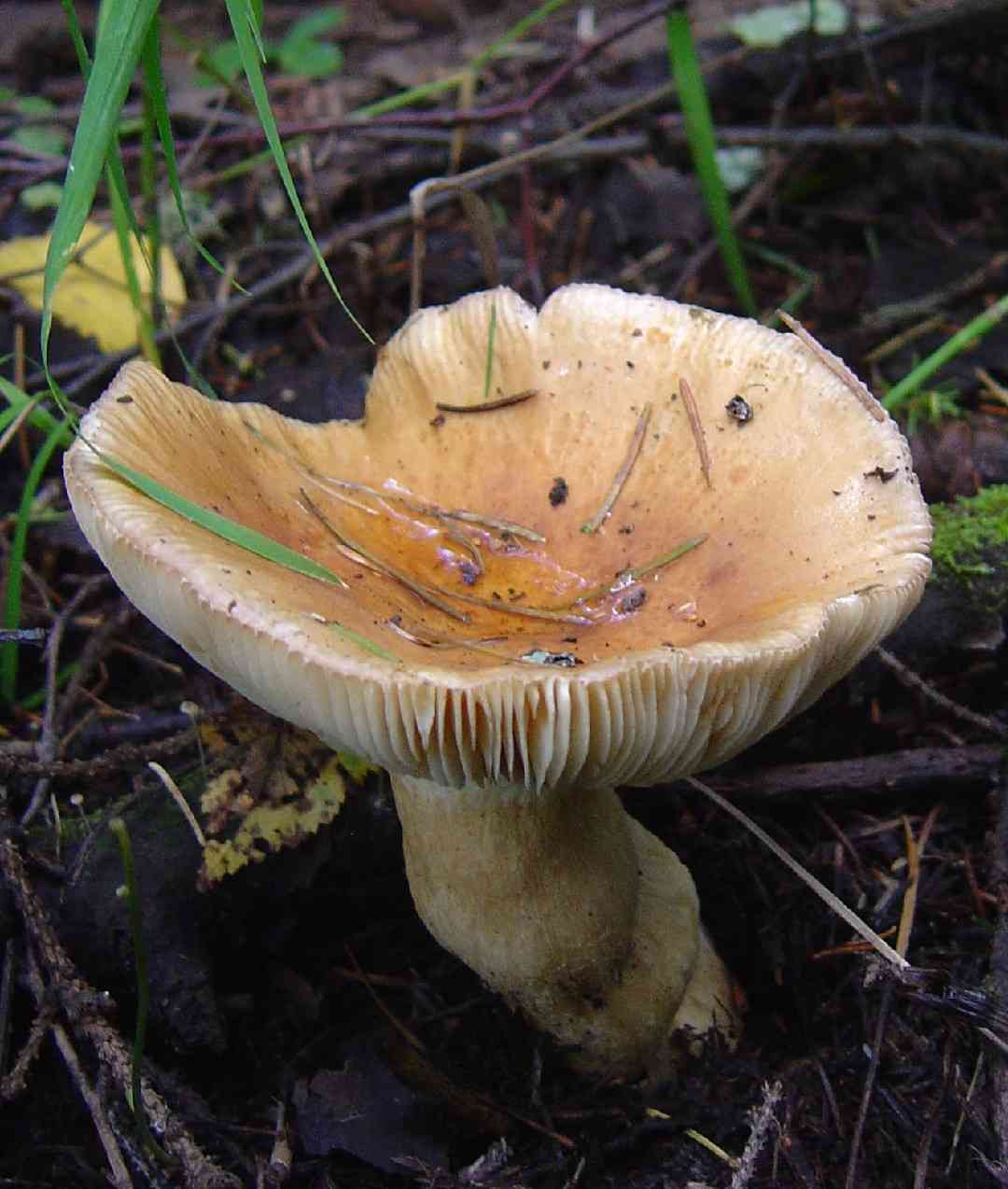
Cap 7 - 16 cm across; convex to flattened; pale yellow to yellow-brown; surface dry, slightly sticky when wet
Cap Shape
Convex, Depressed
Gills
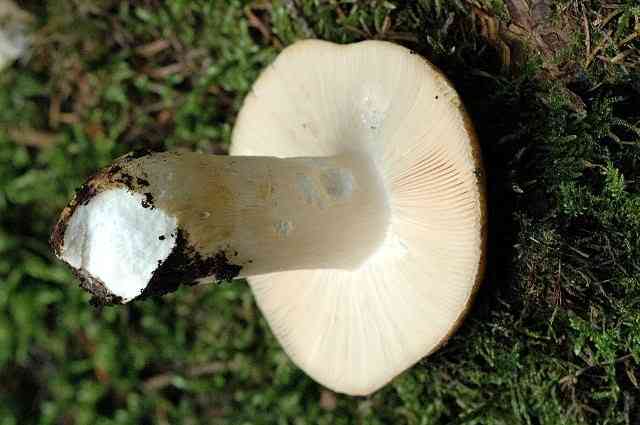
Adnate to adnexed; cream
Gill Attachment
Notched
Stem
Stem 4 - 9 cm long, 2 - 3 cm thick; white; hard; surface dry, smooth
Stem Shapes
Cylindrical
Flesh
Flesh 3 - 10 mm thick; white
Ring
Ringless
Spore Print Color
Yellowish
Odor
Mildly nutty with a hint of marzipan.
Body Color
BrownYellowRedWhite
Flesh Bruises
The flesh or milk does not discolor when bruised or cut.
Growth Form
Scattered, Gregarious
Nutrient Gathering
Mycorrhizal
Substrate
On soil
You can find Russet brittlegill by these plants
Oaks, Pines, Spruces, Norway spruce
Occurence Habitats
Coniferous Woodland
Species Status
Endemic to western North America.
Endangered Species
No
Scientific Classification of Russet brittlegill
Phylum
Club fungi
Class
Mushroom-forming fungi
Order
Russulales
Family
Russulaceae
Genus
Russulas
Toxicity and Edibility of Russet brittlegill
Is Russet brittlegill Toxic?
Toxicity information is not available for this mushroom. Always consult with an expert before consuming any wild mushrooms.

