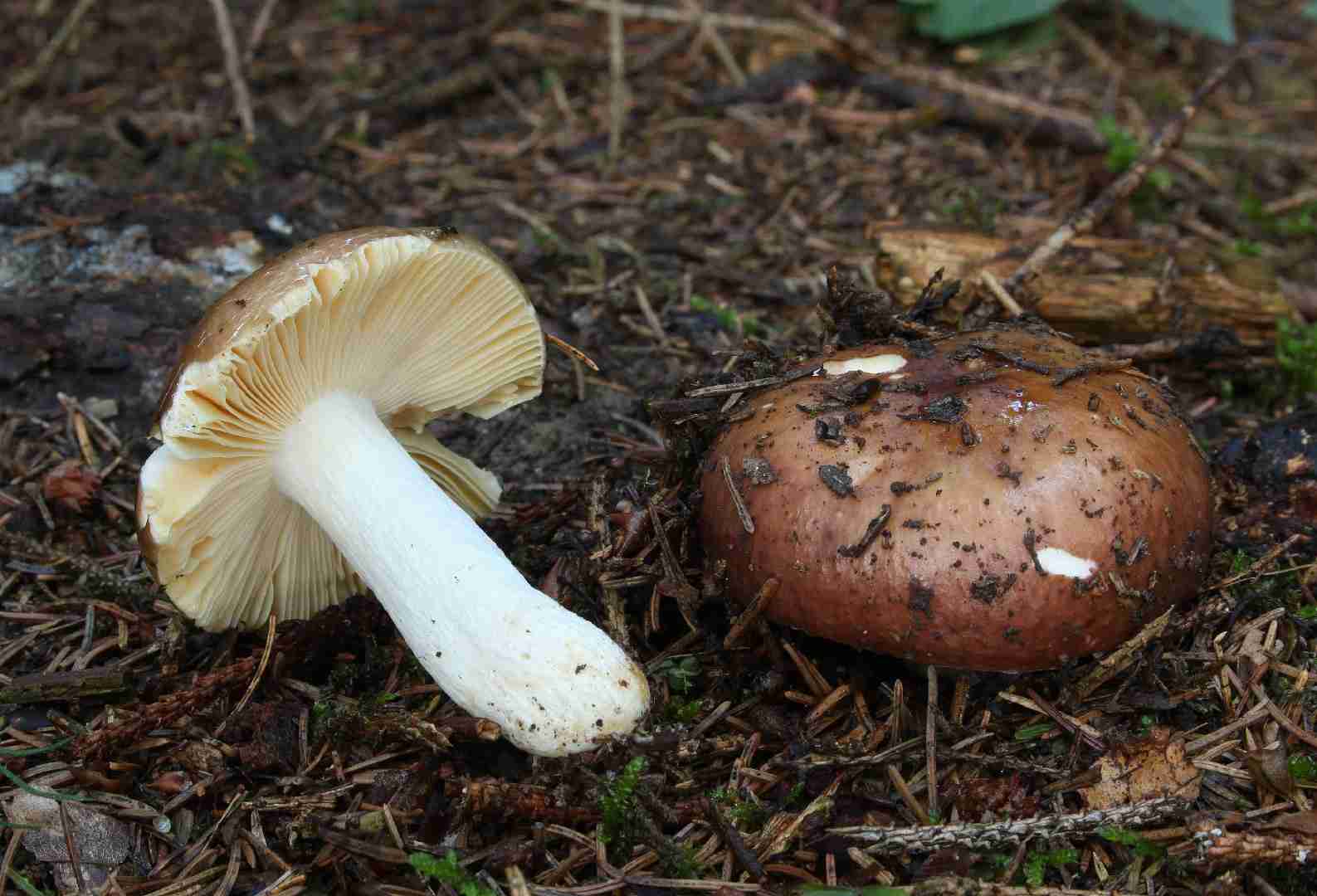
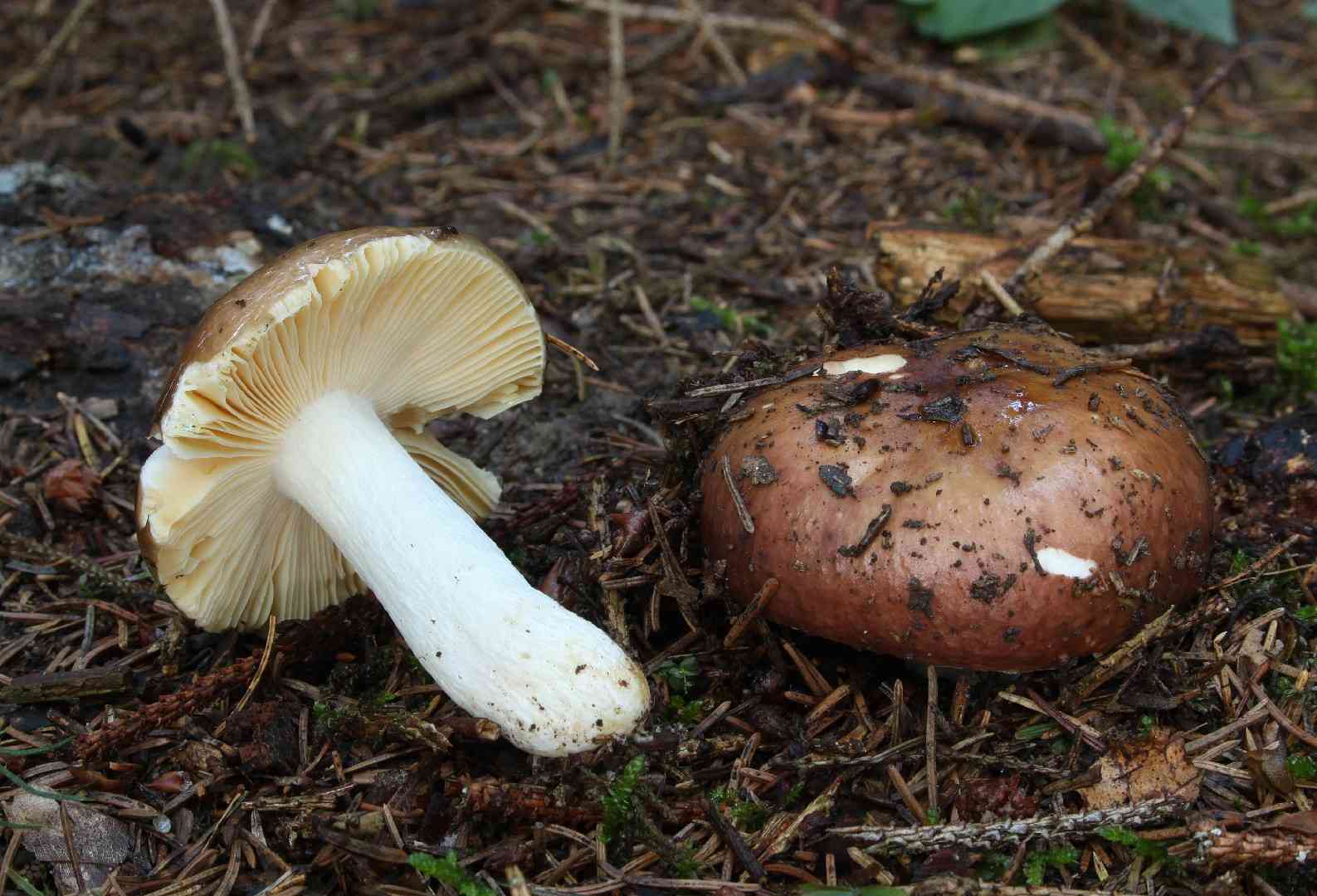
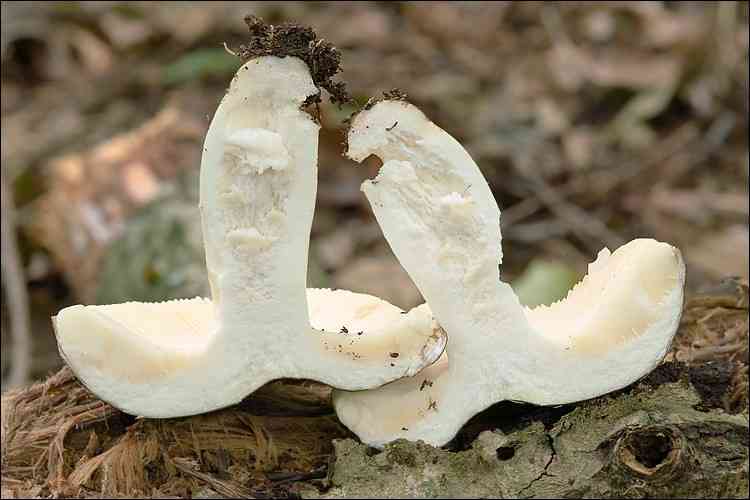
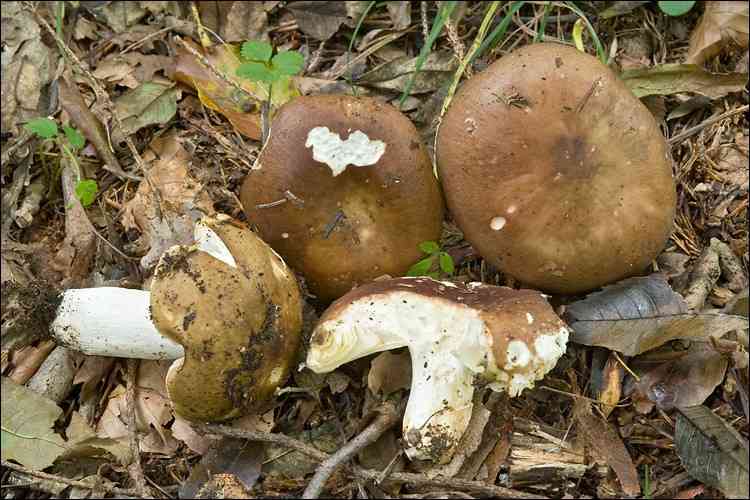
Entire russula
Russula integra
A species of Russulas.
The russula complex, encompassing a collection of highly similar fungi rather than a single species, remains largely uninvestigated. These mushrooms thrive in coniferous woodlands, where their presence is both widespread and frequent. One often encounters these russulas during the late autumn and early winter months.
In This Article
Attributes of Entire russula
Cap Diameter
4 - 18 cm
Height
5 - 15 cm
Cap
6 - 12 cm broad; almost shaped like a sphere, soon becomes flattened or depressed; usually brown and tinged with violet, purple, yellow, or green; shiny
Cap Shape
Convex, Depressed
Cap Surfaces
Smooth, Slimy or slightly sticky
Gills
Thick; widely spaced; white, then turns bright yellow eventually
Gill Attachment
Free to Attached
Stem
5 - 12 cm long, 2 - 3 cm thick; thick; white, stains yellow or russet with age
Stem Shapes
Cylindrical
Flesh
Very firm; white
Ring
Ringless
Spore Print Color
Yellow-ochre
Odor
Faintly fruity with nutty, sweet nuances.
Body Color
BrownGreenYellowRedWhitePurple
Flesh Bruises
The flesh or milk does not discolor when bruised or cut.
Growth Form
Solitary, Scattered, Gregarious
Nutrient Gathering
Mycorrhizal
Substrate
On soil
You can find Entire russula by these plants
Spruces, Pines, Oaks, Firs
Species Status
Widely distributed
Endangered Species
No
Scientific Classification of Entire russula
Phylum
Club fungi
Class
Mushroom-forming fungi
Order
Russulales
Family
Russulaceae
Genus
Russulas
Toxicity and Edibility of Entire russula
Is Entire russula Toxic?
Toxicity information is not available for this mushroom. Always consult with an expert before consuming any wild mushrooms.

