Bitter almond brittlegill
Russula grata
A species of Russulas.
The bitter almond brittlegill is typically recognizable by the potent almond aroma it releases when bruised. Its allure to slugs could account for the frequent observation of this unpalatable fungus with an impaired cap. It thrives in coniferous and deciduous forests across Europe and northeastern North America.
In This Article
Attributes of Bitter almond brittlegill
Cap Diameter
4 - 10 cm
Height
4 - 8 cm
Cap
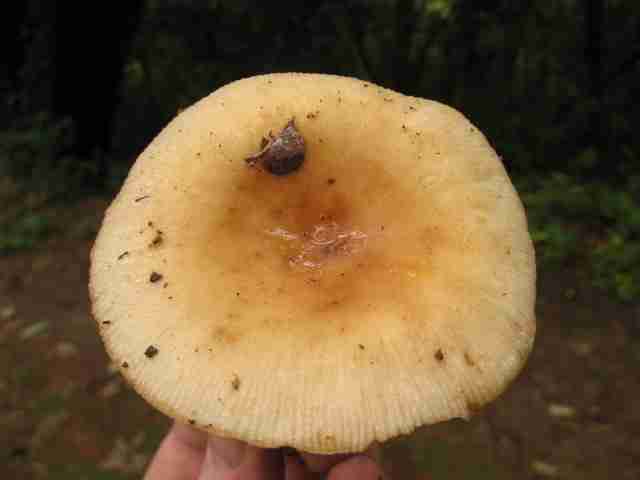
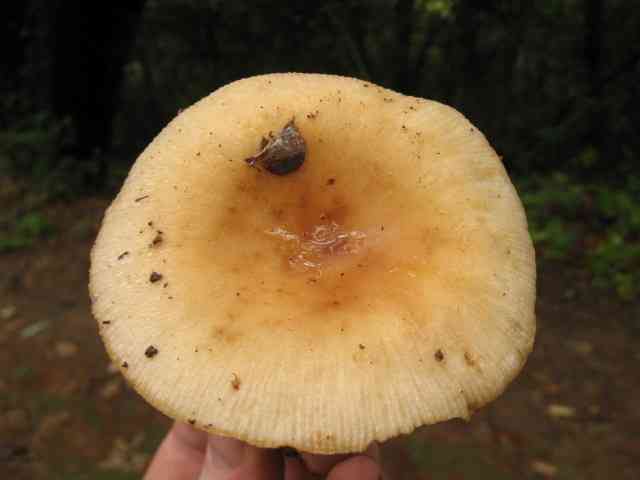
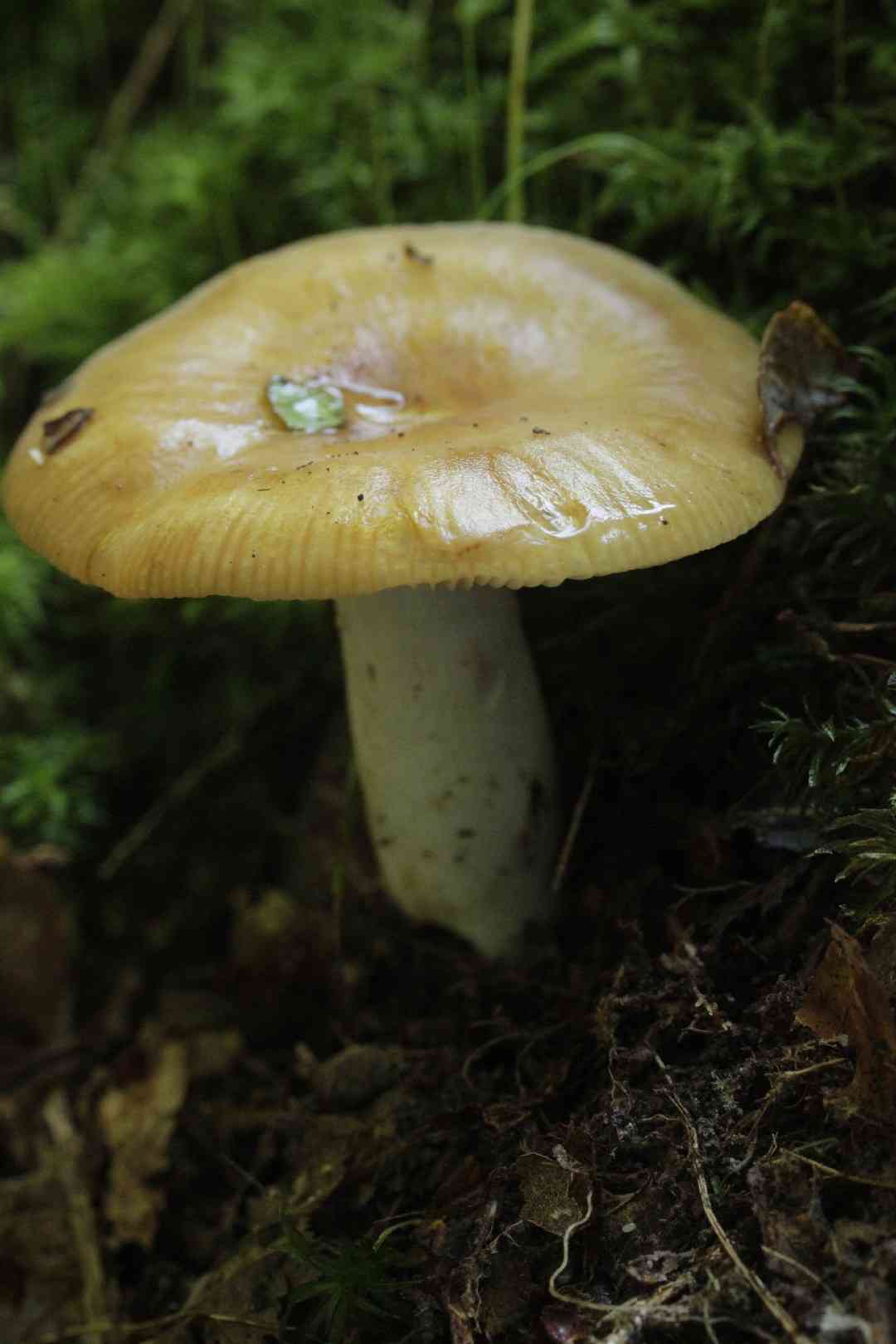
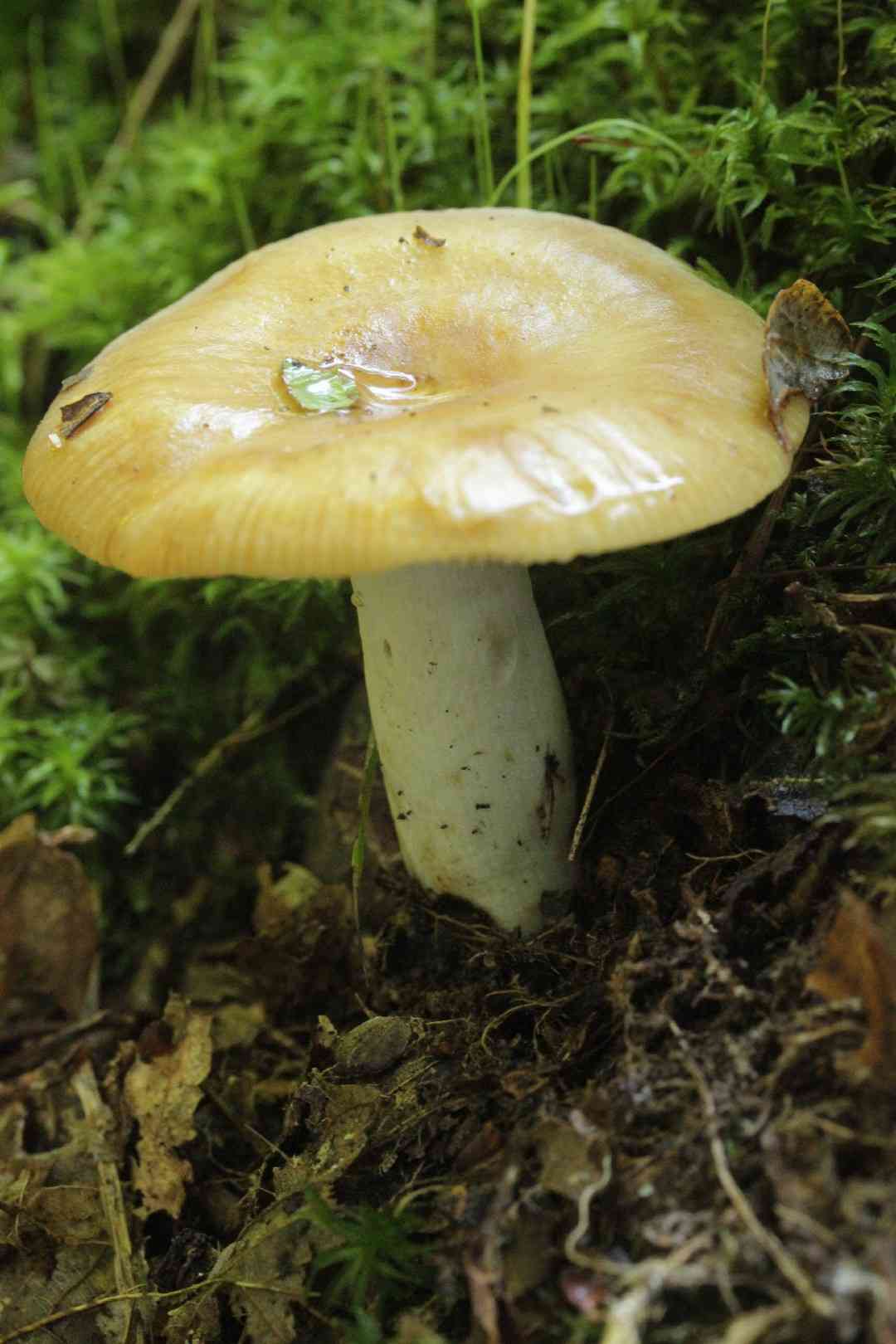
Cap 5 - 9 cm across; spherical, flat; honey brown; surface with radial ridges and warty bumps
Cap Shape
Flat, Depressed
Cap Surfaces
Slimy or slightly sticky, Visible lines or stripes, Warted
Gills
Adnexed; moderately close; cream
Gill Attachment
Attached
Stem
Stem 4 - 8 cm long, 1.5 - 3.5 cm thick; white; brittle
Stem Shapes
Cylindrical
Stem Surfaces
Smooth
Flesh
White; unchanging when injured
Ring
Ringless
Spore Print Color
Pale to mid cream
Odor
Almond-like, reminiscent of marzipan, strong scent.
Body Color
BrownYellowWhite
Flesh Bruises
The flesh or milk does not discolor when bruised or cut.
Growth Form
Gregarious
Nutrient Gathering
Mycorrhizal
Substrate
On soil
You can find Bitter almond brittlegill by these plants
Oaks, Pines, Spruces, European beech
Occurence Habitats
Coniferous Woodland, Deciduous Woodland
Species Status
Widespread and fairly common
Endangered Species
No
Scientific Classification of Bitter almond brittlegill
Phylum
Club fungi
Class
Mushroom-forming fungi
Order
Russulales
Family
Russulaceae
Genus
Russulas
Toxicity and Edibility of Bitter almond brittlegill
Is Bitter almond brittlegill Toxic?
The brittlegill mushroom, known for its bitter almond scent, flourishes in forested areas, particularly in autumn. Its distinctive physical traits, specifically its brittle texture, set it apart from edible counterparts. Consuming this mushroom typically leads to mild digestive upset, highlighting its toxic nature. Given its potential effects on health, caution is advisable.
Type of poisoning
Gastrointestinal
Toxic Severity
Low toxicity
Incubation Period
0.5-4 hours
Poisoning Symptoms
Experience of minor digestive upset in the stomach and intestines.

