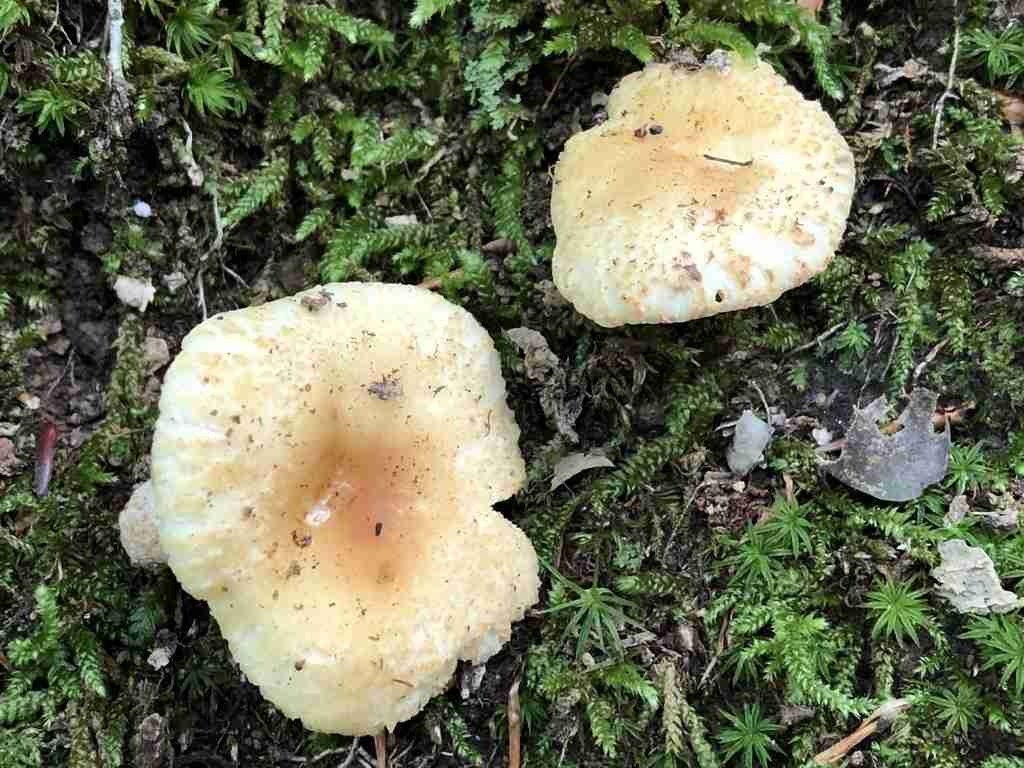
Beeswax russula
Russula earlei
A species of Russulas.
The beeswax russula is atypical among Russulas; its waxy feel and thick, broad, distant gills often lead to it being misidentified as a Hygrophorus. It grows near hardwoods, and its potential toxicity remains a subject of ongoing discussion.
In This Article
Attributes of Beeswax russula
Cap Diameter
3 - 11 cm
Height
3 - 8 cm
Cap
Cap 3 - 11 cm across; convex to flat; yellow
Cap Shape
Convex, Flat, Depressed
Cap Surfaces
Slimy or slightly sticky
Gills
Attached; distant; whitish to creamy, dull yellow; discoloring reddish brown
Gill Attachment
Attached
Stem
Stem 2.5 - 7 cm long, 5 - 25 mm thick; whitish to dull yellow; waxy; fairly smooth
Stem Shapes
Cylindrical
Stem Surfaces
Smooth
Flesh
White to yellowish
Ring
Ringless
Spore Print Color
White
Odor
Mildly mushroomy but not distinctive.
Body Color
BrownYellowRedWhiteOrange
Growth Form
Solitary, Scattered, Gregarious
Nutrient Gathering
Mycorrhizal
Substrate
On soil
You can find Beeswax russula by these plants
Spruces, Pines, Oaks
Occurence Habitats
Deciduous Woodland
Species Status
Widely distributed
Endangered Species
No
Scientific Classification of Beeswax russula
Phylum
Club fungi
Class
Mushroom-forming fungi
Order
Russulales
Family
Russulaceae
Genus
Russulas
Toxicity and Edibility of Beeswax russula
Is Beeswax russula Toxic?
Toxicity information is not available for this mushroom. Always consult with an expert before consuming any wild mushrooms.

