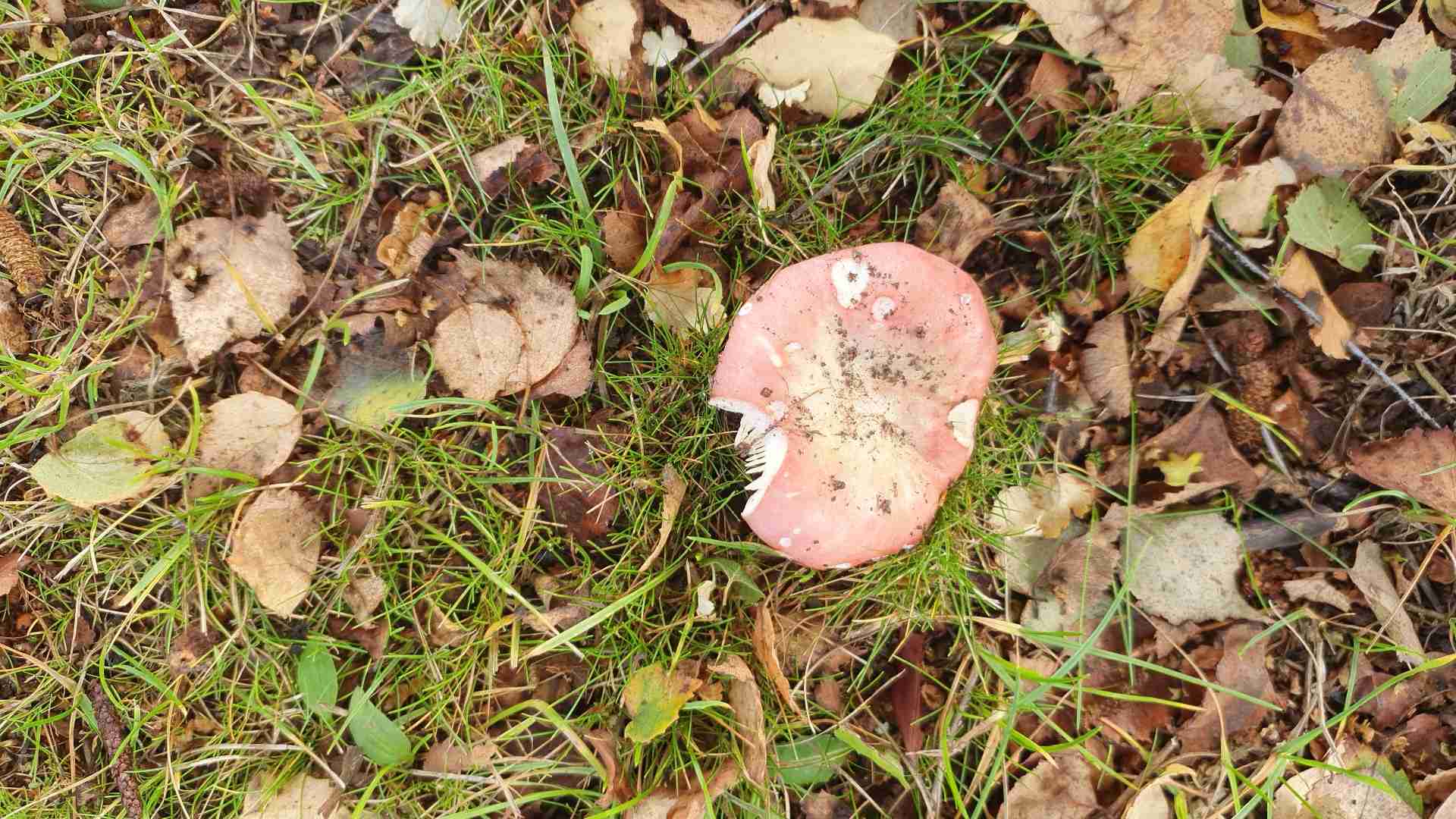
Bleached brittlegill
Russula depallens
A species of Russulas.
The *Lactarius lacteus*, commonly known as the bleached brittlegill, typically presents with a light-colored cap that may exhibit subtle hints of yellow or green. The surface of this cap is smooth and acquires a tacky texture when exposed to moisture. Its distinctive gills are well-separated and notably fragile, a defining feature of its fungal lineage. The stalk, usually white and robust, also tends to be fragile to the touch. This species thrives in diverse woodland environments, forming mutually beneficial associations with various tree species.
In This Article
Attributes of Bleached brittlegill
Cap Diameter
3 - 9 cm
Height
2 - 6 cm
Cap
Generally shiny, darker in the middle, moist smeary, shiny when dry, edge long rolled in, not ridged.
Cap Shape
Convex, Flat, Depressed
Cap Surfaces
Smooth, Slimy or slightly sticky
Gills
White, quickly becoming dirty or ash-grey, attached to almost free-looking.
Gill Attachment
Free to Attached
Stem
2-5 cm long, 0.6-1.5 cm thick, white, moist greyish.
Flesh
White, old somewhat grey, soft, brittle.
Ring
Ringless
Spore Print Color
White
Odor
Mildly sweet, generally agreeable scent.
Body Color
PinkPurpleWhiteGray
Flesh Bruises
The flesh or milk does not discolor when bruised or cut.
Nutrient Gathering
Mycorrhizal
Substrate
On soil
You can find Bleached brittlegill by these plants
Spruces, Pines, Oaks
Scientific Classification of Bleached brittlegill
Phylum
Club fungi
Class
Mushroom-forming fungi
Order
Russulales
Family
Russulaceae
Genus
Russulas
Toxicity and Edibility of Bleached brittlegill
Is Bleached brittlegill Toxic?
Toxicity information is not available for this mushroom. Always consult with an expert before consuming any wild mushrooms.

