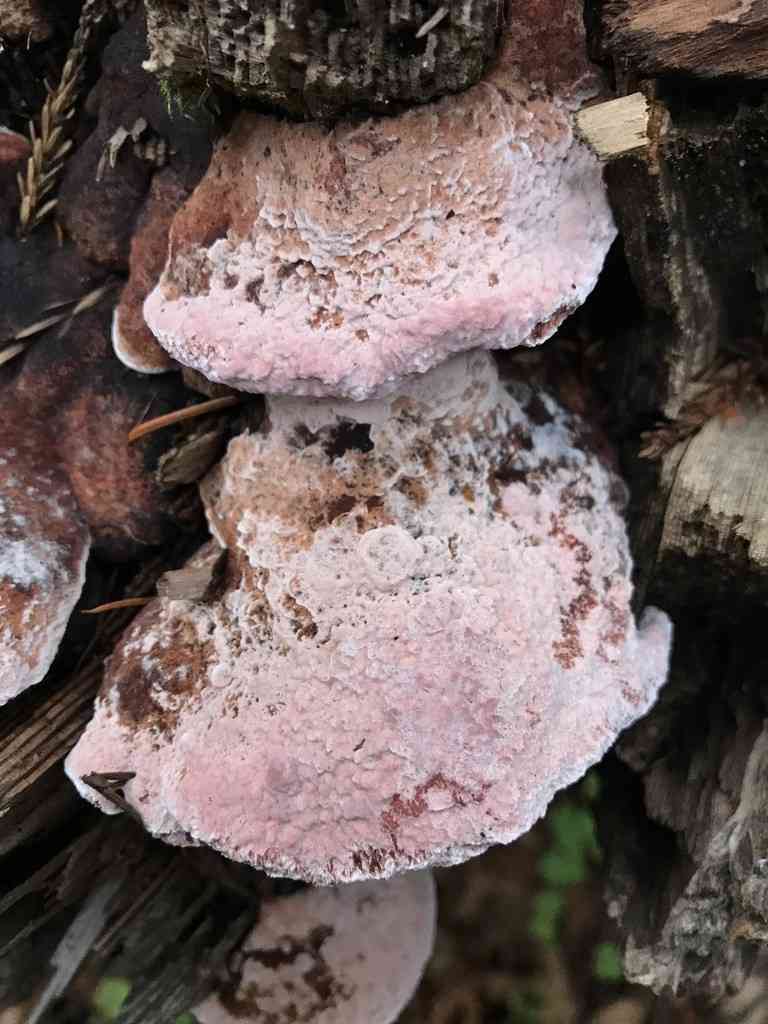
Rosy polypore
Rhodofomes cajanderi
A species of Rhodofomes.
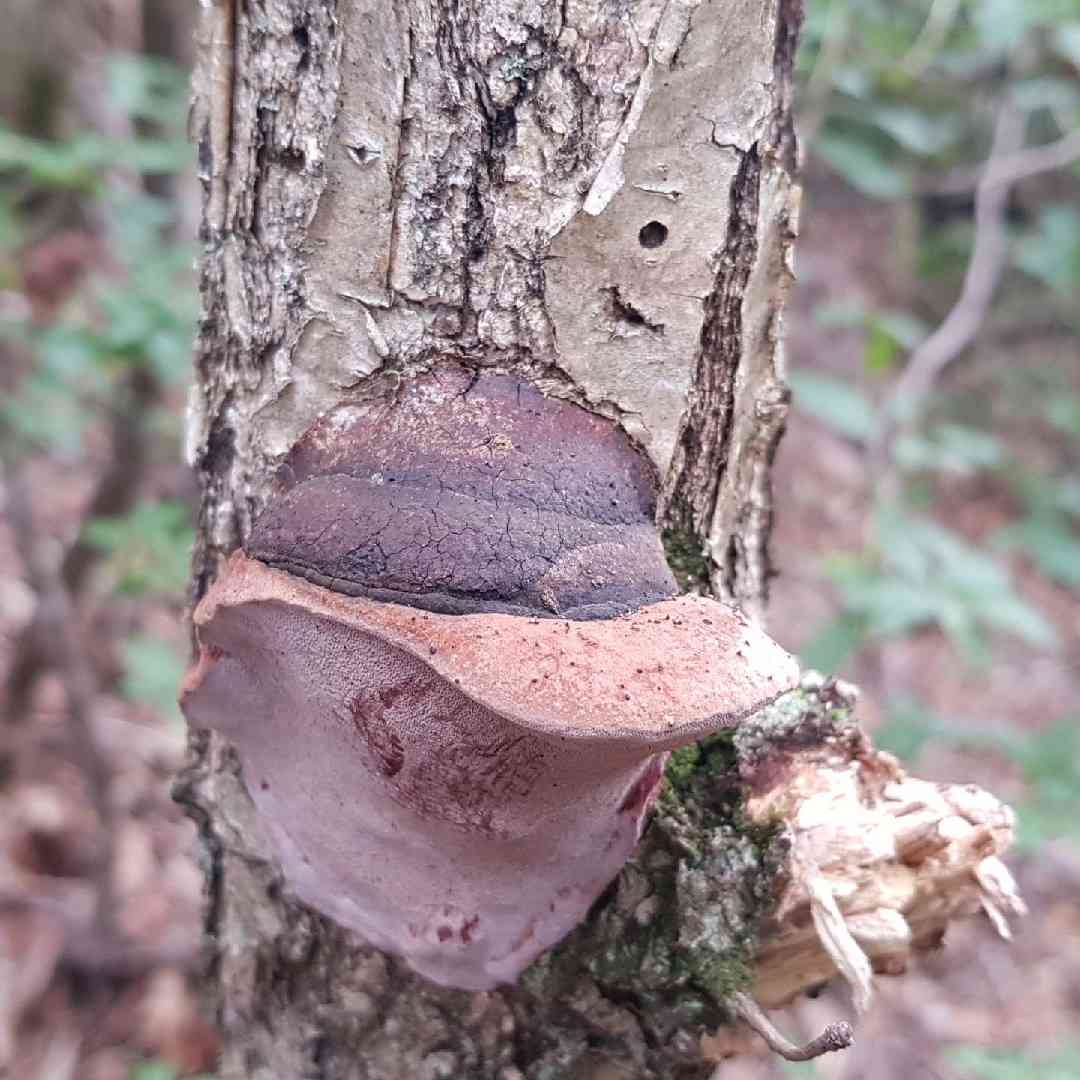
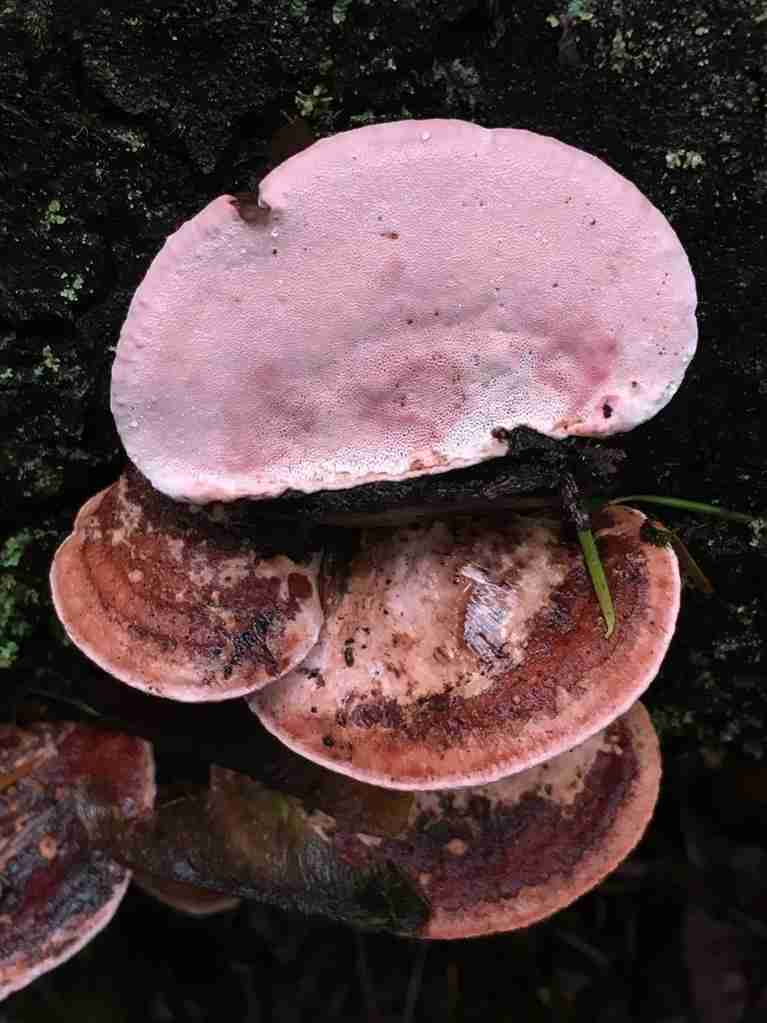
The rosy polypore (Rhodofomes cajanderi) sports a tough, leather-like cap that shifts in hue from a pale, muted pink to a deep, ruddy brown as it ages. Its name is derived from the lively color of its pore surface, which adds a touch of character to an otherwise unremarkable fungus. This mushroom is not suitable for consumption and can cause stomach upset if ingested.
In This Article
Attributes of Rosy polypore
Cap Diameter
4 - 10 cm
Cap
4 - 10 cm broad; hemispherical; light brown; with some wavy edges
Cap Shape
Flat, Convex
Cap Surfaces
Fibrillose-scaly, Velvety
Flesh
Thin; pliant; dingy pink when fresh, woody, and dingy pinkish-brown in age
Spore Print Color
Off-white
Odor
Noticeably fragrant when freshly picked.
Body Color
BrownPink
Flesh Bruises
The flesh or milk does not discolor when bruised or cut.
Growth Form
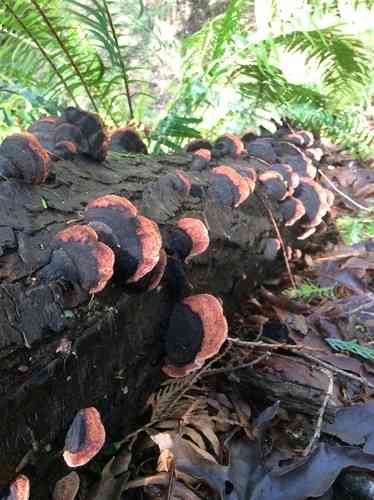
Scattered, Clustered
Nutrient Gathering
Saprophytic, Parasitic
Substrate
Dead Woods, Wood of Living Trees
You can find Rosy polypore by these plants
Common douglas-fir, Ponderosa pine
Occurence Habitats
Coniferous Woodland
Endangered Species
No
Scientific Classification of Rosy polypore
Phylum
Club fungi
Class
Mushroom-forming fungi
Order
Shelf fungi
Family
Bracket polypores
Genus
Rhodofomes
Toxicity and Edibility of Rosy polypore
Is Rosy polypore Toxic?
Toxicity information is not available for this mushroom. Always consult with an expert before consuming any wild mushrooms.