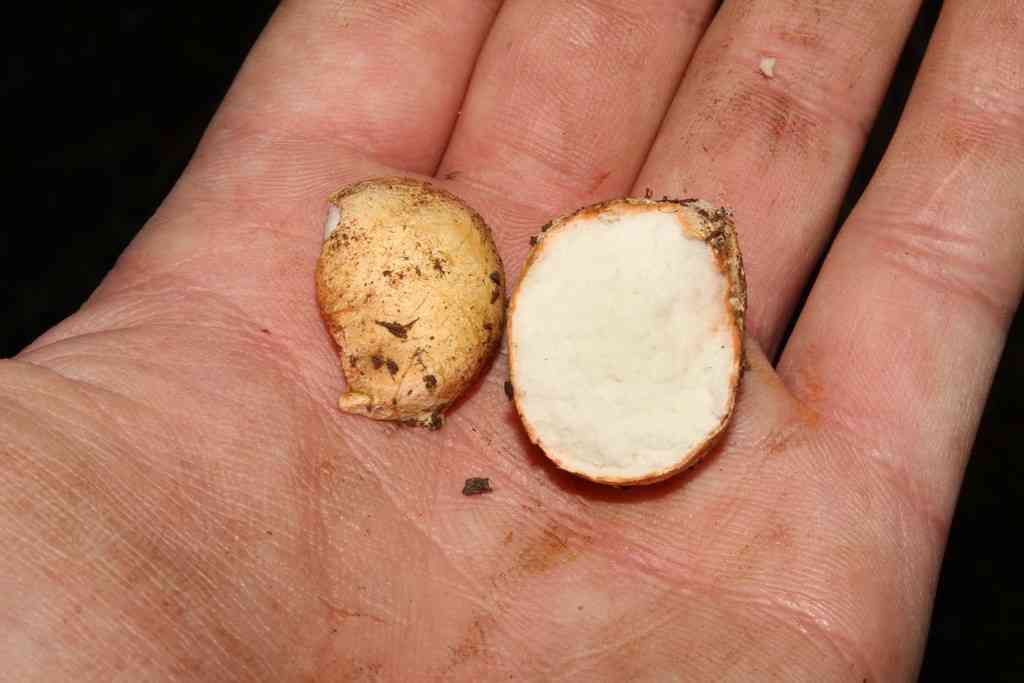
Blushing beard truffle
Rhizopogon roseolus
A species of Rhizopogon.
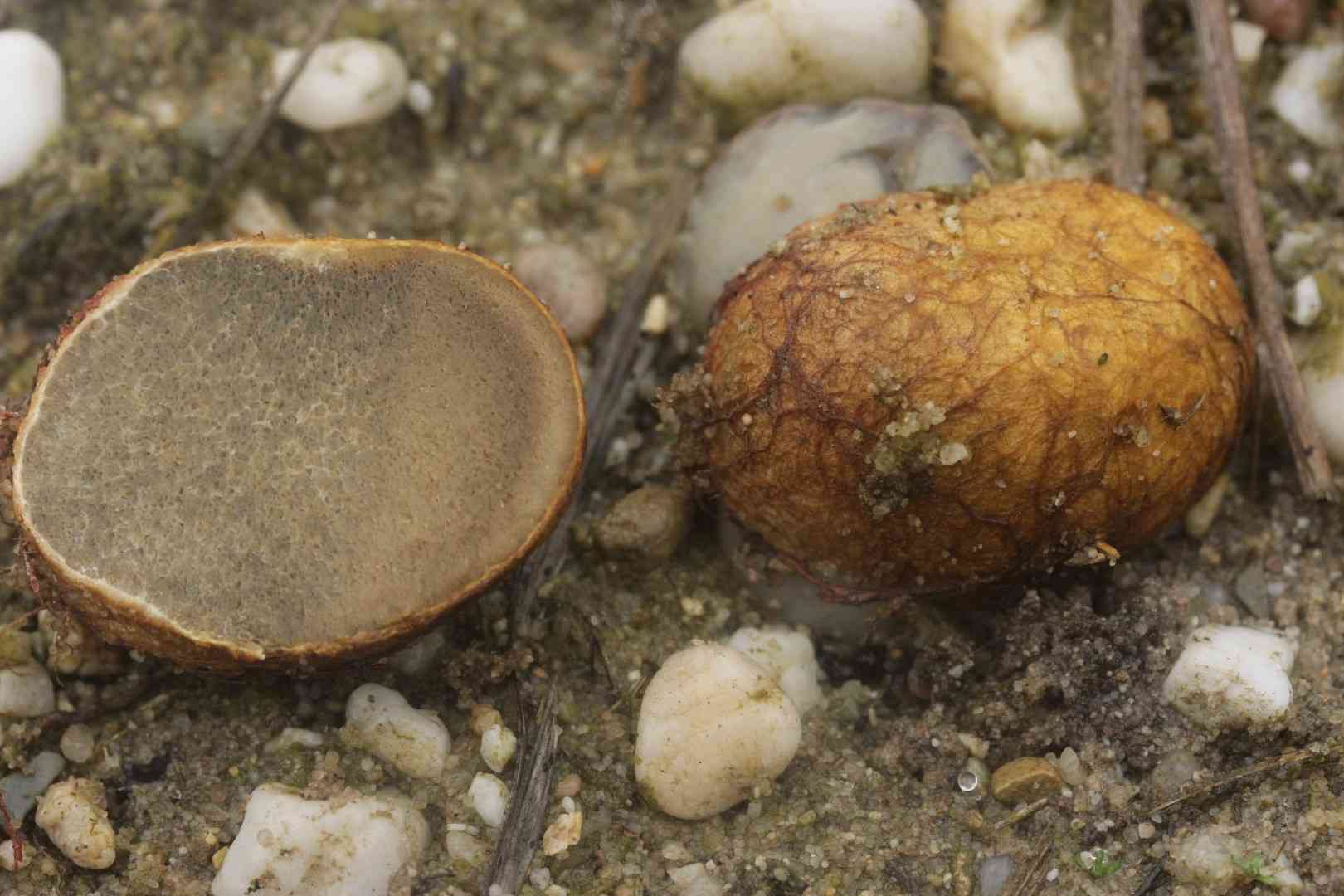
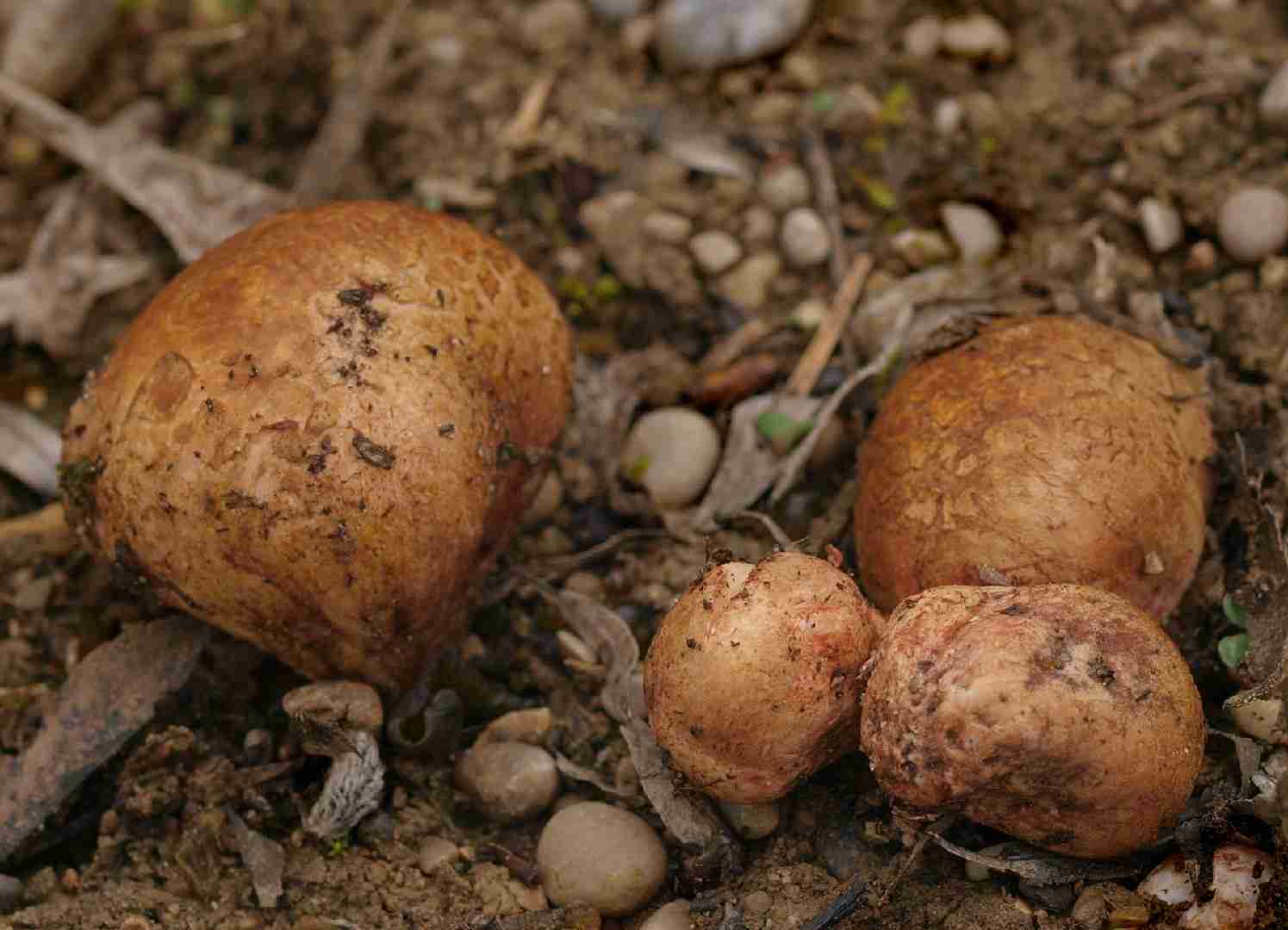
The 'blushing beard truffle' typically establishes a mutualistic relationship with the root systems of specific trees, which assists with nutrient uptake. They manifest as small, potato-like nodules, and when sectioned, their core exhibits elaborate veins. These truffles favor sandy, well-draining ground and generally mature beneath the surface, making them less obvious compared to other fungal varieties.
In This Article
Attributes of Blushing beard truffle
Height
1 - 6 cm
Flesh
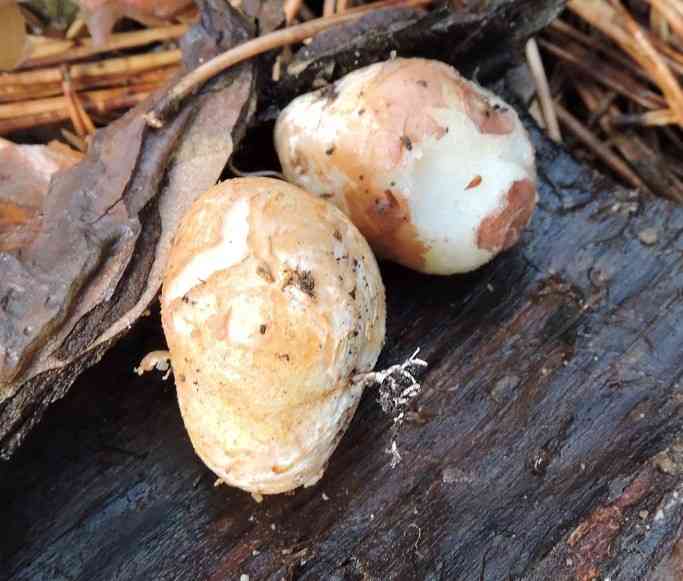
Grainy; white; turns red and brownish-yellow, olive when cut
Spore Print Color
Hyaline
Odor
Initially mild, becomes disagreeable over time.
Body Color
BrownYellowWhitePink
Flesh Bruises
Discolor to pink or red
Growth Form
Solitary, Scattered, Gregarious
Nutrient Gathering
Mycorrhizal
Substrate
On soil
You can find Blushing beard truffle by these plants
Pines, Douglas firs, Oaks, Mugo pine
Species Status
Occasional
Endangered Species
No
Scientific Classification of Blushing beard truffle
Phylum
Club fungi
Class
Mushroom-forming fungi
Order
Boletes and allies
Family
Rhizopogonaceae
Genus
Rhizopogon
Toxicity and Edibility of Blushing beard truffle
Is Blushing beard truffle Toxic?
Toxicity information is not available for this mushroom. Always consult with an expert before consuming any wild mushrooms.