Smoked oysterling
Resupinatus applicatus
A species of Grey oysterling.
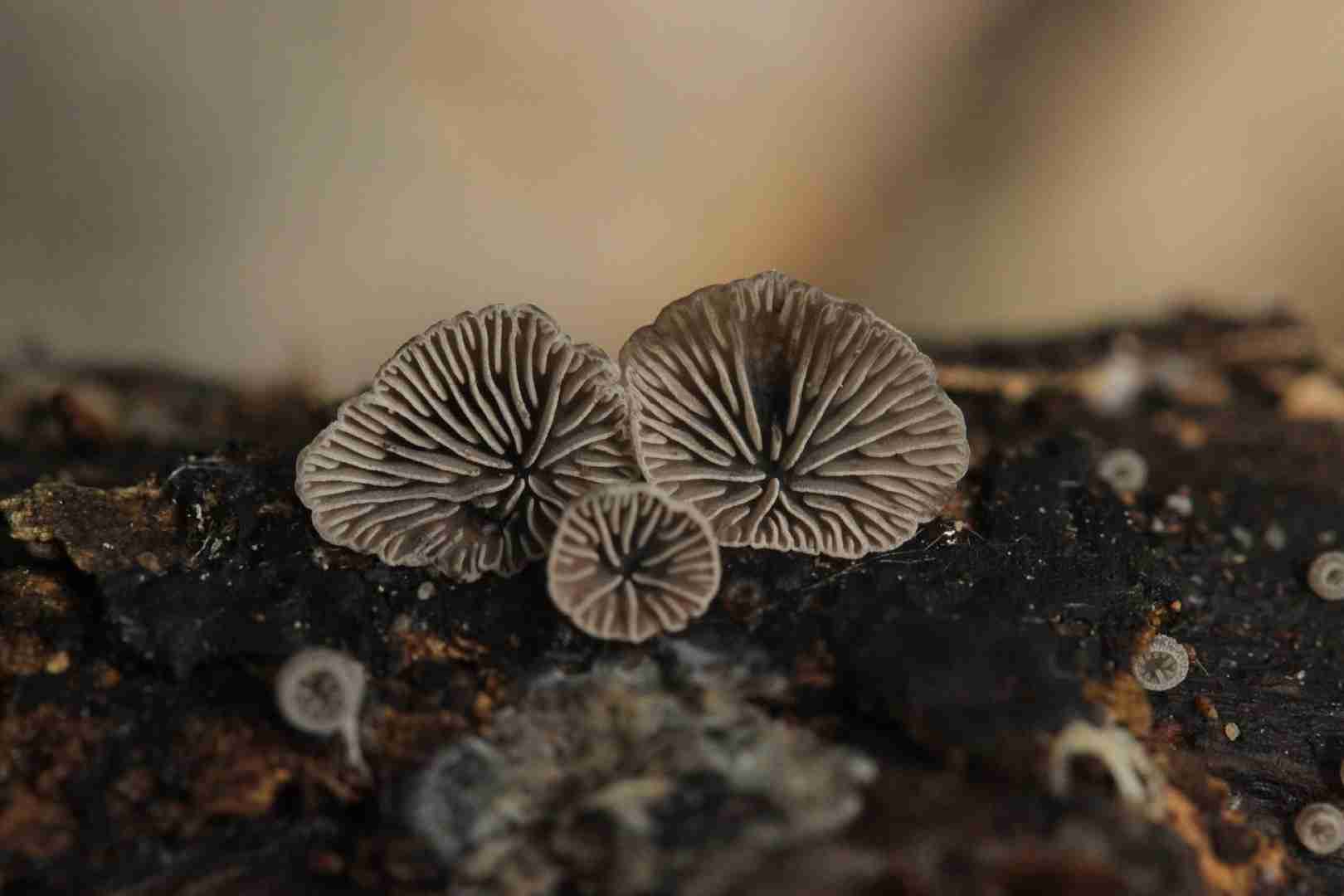
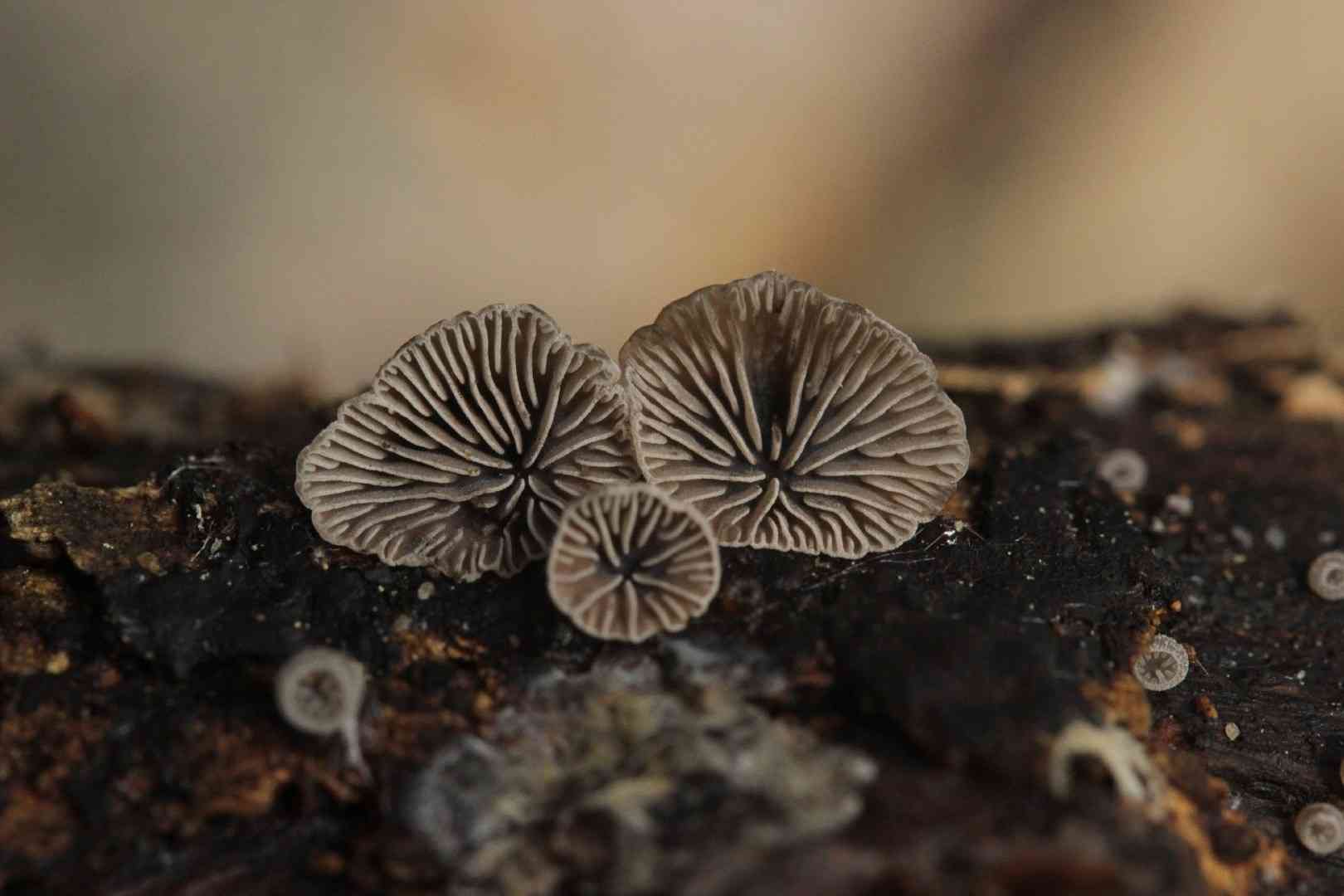
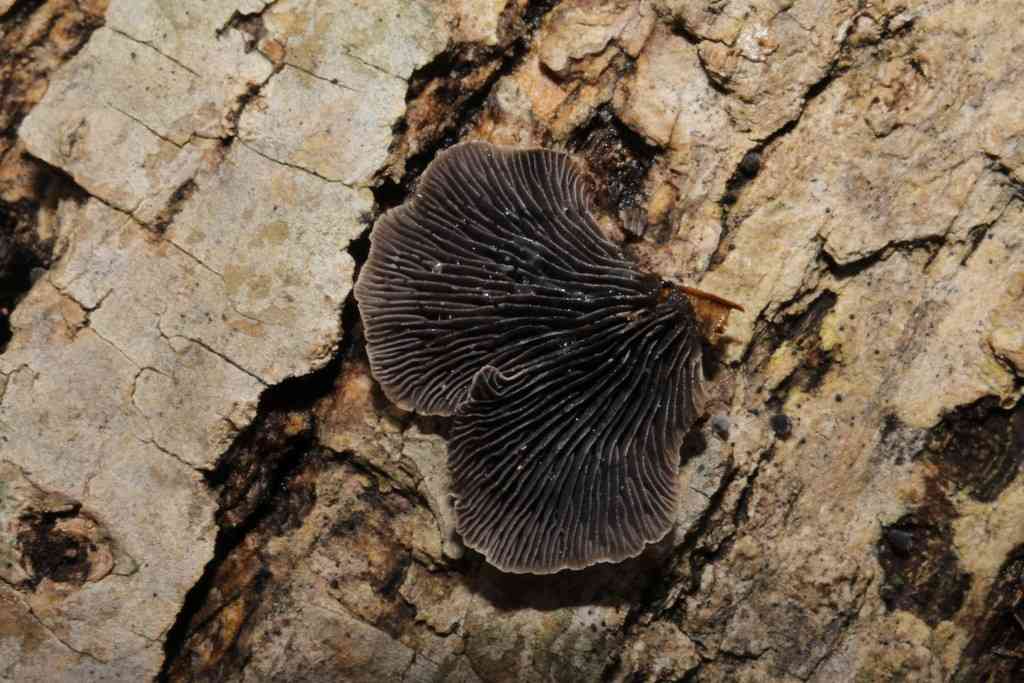
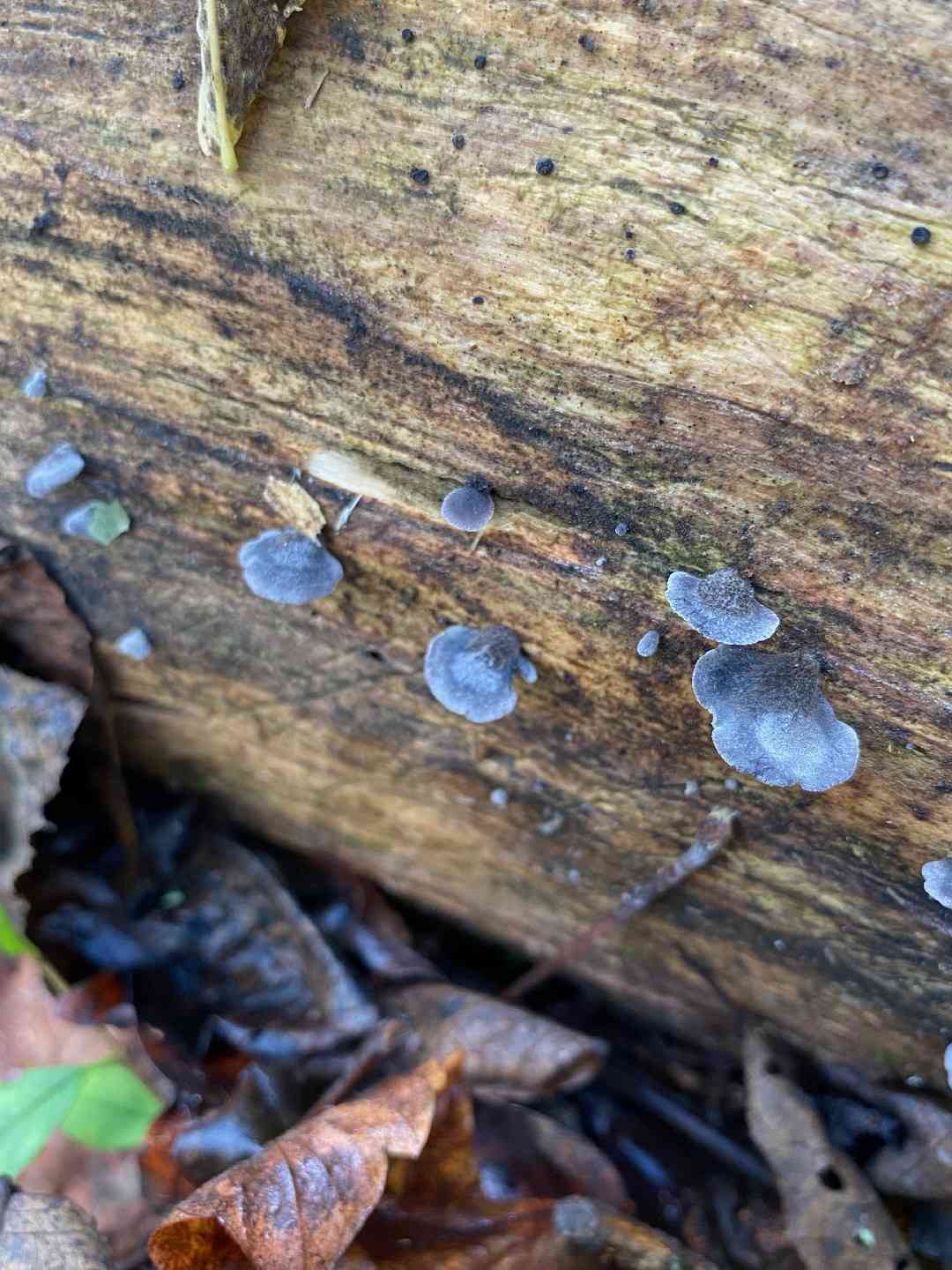
The diminutive smoked oysterling fruiting body can be found growing on decaying wood and may present as either cup-shaped or convex. The genus name Rasupinatus is a Latin derivation meaning 'turned over' or 'bent backward.' Concurrently, Applicatus translates to 'close to' or 'near,' likely due to the smoked oysterling's stemless nature and its tight proximity to the wood.
In This Article
Attributes of Smoked oysterling
Cap Diameter
2 - 6 mm
Cap
2 - 6 mm in diameter; cuplike to convex; grayish-blue to grayish-black; covered with small, fine hairs
Gills
Decurrent; moderately narrow and close; dark brown when revived, edges whitish
Stem
2 - 5 mm broad; lateral pseudostem
Flesh
Firm but gelatinous; black
Spore Print Color
White
Body Color
BlackGrayBlue
Flesh Bruises
The flesh or milk does not discolor when bruised or cut.
Growth Form
Gregarious, Clustered
Nutrient Gathering
Saprophytic
Substrate
On wood
You can find Smoked oysterling by these plants
Willows, Oaks
Species Status
Widely distributed
Endangered Species
No
Scientific Classification of Smoked oysterling
Phylum
Club fungi
Class
Mushroom-forming fungi
Order
Gilled fungi
Family
Pale-spore mushrooms
Genus
Grey oysterling
Toxicity and Edibility of Smoked oysterling
Is Smoked oysterling Toxic?
Toxicity information is not available for this mushroom. Always consult with an expert before consuming any wild mushrooms.

