Ravenel's bolete
Pulveroboletus ravenelii
A species of Pulveroboletus.
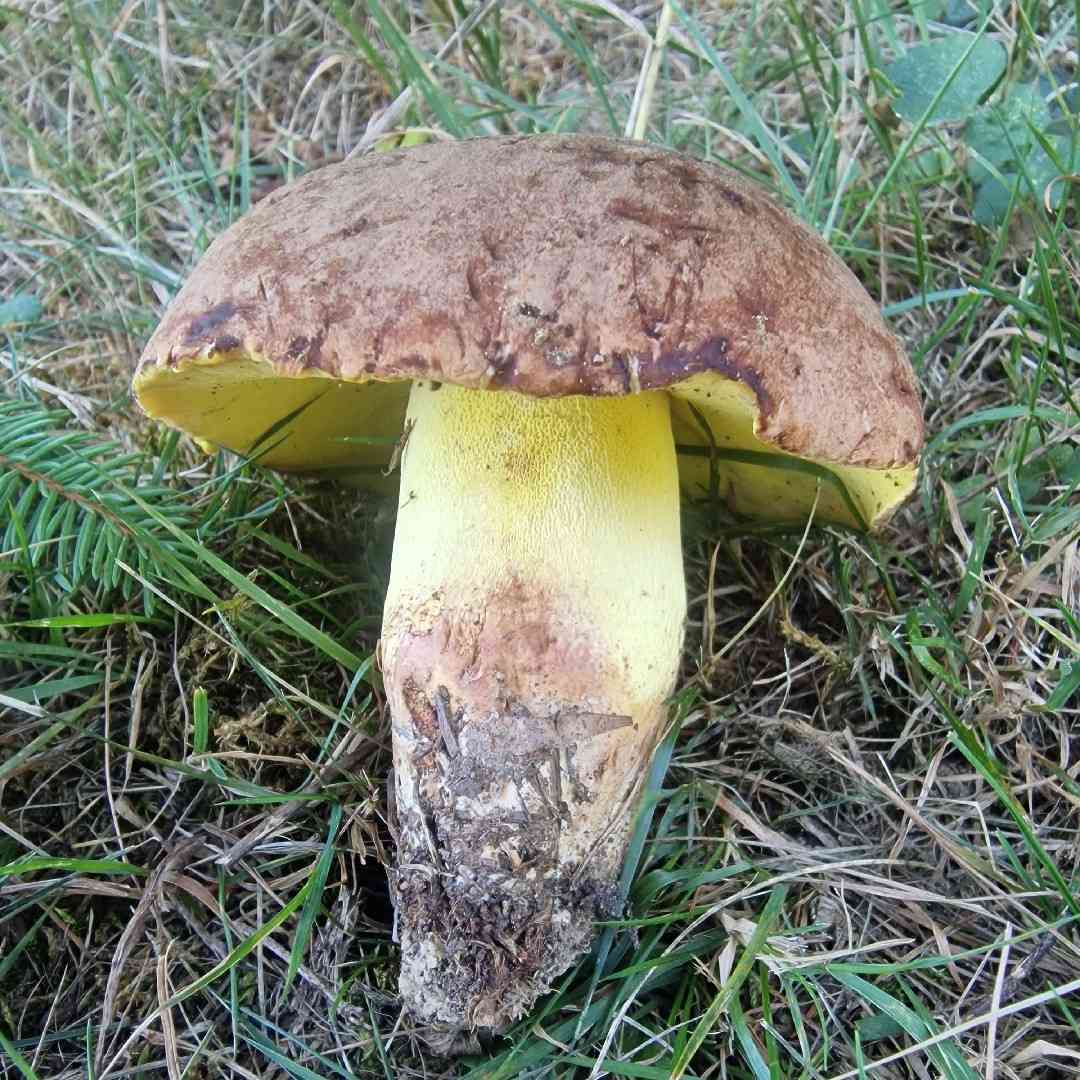
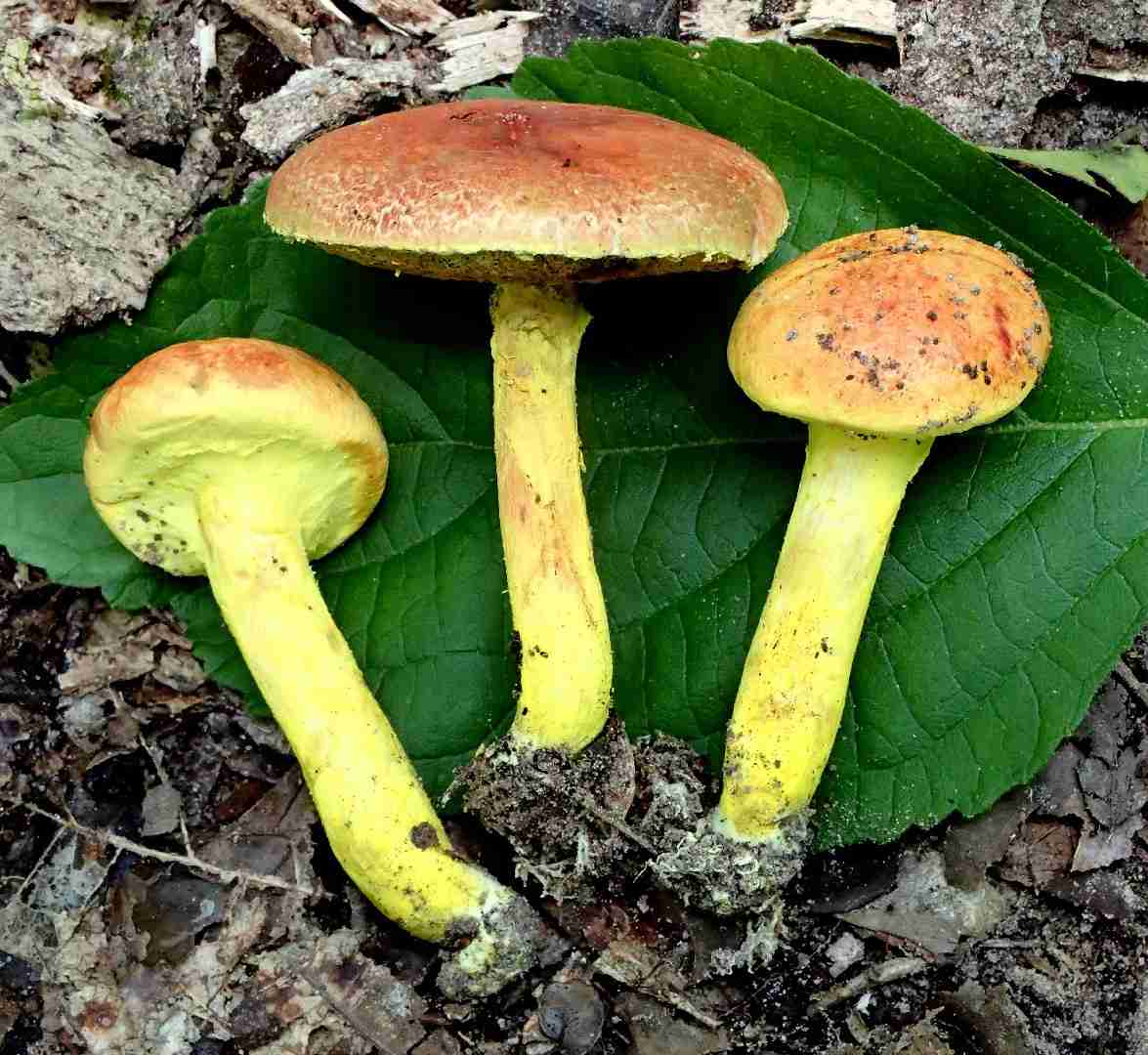
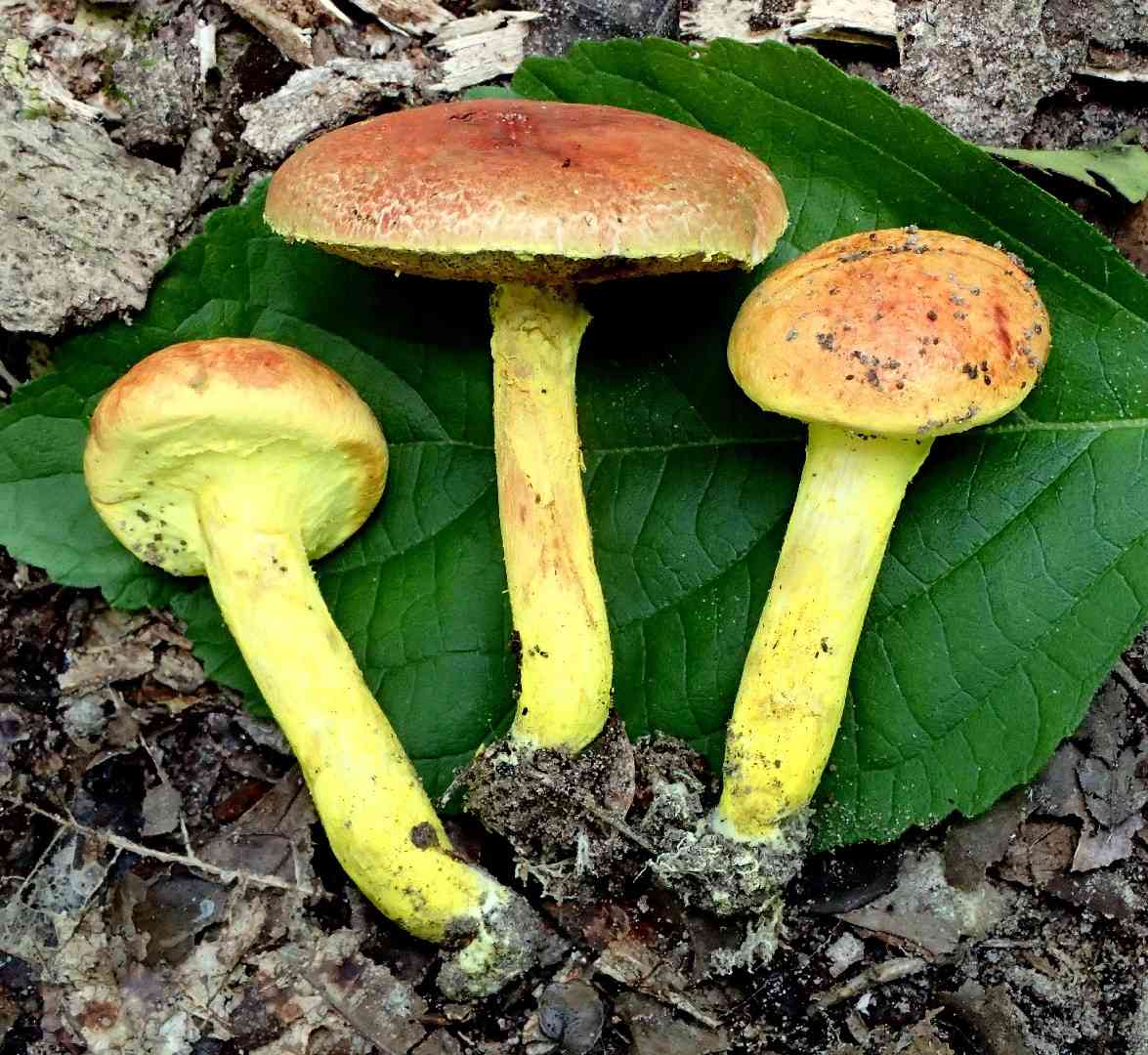
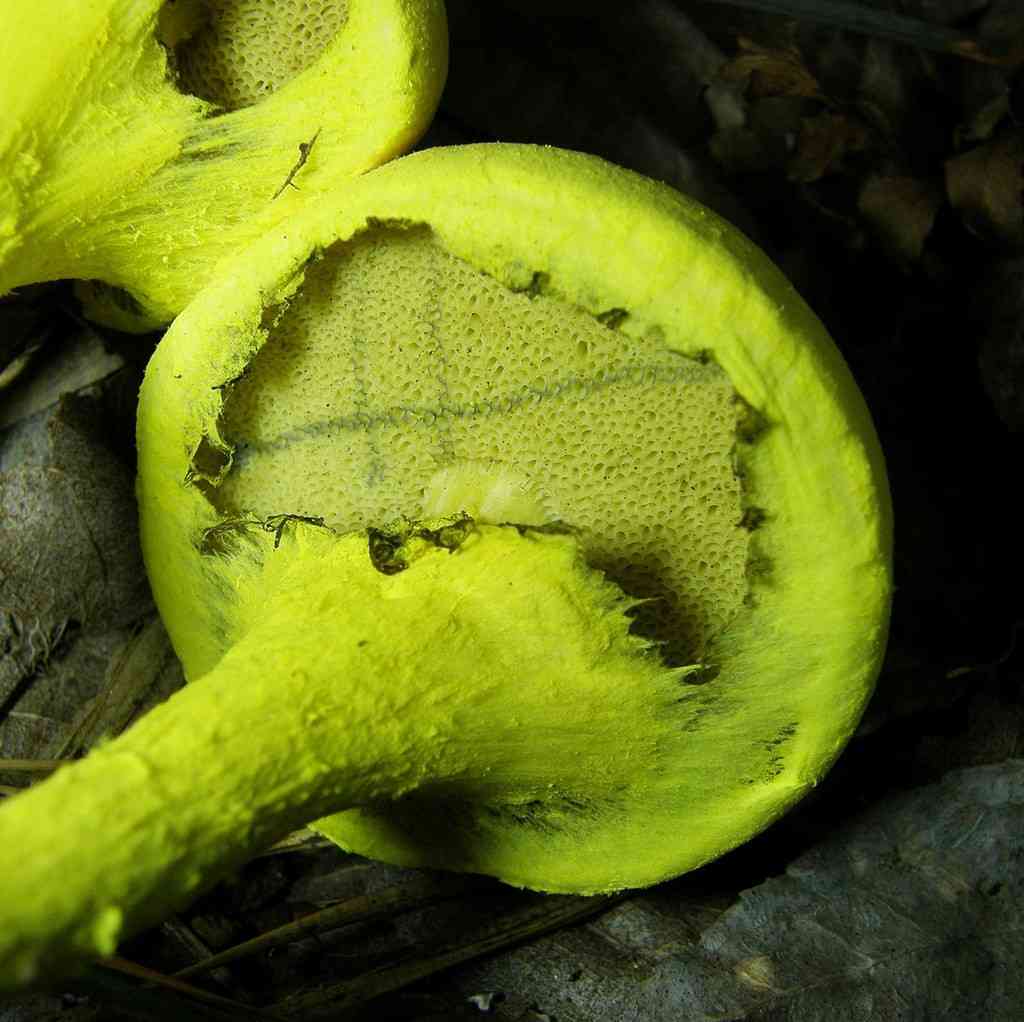
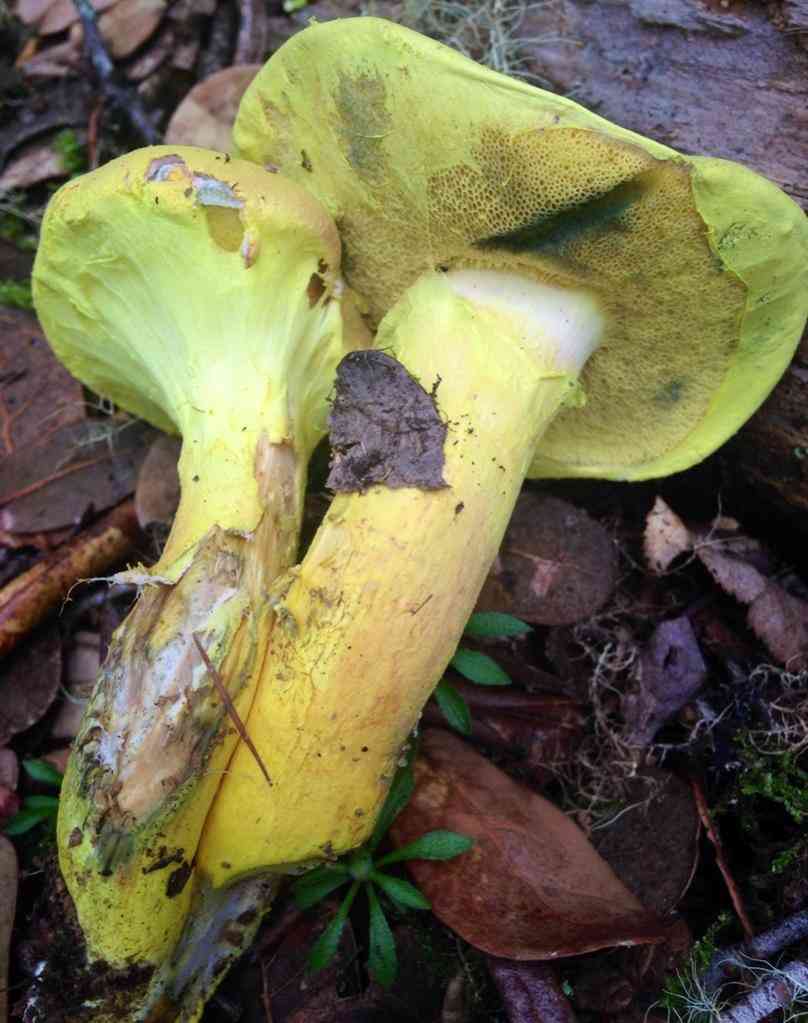
Ravenel's bolete stands out as a distinctive and easily recognizable mushroom – its unique characteristic among boletes is a powdery, brilliant yellow, almost fluorescent veil covering its pores and a section of the stem when immature. This species has also found application in creating mushroom-derived dyes.
In This Article
Attributes of Ravenel's bolete
Cap Diameter
2 - 12 cm
Height
8 - 15 cm
Cap
Cap 2 - 12 cm; convex, becoming flat; sulfur-yellow, becoming orange-brown; edge often hung with veil remnants
Cap Shape
Convex, Flat
Cap Surfaces
Smooth, Slimy or slightly sticky
Stem
Stem to 15 cm long and 2 cm thick; equal or tapering to the base; yellow or whitish; with an irregular ring or veil remains
Stem Shapes
Tapering
Stem Surfaces
Fibrillose
Flesh
White to pale yellow; slowly turning pale blue when it is cut
Ring
With Ring
Spore Print Color
Olive-brown
Odor
Mildly mushroomy but not distinctive.
Body Color
BrownYellowRedOrange
Flesh Bruises
Discolor to blue
Growth Form
Solitary, Scattered, Gregarious
Nutrient Gathering
Mycorrhizal
Substrate
On soil
You can find Ravenel's bolete by these plants
Oaks, Pines
Occurence Habitats
Coniferous Woodland, Mixed Woodland
Species Status
Widely distributed in North America, more common in the south
Endangered Species
No
Scientific Classification of Ravenel's bolete
Phylum
Club fungi
Class
Mushroom-forming fungi
Order
Boletes and allies
Family
Boletes
Genus
Pulveroboletus
Toxicity and Edibility of Ravenel's bolete
Is Ravenel's bolete Toxic?
Ingesting the ravenel's bolete mushroom can lead to a range of unpleasant, albeit minor, digestive issues. Within approximately half an hour of eating it, individuals typically experience symptoms such as an upset stomach, throwing up, loose stools, abdominal pain, and increased perspiration.