Pseudomerulius curtisii
Pseudomerulius curtisii
A species of Pseudomerulius.
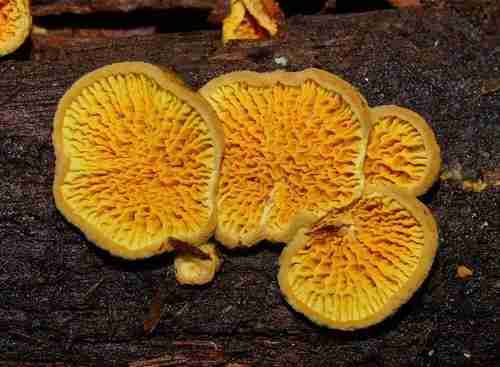
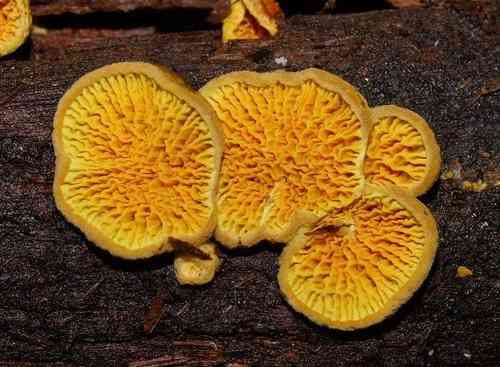
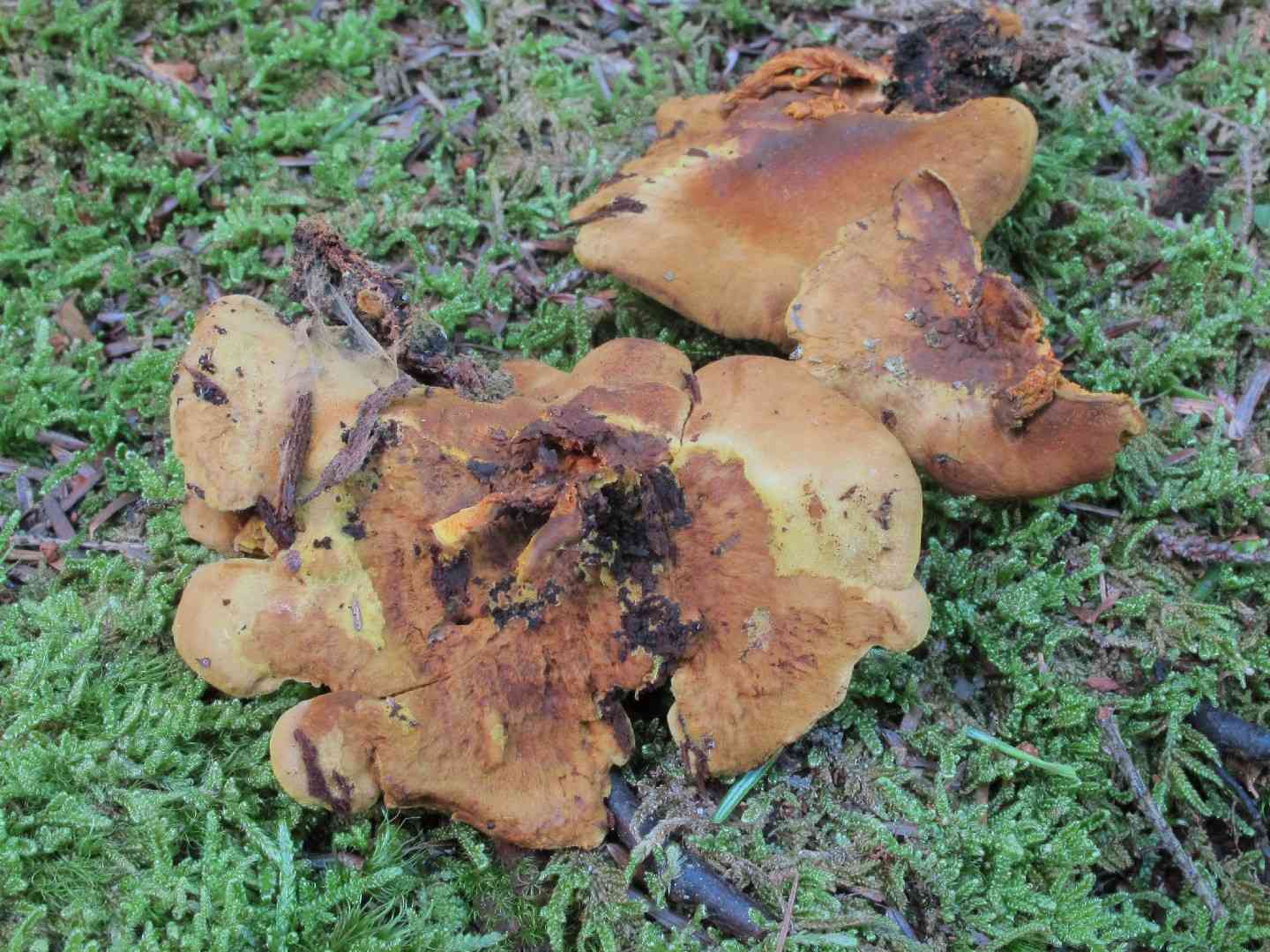
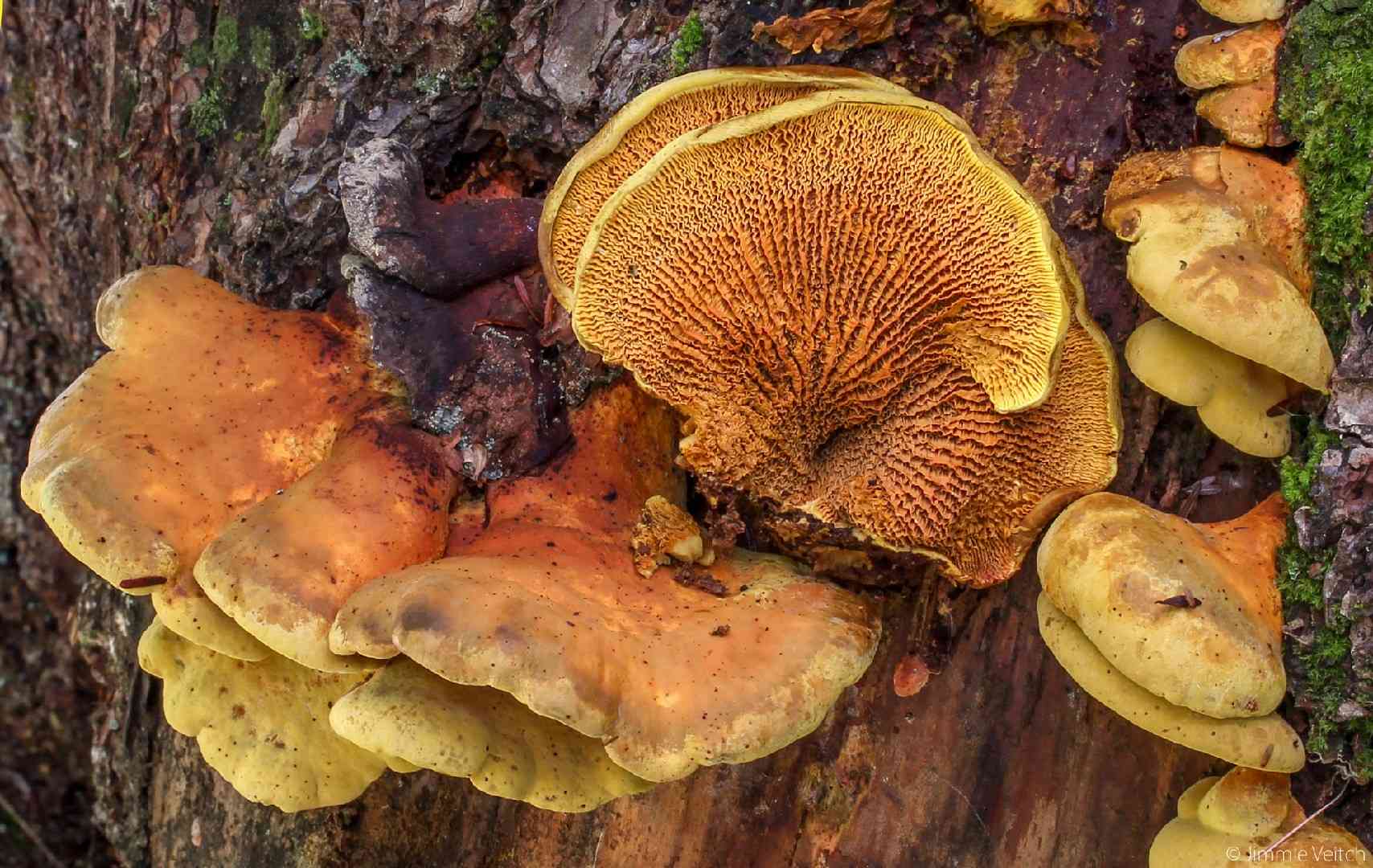
Pseudomerulius curtisii stands out as a remarkable fungus that flourishes on decaying timber, showing a particular preference for conifer-dominated woodlands. Its distinguishing features include a fan-like structure with clear stratification, frequently appearing in overlapping groups. The surface of its fruiting body typically displays hues ranging from orange to brown and possesses a texture that feels notably velvety.
In This Article
Attributes of Pseudomerulius curtisii
Cap Diameter
2 - 5 cm
Cap
Cap 2 - 5 cm wide; convex, semi-circular; yellow or brown; dry, tomentose to smooth; margin incurved
Gills
Narrowed point of attachment; close; yellow orange; staining darker orange
Stem
Rudimentary or absent
Flesh
Pale yellow
Spore Print Color
Olive yellow to yellowish brown
Odor
Smell slightly unpleasant pungent spicy, turning stronger upon drying
Body Color
BrownYellow
Growth Form
Gregarious, Clustered
Nutrient Gathering
Saprophytic
Substrate
On wood
Species Status
Widespread
Endangered Species
No
Scientific Classification of Pseudomerulius curtisii
Phylum
Club fungi
Class
Mushroom-forming fungi
Order
Boletes and allies
Family
Tapinellaceae
Genus
Pseudomerulius
Toxicity and Edibility of Pseudomerulius curtisii
Is Pseudomerulius curtisii Toxic?
Pseudomerulius curtisii is a toxic mushroom, causing gastrointestinal distress within 30 minutes to 3 hours of consumption. Key symptoms involve nausea, emesis, abdominal pain, and loose stools, occasionally alongside perspiration, lassitude, lightheadedness, and shivers.

