Sinuous chanterelle
Pseudocraterellus undulatus
A species of Pseudocraterellus.
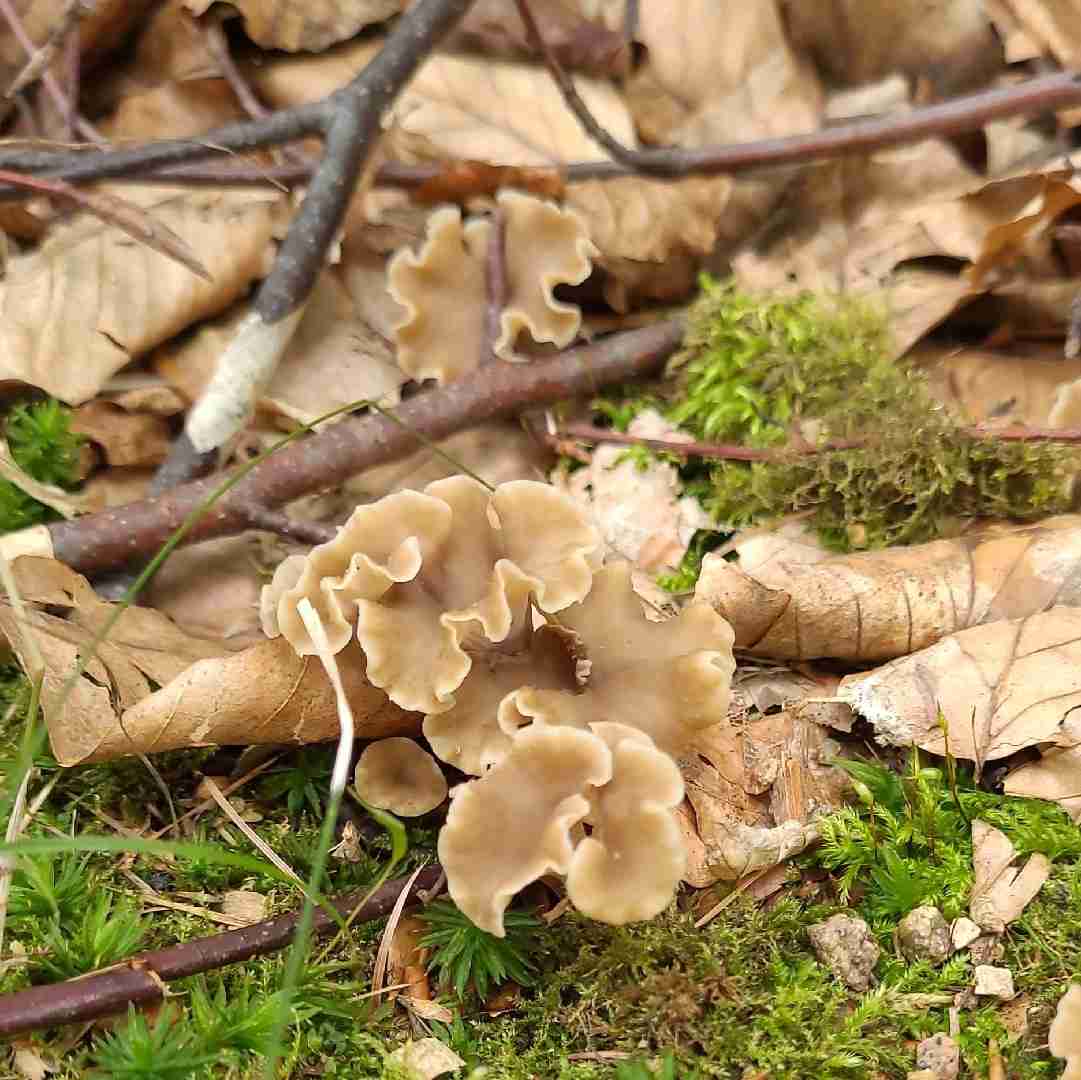
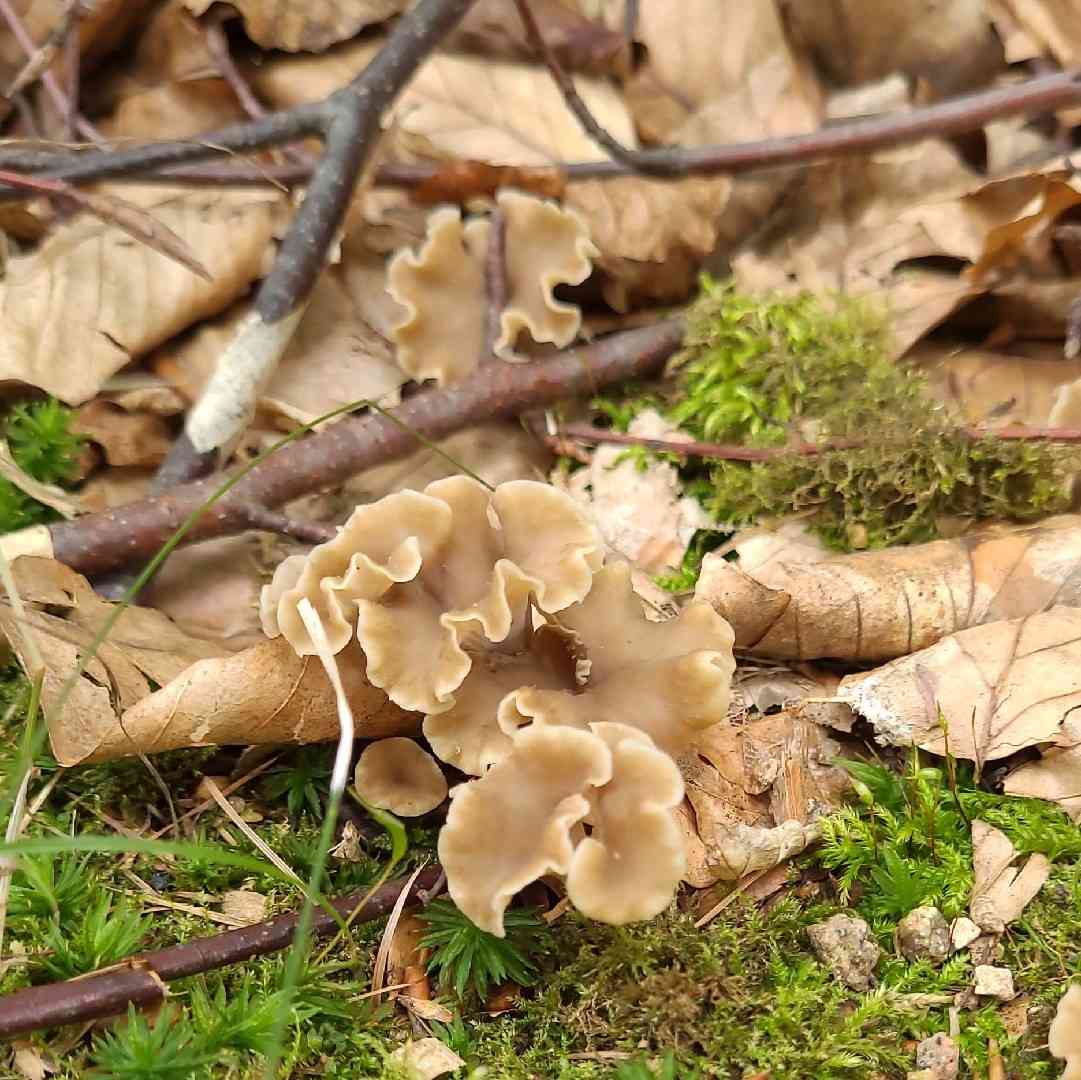
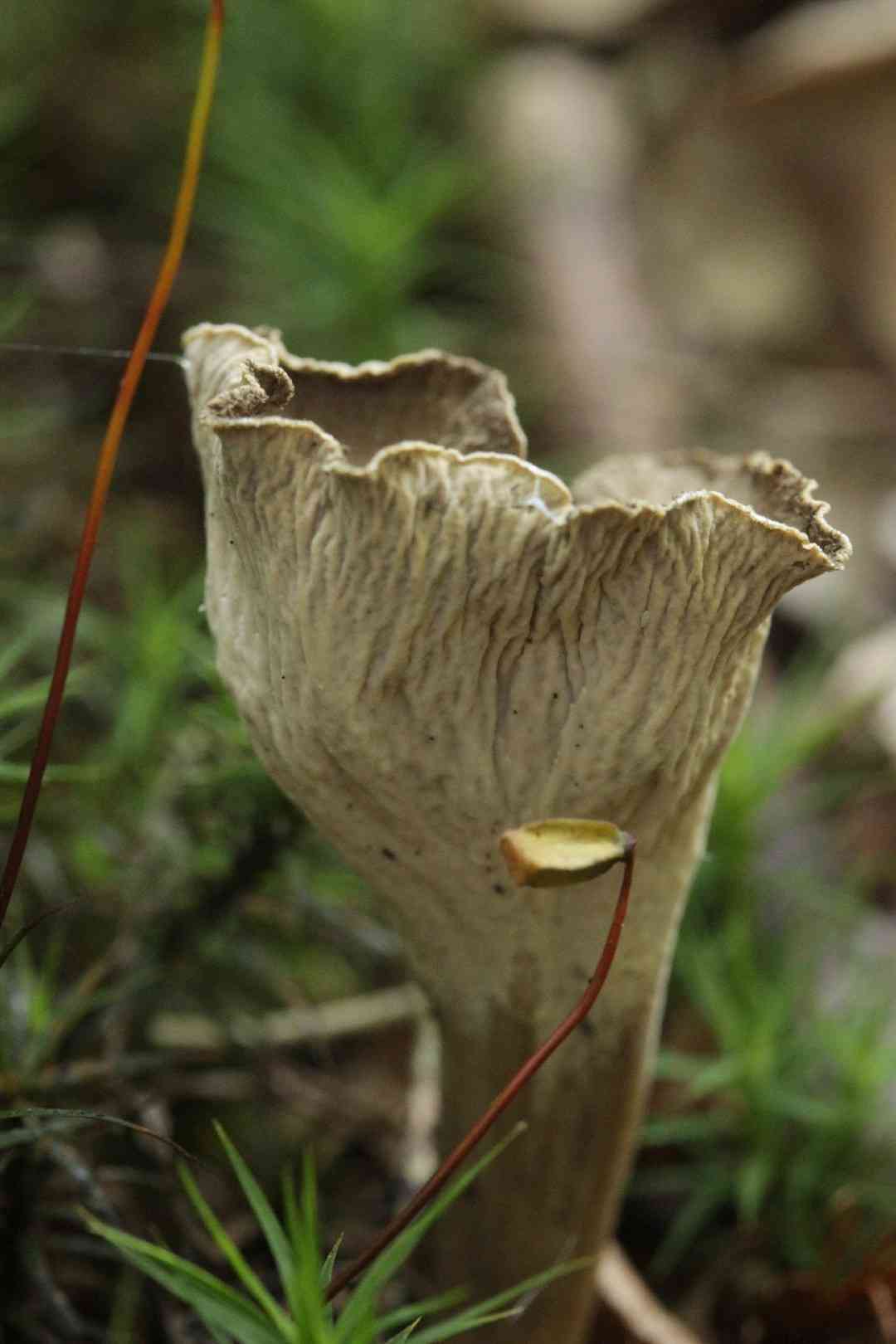
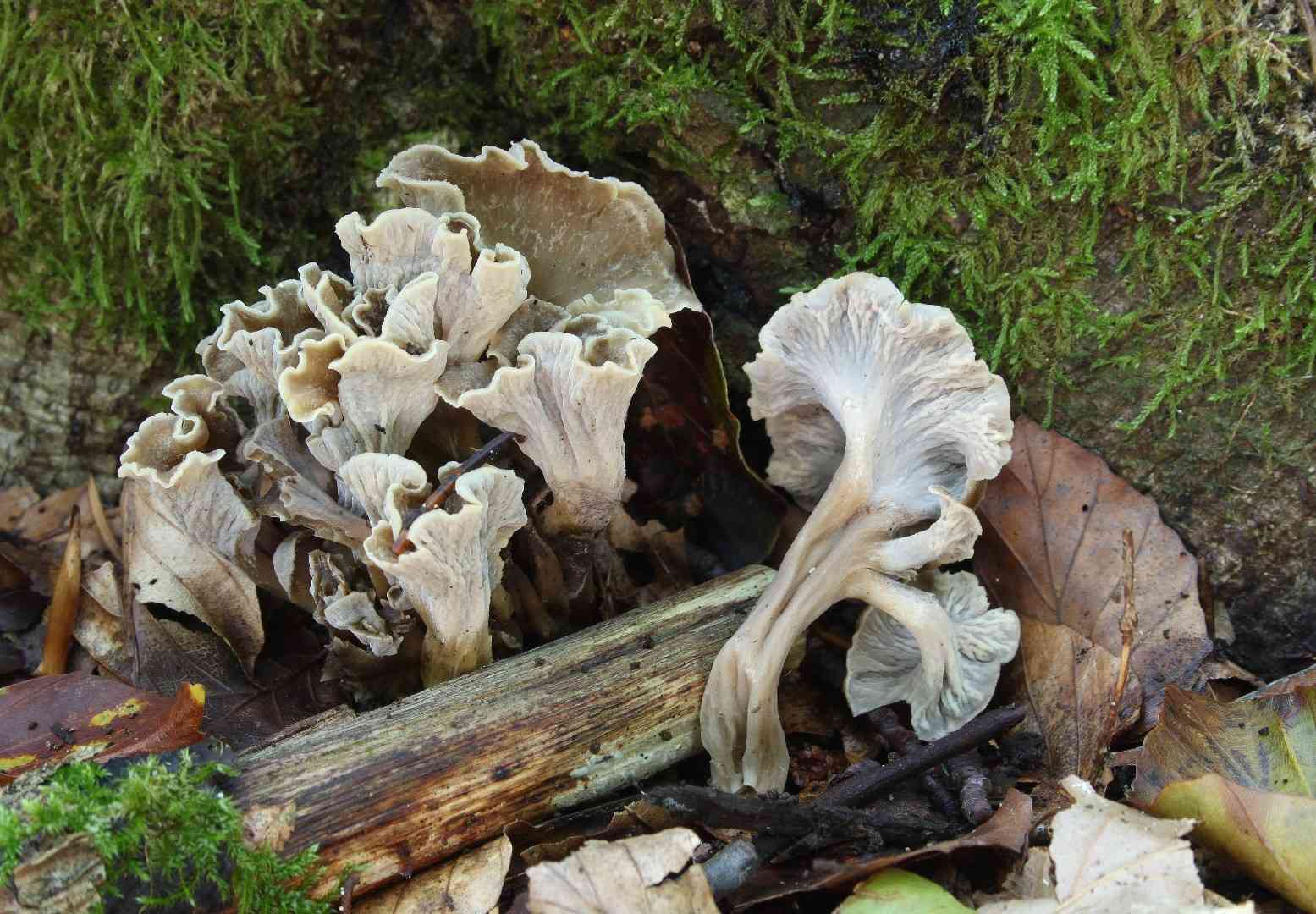
The distinct chanterelle fungus, characterized by its wavy, leaf-like gills and often pale cap, thrives in mossy coniferous forests. It engages in fascinating symbiotic relationships with these trees, assisting them in nutrient absorption while receiving sugars in return. Its fruiting bodies primarily appear during cooler periods.
In This Article
Attributes of Sinuous chanterelle
Cap Diameter
1 - 3 cm
Height
5 - 10 cm
Cap
Cap 1 - 5 cm across; irregularly funnel-shaped; greyish-brown
Cap Shape
Depressed
Cap Surfaces
Smooth
Stem
Stem 5 - 10 cm long; tapering towards base; greyish
Stem Shapes
Tapering
Stem Surfaces
Smooth to slightly fibrous
Flesh
Pale
Ring
Ringless
Spore Print Color
Yellowish ochre
Odor
Pleasantly fruity aroma.
Body Color
BrownGrayWhite
Flesh Bruises
The flesh or milk does not discolor when bruised or cut.
Growth Form
Scattered, Gregarious
Nutrient Gathering
Mycorrhizal
Substrate
Leaf or Needle Litter, On soil
Occurence Habitats
Deciduous Woodland
Species Status
Occasional
Endangered Species
No
Scientific Classification of Sinuous chanterelle
Phylum
Club fungi
Class
Mushroom-forming fungi
Order
Cantharellales
Family
Chanterelle
Genus
Pseudocraterellus
Toxicity and Edibility of Sinuous chanterelle
Is Sinuous chanterelle Toxic?
Toxicity information is not available for this mushroom. Always consult with an expert before consuming any wild mushrooms.

