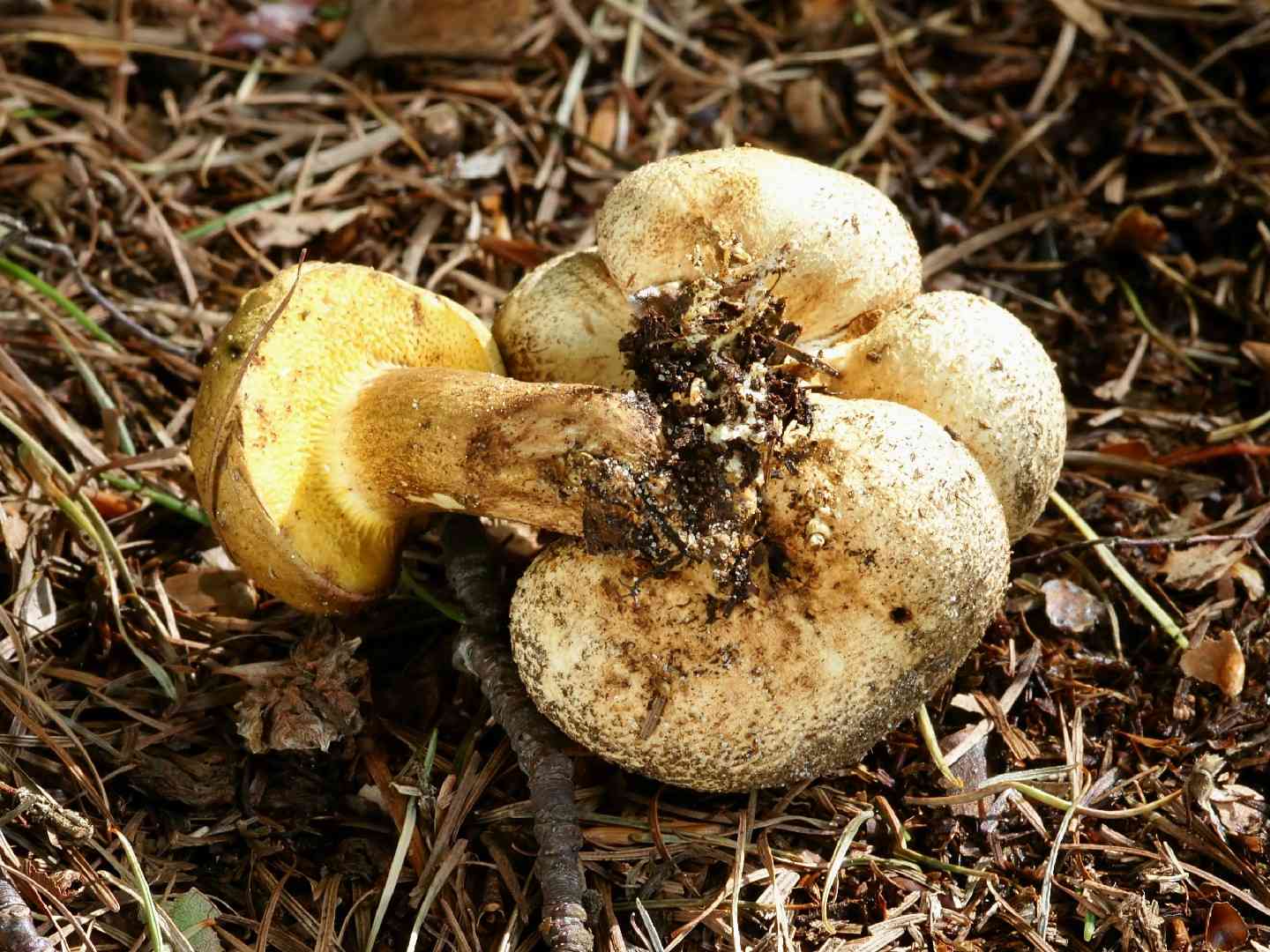
Parasitic bolete
Pseudoboletus parasiticus
A species of Pseudoboletus.
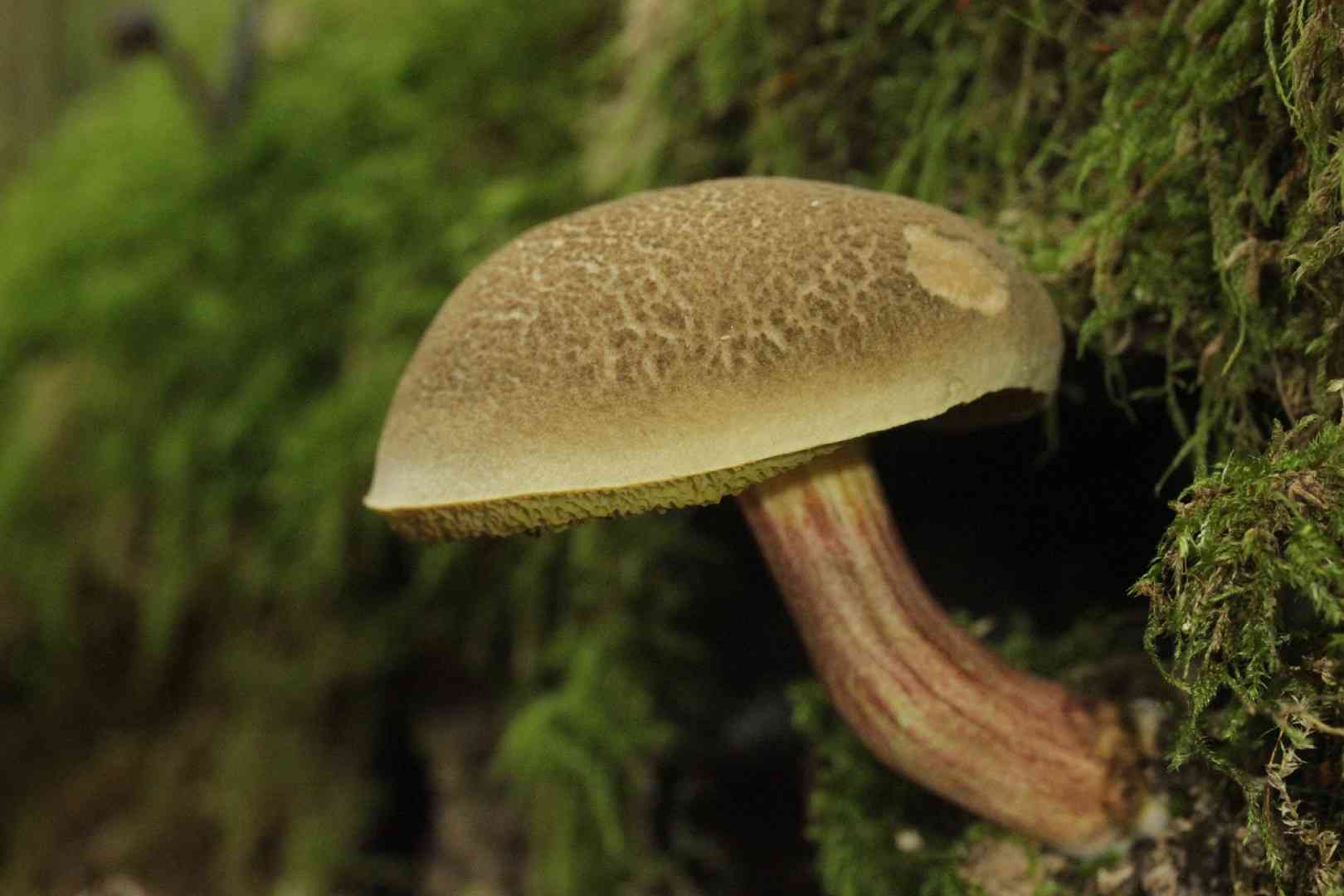
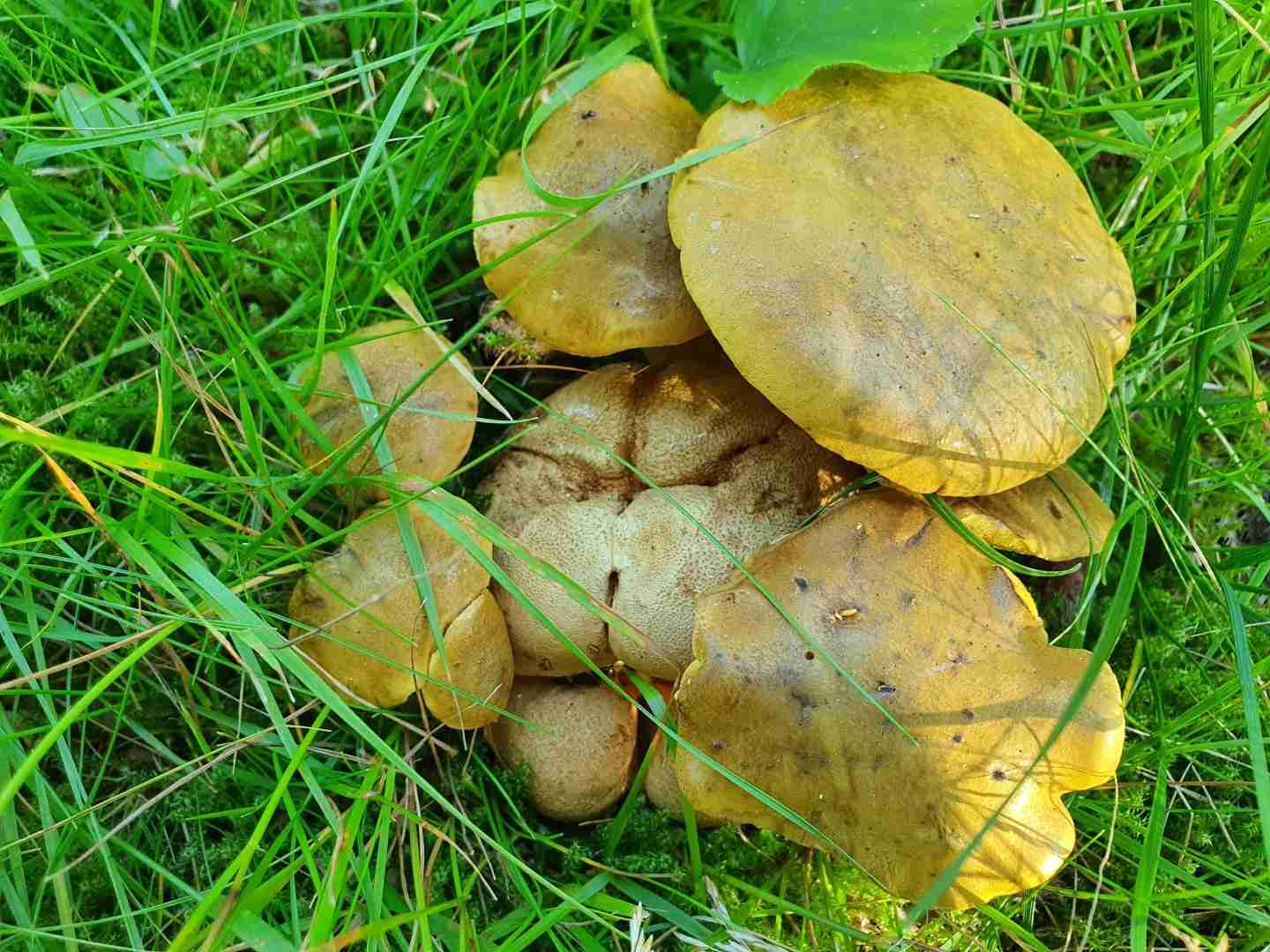
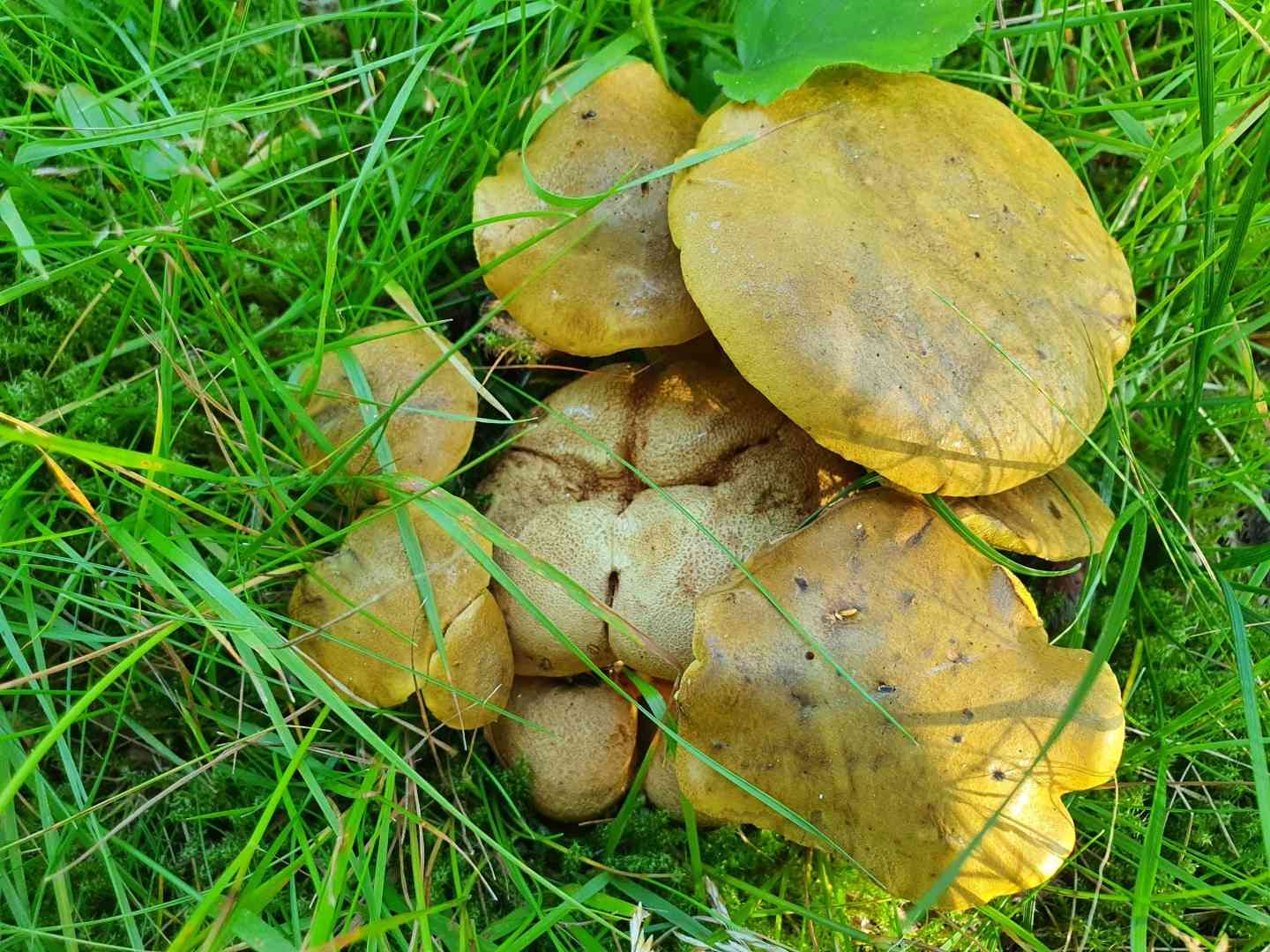
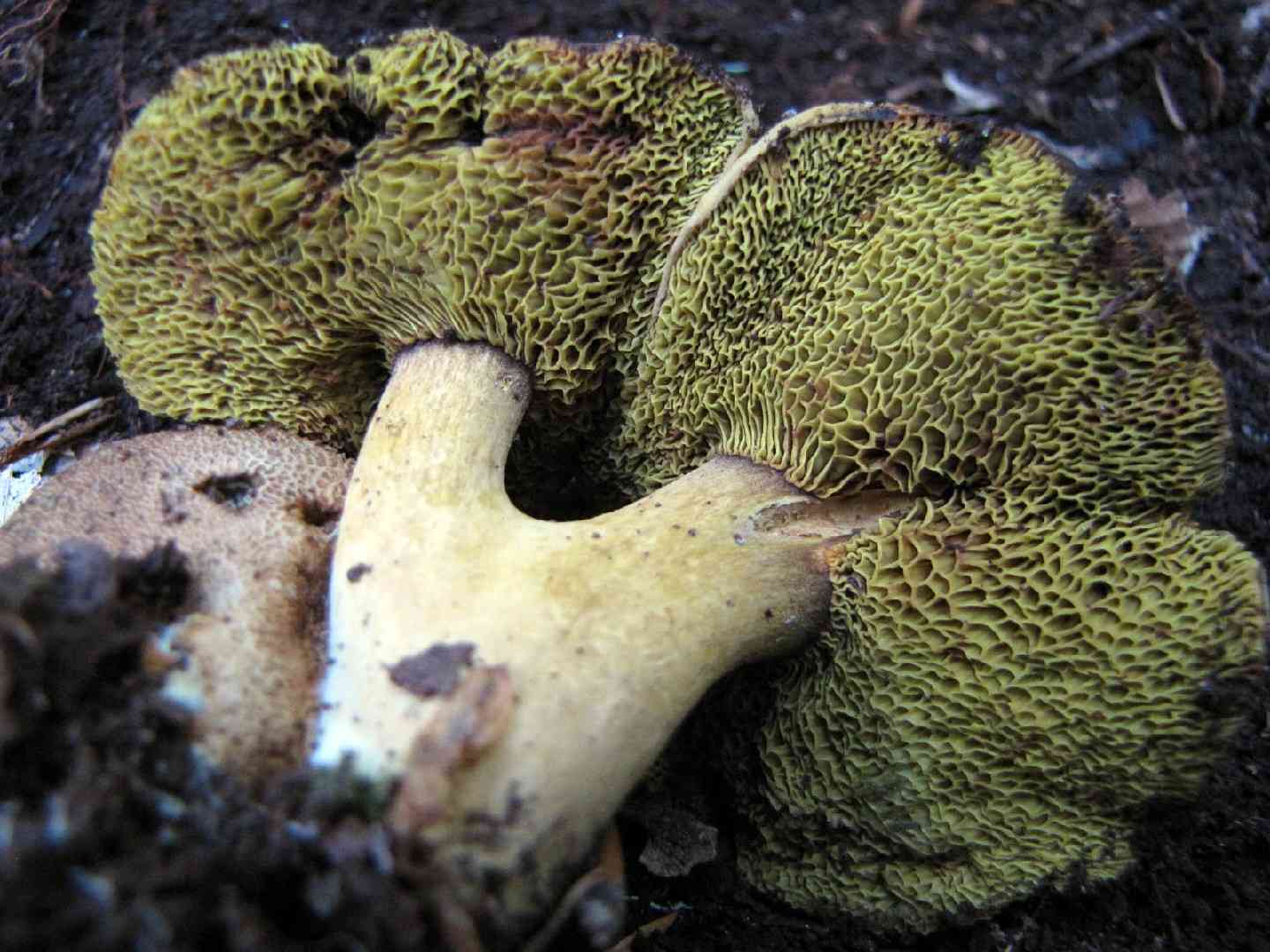
The pileus is initially dome-shaped, becoming planar with age, varying from yellowish-brown to darker shades, and measuring up to 5 cm across. The internal tissue is light yellow and has a delicate flavor, while the reproductive cells are olive in color. The stipe ranges from light yellow to an olive hue.
In This Article
Attributes of Parasitic bolete
Cap Diameter
2 - 7 cm
Height
5 - 10 cm
Cap
2.5 - 7 cm across; convex, becoming flatter; olive-buff to grayish brown; smooth; margin rolled under when young; sometimes bruising reddish
Cap Shape
Convex
Cap Surfaces
Smooth, Velvety
Stem
4 - 8 cm long, 1 - 2 cm thick; equal, often curved near the base; finely stippled and cap-colored; smooth
Stem Shapes
Tapering
Stem Surfaces
Fibrillose
Flesh
Pale yellow
Ring
Ringless
Spore Print Color
Olive-brown
Odor
Mildly mushroomy but not distinctive.
Body Color
BrownYellowRed
Flesh Bruises
The flesh or milk does not discolor when bruised or cut.
Growth Form
Solitary, Gregarious
Nutrient Gathering
Parasitic
Substrate
On mushrooms
You can find Parasitic bolete by these plants
Eastern hemlock, Common earthball
Occurence Habitats
Coniferous Woodland, Deciduous Woodland
Species Status
Widespread in Europe
Endangered Species
No
Scientific Classification of Parasitic bolete
Phylum
Club fungi
Class
Mushroom-forming fungi
Order
Boletes and allies
Family
Boletes
Genus
Pseudoboletus
Toxicity and Edibility of Parasitic bolete
Is Parasitic bolete Toxic?
Toxicity information is not available for this mushroom. Always consult with an expert before consuming any wild mushrooms.