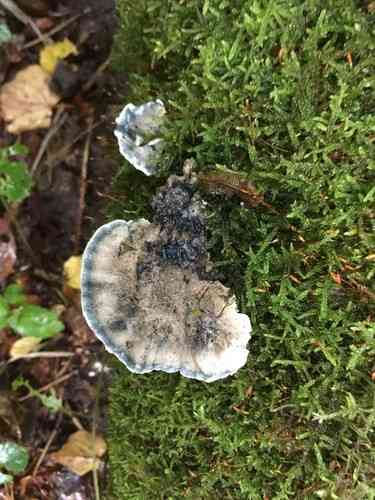
Blue cheese polypore
Postia caesia
A species of Postia.
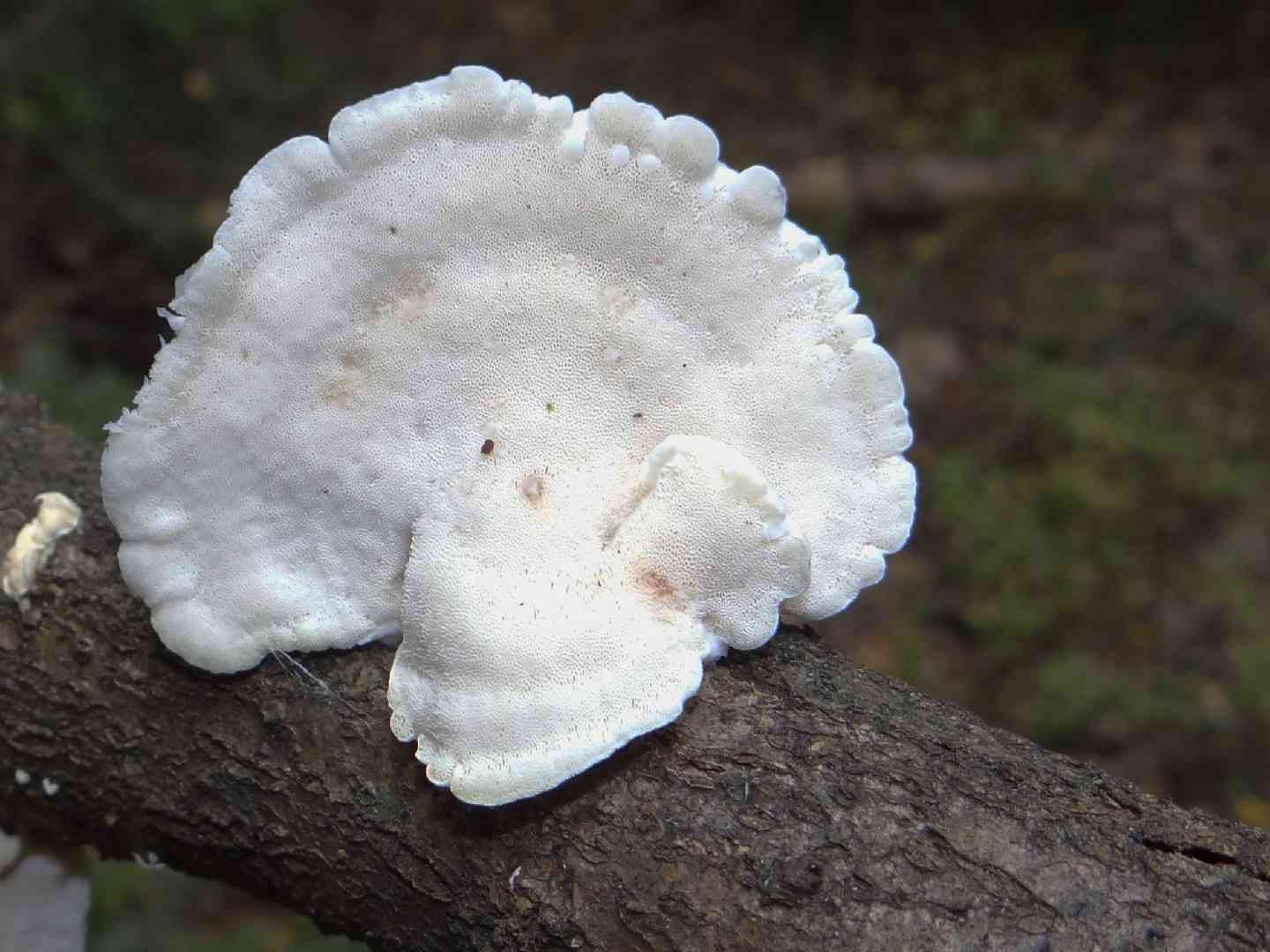
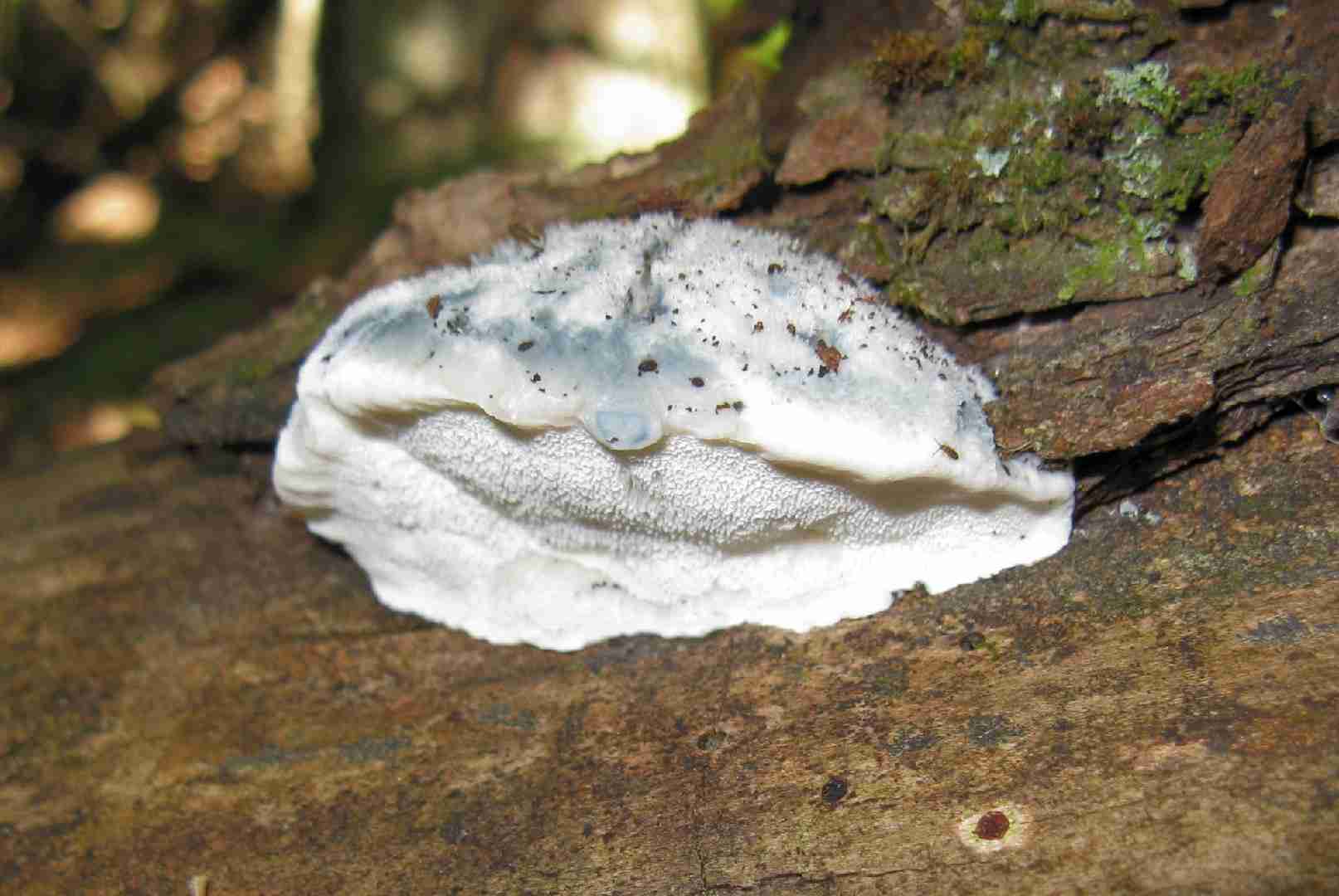
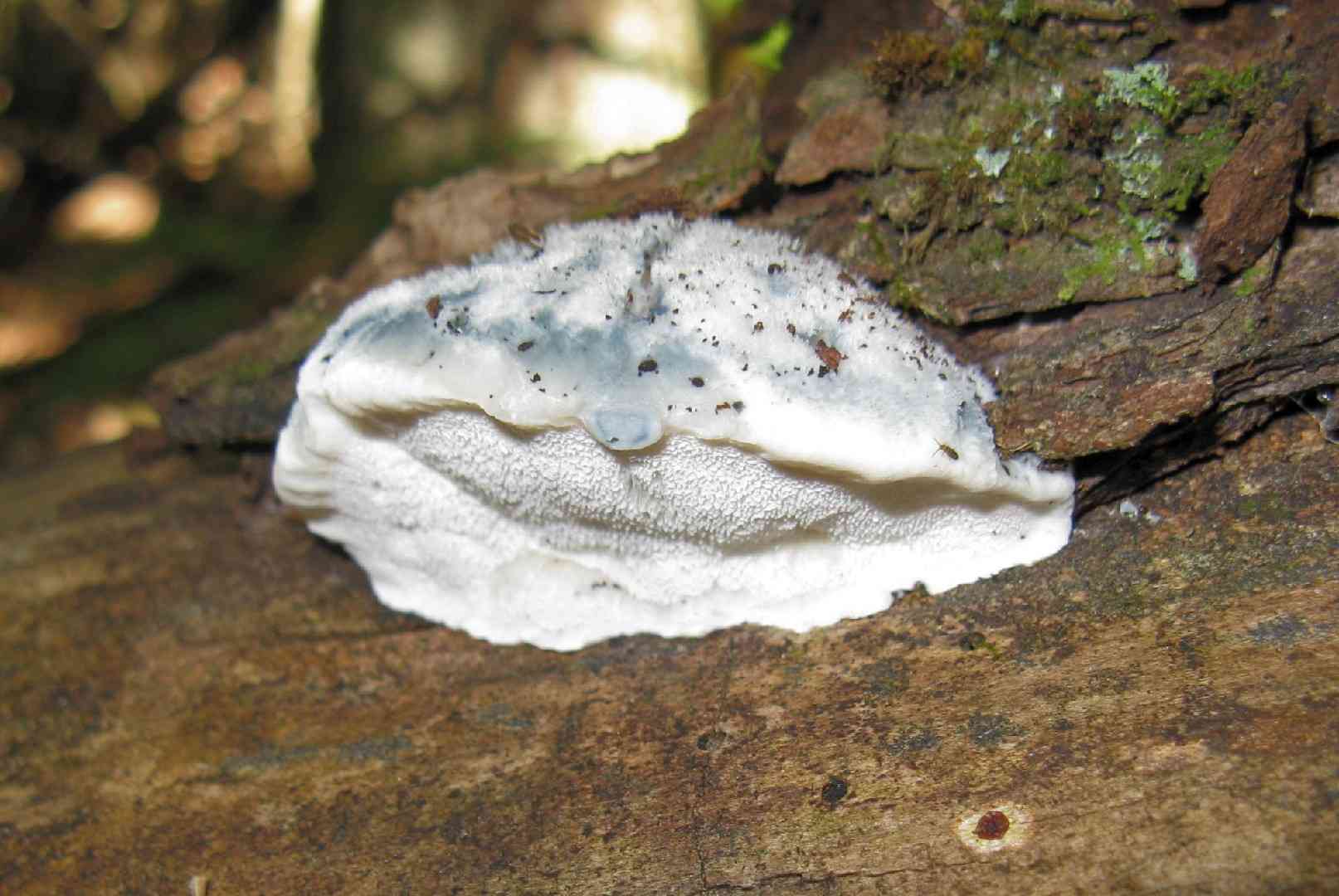
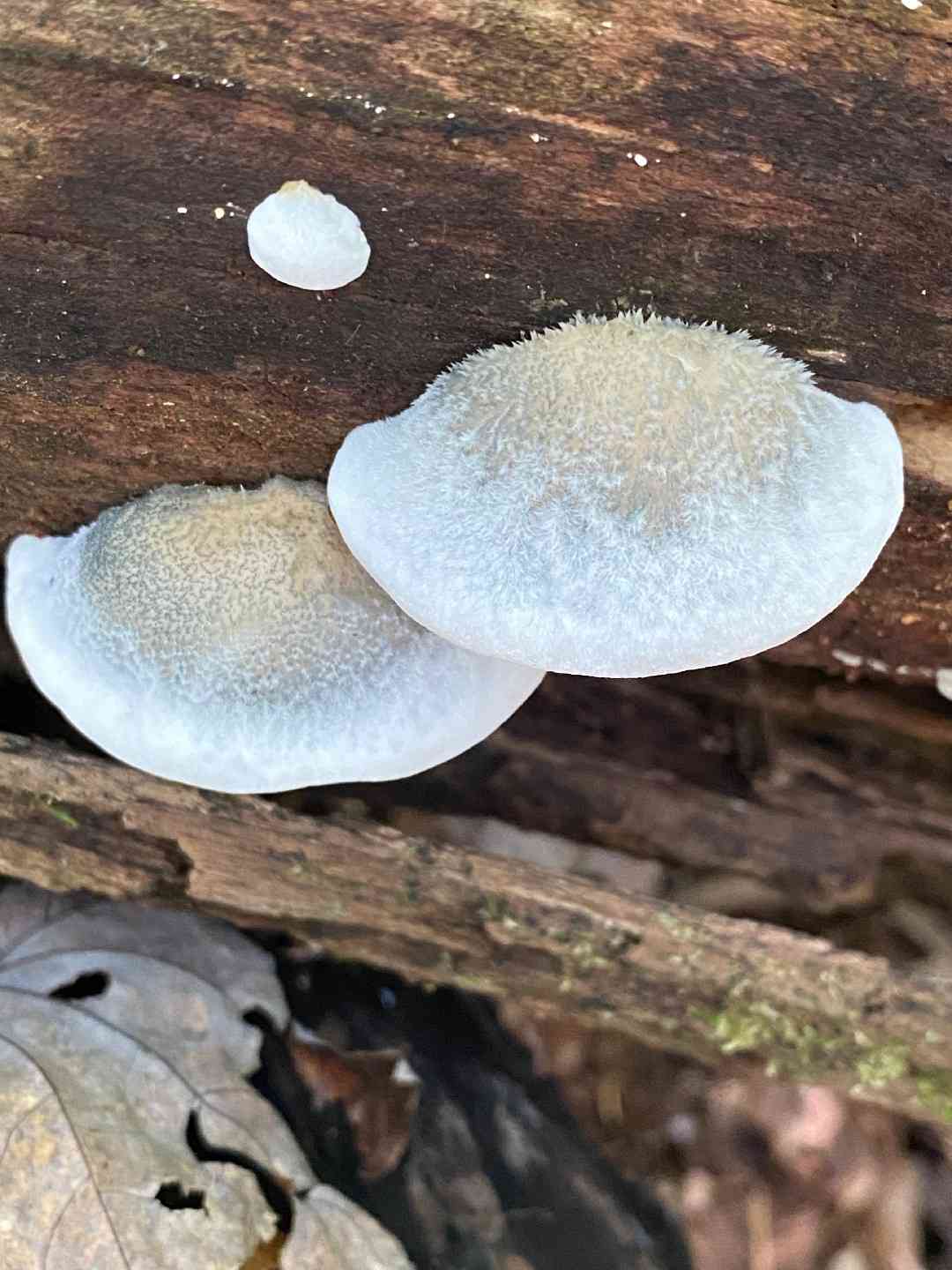
The blue cheese polypore is readily identifiable due to its substantial, robust, and corrugated caps, which impart a undulating look to the fungus. Fully developed samples exhibit a distinctive bluish-grey hue. This causes the blue cheese polypore to resemble blue cheese as it grows on decomposing wood in coniferous and spruce woodlands.
In This Article
Attributes of Blue cheese polypore
Cap Diameter
1 - 5 cm
Height
2 - 13 cm
Cap
1 - 5 cm across; white, blue-grey; covered in fine hairs and radial wrinkles, almost smooth; slightly wavy margin
Cap Surfaces
Fibrillose-scaly
Flesh
Soft-fibred, juicy, watery; white, often streaked with a bluish tinge
Spore Print Color
Very pale blue to white
Odor
Mildly mushroomy but not distinctive.
Body Color
GrayWhiteBluePurpleCyan
Flesh Bruises
Discolor to blue
Growth Form
Solitary, Gregarious
Nutrient Gathering
Saprophytic
Substrate
Dead Woods
You can find Blue cheese polypore by these plants
Spruces
Occurence Habitats
Coniferous Woodland, Mixed Woodland
Species Status
Widespread and fairly common in Britain and Ireland
Endangered Species
No
Scientific Classification of Blue cheese polypore
Phylum
Club fungi
Class
Mushroom-forming fungi
Order
Shelf fungi
Family
Bracket polypores
Genus
Postia
Toxicity and Edibility of Blue cheese polypore
Is Blue cheese polypore Toxic?
Toxicity information is not available for this mushroom. Always consult with an expert before consuming any wild mushrooms.