Dusky bolete
Porphyrellus porphyrosporus
A species of Porphyrellus.
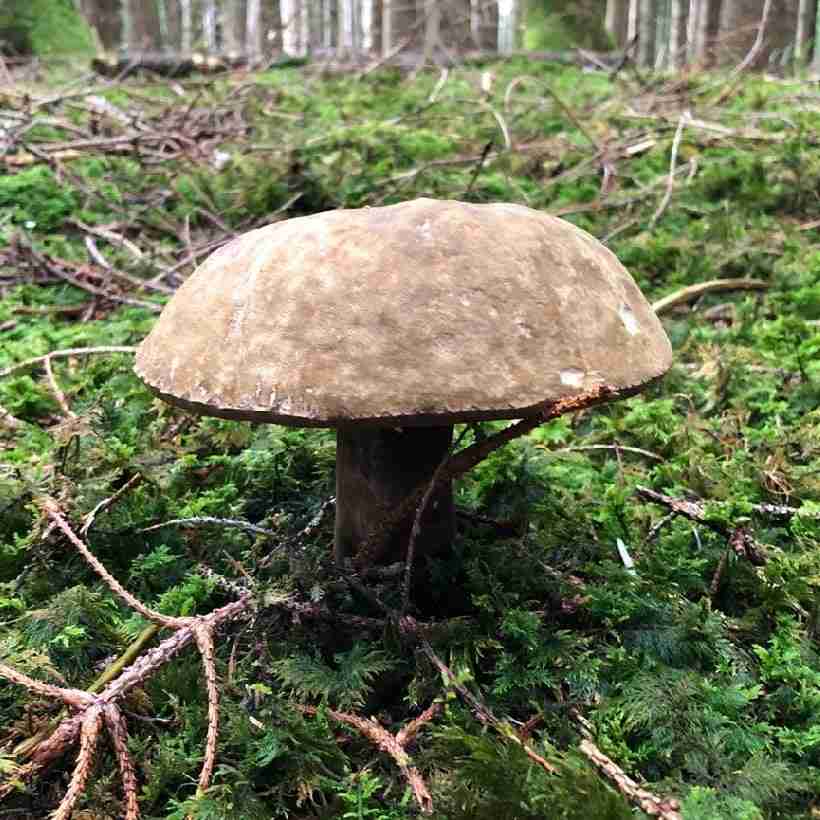
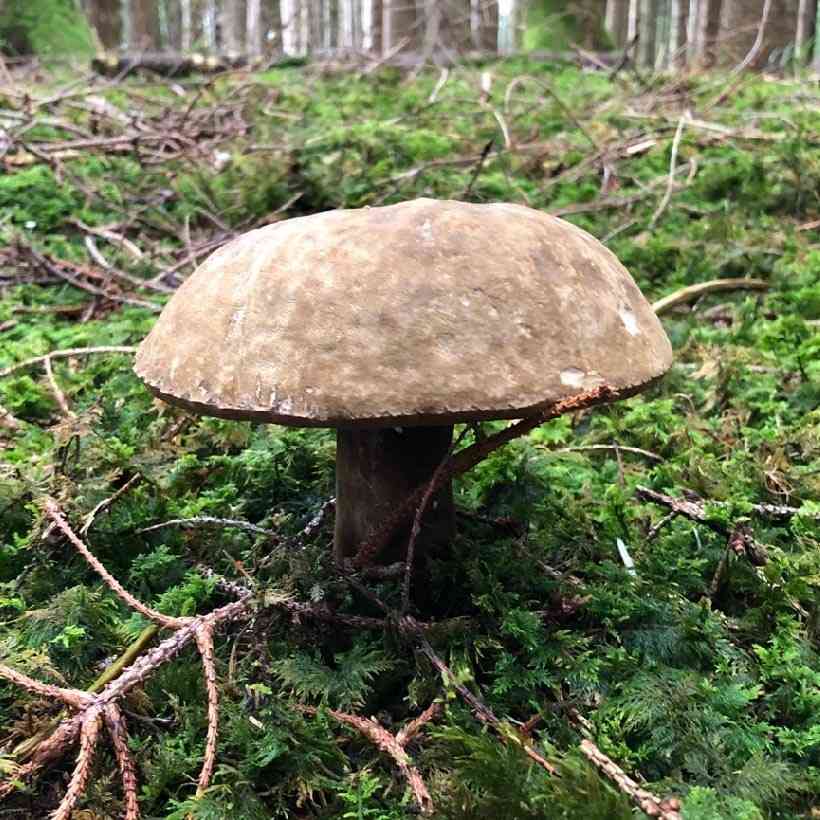
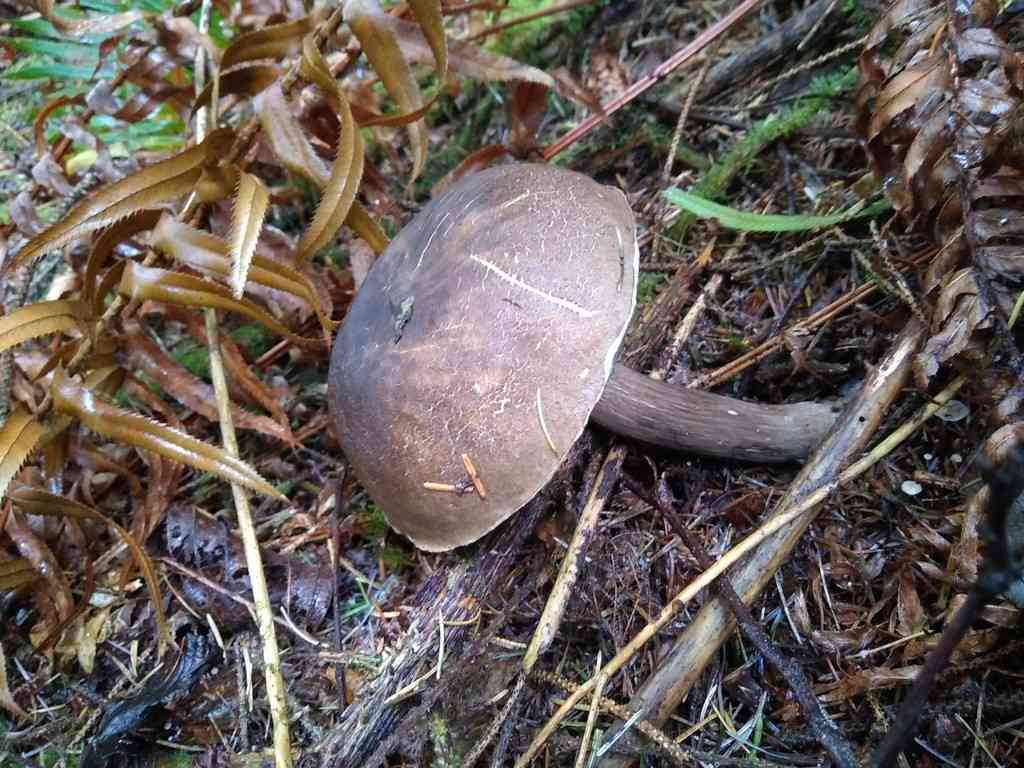
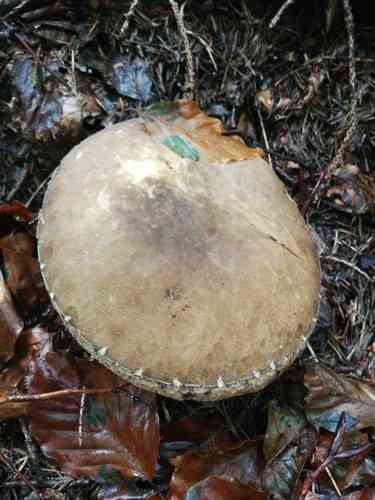
Porphyrellus porphyrosporus, commonly known as the dusky bolete, can be challenging to locate on the forest floor due to its large, yet rather dull or dark brown coloration. This species usually thrives in low-lying areas, found beneath pine trees. A key characteristic is its notable blue to blue-green discoloration when bruised or cut.
In This Article
Attributes of Dusky bolete
Cap Diameter
6 - 13 cm
Height
7 - 15 cm
Cap
6 - 15 cm across; convex, irregularly lobed; dark brown
Cap Shape
Convex, Flat
Cap Surfaces
Fibrillose-scaly
Stem
Stem 5 - 16 cm tall and 1 - 3 cm in diameter; equal, clavate; tobacco brown; smooth as the fruit body matures
Stem Shapes
Rooting
Stem Surfaces
Fibrillose
Flesh
Soft; buff; turn blue-green when cut or bruised
Ring
Ringless
Spore Print Color
Purple-brown
Odor
Slightly sour with musty notes.
Body Color
Brown
Flesh Bruises
Discolor to green
Growth Form
Solitary, Scattered
Nutrient Gathering
Mycorrhizal
Substrate
On soil
You can find Dusky bolete by these plants
Pines, Oaks, European beech, Spruces
Occurence Habitats
Coniferous Woodland, Deciduous Woodland
Species Status
Widespread species of Europe
Endangered Species
No
Scientific Classification of Dusky bolete
Phylum
Club fungi
Class
Mushroom-forming fungi
Order
Boletes and allies
Family
Boletes
Genus
Porphyrellus
Toxicity and Edibility of Dusky bolete
Is Dusky bolete Toxic?
Toxicity information is not available for this mushroom. Always consult with an expert before consuming any wild mushrooms.

