Blue chanterelle
Polyozellus multiplex
A species of Polyozellus.
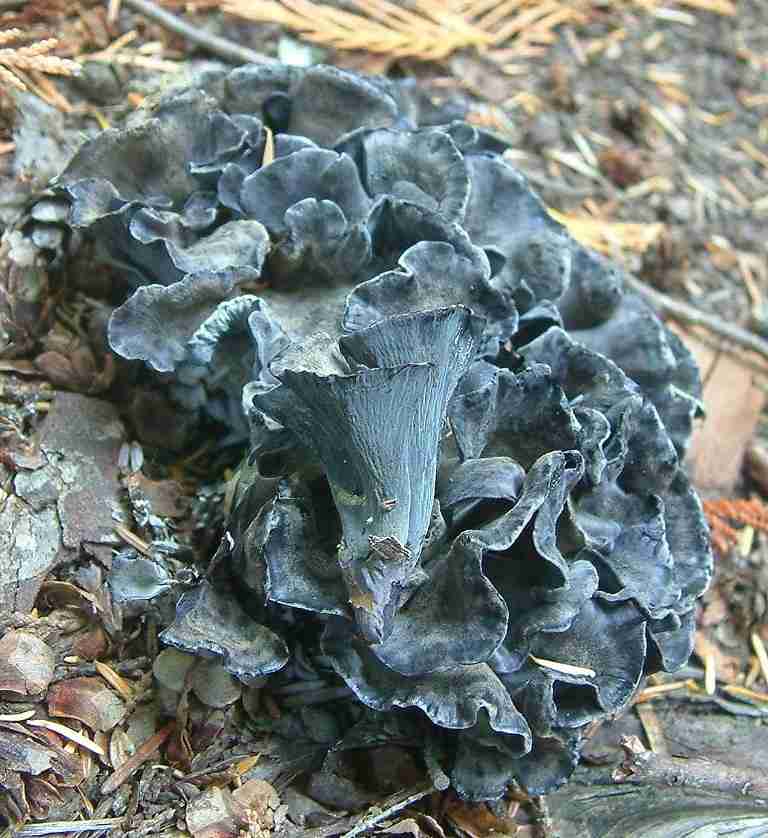
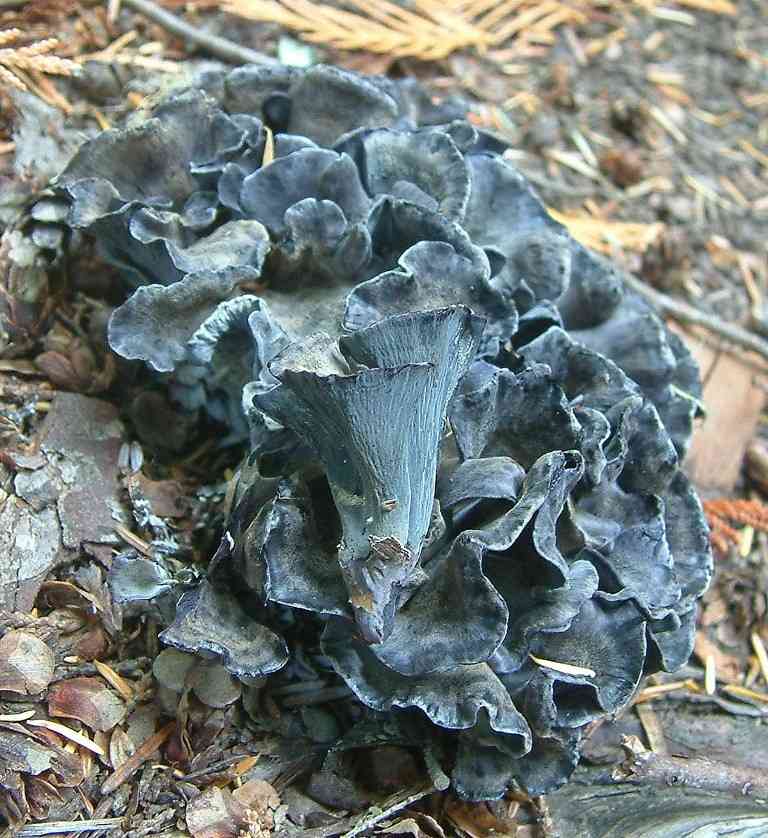
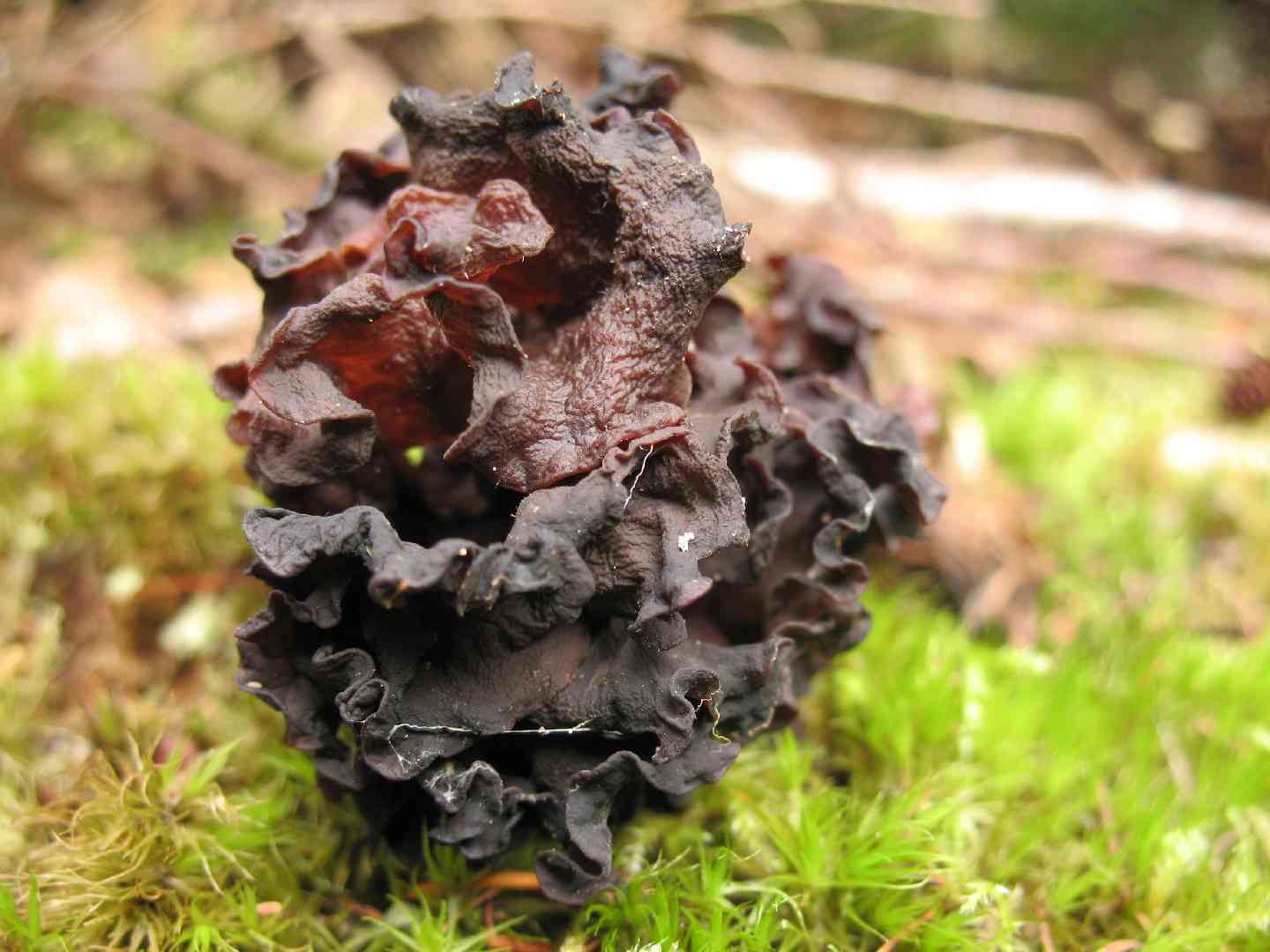
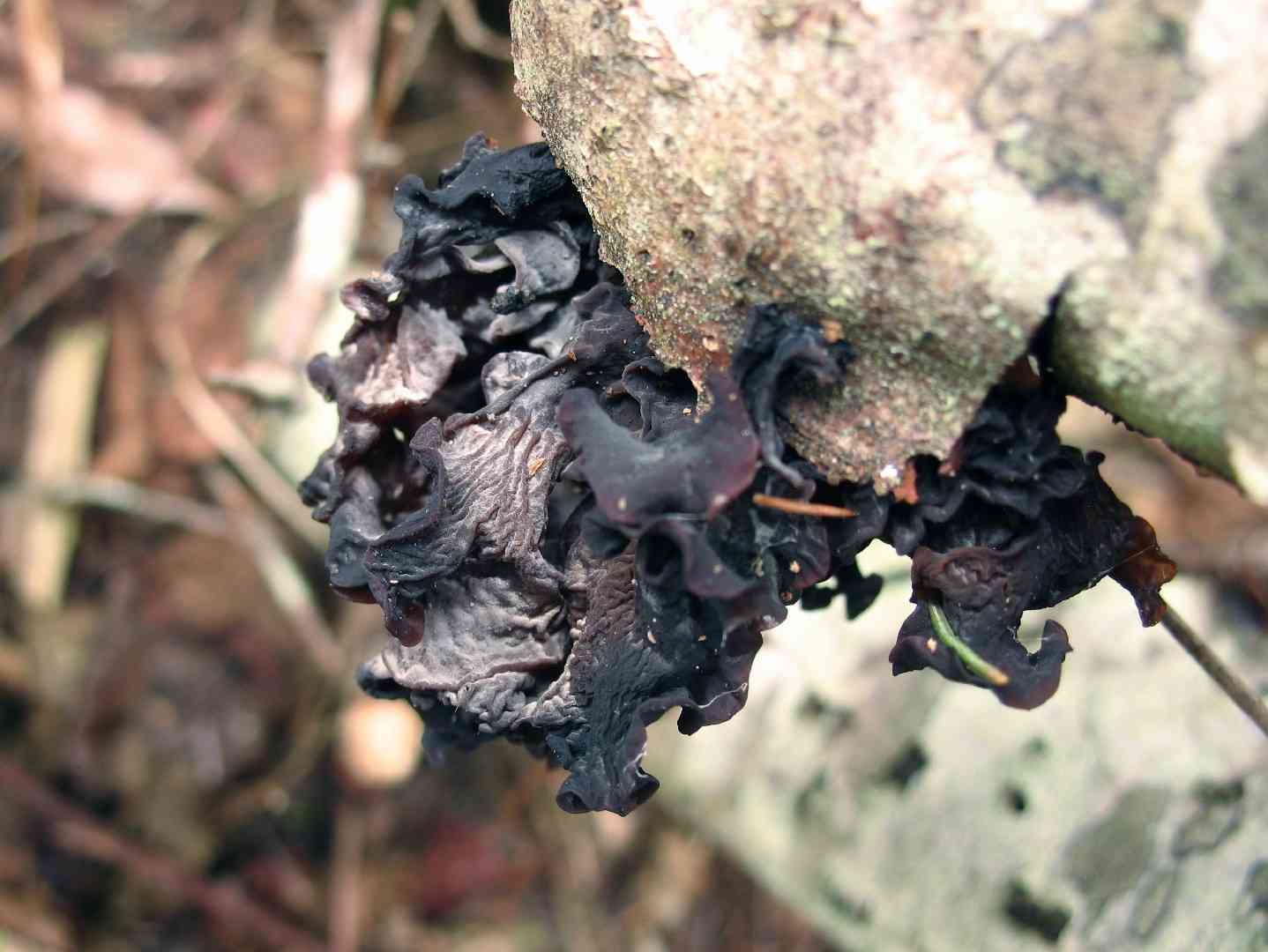
The blue chanterelle is an easily recognizable fungus, distinguished by its vivid blue-to-purple coloration and complex, fringed cap. This mushroom typically develops in groups on decaying conifer wood, mainly appearing in late summer and autumn. Its reproductive structures are notable for their multiple caps often merging and a velvety surface on the underside, as opposed to the usual gill formation.
In This Article
Attributes of Blue chanterelle
Cap Diameter
2 - 8 cm
Cap
2 - 8 cm wide; round or irregularly shaped; purple to blue or black; finely velvety; with wavy margin
Cap Surfaces
Velvety
Stem
Stem 2 - 4 cm long, 5 - 15 mm thick; fused with other stems at the base, solid or becoming hollow; colored like the cap or paler, blackening with age
Stem Shapes
Cylindrical
Stem Surfaces
Smooth
Flesh
Soft but brittle; deep purple to bluish
Ring
Ringless
Spore Print Color
White
Odor
Faintly fragrant, not particularly distinctive.
Body Color
BlackBluePurple
Growth Form
Clustered
Nutrient Gathering
Mycorrhizal
Substrate
On soil
You can find Blue chanterelle by these plants
Firs, Spruces, Pines
Occurence Habitats
Coniferous Woodland
Species Status
Uncommon to rare
Endangered Species
No
Scientific Classification of Blue chanterelle
Phylum
Club fungi
Class
Mushroom-forming fungi
Order
Thelephorales
Family
Leathery earthfans
Genus
Polyozellus
Toxicity and Edibility of Blue chanterelle
Is Blue chanterelle Toxic?
Toxicity information is not available for this mushroom. Always consult with an expert before consuming any wild mushrooms.

