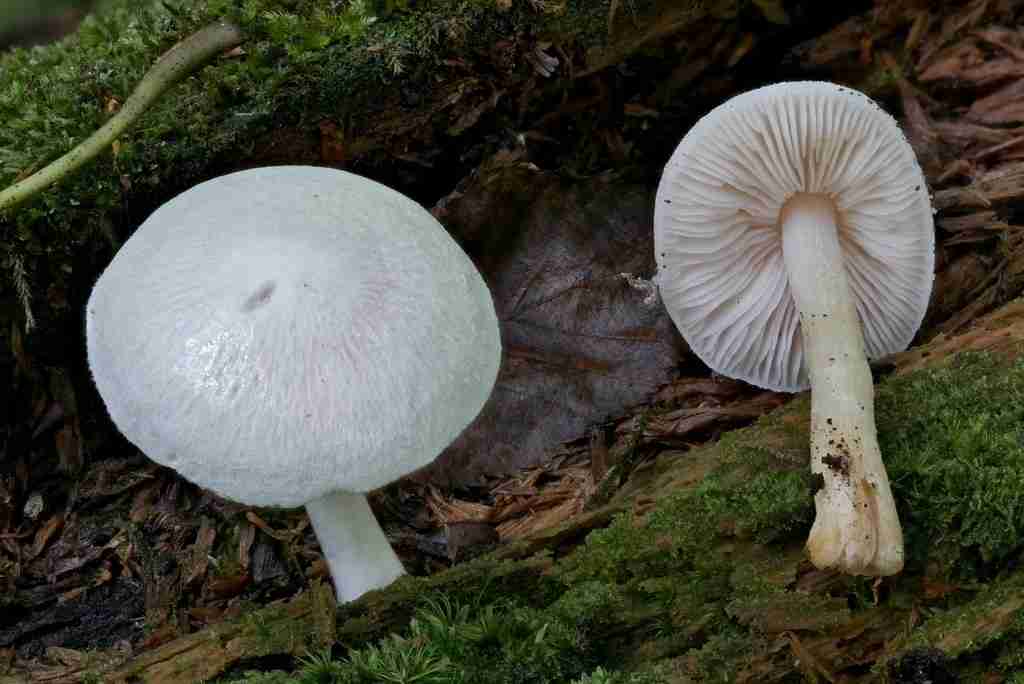
Pluteus tomentosulus
Pluteus tomentosulus
A species of Pluteus.
The mushroom Pluteus tomentosulus is a member of a fungal family characterized by their unattached gills and often a centrally umbonate cap. This particular species commonly thrives on decaying timber, contributing to the breakdown of organic material in woodland ecosystems. Its cap usually exhibits a distinctively fuzzy or felted texture, setting it apart from other members of its genus. It typically emerges during the warmer periods of the year.
In This Article
Attributes of Pluteus tomentosulus
Cap Diameter
3 - 6 cm
Height
4 - 8 cm
Cap Shape
Convex, Bell-shaped
Cap Surfaces
Fibrillose-scaly, Visible lines or stripes
Gill Attachment
Free
Stem Shapes
Cylindrical
Stem Surfaces
Smooth to slightly fibrous
Ring
Ringless
Spore Print Color
Brownish pink
Odor
Mildly mushroomy but not distinctive.
Growth Form
Solitary, Scattered, Gregarious
Nutrient Gathering
Saprophytic
Substrate
Dead Woods
You can find Pluteus tomentosulus by these plants
Coast live oak
Occurence Habitats
Coniferous Woodland
Scientific Classification of Pluteus tomentosulus
Phylum
Club fungi
Class
Mushroom-forming fungi
Order
Gilled fungi
Family
Pluteaceae mushrooms
Genus
Pluteus
Toxicity and Edibility of Pluteus tomentosulus
Is Pluteus tomentosulus Toxic?
Toxicity information is not available for this mushroom. Always consult with an expert before consuming any wild mushrooms.

