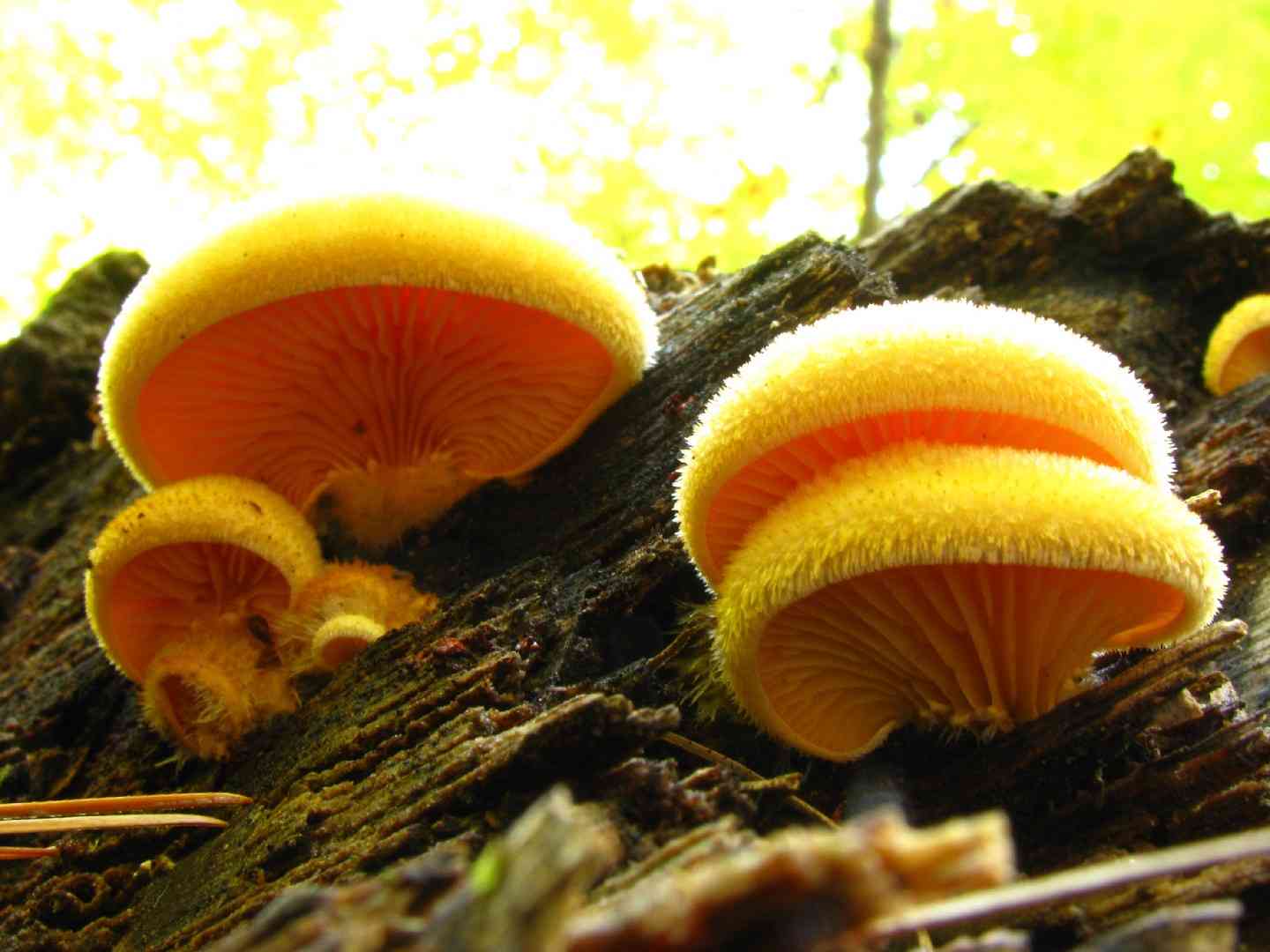
Mock oyster
Phyllotopsis nidulans
A species of Phyllotopsis. Also known as Orange oyster.
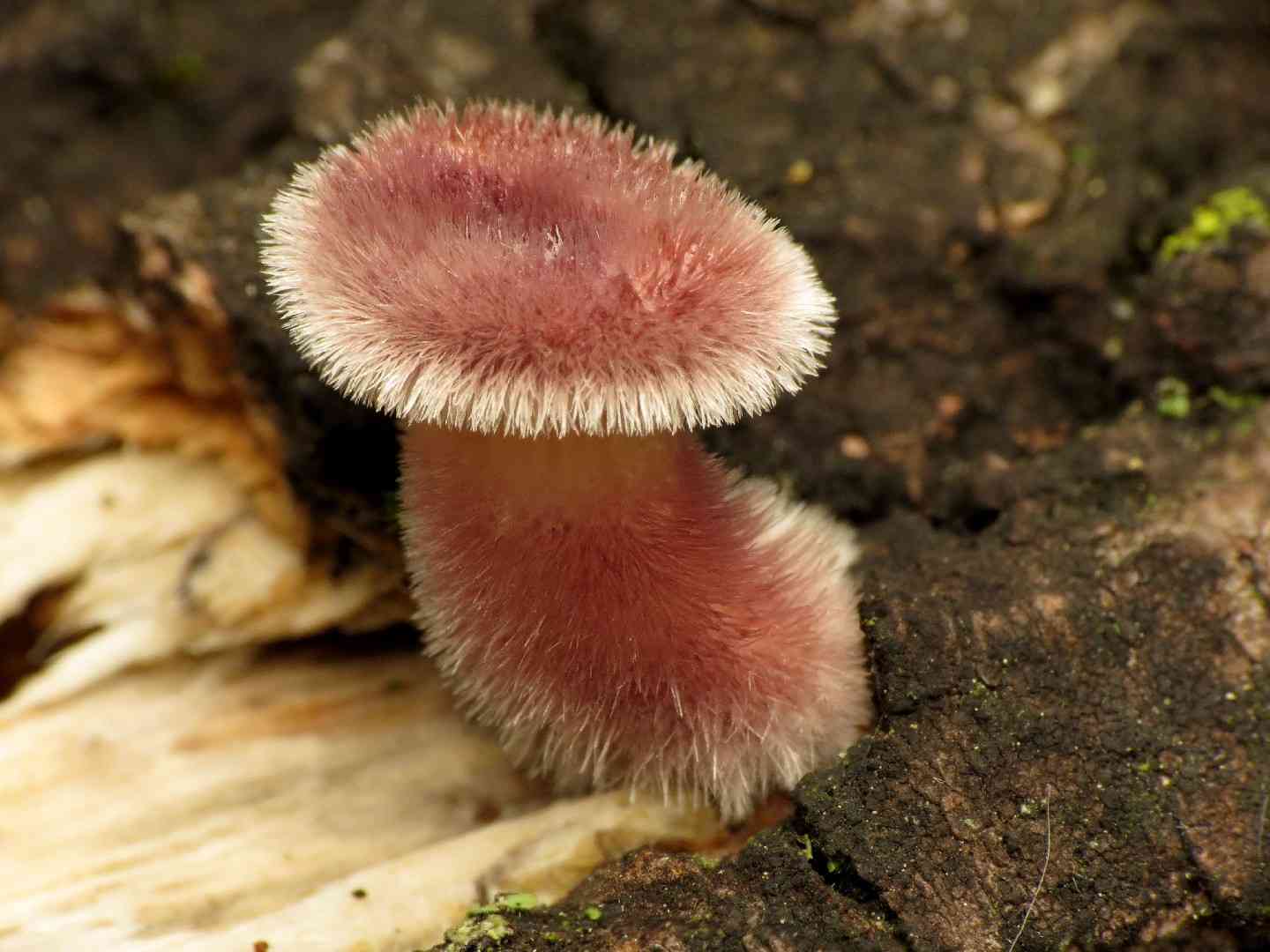
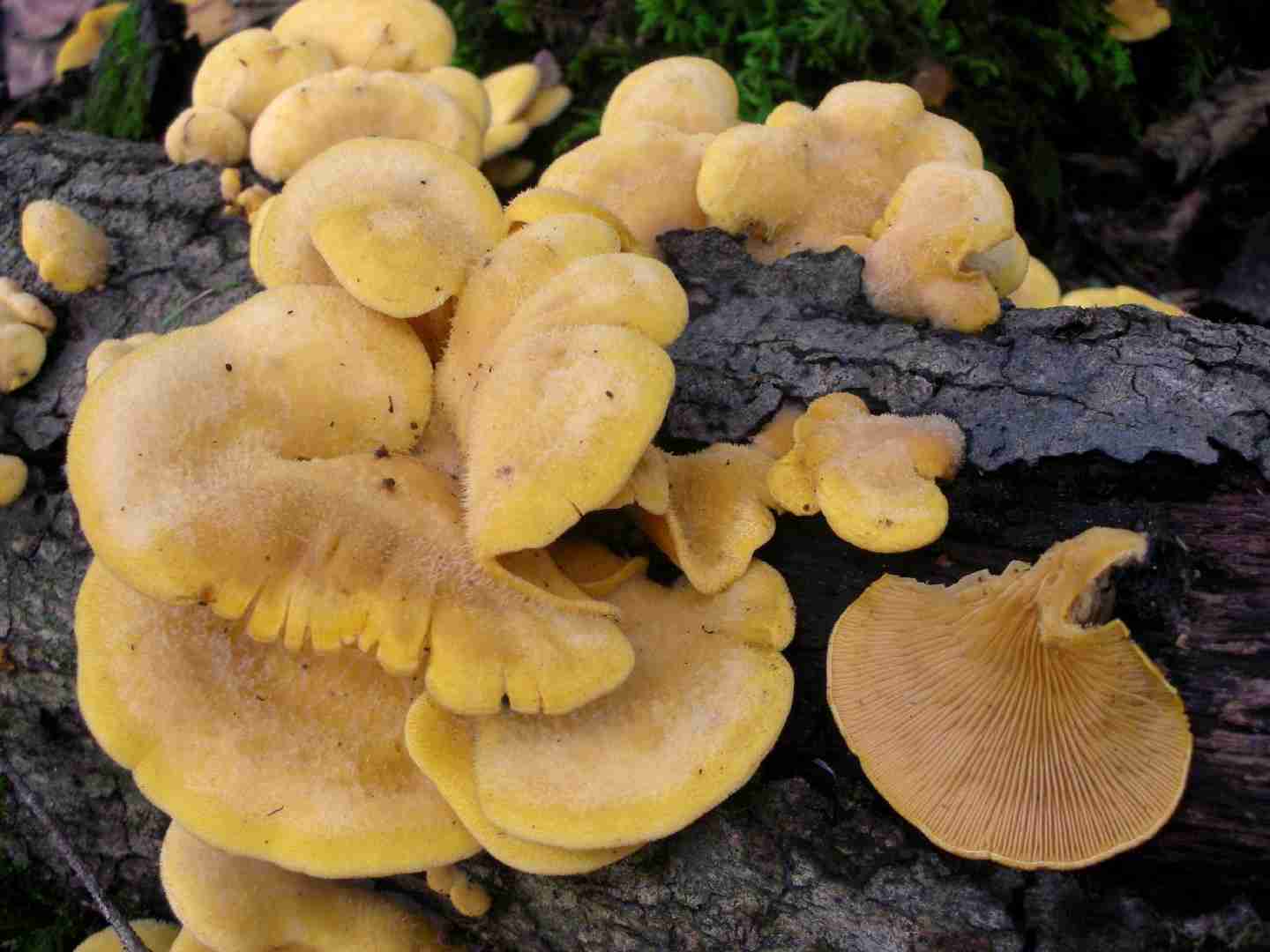
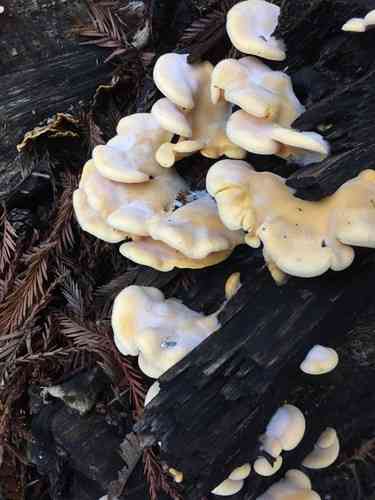
The Mock oyster mushroom (Phyllotopsis nidulans) is often discovered either in isolation or in groups, and similar to numerous fungal species, it predominantly thrives on decomposing or dead wood. While typically labeled as inedible, this classification stems from its flavor profile rather than any toxic properties. The mushroom emits a strong, disagreeable scent that has been likened to the smell of decaying eggs.
In This Article
Attributes of Mock oyster
Cap Diameter
2 - 8 cm
Height
1 - 3 cm
Cap
Cap 2 - 7 cm across; fan-shaped; whitish, bright orange; surface dusting; margin inrolled; bruising brownish
Cap Shape
Convex, Flat
Cap Surfaces
Fibrillose-scaly
Gills
Close, nearly crowded; bright to pale orange
Flesh
Soft; pale orange; not changing when sliced
Spore Print Color
Pale pink
Odor
Strong, foul, skunk cabbage-like.
Body Color
BrownYellowWhiteOrange
Flesh Bruises
The flesh or milk does not discolor when bruised or cut.
Growth Form
Gregarious, Clustered
Nutrient Gathering
Saprophytic
Substrate
Dead Woods
You can find Mock oyster by these plants
Coast live oak, European beech
Occurence Habitats
Deciduous Woodland, Coniferous Woodland, Mixed Woodland
Species Status
Widely distributed
Endangered Species
No
Scientific Classification of Mock oyster
Phylum
Club fungi
Class
Mushroom-forming fungi
Order
Gilled fungi
Family
Pale-spore mushrooms
Genus
Phyllotopsis
Toxicity and Edibility of Mock oyster
Is Mock oyster Toxic?
Toxicity information is not available for this mushroom. Always consult with an expert before consuming any wild mushrooms.