Yellow pholiota
Pholiota flammans
A species of Scalycaps.
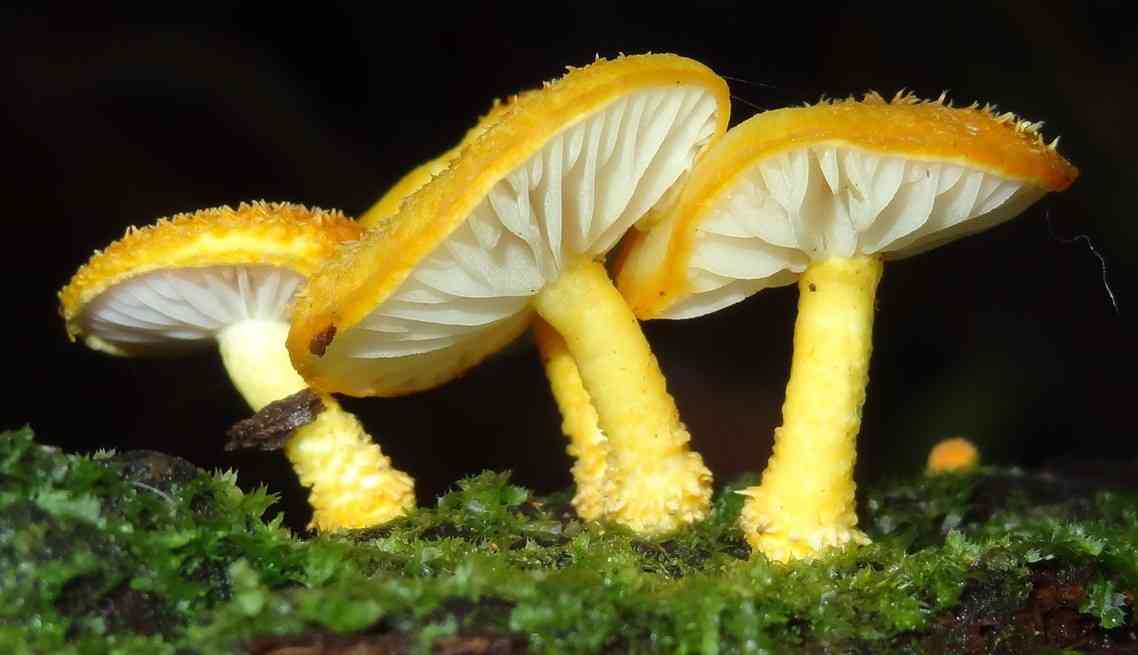
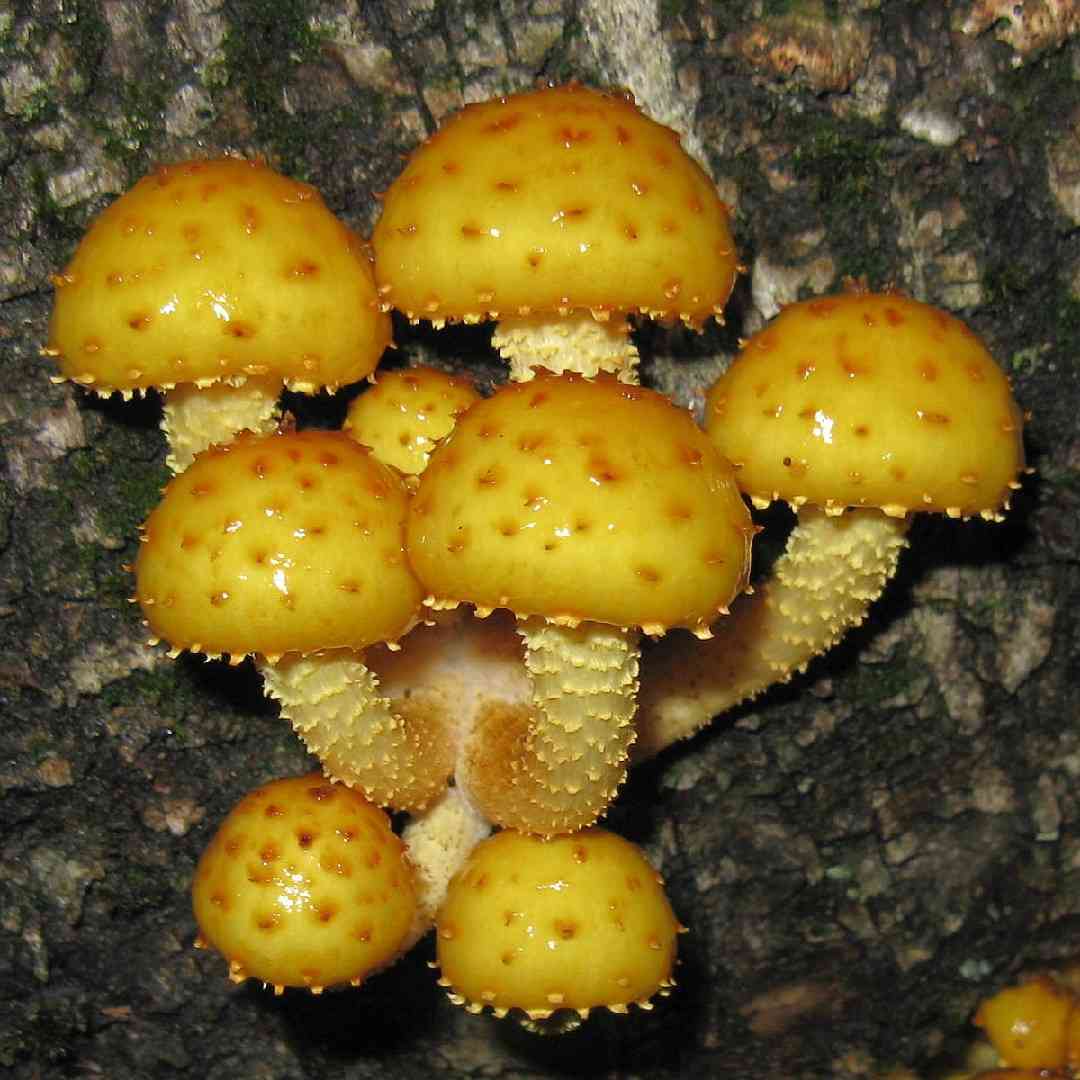
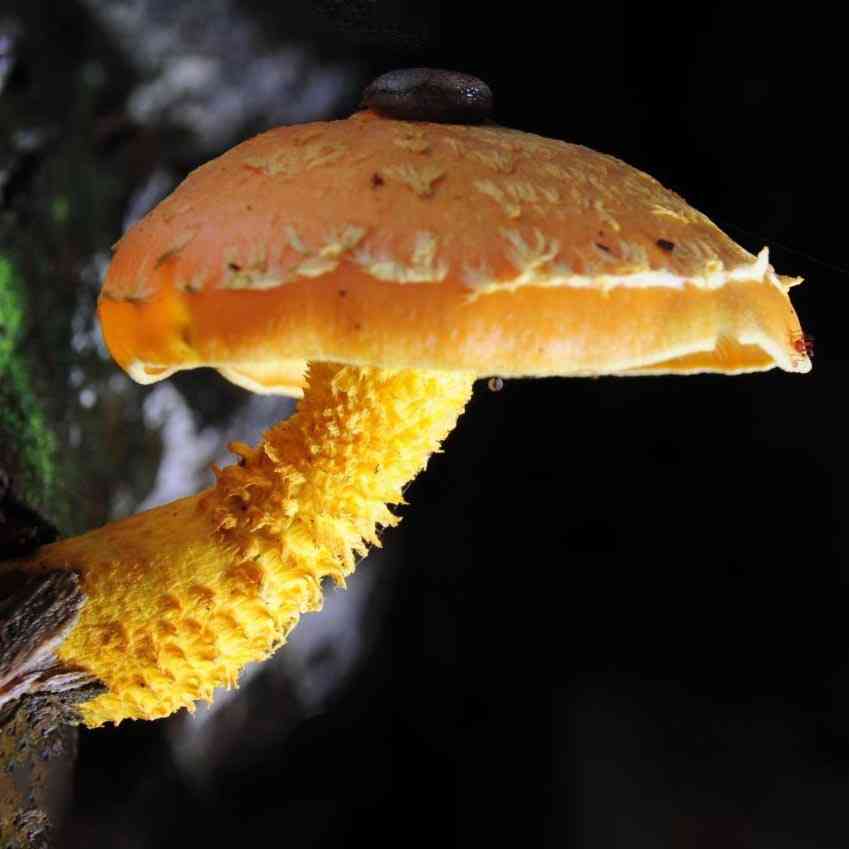
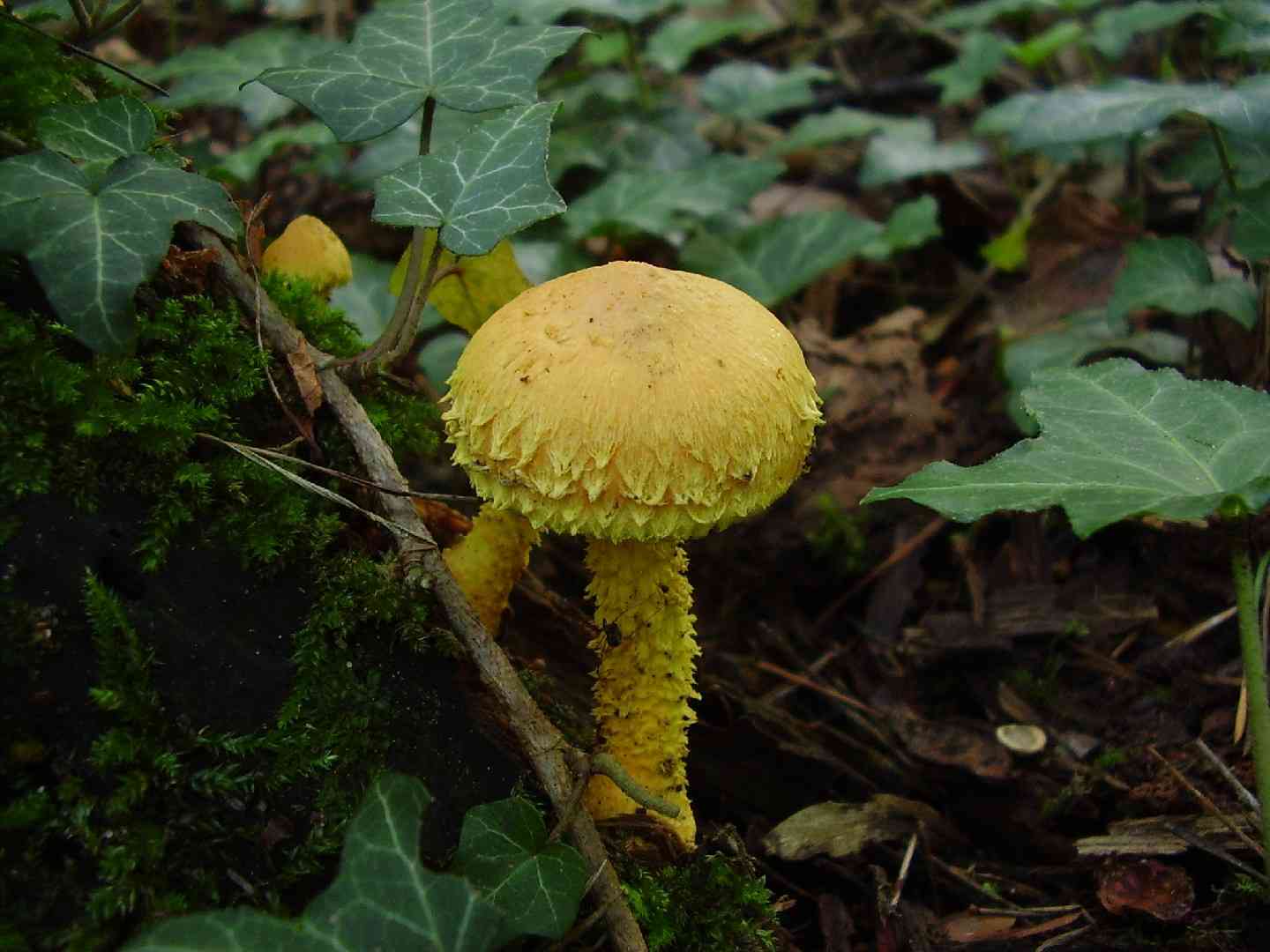
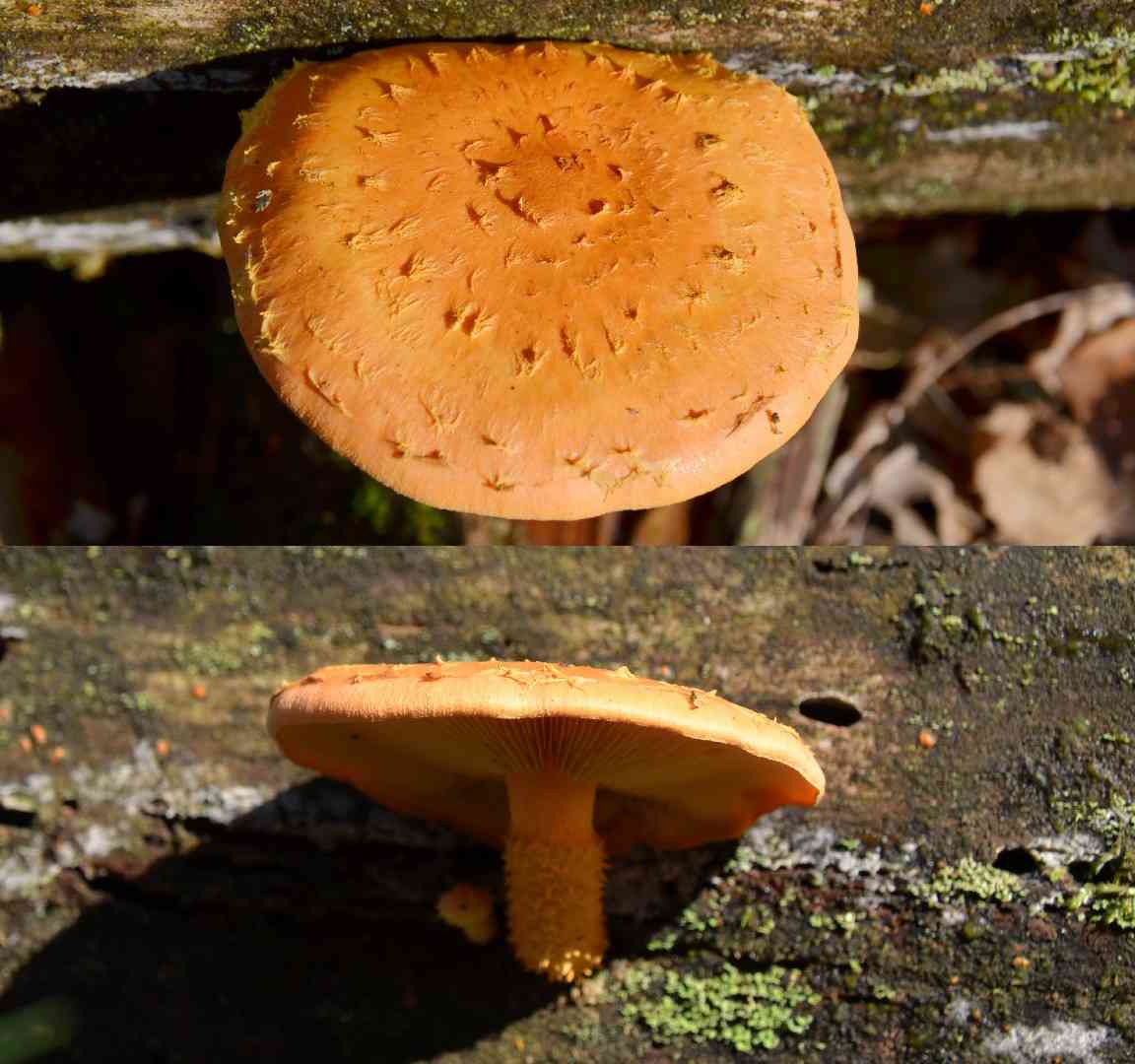
Pholiota flava, commonly found in woodland settings, favors decaying timber and usually appears in groups. It's identified by its vibrant yellow, granular-capped top and gills beneath, feeling tacky when damp. The stalk is thin and often features an annulus. This fungus plays a vital role in the decomposition of wood, thereby enriching the nutrient cycles within forests.
In This Article
Attributes of Yellow pholiota
Cap Diameter
3 - 8 cm
Height
4 - 10 cm
Cap
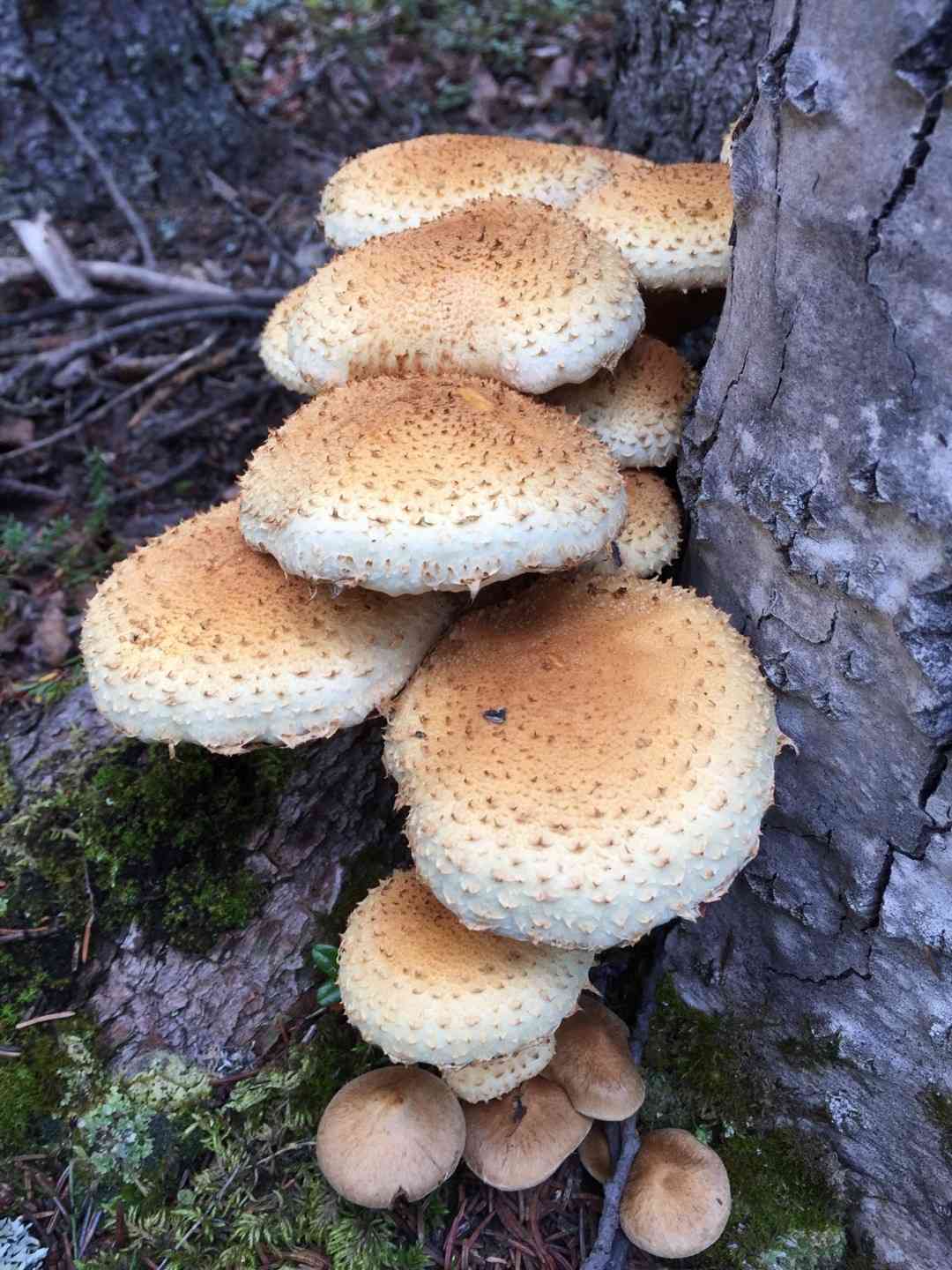
Cap 4 - 8 cm; convex, bell-shaped, or nearly flat; bright yellow; covered with hairy scales, slimy beneath the scales
Cap Shape
Convex, Bell-shaped, Flat
Cap Surfaces
Fibrillose-scaly, Slimy or slightly sticky
Gills
Attached; close or crowded; yellow, sometimes bruising brownish on the edges, eventually cinnamon brown
Gill Attachment
Attached
Stem
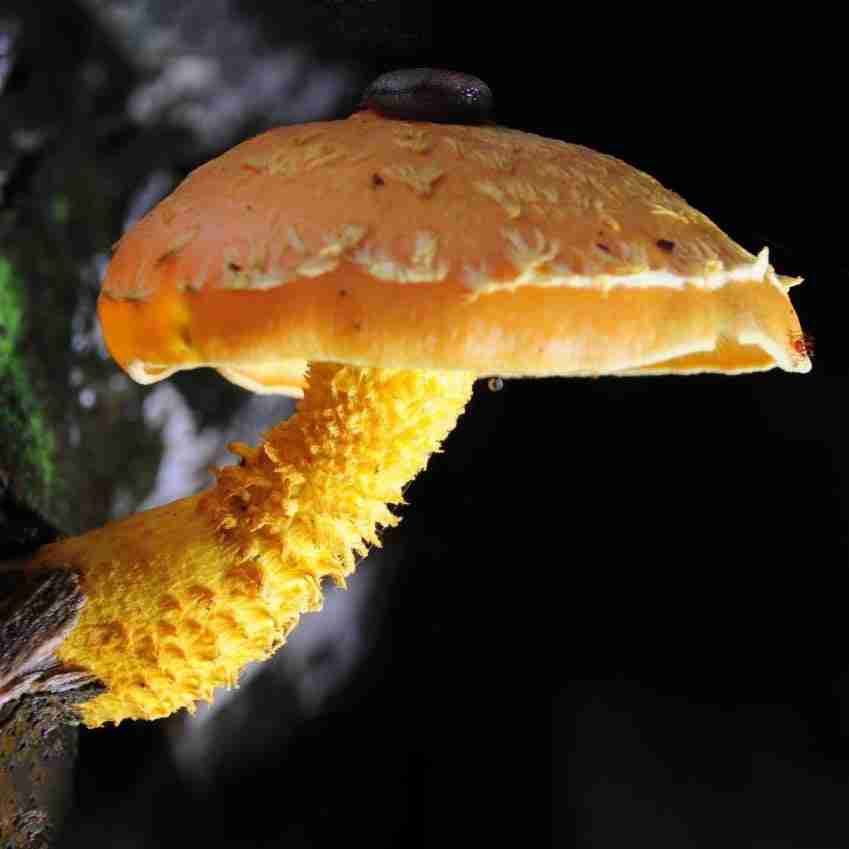
Stem 5 - 10 cm long, up to 1 cm thick; sheathed below the apex with bright yellow scales; silky near the apex, dry
Stem Shapes
Cylindrical
Stem Surfaces
Scaly
Flesh
Yellow
Ring
With Ring Zone
Spore Print Color
Rusty brown
Odor
Non-distinctive, unremarkable mushroom smell.
Body Color
Yellow
Flesh Bruises
The flesh or milk does not discolor when bruised or cut.
Growth Form
Solitary, Gregarious
Nutrient Gathering
Saprophytic
Substrate
Dead Woods
You can find Yellow pholiota by these plants
Spruces, Pines, Firs
Occurence Habitats
Coniferous Woodland, Deciduous Woodland
Species Status
Widely distributed in northern North America
Endangered Species
No
Scientific Classification of Yellow pholiota
Phylum
Club fungi
Class
Mushroom-forming fungi
Order
Gilled fungi
Family
Strophariaceae
Genus
Scalycaps
Toxicity and Edibility of Yellow pholiota
Is Yellow pholiota Toxic?
Toxicity information is not available for this mushroom. Always consult with an expert before consuming any wild mushrooms.