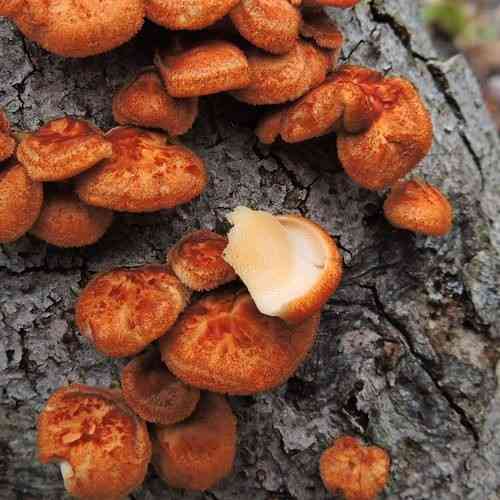
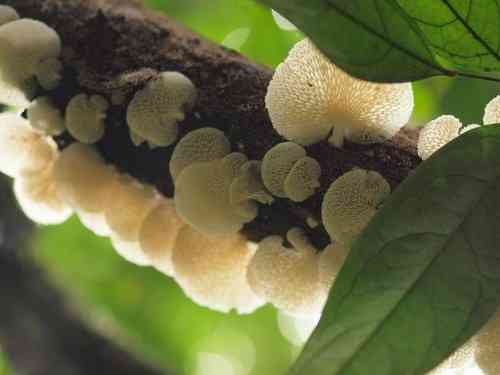
Hexagonal-pored polypore
Neofavolus alveolaris
A species of Neofavolus.
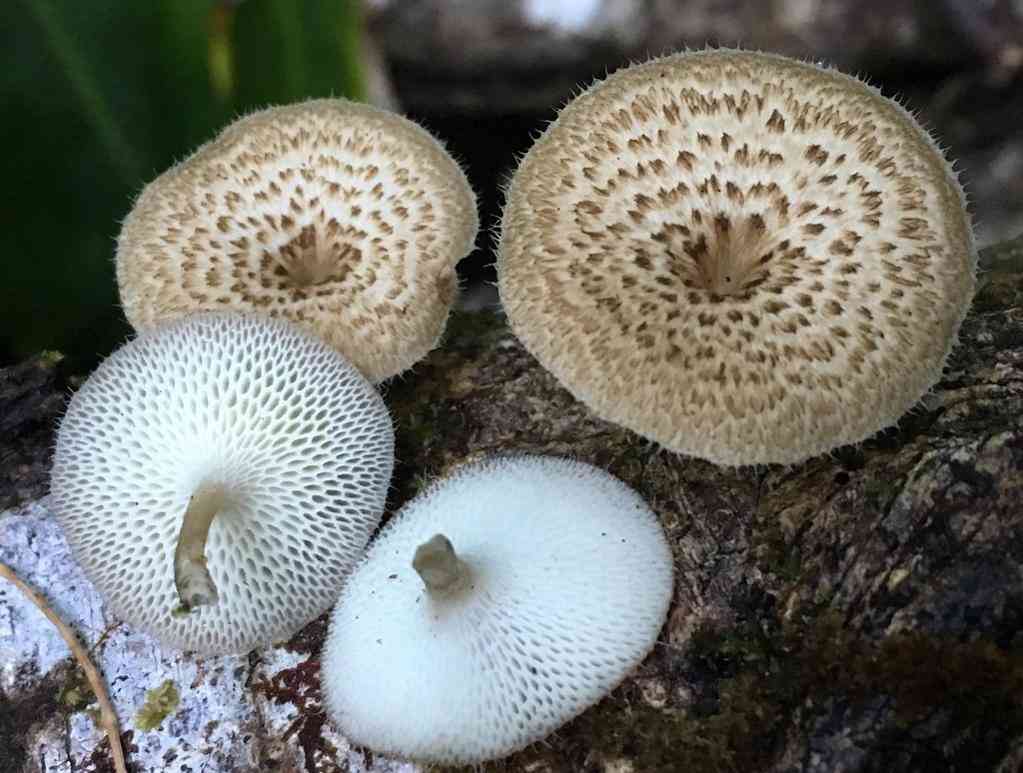
This species lives up to its name, with its most striking characteristic being its pores. These pores are typically six-sided, though occasionally four-sided, creating an underside that remarkably resembles a honeycomb. These hexagonal-pored polypores are found worldwide, spanning North America, Asia, Australia, and Europe, and have a preference for growing on deceased hardwood trees. While not considered poisonous, it is generally advised against consuming this mushroom.
In This Article
Attributes of Hexagonal-pored polypore
Cap Diameter
2 - 9 cm
Cap
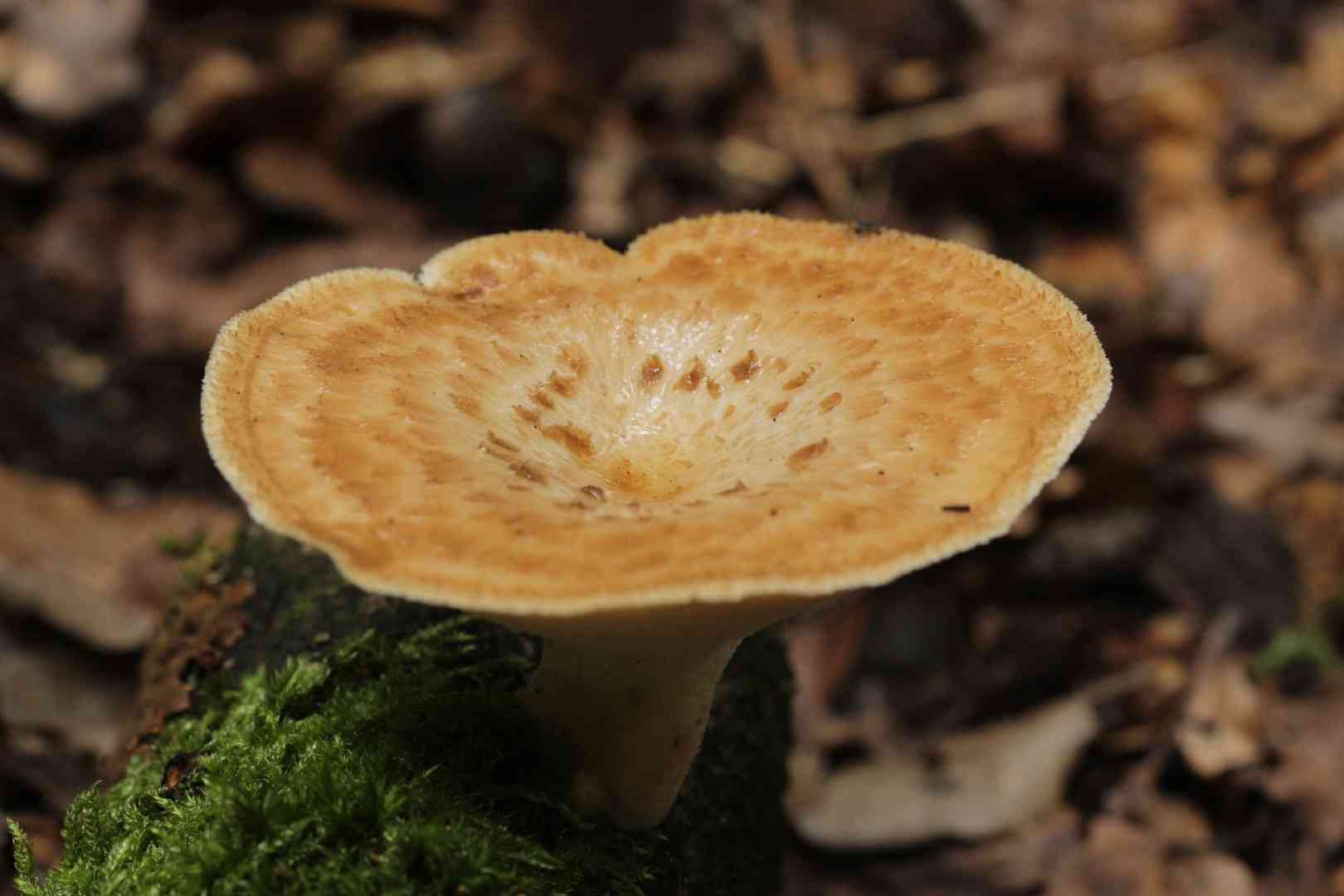
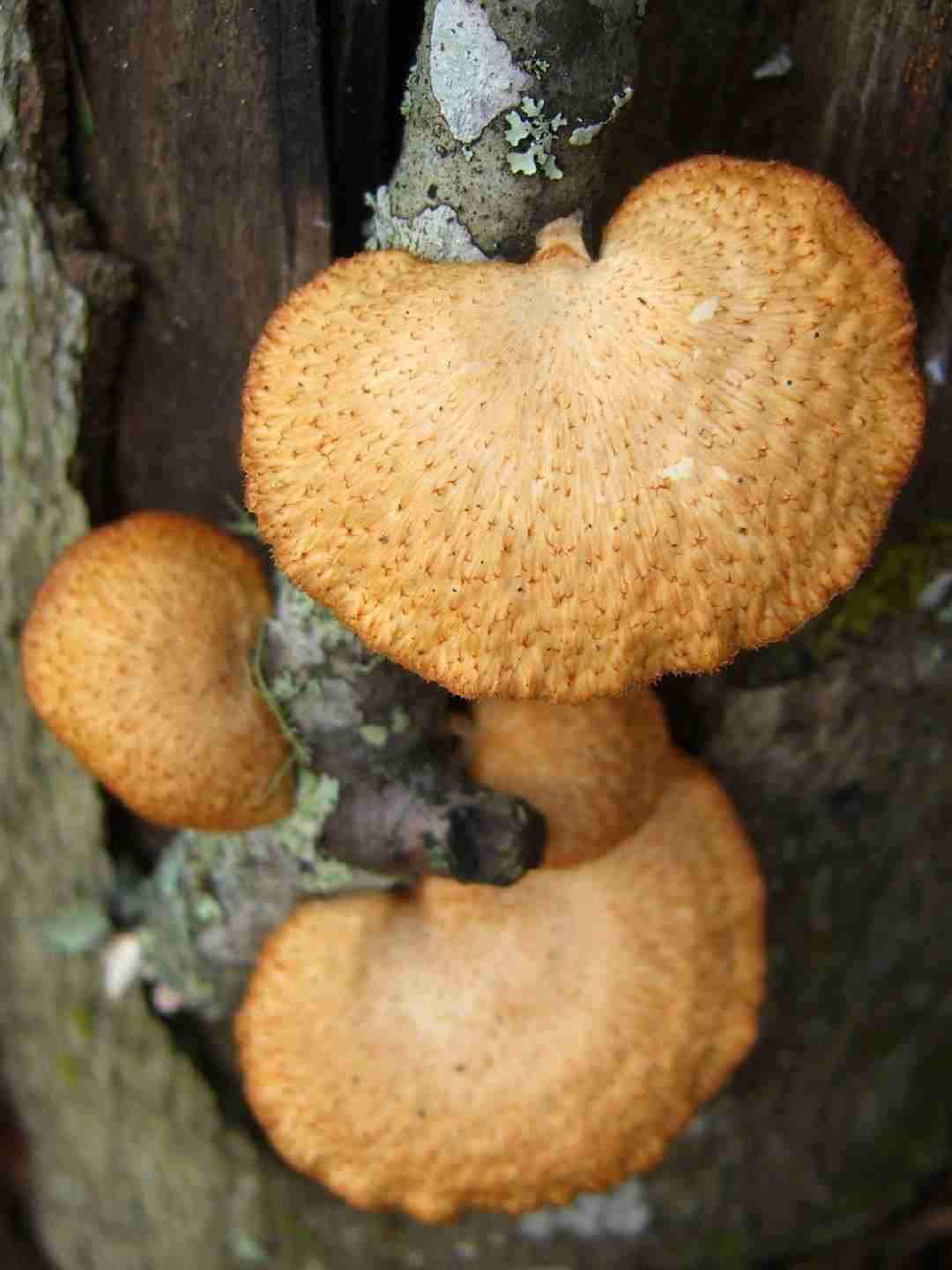
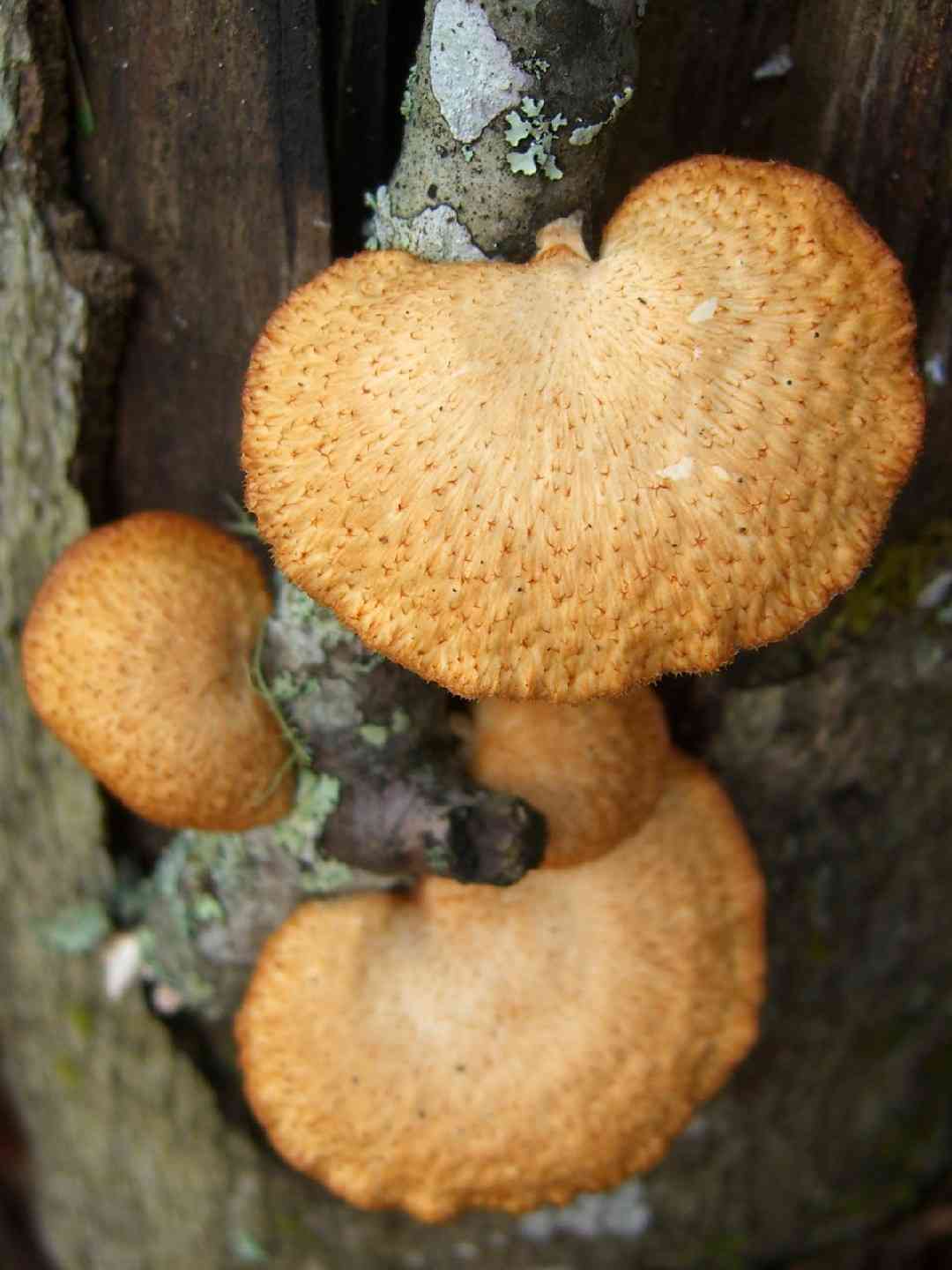
2 - 7 cm across; fan-shaped, kidney shaped; upper surface orange, nearly white
Cap Shape
Convex, Depressed, Central Bump
Cap Surfaces
Fibrillose-scaly
Stem
Occasionally with a centrally located and more substantial
Flesh
2 mm thick; tough; white; unchanging when sliced
Ring
Ringless
Spore Print Color
White
Odor
Faint, indistinct mushroom-like smell.
Body Color
YellowWhiteOrange
Flesh Bruises
The flesh or milk does not discolor when bruised or cut.
Growth Form
Solitary, Scattered, Gregarious
Nutrient Gathering
Saprophytic
Substrate
Dead Woods
You can find Hexagonal-pored polypore by these plants
White oak
Occurence Habitats
Deciduous Woodland
Species Status
Widely distributed and common
Endangered Species
No
Scientific Classification of Hexagonal-pored polypore
Phylum
Club fungi
Class
Mushroom-forming fungi
Order
Shelf fungi
Family
Polyporaceae
Genus
Neofavolus
Toxicity and Edibility of Hexagonal-pored polypore
Is Hexagonal-pored polypore Toxic?
Toxicity information is not available for this mushroom. Always consult with an expert before consuming any wild mushrooms.