Winter bonnet
Mycena tintinnabulum
A species of Bonnets.
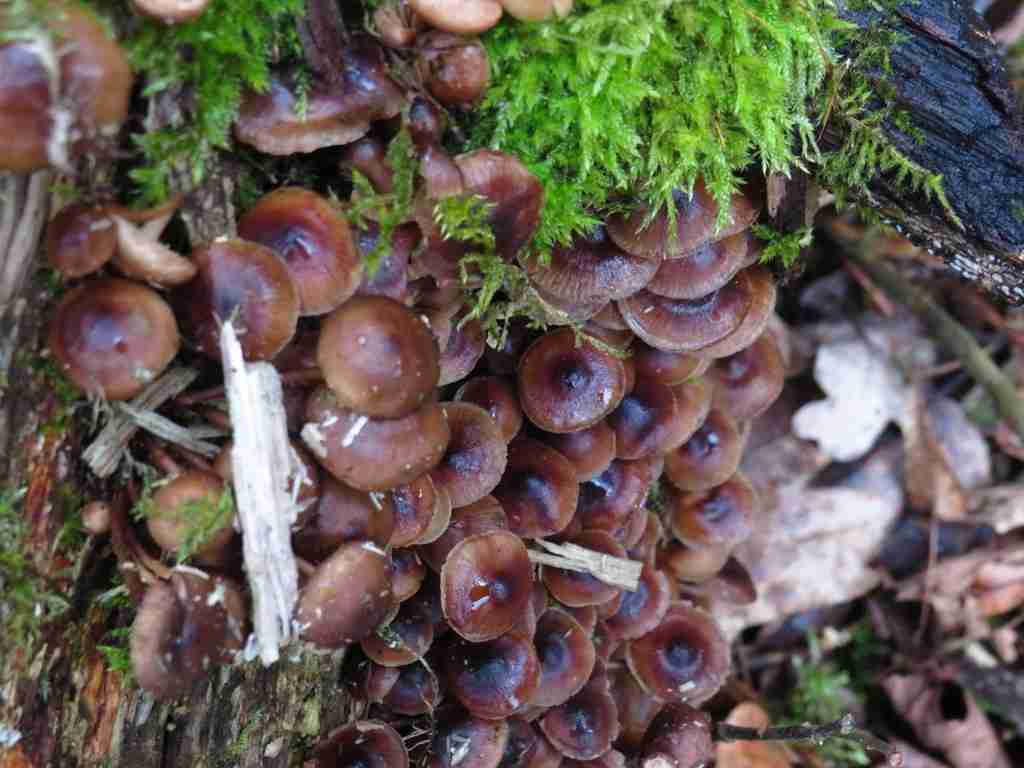
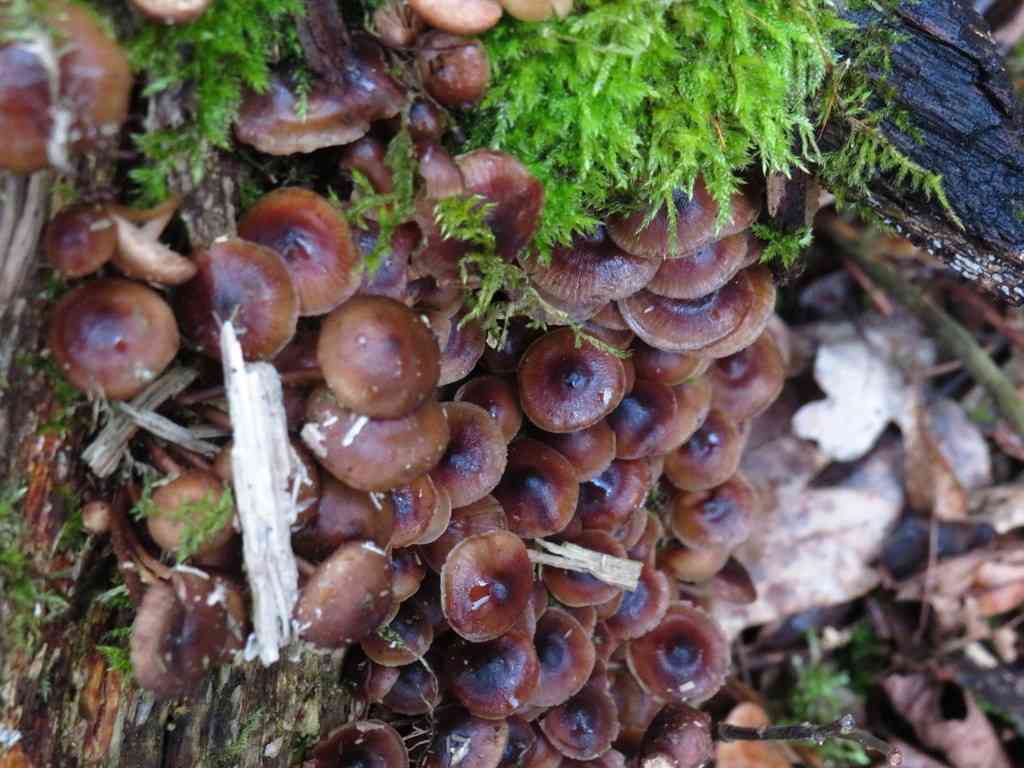
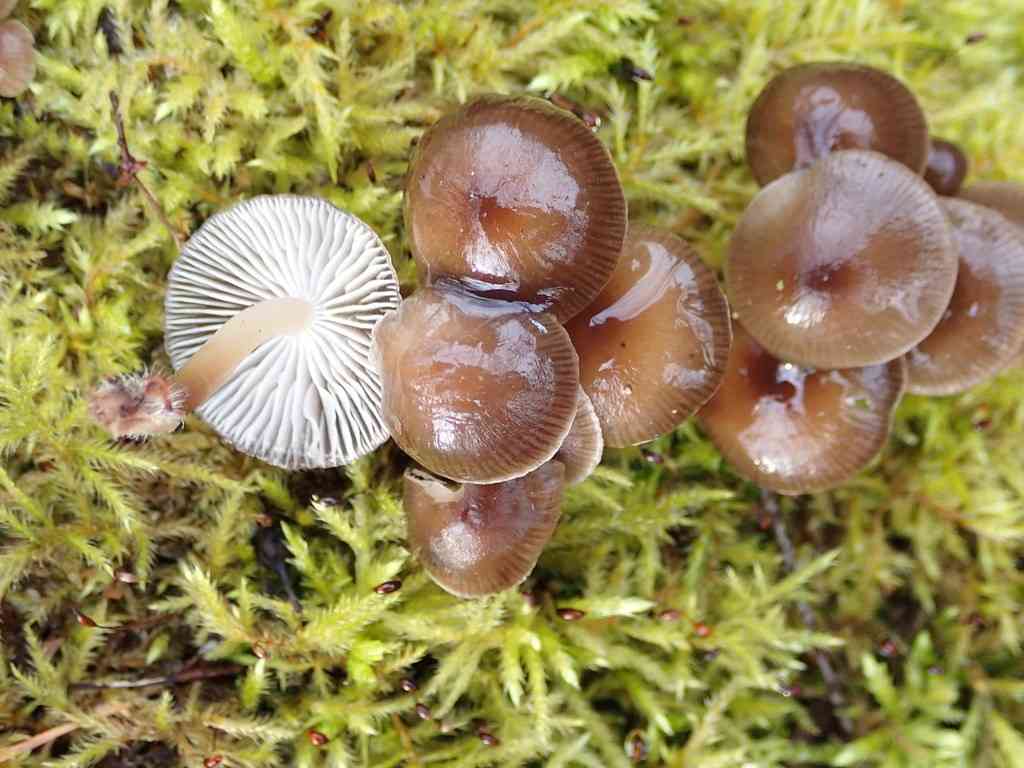
The winter bonnet mushroom is distinct for its campanulate cap and narrow stipe. It commonly emerges in colder months, preferring moist, nutrient-rich soil in forested habitats. Key features include its fragile build and see-through appearance, along with its tendency to cluster together, forming small, dense communities on decomposing timber.
In This Article
Attributes of Winter bonnet
Cap Diameter
1 - 4 cm
Height
2 - 4 cm
Cap
5 - 26 mm across; convex to almost plane; dark brown to pale brown with whitish margin; hygrophanous
Cap Shape
Bell-shaped, Convex, Flat
Cap Surfaces
Slimy or slightly sticky, Visible lines or stripes
Gills
Broadly adnate, decurrent; whitish, pale grey to pale brown
Gill Attachment
Decurrent
Stem
15-45 x 1-3 mm; equal, straight; whitish to greyish, becoming more yellow brown; pruinose at the apex, glabrous farther down
Stem Shapes
Cylindrical
Flesh
Thin; quite hard, enacious; greyish to whitish
Ring
Ringless
Spore Print Color
White
Odor
Earthy, musty with hints of garlic.
Body Color
BrownBlackYellowGrayWhite
Flesh Bruises
The flesh or milk does not discolor when bruised or cut.
Growth Form
Gregarious, Clustered
Nutrient Gathering
Saprophytic
Substrate
On wood
You can find Winter bonnet by these plants
European beech, Oaks
Species Status
Rare
Endangered Species
No
Scientific Classification of Winter bonnet
Phylum
Club fungi
Class
Mushroom-forming fungi
Order
Gilled fungi
Family
Bonnet mushrooms
Genus
Bonnets
Toxicity and Edibility of Winter bonnet
Is Winter bonnet Toxic?
Toxicity information is not available for this mushroom. Always consult with an expert before consuming any wild mushrooms.

